
Description and characteristics of black cherry varieties
Content
Vladimirskaya
This cherry is one of the oldest varieties growing in Russia. According to scientific data, it first appeared in this country over 10 centuries ago and has since gained immense popularity.
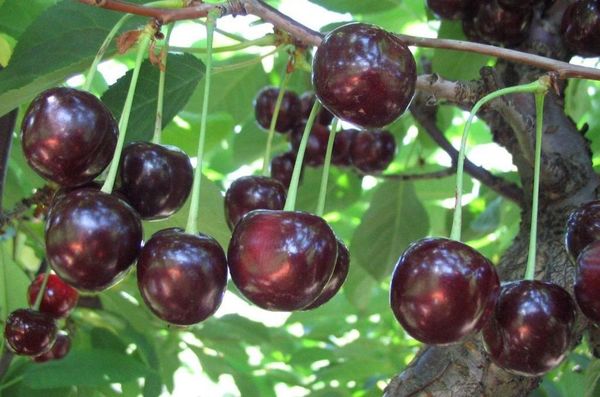
It is compact in size, resembling a multi-stemmed bush, reaching 2 to 5 meters in height. The bark is smooth, with a grayish tint. The crown is rounded and not densely dense. The leaves are rounded, slightly elongated, and medium-sized—approximately 8 cm long—with a pleasant bottle-green hue. The fruits of this variety are small, a rich black-red color. Vladimirskaya produces a harvest quite early—the first berries ripen as early as mid-July, and it begins bearing fruit two years after planting. The harvest volume directly depends on the weather conditions the tree experienced during the winter, and in favorable weather conditions, up to 25 kg of berries can be obtained. However, if conditions were poor, the yield will be very low.
In addition, when growing Vladimirskaya, it will be necessary to plant pollinator varieties nearby, since this cherry is self-sterile.
Despite all its drawbacks, Vladimirskaya is quite popular, and many farmers value it for the excellent taste of its fruits and the early maturity.
Griot of Ostheim
Its history spans over three centuries, during which the Griot of Ostgay rapidly gained popularity among farmers across Europe. The tree is not particularly tall, reaching up to 4 meters in height, with a rounded crown that is characterized by considerable density.
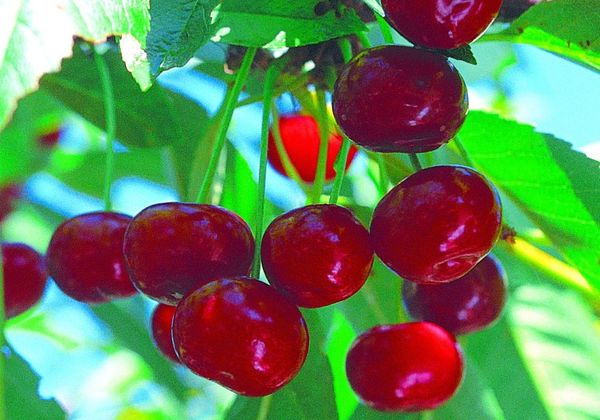
The plant's bark is dark brown, and the shoots are quite thin and also brown. The leaves are medium-sized and ovoid. The cherries are small and a rich dark color. They are round and slightly flattened on the sides. Their flavor is highly rated.
Griot Ostheimensis is characterized by early fruiting; the first harvests can be obtained as early as the third or fourth year after planting, and the fruit production increases each year. It thrives in a warm climate, and under favorable conditions, a significant harvest can be achieved.
Leningradskaya
This variety was developed in St. Petersburg. Therefore, it's no surprise that its main characteristic is its excellent frost resistance: the plant is resistant not only to severe winter frosts but also to spring frosts.
The tree is small, reaching just 4 meters in height. Although the crown is quite spreading and dense, regular pruning is recommended to prevent branches from shading the ripening berries. The berries themselves are relatively large, with smooth, rich, dark red, almost black skin. Ripening times vary depending on the location, with harvesting beginning in late June or as early as mid-July. The yield is quite high, with a single tree yielding up to 40 kg of ripe cherries.
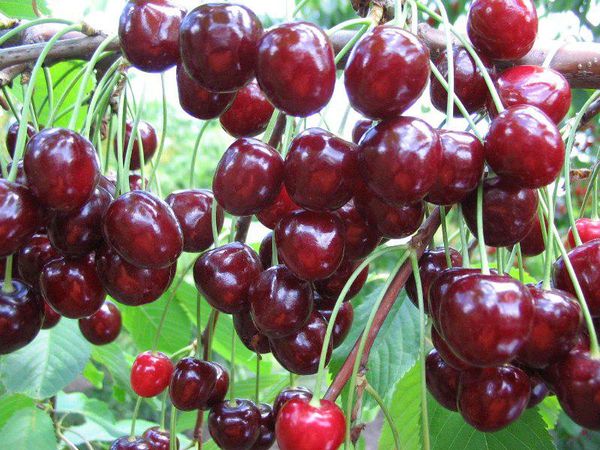
The disadvantages of this variety include the following: ripening occurs unevenly, so sometimes some of the fruits may fall off, while others will still be unripe.
Furthermore, Leningradskaya has a moderately early fruiting rate—the first fruiting doesn't occur until the fifth year after planting. Leningradskaya is also self-sterile, so pollinator varieties will need to be planted.
Morel Bryansk
The Bryansk Morel is a medium-sized tree with a rounded, moderately spreading crown and medium foliage. Its shoots are quite large and have a greenish tint. The leaves are smooth to the touch, slightly elongated, and dark green.
The fruits of this plant are large, round, and have smooth, shiny red skin. The flesh is very juicy and dark, and the juice is also colored. In appearance, they are very similar to the Senchesta Morelle variety. The berries have a sweet and sour taste, and their flavor is highly rated.
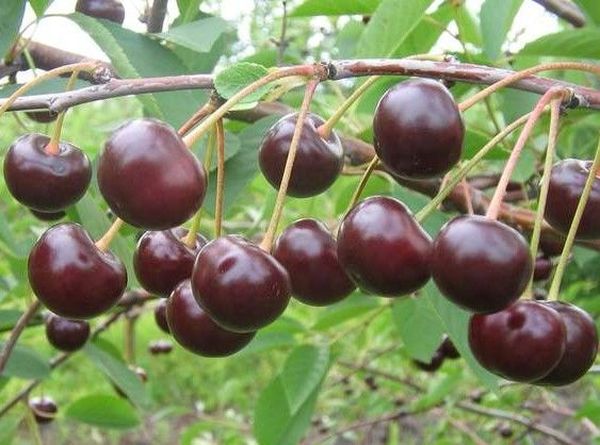
In addition, Morel Bryanskaya is self-fertile, so there is no need to plant other cherry trees for its pollination.
Rossoshanskaya
A small black cherry tree reaching approximately 4 meters in height. The crown is pyramidal and not overly foliated. The bark is smooth and grayish, darkening over time. The leaves are medium-sized, slightly elongated, serrated at the edges, and slightly pointed at the top.
The fruits are medium-sized, a rich dark burgundy, almost black color. They ripen as early as the second half of June, ripening evenly. Furthermore, they retain their shape for a long time and are easy to transport. This makes them suitable for widespread commercial use.
The plant tolerates frost well—temperatures as low as -35 degrees Celsius won't harm it. Fruiting begins in the third year after planting, but don't expect a large harvest for the first few years. The largest harvest occurs only between 6 and 11 years after planting, so patience is essential.
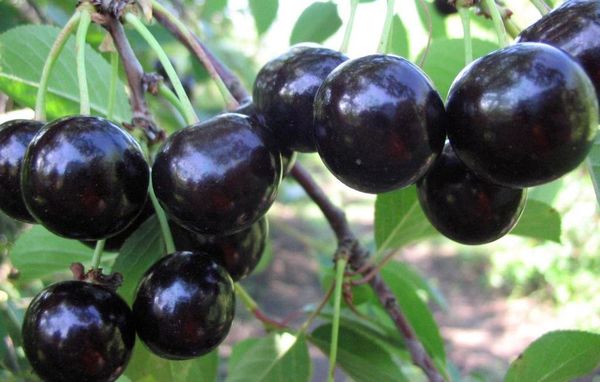
The downsides of Rossoshanskaya include its moderate yield and low resistance to diseases, such as fire blight and coccomycosis. Furthermore, fallen berries must be carefully collected, as they tend to germinate near the tree.
Chocolate Girl
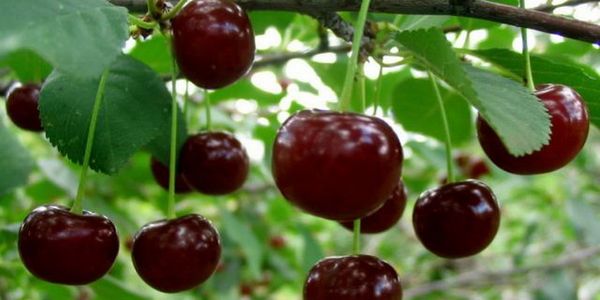
A relatively new variety with high yields. Shokoladnitsa is quite small—just 2.5 meters tall—which makes picking the berries much easier. The crown is inversely pyramidal. Shokoladnitsa produces large berries with a rich, dark red color.
Flowering begins in mid-May, and the harvest can be picked as early as mid-July. The first fruiting occurs in the fourth year after planting, with a single tree yielding up to 12 kg of berries. They have a sweet flavor, although they also have tart notes.
Black consumer goods
A cultivar bred by Michurin. It is compact, reaching up to 3 m in height. The crown is rounded and moderately dense. The bark is rough and brown. The leaves are ovoid and light green.
The variety is medium-early in fruiting—the first harvest can be collected by the third year after planting. The fruits are large, dark red, and have excellent flavor. It produces fruit consistently, yielding up to 15 kg of cherries per tree per year.
The disadvantages include average winter hardiness and low resistance to coccomycosis.
Video: Planting and Caring for Cherries
This video will teach you how to properly care for and plant cherry trees.