
Description of the unpretentious Brusnitsyna cherry variety
Content
Description and characteristics of the variety
The Brusnitsyna cherry variety features a lush, spreading bush about two meters tall with vibrant foliage, which is covered in a froth of numerous fragrant flowers in May and bursts with red-burgundy berries in August. The 30–35 cm long shoots grow very quickly, and the leaves are simple, elongated, with a sharp edge and serrated sides.
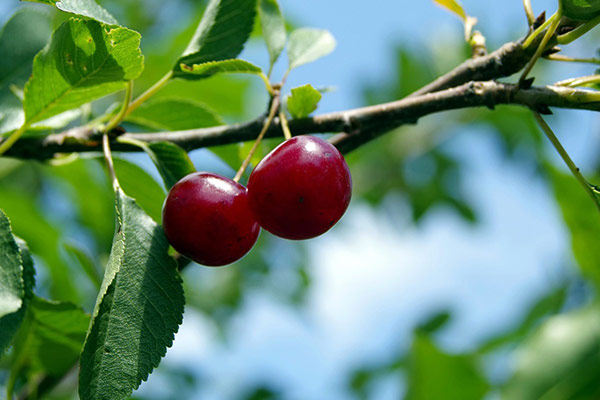
This self-fertile variety tolerates frosty winters well, has high resistance to most diseases, quickly begins bearing fruit, and regularly delights with a high yield of tasty and healthy berries. Thus, the Brusnitsyna cherry doesn't require pollinators to set fruit, but some sources cite the Mayak variety, which increases the cherry bush's yield when planted next to it. Even without such a pollinator, the first harvest can be achieved in the third or fourth year, and a mature plant typically yields at least 20 kg of berries.
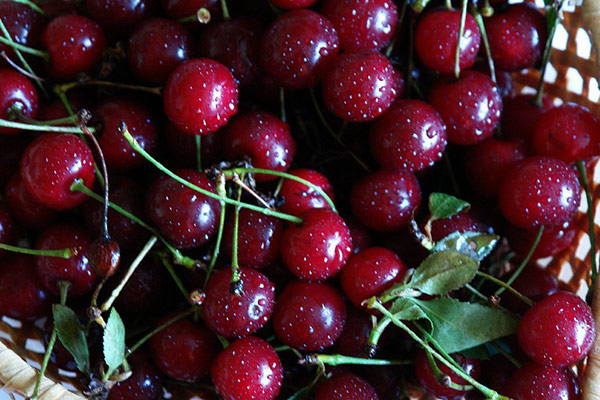
The flexible, fast-growing branches can be pruned to the desired shape. Flowers, followed by fruit, form on the branches. The berries are bright red-burgundy, with a distinct sweet-tart flavor. The average weight is 6 g. The cherries ripen in August. This ripening time offers an added bonus—by this time, virtually all other varieties have long since lost their fruit. The berries are versatile: delicious and very healthy fresh, they are used to make juices, wines, liqueurs, and cordials with a wonderful aroma, and are often used to make jams, preserves, and marmalades.
Ease of care, regular high yields, and the ability to grow in harsh climates—all of this makes Brusnitsyna cherries suitable for planting in private gardens and farms for both personal consumption and commercial purposes.
Features of growing Brusnitsyn
Cherries of this variety prefer light, sandy soil with a neutral pH, bright, open locations with plenty of sunlight, and preferably protection from strong northerly winds. Conifers should be kept away from nearby trees to prevent infection. If the soil is acidic, lime should be added before planting. Heavy clay soil should be loosened to ensure adequate aeration for the roots and to prevent waterlogging, as stagnant water can kill the bush. To achieve this, add several buckets of sand per square meter and dig thoroughly to a depth of at least 1 meter.
If the groundwater level is closer than 2 meters to the surface, it's best to plant the cherry tree on a hill or any elevated area, just to avoid the possibility of water accumulation. If winters are very harsh, it's a good idea to find a spot close to a building.
For planting, select one- or two-year-old seedlings, carefully inspecting the root system before purchasing. The roots should be healthy and not overdried. If there are a few damaged or dried roots, they can be cut off immediately before planting and then treated with charcoal. Experienced gardeners recommend soaking the dried roots in water for several hours and then dipping them in a clay slurry to improve rooting.
The hole should be dug to match the length of the roots. Typically, the depth is approximately 40–60 cm, and the width is 60–80 cm. The soil removed from the hole is mixed with fertilizer, including humus, compost, wood ash, and potassium and phosphorus fertilizers. A stake is driven into the center of the hole, to which the seedling is tied for stability. A mound of enriched soil is added, the roots are laid on it, and covered with prepared soil, lightly compacting it. After planting, the root collar should be level with the ground. Then, a shallow trench is dug around the bush at a distance of 30 cm and filled with 2–3 buckets of settled water. The area around the trunk can be mulched with a thin layer of peat or compost.
You shouldn't water the cherry tree too often; it's important to water it thoroughly after flowering, when the berries begin to ripen (in the fall after the leaves have fallen).
Organic fertilizers are applied every two years, infusing the soil around the roots with an infusion of poultry manure, cow manure, or horse manure. Mineral fertilizers are applied annually: in early spring, the plant is fed with 50 g of urea; after fruiting, up to 200 g of phosphorus and up to 70 g of potassium fertilizers are added. Mineral fertilizer granules can be scattered on the soil surface so that after rain or watering, the fertilizer gradually reaches the roots, or they can be dissolved in irrigation water and added to the prepared trench. After watering or loosening the soil (which should be done several times throughout the season), it is advisable to mulch the area under the bush – this will retain the necessary amount of moisture and prevent weeds from growing. In winter, mulch, applied thicker before the onset of frost, will help the root system withstand the cold.
Pruning is done in the fall, removing damaged or diseased branches and shortening shoots to shape the plant. The bush should be sparse and easily permeable to air and sunlight to prevent fungal infections. Use a very sharp tool for pruning, most often pruning shears. All cuts thicker than 1 cm should be treated with garden pitch or charcoal.
The trunk branches are whitewashed in the summer to protect them from pests, and wrapped in winter to protect them from rodents.
Video: "What Affects Cherry Harvest"
Many gardeners face the problem of poor cherry fruit production. Why this happens and what steps to take are discussed in the following video.