
The main diseases of cherries and how to treat them
Content
Coccomycosis
Felt cherry and other varieties of this crop are susceptible to various diseases. The most insidious of these is coccomycosis. It is caused by the fungus Coccomyces hiemalis. Its development is facilitated by prolonged damp periods with temperatures ranging from 20 to 24 degrees Celsius.
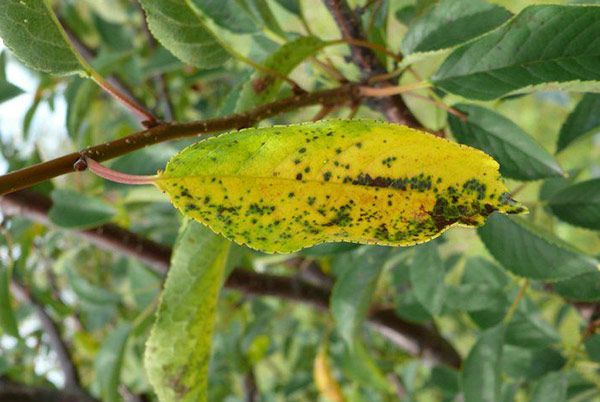
Symptoms of the disease are:
- the appearance of red or brown spots on the front side of the leaf;
- gradually the stains begin to dry from the inside;
- a pink coating develops on the back of the leaf;
- The leaves begin to die off and the branches become bare.
Because the disease manifests itself as leaf blade abnormalities, many consider coccomycosis a foliar disease. However, due to the loss of most of the crown, the entire tree suffers. If these symptoms appear, it's important to take the appropriate action: burn all fallen leaves and spray the cherry tree with Bordeaux mixture, systemic fungicides, or a ferrous sulfate solution.
To prevent the development of pathology, it is necessary to organize preventive procedures every year to prevent the appearance of parasites and diseases.
Moniliosis
Moniliosis (Monilial blight) affects fruit trees in the Urals, Siberia, Kuban, and Central Black Earth Regions. However, the disease is also common in the Moscow region. It is also caused by a fungus, Monilia cinerea. It's worth noting that cherry anthracnose is also caused by a fungal pathogen.
In the case of moniliosis, the plant is affected during the flowering period. The onset of the disease resembles the aftermath of a frost: the leaves dry out and become spotted. Reinfection of the trees occurs through the fruit, where the berries mummify and dry out.
To treat, it is necessary to burn all the leaves, felt and fruits, and also treat the tree (felt cherry or any other variety) with special agents - copper-containing fungicides (for example, "Kuprozan").
Clusterosporiasis
Cherry diseases vary widely. Clasterosporium wilt, also a fungal disease, poses a significant threat. Cherry wilt affects leaves, flowers, and shoots. Initially, the fungus causes brown spots to appear, which dry out inside, leaving behind round holes. Cherries are also unlucky here—they don't develop well.
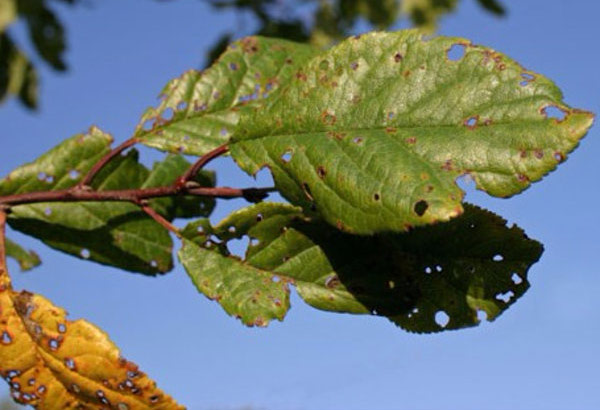
To save the felt cherry and other varieties of this fruit tree, it's necessary to remove all fallen leaves (they harbor disease pathogens and cherry pests), and treat the tree with Bordeaux mixture or a multi-action fungicide. Rust and brown spot are treated in a similar manner.
Scab
Cherry tree diseases and their management consume a lot of gardeners' energy, as they are the main cause of poor harvests. Cherry scab is a fairly common disease. When scab infects cherries, dark spots appear on the leaves, which then begin to crack. Symptoms initially appear on the leaves, but later, the lesions can also be seen on the fruit. As a result, an infected cherry tree will produce a minimal and poor-quality harvest.
Treatment for scab is similar to the surgeries performed when signs of diseases such as brown spot and miniliosis are detected on cherry trees. However, depending on the severity of the disease, additional control measures may be required in each individual case. Therefore, it is always important to know the most effective treatment for each specific disease.
Gummosis
Another common affliction of cherries and sweet cherries is gummosis. Gummosis is a non-infectious disease affecting stone fruit crops. It develops as a result of sunburn or frost damage, improper fertilizer application, or mechanical damage to the bark. All of these factors serve as entry points for pests (caterpillars, midges, spider mites, etc.) and pathogens to enter the wood. In this case, each problem is treated separately, which compromises the overall outcome.
Due to the trees' reduced resistance to adverse environmental factors, gum flow often combines with pest attacks (caterpillars, etc.). Cherry tree pests leave traces of their activity: leaves become covered in webs (mites, caterpillars, etc.), holes appear on the leaf blades, and the leaves themselves soon begin to fall off. If the infestation is severe, pest control becomes ineffective.
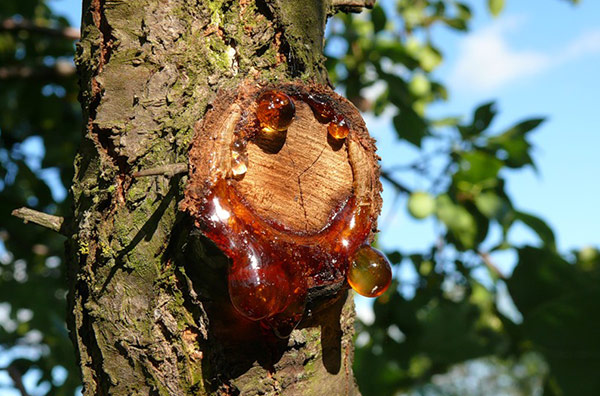
Gummosis is a gum-like substance that appears on the branches and trunk. This gum takes the form of droplets. If such droplets appear on the trunk, immediate treatment is necessary.
Gum flow can be chronic or acute. Left untreated, it can weaken the tree and eventually lead to its death. So, let's figure out how to combat it.
To cure gummosis, it is necessary to carry out sanitary pruning and properly shape the crown. All mechanical damage and cuts are treated with garden pitch. After this, pest and disease control measures are initiated against the gummosis. The tree itself should be sprayed with a copper sulfate solution. A manure-clay mixture (1:1 ratio) is effective as a folk remedy. The resulting solution is used to seal cracks in the bark.
As we can see, this disease is quite difficult to control, so prevention is best. After all, pests and diseases are the main threat to your garden. Remember that cherry tree pests are the primary threat, and they must be controlled as quickly as possible. Cherry tree pest control is most effective in the spring.
Preventive measures
Cherry tree care in spring and fall involves pest and disease control. The best solution is to implement preventative measures, which include several techniques:
- collection and subsequent burning of plant debris (felt, leaves, branches, etc.). They may harbor parasites (such as caterpillars) or pathogens;
- performing sanitary pruning;
- trunk whitening;
- digging the soil;
- implementation of all necessary agricultural practices in tree care;
- preventive spraying with agents against pests and diseases.
To achieve maximum effectiveness, preventative treatments should be performed several times during the season. Ideally, they should be applied in spring, summer, and fall. This way, you can protect your plants throughout the entire growing season.
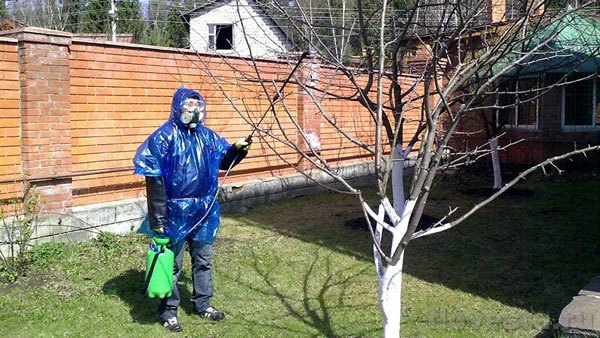
The preventative measures against parasites and diseases described above are much easier and simpler to carry out. After all, a full-scale fight against them requires much more effort, time, and money.
Knowing what affects felt cherries and other types of cherries can help prevent diseases and pests, allowing you to harvest abundant, high-quality crops for years to come.
Video "Cherry Diseases"
By watching this video, you will learn about the main cherry diseases, their treatment and prevention.