
The main methods of grafting grapes at different times of the year
Content
Rules and secrets of grafting
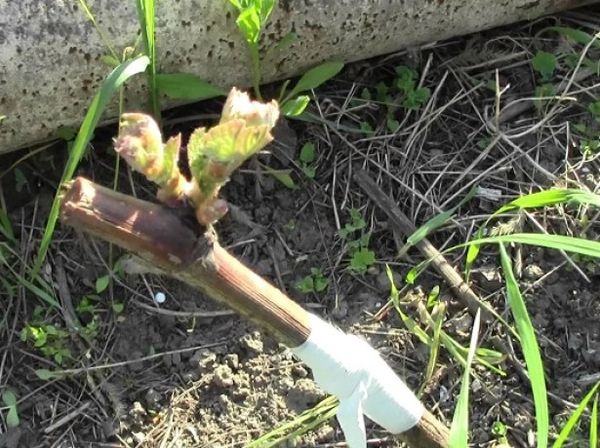
To ensure successful grafting of another grape variety onto an old bush, you must adhere to the following rules:
- the grafted variety must be acclimatized;
- the growth rate of the cutting and the bush must match;
- Branches for grafting in winter and spring are prepared in advance. In summer and fall, a green branch can be grafted directly;
- You should only work with disinfected tools;
- the correct way to cut the cutting is away from you;
- the rootstock vine must be cut perpendicular to its growth;
- the procedure must be performed at an air temperature of at least +15 °C;
- After manipulation, the bush requires special care.
Deviation from the technology may result in the cutting not taking root, and all your efforts will be in vain.
It's worth noting that there are several classifications of grape grafting. For example, based on the characteristics of the rootstock and scion, the methods may be as follows:
- "Black on black" is when a previous year's cutting is grafted onto a black branch. This method is used in the spring;
- "green to green" - when the cutting and vine are green;
- "Black to green" – in this case, branches harvested last year are grafted onto a blossoming shoot. Black to green grape grafting is done in the fall.
How to prepare cuttings
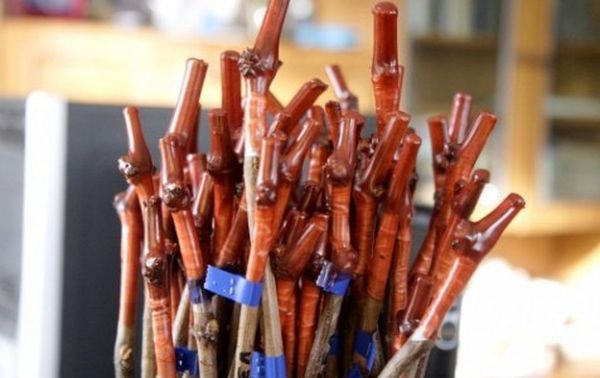
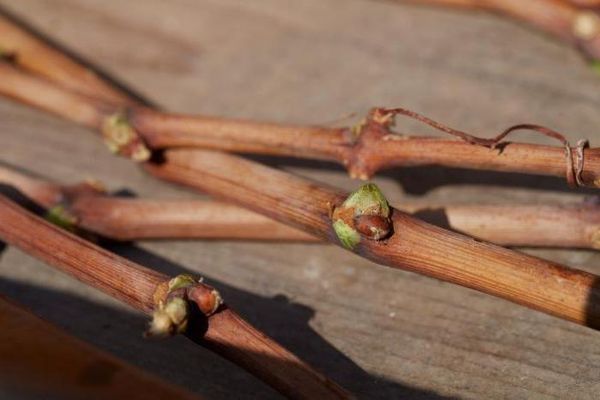
So, the grafting process begins with preparing the cuttings. Grape cuttings are taken from a healthy vine that produces a good harvest. Use a sharp knife to cut the cuttings, leaving 2-4 buds. Damaged, crooked, or overly thin cuttings may not take root, so choose your cuttings carefully. The optimal cutting length is 9-12 cm.
Dip the cut branches in a 3% copper sulfate solution for half a minute and lay them out on a table to dry. Then wrap them in plastic wrap or a damp cloth and place them in a location where the temperature will not exceed 5°C.
The scion also requires preparation. If the procedure is planned for spring, then prune the bush in the fall.
Methods of spring grafting
Budding
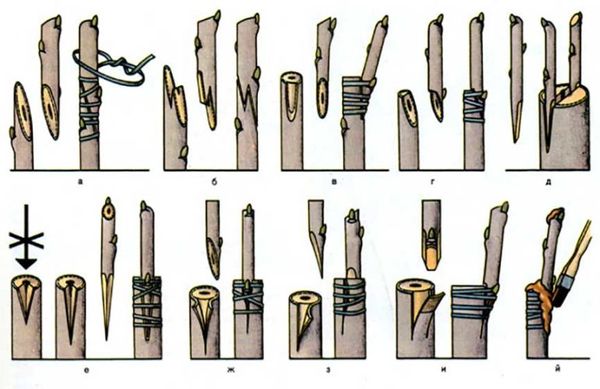
There are several spring grafting methods, one of which is budding. This method can be used if the cutting and shoot are of equal thickness. Identical cuts are made on both branches, joined, and tied.
Into the cleft
Select a thick, black branch, measure 5 cm from a node, and trim the rest. Make a 3 cm deep cut in the branch. Sharpen the tip of the cutting. Next, soak the cutting in a growth-stimulating solution for an hour, then insert it into the hole in the branch and carefully tie it, then cover it with a cloth or bandage. This procedure is performed in late spring.
Into the cleft on the underground trunk
This type of grafting can be done earlier. The bush should be dug 15–20 cm deep and excess roots removed. Make a slit in the center of the cut and insert a couple of cuttings, tie them together, seal them with clay, and cover with plastic wrap. Then, surround the vine with sand to protect the bush from the cold.
With a drill
Drill grafting is a modified version of split grafting. The difference is that a hole is made in the trunk with a drill, which is disinfected first. The bark-stripped scion is inserted into the vine. The junction is filled with sawdust and sealed with clay. Even a novice can handle this procedure.
Summer vaccination
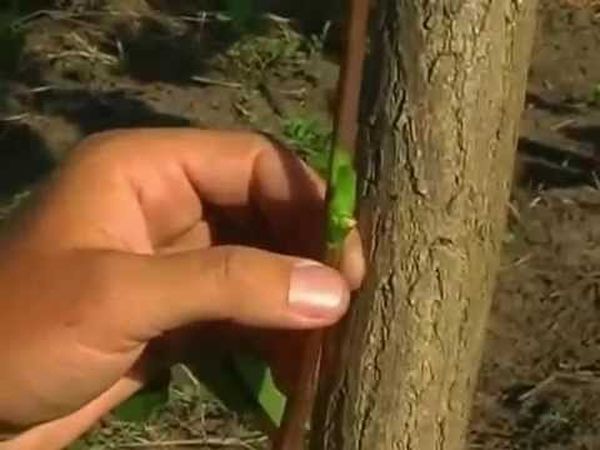
Grafting grapes in summer is done in various ways. In June and July, for example, "green" grafting is performed. Just before grafting, a green branch is cut, the tip is sharpened, and inserted into the cut on the green shoot. The junction is tightly wrapped with adhesive tape. As you can see, green-to-green grafting is simple, and the branches take root well. It's worth noting that summer grafting of indoor grapes will yield the desired results if done at temperatures up to 25°C.
Autumn grafting
Every winegrower wants to constantly improve their harvest. Grafting not only improves the fruit's quality but also rejuvenates and promotes health. In our country, autumn grafting of growing grapevines is primarily practiced. However, grapevines are also grafted in summer and spring. October, when the thermometer does not drop below 15°C and the soil temperature does not drop below 10°C, is the best time for autumn grafting. Autumn grafting of grapevines has the following advantages:
- allows you to get fruits earlier;
- Promotes increased yield. The berries become larger, there are more of them per bunch, and therefore the bunches themselves increase in weight and size;
- For some varieties, the ripening period becomes shorter after autumn grafting.
For valuable and rare varieties, which are often "capricious", grafting can improve the quality and speed of propagation.
In the south, grafting is used to improve grapevine health and treat leaves and roots that are susceptible to aphids. Grafted vines also become more drought-resistant. In northern regions, grafting improves growth, resulting in earlier harvest. It also increases resistance to high humidity and increased soil acidity.
Before grafting, the "mother vine" and cuttings must be properly prepared. The best method is to graft the vine into a split in the underground trunk. We've already discussed how to do this. We'll just add that during this period, the soil around the bush is loosened and watered, new soil is added on top, and for the winter, the bush is sprinkled with hay and covered with spruce branches.
Features of winter grafting
The bush has already grown, but winter still lingers? This period is used for winter grafting. It's also called "tabletop grafting" because it's done indoors, on a table. This procedure offers numerous advantages: the grafting period is short, and in 95% of cases, the rootstock and scion successfully fuse.
The cuttings are prepared in the same way as for other grafting methods. Remove the rootstock 24 hours before the procedure and allow it to warm up. Then, soak it in water at 15°C for 24 hours. Next, graft the cutting onto it. Place the grafted plants in a jar, cover with plastic wrap, and leave them in a warm place for a couple of weeks. After the specified time, place the plant in a container and store it in a cool place until spring, when it can be planted outdoors.
Further care
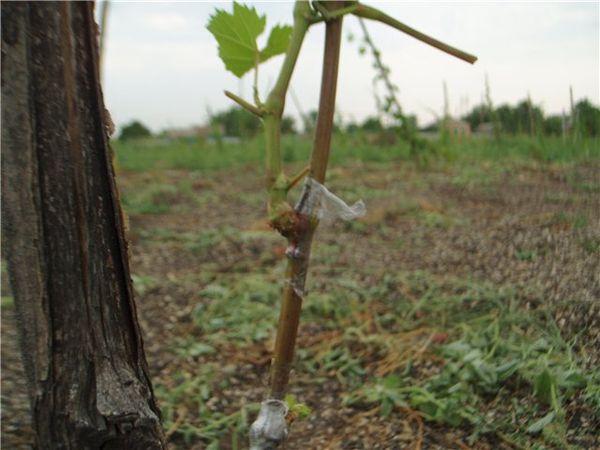
Subsequent care is crucial to achieving the desired results. It's important to follow all instructions for the chosen grafting technique, as each method has its own nuances. Ensure the cuttings are tightly wrapped and that no sap is released. Otherwise, the vines will lose vitality and will likely die.
The vine grower should regularly inspect the bush and remove unwanted growth points, as the plant should focus all its energy on growing the scion. Water the plant regularly, provide adequate light, maintain a consistent temperature, keep weeds at bay, and loosen the soil, and the results will not be long in coming.
Video: "Green Grafting of Grapes"
This video will show you how to green graft grapes using a single bud.