
Timing and basic rules for watering grapes
Content
When and how often should you water?
Even though the plant is drought-resistant, grapes need watering. Humidification is an essential part of care. It's important to provide grapes with the optimal amount of moisture. If weather conditions are favorable and there are no problems with natural precipitation, as is the case, for example, in the Rostov region, there's no need to overdo it with irrigation. If summer is characterized by low humidity and scorching sun, watering is essential.
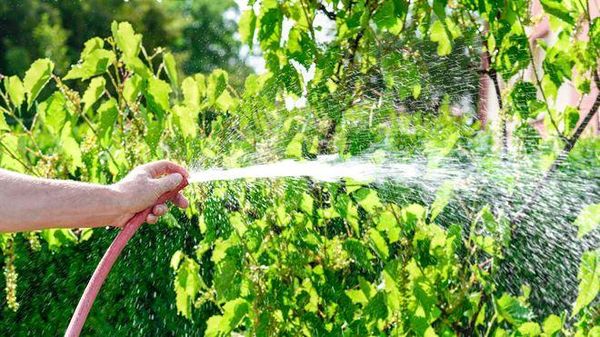
No living organism on Earth can survive without water. Water plays a role in the formation of fruit crowns and fruit. A lack of water leads to reduced yields, less juicy berries, and smaller clusters. It's important to understand that during the ripening period, the plant requires more water than during harvest.
It's also important to figure out how often to water the grapes per day. Fertilizing grapes is impossible without water. Water facilitates the absorption of the nutrients contained in the fertilizer. The efficiency of watering increases if the procedure is completed when the fruit begins to color. Although each grape variety has its own characteristics, there are clear requirements for proper grape watering. These include:
- optimal water temperature (warm in spring, cool in summer);
- start of the procedure before flowering;
- frequency – 3–4 times per season for fruit-bearing bushes, 1 time per week for seedlings;
- evening watering;
- volume 1-2 buckets per procedure.
Do grapevines need to be watered frequently? No. During the day, especially in summer, it's not recommended to let the leaves and stems get wet. The sun is too harsh in the afternoon and can burn the crown. Before flowering, the bushes are watered with warm water to warm the soil, which has cooled after winter. In hot weather, it's important to maintain an optimal internal temperature and avoid heat stress. If the plant is already bearing fruit, it doesn't require as much water. It's sufficient to water the vines several times a season, especially in July and August, but in large amounts.
Basic methods and rules
Grapes are one of the oldest plants domesticated by humans. A wide variety of grape varieties allows every gardener to choose the perfect bush for their needs. Table grapes are the most common. They produce delicious, aromatic, juicy berries and large clusters. Achieving this result requires knowing how often to water grapes. During the ripening period, the plant requires ample moisture not only for nutrition but also for temperature regulation. Excess water evaporates under the influence of the sun, maintaining an optimal water balance.
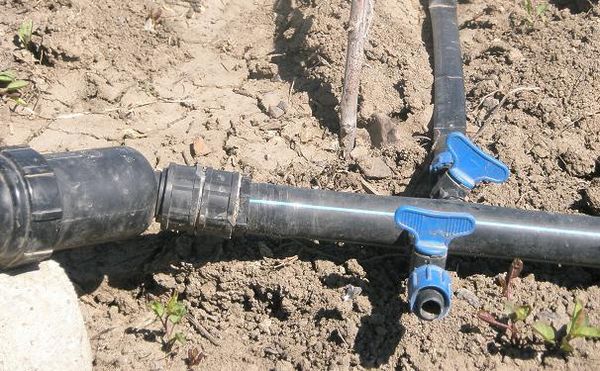
Not everyone has free time, and plants require attention. Therefore, specialists have found optimal automated methods. Human intervention is virtually eliminated, eliminating the need to manually water each plant.
Large vineyards are installing entire drip irrigation systems, which is justified by the planting area. Smaller farms are adopting this trend on a smaller scale. The drip method is considered the most effective, especially in nurseries where new seedlings are grown. Several irrigation methods are used:
- drip;
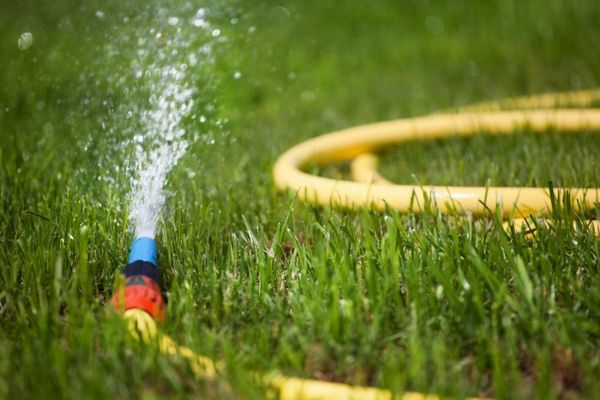
- rain;
- surface;
- arched.
Can you judge the quality of watering by the leaves? Yes. Adequate moisture promotes the formation of a lush, green crown.
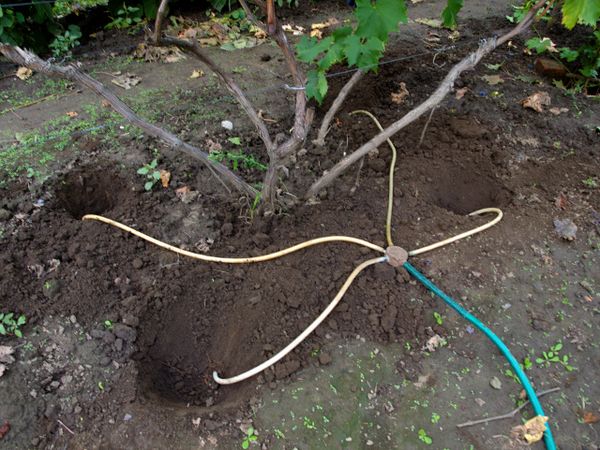
Surface irrigation is the simplest method. Dig a 20-cm-deep trench along the row, then fill it with water at a gentle pressure for one hour. The main advantage is that the root system is saturated with nutrients, while the crown remains undisturbed. This method allows you to feed the plant by adding fertilizer.
Not every gardener has the means to install a sprinkler system—it's too expensive for small plots and only moderately effective. The most convenient way to water grapes during the summer ripening period is with a drip irrigation system. This method allows the vines to have individual holes through which water is evenly distributed. This allows for precise control of the amount of moisture in a specific area. Unlike previous methods, not a single drop evaporates.
Features of summer watering
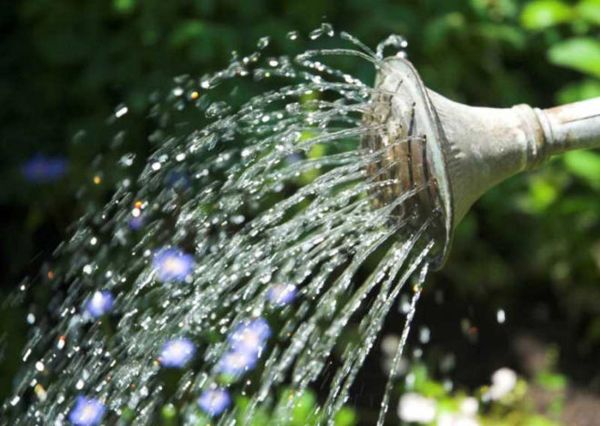
Many people wonder: how to water grapes in the summer? Cold water is not recommended; the optimal temperature is room temperature, warmed by the sun. Drip irrigation of fruiting grapes will yield a bountiful harvest and juicy fruit. This system requires time, attention, and money. But the results will make you forget about the difficulties.
Moreover, you can find out from the seller how often to water grapes in the summer when purchasing a seedling. The variety dictates how often, when, and how much to water. Therefore, grapevine care should be approached individually. Proper watering will undoubtedly affect the size of the grape clusters and the sweetness of the berries.
Video: "Rules for Watering Grapes"
This video will show you how to properly water grapes.