
A review of the best fertilizers and rules for feeding grapes
Content
Essential minerals and elements
It's important that the soil is rich in nutrients for both growing and ripening. If fertilizers aren't applied promptly, yields will decline year after year. Plants will suffer from frost and drought, as well as from deficiencies in essential nutrients. Fertilizing is essential for healthy growth.
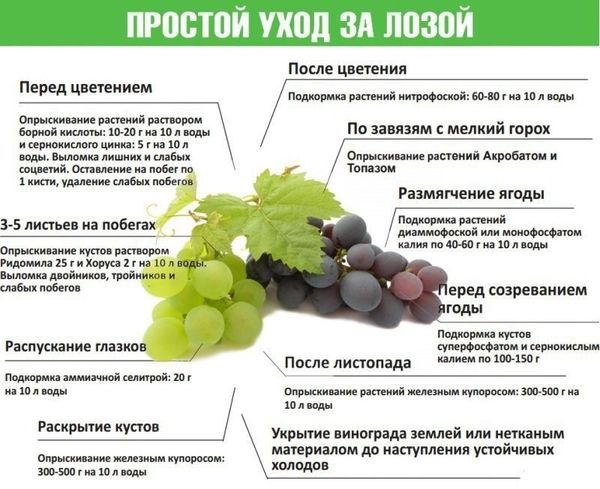
For normal growth and harvesting of good bunches of grapes in August, it is necessary to periodically apply mixtures containing:
- nitrogen;
- potassium sulfate;
- phosphorus;
- zinc;
- copper;
- boron;
- bromine.
Nitrogen is necessary for normal growth of green mass. Leaves and shoots cannot develop normally without this element. In summer, the need for this element decreases. After August, such treatments can even be harmful, so they should not be used at this time. Fertilizing grapes in August should be different from spring feeding. It's important to remember this.
Grape fertilizer should also contain phosphorus. It's essential during the initial flowering period to ensure proper fruit production. Adding this element (superphosphate) will significantly improve the development of the flowers.
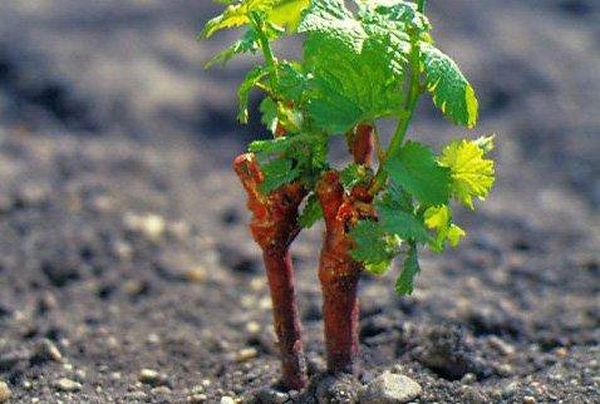
When answering the question of what to fertilize grapes with, potassium and copper are essential. Potassium is needed to accelerate ripening and growth. Copper promotes frost resistance. Zinc is an additional element. It's important that it's also included in the fertilizer for young grapes. This will significantly increase fruiting.
Boron, or boric acid, increases the sugar content of fruits. This element also helps prepare the plant for winter.
Review of the best fertilizers
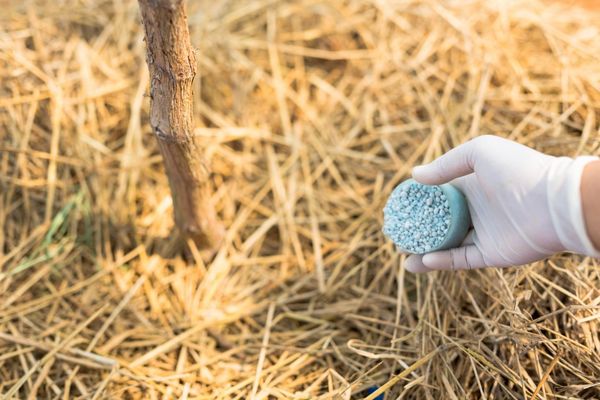
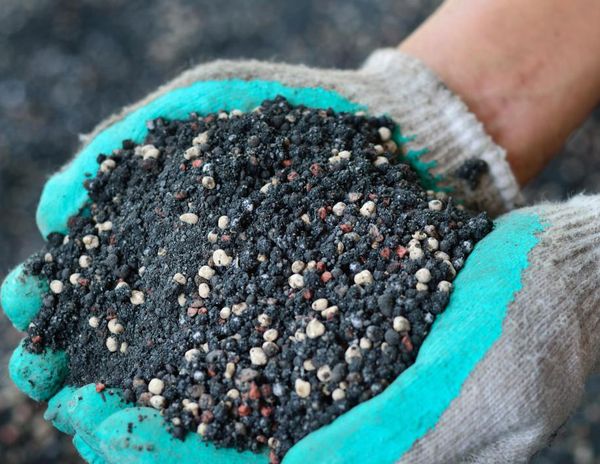
Mineral fertilizers (single-component) are the best choice. Ammonium nitrate, potassium chloride, and superphosphate are all essential for the plant. Many inexperienced gardeners ask: how to fertilize grapes and what to feed them with? It's important to use mixtures containing two or three elements (ammophos, nitrophoska). The use of complex preparations is acceptable and recommended. Among the best are "Akvarin," "Novofert," "Kemira," and "Floravit." Fertilizing grapes with these compounds will ensure a good harvest.
How to choose the time
It is extremely important to correctly determine the composition that is suitable for plant nutrition in a given season.
In the spring
During this period, the gardener's main task is to enrich the soil with micronutrients. Use the products described above. They will ensure good fruiting later. A mixture of sulfate and other growth components for vineyards during this period will promote a good harvest.
Fertilizing should be done in mid-May.
In summer
Remember to feed this plant in the spring and summer. Foliar feeding of grapes in July is the key to rapid growth and ripening.
Keep in mind that berry ripening requires different fertilizing than growing season. During the growing season, it's crucial to apply manure to improve soil permeability and stimulate the development of essential microorganisms.
Fertilizing grapes in June is suitable if the plants are experiencing poor growth or, conversely, are overloaded with the harvest. To do this, mix potassium salt, superphosphate, and saltpeter, then dilute with water. Avoid using nitrogen, as this will take too long for the fruit to fill with juice.
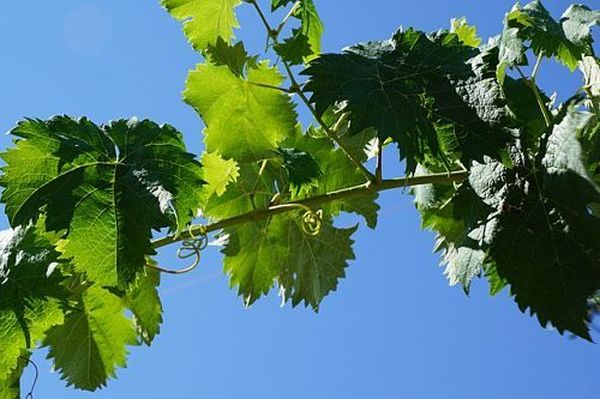
What to do with grapes in July? Bird droppings are another fertilizer that should be applied at this time. Fertilizing grapes in the summer should be done with bird droppings. Why is it important to feed grapes in the summer? Because at this time, they need to enrich the soil with beneficial micronutrients.
Before fertilizing, dilute the manure with water at a ratio of 1:4. Then, dilute it with water immediately before watering. Fertilizing grapes with ash is also acceptable for further enriching the soil. Ash for grapes is an inexpensive and simple method for proper plant growth.
In the fall
Fertilizing grapes in the fall is also important. The ideal choice is vines, which should be prepared in advance. It is recommended to add zinc, iodine, boron, and manganese to the fertilizer mixture. This mixture can be applied either dry or as a water-based solution.
Don't use too much of these mixtures. It's important to apply them regularly in small amounts. This will ensure normal growth and maturation.
Fertilizer application rules
It's important to follow a number of rules to ensure a good harvest. Enrich the soil with the beneficial elements described above. A couple of weeks before flowering, feed the plants with a solution of superphosphate, saltpeter, and potassium salt mixed with water. Before ripening, apply superphosphate. Potassium fertilizers for grapes are also suitable.
Remember that once every three years, the plant (root system) needs to be treated with manure and vines, as well as ammonium sulfate and superphosphate. If you're growing in sandy loam soil, these amendments should be applied every two years. For normal growth in sandy soil, this should be done annually.
Video: "Summer Fertilizing of Grapes"
This video will tell you about the best way to feed grapes in the summer.