
How to make a support and stand for grapes yourself
Content
Why is support needed?
Grapes are essentially vines, and to grow properly, they require support. Proper staking also serves many important functions. It ensures ventilation, which is important for preventing fungal diseases. Each shoot receives sufficient light, allowing it to develop quickly and evenly, ripening before autumn, and thus becoming more frost-resistant.
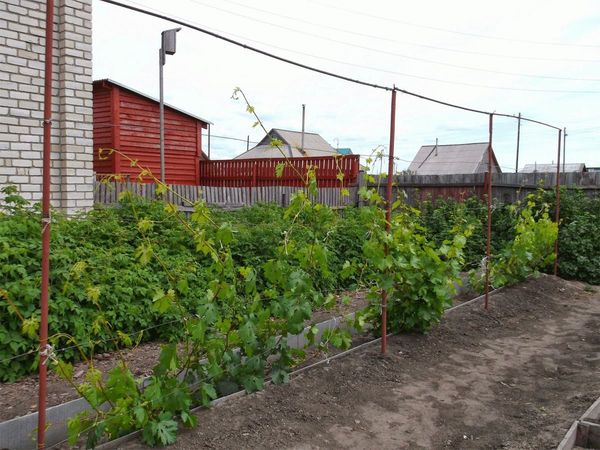
Pollination of the flowers is easier, and sunlight accelerates metabolic processes and increases the plant's yield. In the light, the clusters ripen faster, and the berries themselves are much sweeter and larger than those formed in dense canopies. Finally, harvesting is easy in such a vineyard.
Necessary materials and tools
To make a trellis, you'll need poles and wire. The poles can be made of metal (preferably steel), reinforced concrete, or hard, rot-resistant wood (oak, ash, acacia, etc.). Staples are driven into wooden poles to secure the wire, while holes are drilled into others (wire tied around the poles doesn't hold up well under the weight of the vines). To ensure a more stable foundation, the poles are cemented into the base.
The optimal height of the pillars is on average 2 m, but depending on the possibilities and purposes, the supports can be up to 3.5 m.
It's recommended to use galvanized steel wire for grapevines. It's durable and also unattractive to metal thieves. The optimal diameter is 2–3 mm.
Arched structure
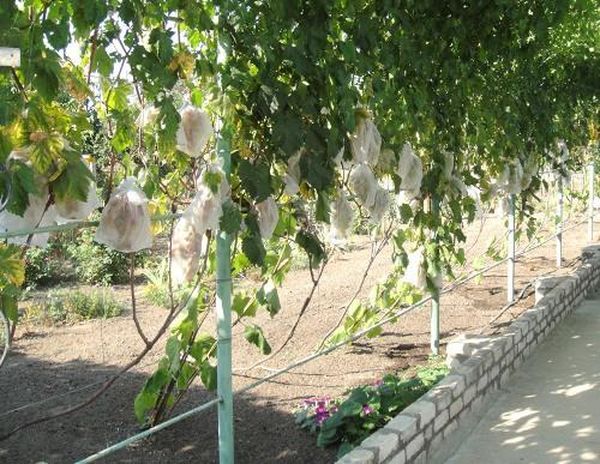
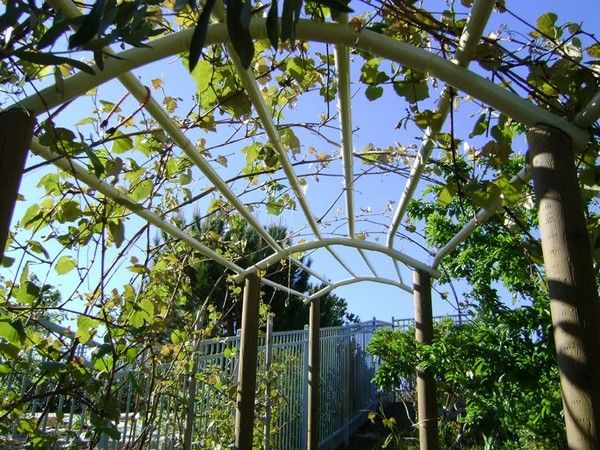
Arched structures are suitable for large courtyards. Besides their practical benefits, this option can become a central element of the landscape design. The arch can be planted solely with grapes (in a two-row arrangement) or combined with ornamental plants such as clematis, climbing roses, and so on. A seating area, such as a bench and table, can be created beneath the arch.
However, due to the height of the structure (the recommended height is 3.2 m), maintaining the upper portion of the vineyard is only possible with a stepladder. Such structures are more suitable for open-air cultivation in southern regions.
The arch can be made using curved metal pipes or straight posts with sheathing. The former is easier to construct and looks more attractive. The frame is made from 20x40 mm steel pipes. 10x20 mm pipes serve as connecting beams between them (on average, two are needed on each side and one at the top). Finally, 3 mm steel wire is stretched at intervals of 40–50 cm between the rows.
Semi-arched design
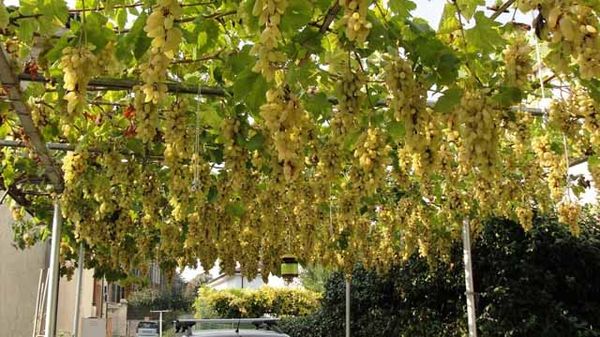
This option allows for the simultaneous cultivation of several grape varieties with different ripening times. It consists of an L-shaped canopy.
A semi-arch looks beautiful and provides shade, so it's often used as a seating area. In this case, a plastic covering can be installed on the top to provide protection from rain. Sometimes this structure is connected to a veranda. If the semi-arch is installed next to the house, it protects the windows from the sun.
On average, the recommended height is 2 m, the canopy width is 120 cm.
Straight columnar support
A simple and convenient option. There are several types of such structures. Let's learn how to make a particular columnar support for grapes yourself.
Single-plane
The simplest type of trellis resembles a fence. It consists essentially of posts with rows of wire stretched between them. This design provides good ventilation and easy access to the vines for pruning, cultivating, harvesting, and winterizing. However, it's more difficult to grow strong plants with multiple branches on this type of trellis, as the tied-up shoots will gradually become denser.
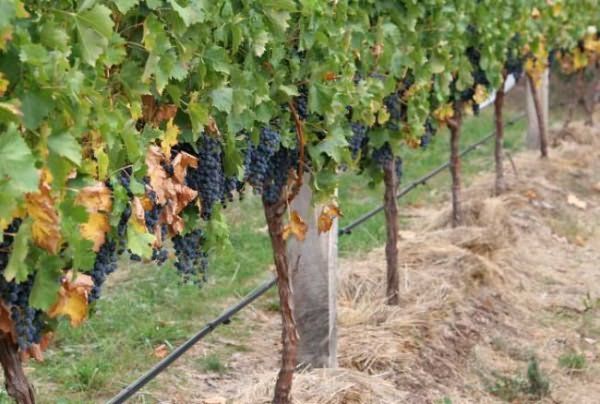
The posts for this structure are spaced at intervals of 3–6 meters. The first and last posts should be the strongest and heaviest, as they bear the brunt of the load. They can be reinforced with braces or guy wire.
The bottom row of wire is stretched 40 cm above the ground to prevent the bunches from touching the soil. Subsequent rows are laid at the same distance. A total of 4-5 rows are recommended.
You can run two parallel wires in each row by attaching crossbars to the posts. The vines are then guided between the wires. This design makes tying the vines easier, but it does complicate preparing the grapes for winter shelter.
With the standard method, trellises can be constructed with trailing shoots: the standard is secured to a support, and the shoots hang down from the top wire. Sometimes, instead of wire, garden mesh is used to fill the space between the posts.
In landscape design, such trellises can be used as an internal fence.
Two-plane
These structures can support even large, mature plants. They provide the vines with more space to develop. There are several types of two-plane structures.
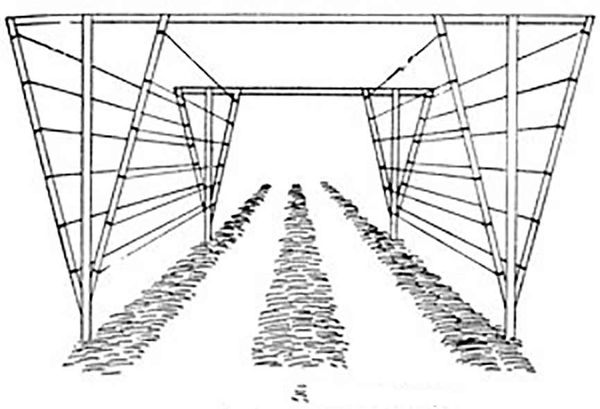
Straight lines are two parallel, flat planes (like two fences placed close together).
- V-shaped ones are close together at ground level but diverge upwards.
- Y-shaped – a single pole-like support with slats or metal pipes attached to the top at 45–60° angles. This variety has a variation: outward-facing canopies are attached to each upper surface, from which the growth hangs downward.
Let's look at how to make a V-shaped trellis. Since the planes are at an angle, their installation differs from the standard one.
Draw a rectangle on the ground to accommodate the structure (the distance between the supports of a pair should be 80 cm) and drive stakes into the corners. After ensuring they are symmetrical, dig a hole 50 cm deep and 30 cm in diameter for each support. Place the posts in these holes (preferably 2.5 m pipes). The distance between the tops of each pair of pipes should be 120 cm, or 40 cm greater than the distance between the bottoms. Secure the posts at an angle with crushed stone and fill the holes with cement.
Once it's completely set, tighten the wire. The bottom row should be at least 50–60 cm above the ground, with the remaining rows at 40–50 cm intervals. To ensure the wire stays in place, you can use staples or hooks.
Master's advice
To protect wooden posts from rotting, it's recommended to soak them in copper sulfate for 10 days before planting. Avoid using wood preservatives or regular wood stains, as they can damage the roots if they get into the soil. For increased durability, coat the posts with tar and wrap them with roofing felt.
If you intend to use a metal pole, treat the future underground part with construction bitumen to protect it from corrosion.
Avoid placing supports near trees or planting seedlings nearby, so they don't create shade as they grow. For example, grapes next to an Epode pear tree will receive less sunlight and will not thrive.
Video: "DIY Grape Support"
This video will show you how to make your own grape support.