
Rules for pruning grapes in the fall for beginners
Content
What you need to know about fall pruning
In the first year, the vine is usually not pruned unless it is clearly deformed. It's best to simply tie up any overgrown shoots. Crown shaping begins in the second year.
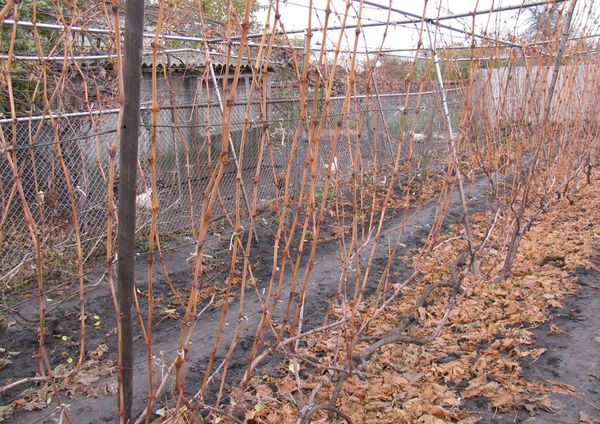
There are two methods of pruning: fan and standard.The fan-shaped crown allows for easy winter protection, which is why it is more commonly used in the northern and temperate latitudes of Russia and Belarus. It involves forming several branches that grow vertically relative to the main trunk, forming a fan-shaped structure.
Standard vines require the creation of a strong, tall main trunk. They are suitable for both arched and uncovered vineyards in southern regions. The question "How to prune grapes correctly?" may seem daunting to beginning farmers. However, any pruning diagram can be found online, complete with pictures that clearly show all the steps.
How to choose the right time
Experienced winegrowers perform winter pruning of grapevines in two stages. The first, sanitary pruning, is performed after harvest, when the leaves begin to yellow. This involves removing old shoots that have finished bearing fruit, suckers, and weak and diseased shoots. The second stage, which shapes or maintains the desired crown shape, is performed on average two weeks after leaf fall.
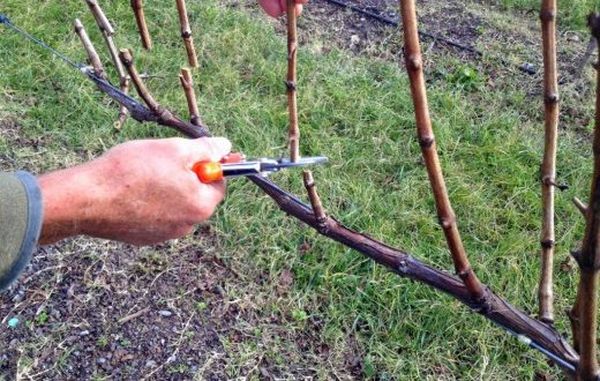
When using the covering method, fall pruning and winter covering should occur almost immediately after each other. Relatively warm weather is preferable, as temperatures below -5°C can cause the vines to break. Some experts recommend pruning after the first frost. This will reveal weak shoots that will be destroyed by the winter cold anyway.
Step-by-step instructions
How you prune your grapes for the winter affects many things: yield, berry size, and even the plant's frost resistance.
At first glance, pruning grapes in the fall can seem difficult for beginners, but by following the chosen plan and guidelines, you can achieve excellent results. Pruning young grapes involves removing excess shoots according to the chosen growing pattern. Let's look at the most popular fan method.
In the second year of cultivation, inspect the seedling and identify the two strongest shoots. The lower shoot should be pruned so that at least two buds remain. The remaining 1-3 can be used as reserves.
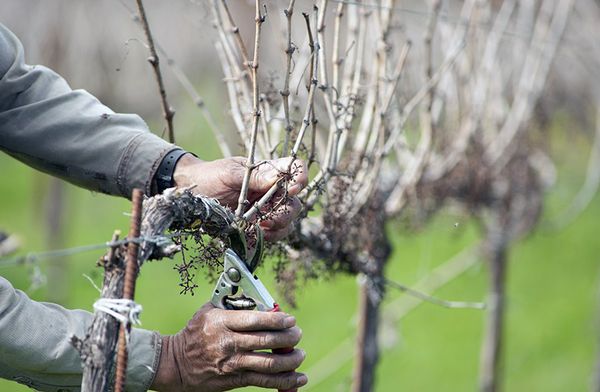
If all survive, in the spring, the two largest shoots are left and the rest are pinched. The second (top) shoot should have 3-5 buds remaining, plus a few more for later use. All other shoots are removed completely.
In the third year, shoots form branches. These are pruned, leaving two of the strongest shoots on each. Again, the lower shoot is shortened to the second bud (called a replacement branch), and the upper shoot is shortened to the seventh or eighth bud. A replacement branch always contains at least two buds: one develops into a fruiting shoot, which will produce a fruiting vine; the other develops into a replacement branch, which will produce strong shoots. In the fall, the fruiting shoots are cut back completely, and two strong shoots are left on the replacement branches. One of these will bear fruit, and the other, pruned to two buds, will become a new replacement branch. The cycle repeats over and over.
Depending on the variety, vineyard size, and other conditions, the number of shoots left may be greater. In any case, a reserve of buds should be left. Pruning can rejuvenate the plant if yield declines sharply.
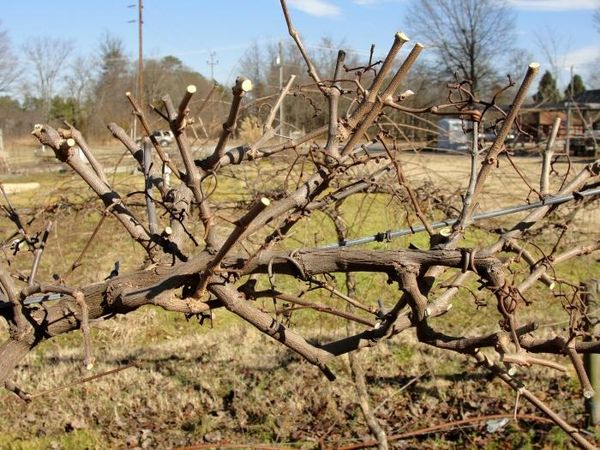
To do this, completely cut back the crown and dig up the trunk to a depth of 15 cm. Then, cut the trunk back to a depth of 10 cm, and make several notches in the remaining 5 cm. The cut areas are sealed with clay and then covered with soil. In the spring, the plant will produce new vines, which can be used to form a new bush.
If you have an unpruned vineyard, you should tidy it up as follows: in early September, prune all young shoots growing on old branches up to 50 cm above ground level, shorten the remaining shoots by 10% and remove side shoots. After the leaves have fallen, select the two most developed shoots at a height of 50–80 cm, from which, using the standard pruning method, form a replacement shoot (which should retain 2–4 buds) and a fruiting vine (5–12 buds). Then, continue pruning according to the general method.
In the fall, grapevines are pruned using pruning shears (if the vines are thinner than 3 cm) or a fine-toothed saw (if they are thicker). Tools must be sharp, as jagged or crushed cuts can lead to infection or weakening of the plant.
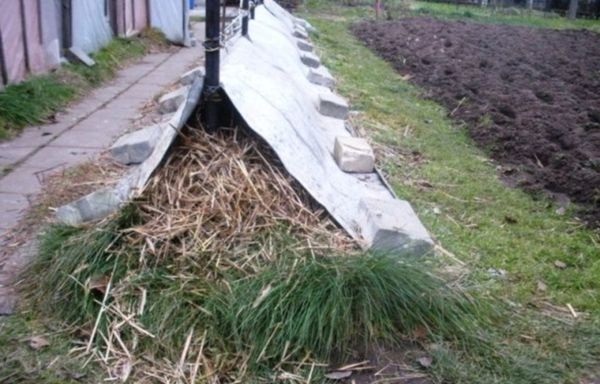
It's recommended to make cuts at a 45° angle toward the inside of the bush. Finally, the plant needs to be covered: remove the remaining branches from the trellis, lay them in the direction of the vine's growth, and secure them to the ground. Cover them with a tarp or thick film to protect them from the cold.
Pros and cons of pruning in the fall
Pruning grapes in the fall has several advantages. Firstly, it significantly facilitates the plant's wintering – without it, the crown may simply not fit under certain types of cover. Secondly, stems pruned in the spring can leak excessive sap, which sometimes leads to a reduced yield and even death of the plant.
For the same reason, during the summer, grapevines can only be lateral-sonned, pinched, and pruned. True pruning is not allowed at this time. In the fall, sap flow ceases, and cuts heal much faster. Thirdly, fall pruning stimulates earlier bud break the following spring. Consequently, this accelerates harvest ripening, which is especially important in colder regions.
Disadvantages include the potential for freezing at the cut site if pruning is done in late autumn. This leads to drying out of the upper part of the shoot. Furthermore, early bud development can become a problem if frost returns.
Video: "Autumn Pruning of Grapes"
This video will show you how to properly prune grapes in the fall.