
Stages and features of summer grape pruning
Content
Why do you need to prune in summer?
Winegrowers with limited practical experience often ask: can grapes be pruned in the summer? After receiving an affirmative answer, they wonder how to prune grapes properly. This garden crop is characterized by vigorous growth. Pruning grapes in the summer is a must.
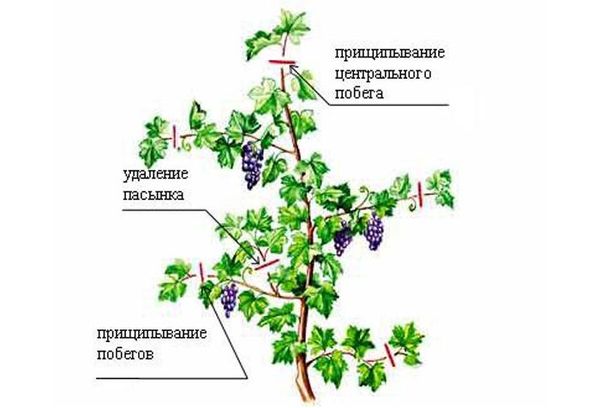
If this procedure is neglected, the vineyard will focus on growing young vines. With excess shoots, the harvest will not only be small in size but will also lose the flavor for which it is so prized. Summer pruning of grapevines is aimed at correcting the growth of the bush and preventing it from becoming untidy. It is necessary to maintain a balance between fruiting and barren vines.
If you remove unnecessary shoots in time, the fruits will be provided with all the nutrients. Summer pruning of shoots is a necessary preventative measure that helps the crop survive the growing season without problems.
When to carry out
When and how should you prune your grapevine to ensure it looks well-groomed and grows healthy? In June, fresh shoots need to be pruned and fruiting vines need to be tied up. This same month, replacement shoots are established. These are the ones from which fruiting shoots can be expected next year. In July, side shoots need to be removed. This procedure is performed after flowering. Spray and fertilize the plant this same month. For grapes, pruning young shoots is also important in August.
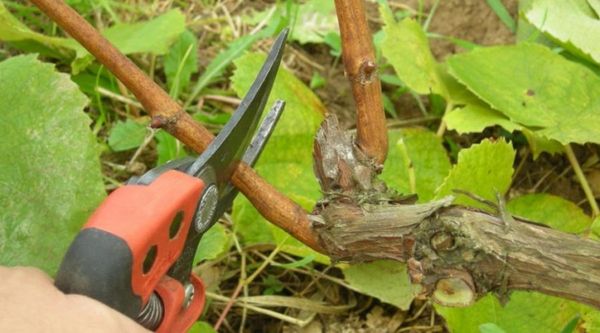
Experienced gardeners prune the top of the root system to stimulate better, fuller development of the lower roots. The plant's tendrils act as anchors. Should they be removed? Some gardeners remove them daily, while others avoid this procedure. Pruning grapes in the summer is recommended before and after flowering. Pruning interfering shoots is continued even after the clusters have formed.
Features of the procedure
How should vines be pruned, and what should be considered during the process? Garden tools are typically not used for pruning. Summer grape shaping is simple for both beginner and experienced gardeners. This involves breaking off and pinching (i.e., pinching) the tops by hand.
The pruning procedure is more clearly illustrated in images online. The stages take all summer. If the pruning is carried out promptly and correctly, and subsequent summer care is carried out correctly, you can expect to harvest large, tasty berries.
Step-by-step instructions
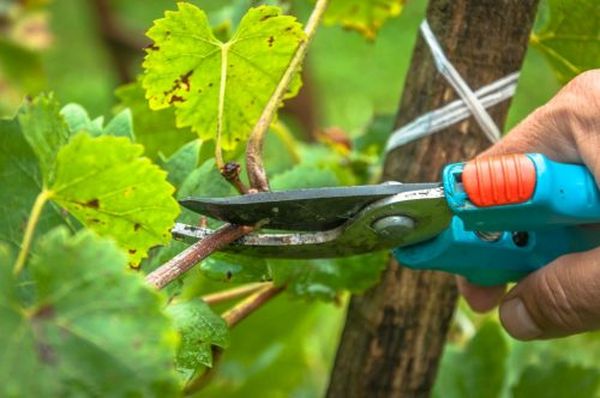
How to prune grapes in summer to remove unwanted shoots? This green operation is well known to experienced gardeners. It consists of such stages as pinching the grapes (particularly the tops), removing side shoots, pruning, and thinning (removing foliage).
Topping
Pinching is an excellent stimulation of abundant fruiting. As spring approaches, the root system and aboveground parts of the shrub transfer accumulated nutrients to the growing points at the top of the shoots and inflorescences. Because of this, the flower clusters don't receive the necessary nutrients, and the flowers quickly fall off. This procedure helps to save the situation.
The tops of green shoots are usually pinched back to a length of 2 cm, grasping them with two fingers. After this stage, the shoots grow less vigorously for two weeks. Nutrients begin to flow to the inflorescences, stimulating excellent fruit set. Bush varieties with poorly developed and loose clusters require this procedure most.
Pinching out stepsons
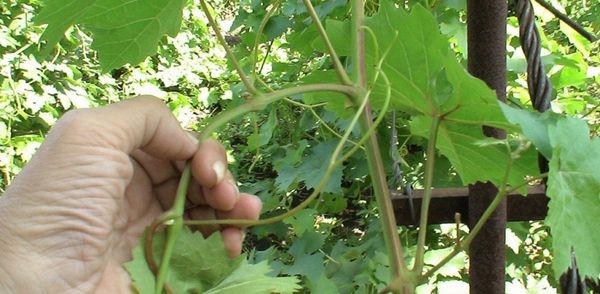
When a gardener plans to prune grapevines, they should also remove side shoots. In July, remove the lateral shoots that emerge from the axillary buds. Fragile branches are broken off by hand, applying pressure to the base with the thumb. It's important not to remove the shoot entirely, but to pinch it back so that 2-4 lower leaves remain intact. Pinching out the side shoots leaves no wounds.
Bushes also require staking in July. It's recommended to check the bushes once a week for the next batch of shoots. Each new shoot growing on the plant two days after the previous staking should be removed. Those that appear on fruiting bushes are broken off when the buds reach 2 cm in size. Lower shoots should be removed, leaving those needed to maintain the bush's shape intact. The second time, shoots are removed when fruiting shoots reach 8 cm in length.
Weak and sterile shoots must be removed.
Two shoots should be left on replacement branches. For table varieties, up to eight shoots are left per linear meter of trellis. Large-fruited varieties require a single lower inflorescence located at the base. Industrial varieties do not require pruning.
Coinage
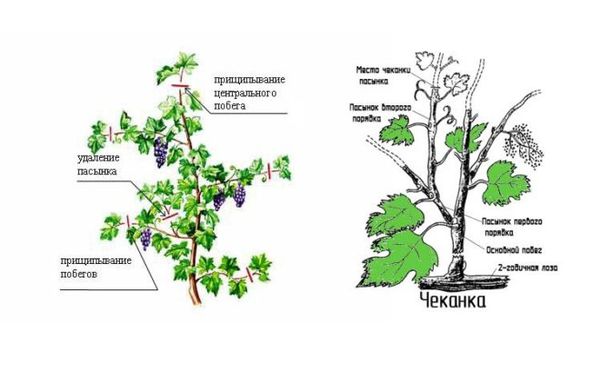
Grape pruning is a process that involves removing the unripened upper parts of the shoots. The cutting is done down to the point where the first leaf grows. Unlike pinching, the apical shoot is trimmed back to a length of up to 40 cm. Pruning promotes faster ripening of the berries by stimulating proper nutrition in the bunches.
How to prune the plant? Low-growing shrubs whose clusters are not prone to shedding require little or no pruning. Vigorous plants with late-ripening fruit require pruning. The effectiveness of this procedure is particularly noticeable to gardeners who irrigate vineyards. Pruning, performed in the northern regions of the country, helps the shoots mature properly. After this pruning stage, no more than 14 leaves should remain on the shoot.
The procedure is carried out with a disinfected instrument - a sharp pruning shears or knife.
Lightening
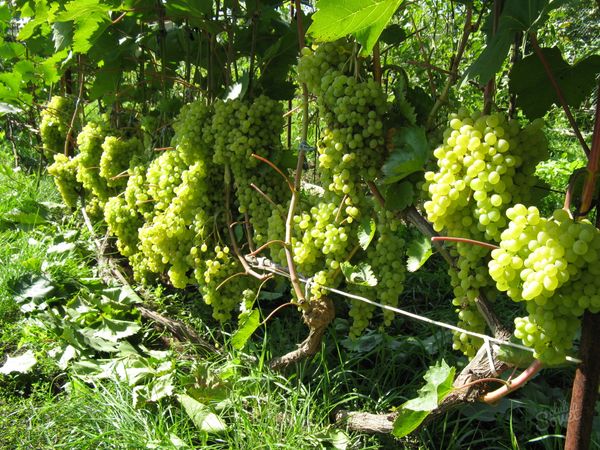
Pruning grapevine leaves, or thinning them, is important for creating ventilation throughout the entire vine. However, each gardener must determine for themselves whether their grapevine requires this procedure. When should the leaves be plucked? For example, in temperate climates with short, cool summers, the procedure is scheduled for July. Five to ten leaves should be removed from the shoot where the grapes ripen. This will allow the vine to receive more sunlight and ensure fresh air circulation. Thinning also helps prevent diseases common to the vine.
Aftercare
How should you care for grapes after all pruning steps have been completed? Water each vine with 10 liters of water. Afterward, loosen the soil. To retain maximum moisture and avoid frequent weeding, mulch. Fertilize the vineyard with superphosphate, ammonium sulfate, and ammonium nitrate.
To prevent fungal infection, the shrub is treated with a fungicide. If gray mold is detected during inspection, treatment is carried out with potassium permanganate. Baking soda, a folk remedy, is also effective.
Video: "Summer Pruning of Grapes"
This video will show you how to prune grapes in the summer.