
7 Key Secrets to Successful Grape Growing
Content
Selecting a site for planting
Grapes aren't a crop that can be planted anywhere. A quiet, sunny location protected from drafts and cold winds is recommended. An area near buildings is ideal for growing grapes, as this will provide additional warmth at night and shelter them from the wind. A south-facing slope is also a good choice. Planting grapes near trees or other tall plants is not recommended: firstly, grapes will ripen poorly in the shade; secondly, they will lack mineral nutrients.
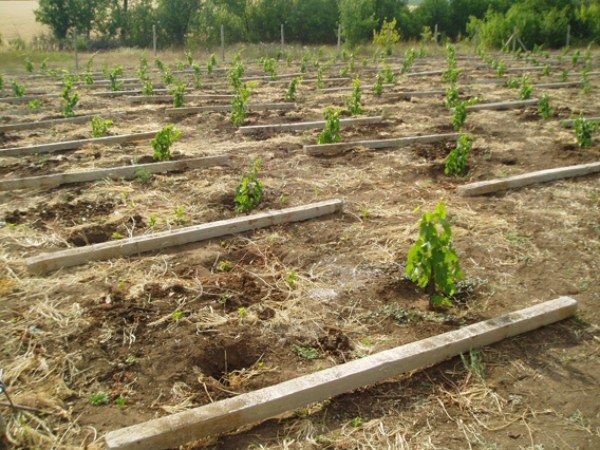
Sometimes gardeners grow grapes along the roadway—this placement is possible if there's not enough space on their dacha plot. In this case, it's important to ensure fencing to minimize dust exposure.
Since grapes have a well-developed root system, which reaches 2 m during plant growth, groundwater must be at an accessible level.
Selecting a regional variety
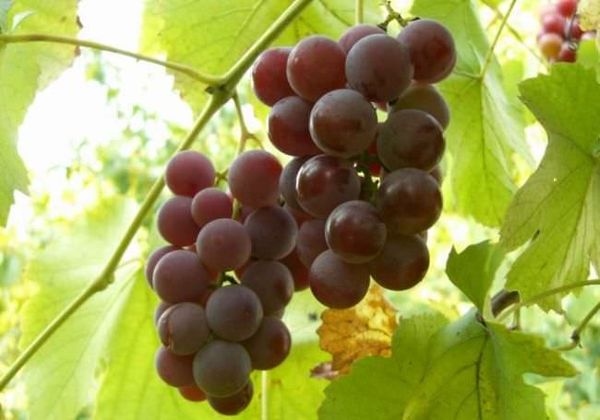
Don't buy a grape seedling of any grape variety you like. You need to pay special attention to this issue, as not all varieties thrive in different climate zones. Check with nurseries to find out which varieties thrive and produce best in your area. You might want to ask your neighbors, who have been growing grapes for years, which varieties are resistant to pests. The most easy-to-grow and popular varieties include Lydia, Moldova, Isabella, and Arcadia. But if you want to grow grapes for the purpose of making wine, then it is better to pay attention to special technical varieties.
Light access and mode
The quality of the future harvest depends on how much warmth and light the grapes receive. Therefore, it's important to know how to plant grapes correctly to ensure these basic conditions are met.
Plant the bushes so that there's at least one meter between them. Grapes grow best in a north-south line. If this isn't possible, you'll need a reflective screen, which will also serve as wind protection.
Pay special attention to watering; the plant's robust root system is sensitive to excess moisture. During the first year, intensive watering is required, especially if high temperatures persist for a long period. Use 10 liters of water per watering. After the water has completely absorbed into the soil, thoroughly loosen the soil to allow air to reach the root system.
Pruning and shaping
There's a fairly simple method for pruning and shaping grapevines, called "Guyo's method," suitable even for beginners. During pruning, three main shoots formed during the current year are left. One shoot is pruned short, leaving three buds, and the remaining two are pruned long, with six to eight buds for future fruiting. After a year, the long shoots that have already produced fruit are completely removed, leaving three more shoots on the short vine. This process is repeated annually.
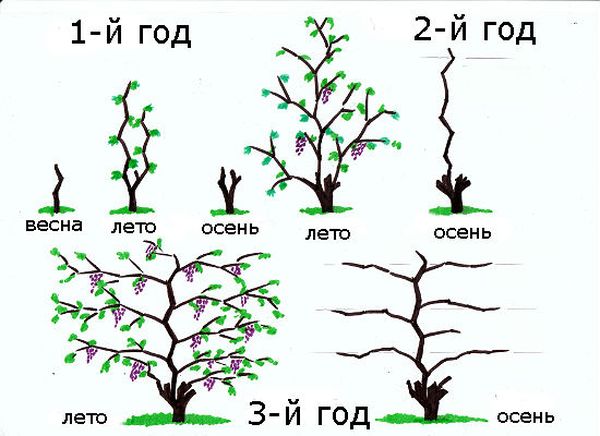
It is worth remembering that pruning should not be done in the spring, since the plant is in a growing state and active sap flow is taking place.
Crop regulation
One of the most important questions for gardeners is how to grow grapes in their garden for maximum yield without harming the plant. Unfortunately, the assumption that the more shoots left, the more berries I'll harvest, is misguided. The plant is unable to support the enormous weight of a mature fruit vine; it quickly begins to break, weaken, and become diseased. The length and number of shoots are regulated by pruning, but this procedure is highly individualized for each variety. The optimal pruning for any variety is medium—when 30–35 buds remain on the young vine.
With proper care, a single grape bush can yield up to 50–70 kg of fruit. In some cases, harvests of up to 100 kg of fresh berries have been achieved.
Rational application of fertilizers
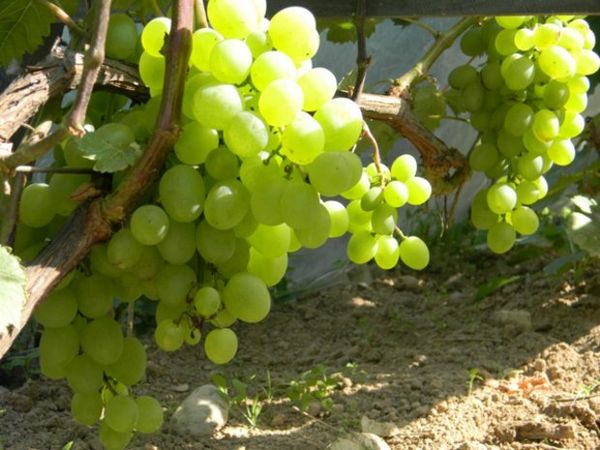
The desire to achieve a bountiful harvest through supplemental feeding is perfectly normal, but overdoing it with mineral fertilizers should be done in moderation. Fertilizers should be applied in small doses and systematically. In the spring, immediately after the grapes have opened, add minerals containing phosphorus, nitrogen, and potassium to the soil, after which it is recommended to sprinkle the area around the trunk with fertile soil.
A week before flowering, repeat the feeding, but follow with generous watering. The final treatment is performed during the flowering period. It's best to use a complete fertilizer, purchased from reputable specialty stores.
Invisible dangers
Invisible dangers include pests and diseases, which are extremely difficult to avoid. When temperatures drop below 15°C, spray the plant every 10 days. Experienced plant breeders offer recipes against fungal diseases that contain natural ingredients.
For example, add chopped grass clippings to a bucket of water, then add one glass of kombucha infusion, then let the solution sit for two days until it becomes cloudy. Dilute the concentrate with water at a ratio of 1:7 and spray the grapes 1-2 times a week during the growing season.
If the planted grapes look unhealthy or have started to turn yellow prematurely, this indicates a lack of micronutrients.
Video: How to Grow Grapes
In this video, a specialist will talk about grape growing techniques.