
Why do grape leaves turn yellow and how to prevent it?
Content
How to determine the cause
Understanding why grapevine leaves are turning yellow requires assessing all possible factors that could negatively impact the plant. Often, yellowing and drying leaves are the result of improper summer vineyard care. In any case, if your plant has suddenly changed leaf color, you need to determine the cause as soon as possible.
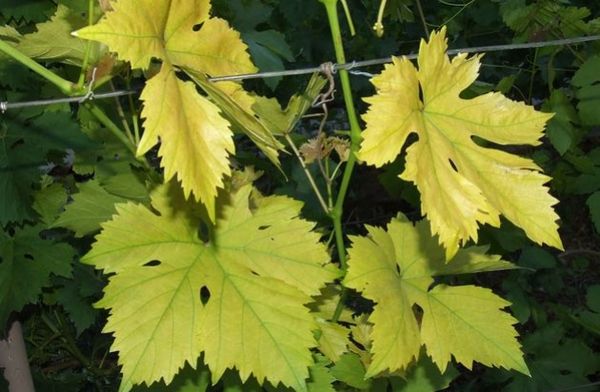
Among the most common reasons for the appearance of yellow leaves on a bush may be:
- Damage to the bush's root system. This is often caused by small rodents. This means the plant is deprived of the nutrients it absorbs best through the soil. This can cause the leaves to turn yellow and dry out;
- Insects. Yellowed grape leaves are often the result of entire colonies of pests. These small, sucking pests are invisible to the naked eye. This is why they can cause serious damage to the plant before you even realize it needs to be sprayed. This is where the spots on the leaves come from.
- Viruses. Bacterial and fungal diseases can destroy your grape vines. Typically, they begin with discoloration of the leaves and berries.
Even a beginner can understand why grape leaves turn yellow. The key is to properly care for the plants and inspect them regularly. It is recommended to treat any visible mechanical damage and promptly remove all unnecessary shoots and leaves. Moreover, this list does not end with the reasons for the appearance of yellowing on grape leaves.
Lack of fertilizers
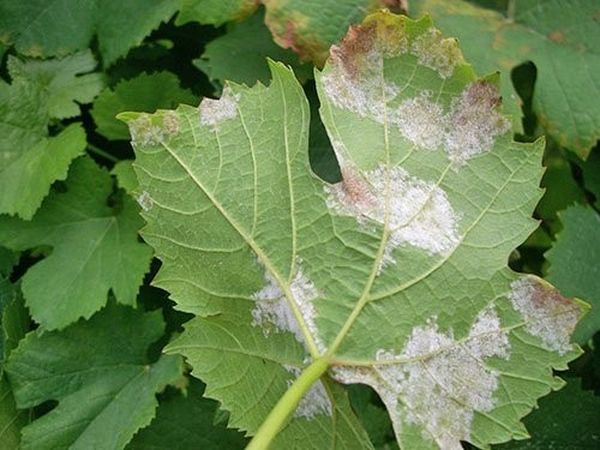
Leaves turning yellow and falling off can sometimes be caused by improper fertilization or a complete lack of it. If you neglect fertilizing and the soil contains too little nitrogen, this will soon affect the grapevine's foliage. It will turn lemon-colored, curl, dry out, and fall off easily. Replenishing the nitrogen deficiency in the soil is essential. If you don't want to buy store-bought chemicals, add chicken manure or poultry manure to the soil.
Chlorosis
It's quite difficult to immediately determine why grape leaves turn yellow. One cause of chlorosis is a disruption of the plant's vital process of photosynthesis. This occurs when the plant's leaf blades produce insufficient chlorophyll. Low iron levels in the grape leaves also contribute to this problem.
Infectious
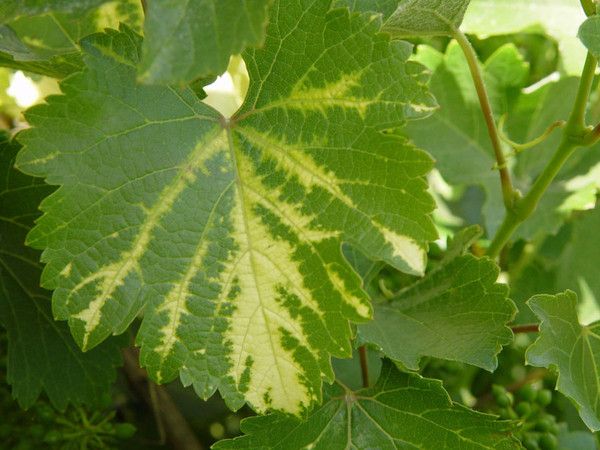
What should you do if your grapevine leaves are noticeably lighter? Infectious chlorosis may be the cause. This disease is generally caused by a lack of iron in the plant's leaf blades (this element is essential for chlorophyll formation). A yellowish tint to the leaves is one of the first symptoms of the disease.
Interestingly, the bushes are affected through the nutrient system. If no action is taken promptly, the entire bush will be damaged, from the roots to the branches. Furthermore, grapevines typically develop side shoots with rather small leaves.
Unfortunately, treating yellow leaves on a bush affected by infectious chlorosis is pointless. The only thing you can do is uproot the bushes as soon as possible, disinfect the soil, and remove nematodes that will further spread the disease. Even if you've lost a truly valuable and rare variety, propagating it in an attempt to overcome the disease is strictly prohibited.
Non-infectious
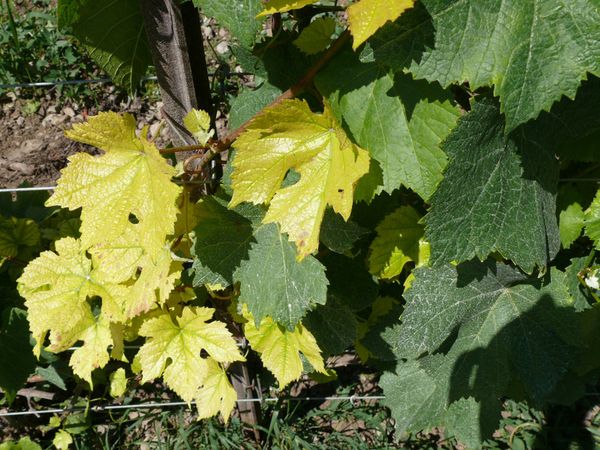
Yellowing leaves on home-grown grapes are often caused by non-infectious chlorosis. It also results from disruptions in photosynthesis. This condition typically develops when the vine's growing region experiences unfavorable climatic conditions.
However, mistakes in vineyard care are the most common cause of non-infectious chlorosis. Remember: you can prevent this disease by avoiding planting grape vines in soils with high lime content, saline soils, or heavy soils.
Treatment
Spots on the leaves are just the beginning of chlorosis.
Treatment should begin immediately at the first signs of symptoms. For example, ferrous sulfate has proven highly effective. To do this, dilute 200–300 g of ferrous sulfate in one liter of water. Spraying the shrub is not necessary. Make small holes in the soil and pour the nutrient solution into them. You can also treat the shrubs with fertilizer in June–July. It's important that the fertilizer mixture contains iron.
Prevention
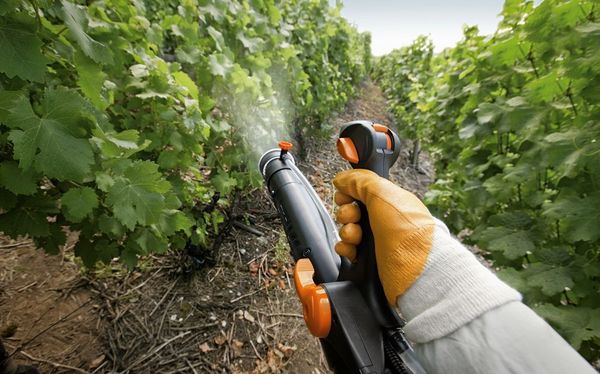
The first thing you should pay attention to is the need for soil drainage and mulching. The substrate should be well-drained and moisture-retaining. When fertilizing, it's best to choose physiologically acidic fertilizers. To reduce the risk of chlorosis, it's best to purchase varieties with good resistance to this disease.
Whatever you decide to do to treat your grapevines, begin immediately after noticing the first symptoms of the disease (for example, noticeably lighter foliage). Only then can you expect a complete result.
Video: "Grape Diseases and Their Treatment"
This video will tell you about the diseases that grapes can get and how to treat them.