
What do brown spots on grape leaves mean?
Content
What causes brown spots?
Brown spots appear on the upper and lower sides of leaves as a result of a fungal disease commonly known as "olive spot," but scientifically known as Alternaria wilt. This is a very dangerous fungus for vineyards. The disease can be recognized by the spots on the crown, and the grape leaves become covered with white spots with a rusty tint along the edges, as if they have been scorched. The berries also become unpalatable. Sometimes, red, distinct spots can be seen on the grape leaves. After some time, the affected areas turn into dark spots, become covered with brown crusts, and dry out.
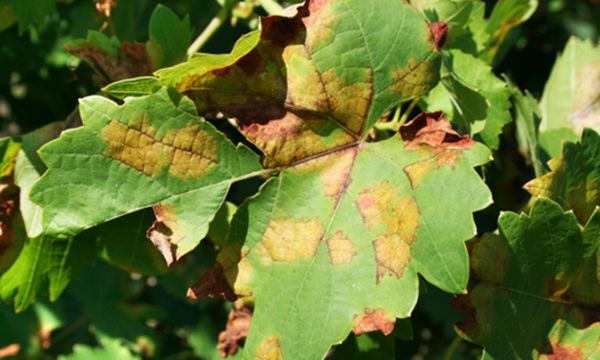
This disease spreads very quickly in hot, humid weather. The first signs appear in the spring, when an olive-colored coating is clearly visible on the underside of the leaf. The spots are up to 1 cm in size, and the fruits become misshapen and wrinkled. In the summer, the fungus can be recognized by the shoots, which remain green and whitish for a long time.
Alternaria most often affects hybrid varieties. The most critical period of disease control begins after the first two leaves emerge. Then, at temperatures of 25°C and high humidity, the buds may die off, and under unfavorable conditions, the leaves become completely covered with a rusty coating, dry out, and fall off. However, the fungus continues to thrive on the dry parts.
What should you do if your grape leaves turn black?
Treatment of grapes
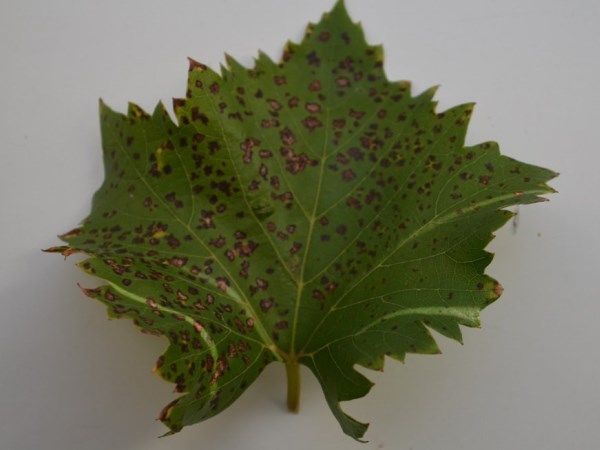
If the first signs of disease appear on the grapevine's crown, look for the root cause. Grapes receive their nutrition from the root system, and as we know, the soil harbors many fungal diseases that can destroy the harvest and even the plant itself. The first signs of the disease appear on the grapevine leaves, so every vineyard owner always carefully monitors the green crown and, upon noticing a few early symptoms, immediately combats the fungus. Brown spots on grapevine leaves are not so serious—they can and should be treated.
There are several ways to treat spots:
- mechanical;
- chemical.
The first proven method is to prune the bush and burn the leaves where brown spots have appeared. This is intended to prevent the spread of pathogens. Not everyone is prepared to take this drastic step. In the age of advanced gardening technology, gentler methods are available that can help treat dark spots, white streaks, or reddish streaks.
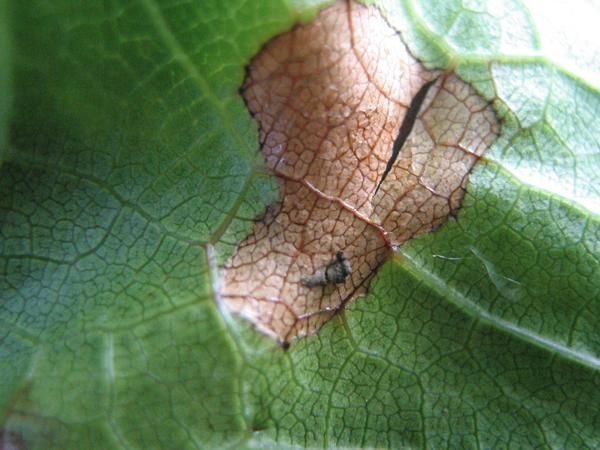
Treating leaves with copper-containing preparations makes it possible to protect the plant not only from the consequences, but also from the causes.
Affected areas should be treated with a spray bottle. The sprayed bush may develop light streaks, but this is nothing to worry about. It's important not to overdo the treatment. Treated areas should be monitored. Repeated treatments that fail to produce any results indicate the procedure is ineffective and should be discontinued.
Prevention
It's better to prevent disease from developing than to treat a problem that's already progressing. Fungal diseases like Alternaria leaf spot, which causes white spots on grape leaves, are easily treated with Trichodermin, which is harmless and doesn't affect the taste or smell of the fruit.
Bushes should be treated every 10-20 days, starting when buds open, in the evening or on cloudy days. It's best to do this after rain. Another product with a similar composition is Fitosporin. It's applied in three stages: first on the buds, then on the inflorescences, and after flowering.
Video: Protecting Grapes from Diseases
This video will teach you how to protect grapes from diseases.