
What is the best way to treat grapes against gray and white rot and when?
Content
White and black rot
To get rid of rot in vineyards, it's first necessary to understand the different types of this disease and the symptoms that appear on affected plants in each case. For example, white rot most often affects vines during the period of active berry ripening.
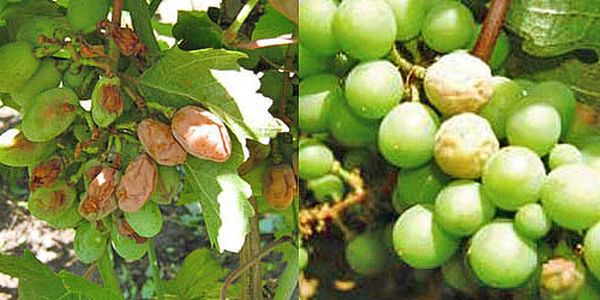
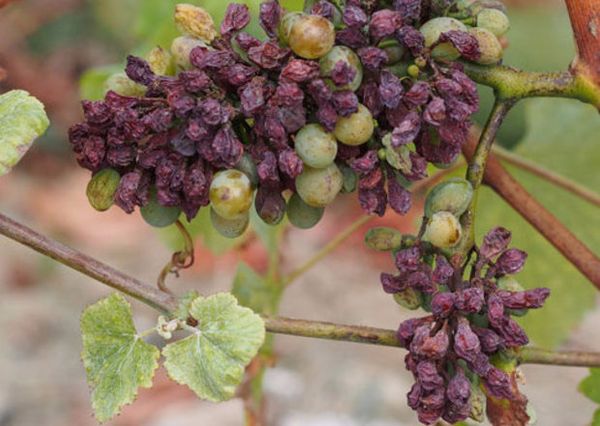
Hot weather contributes to this. The grapes take on a purple tint, turn brown, and dry out. The leaves turn a dirty green, but they don't fall off the branches. Even an inexperienced winegrower will notice pycnidia (pimples) appearing between the ripening berries. As the disease progresses, the fruits acquire a light, almost white hue.
The bush may also need treatment for black rot. In this case, the infection manifests itself as follows: initially, a small dark spot with a white dot in the center appears on the berry, then it grows and covers the entire grape. As the disease progresses, the grapes turn black and gradually dry out. If left unharvested, they will eventually fall to the ground, but even there they will remain a source of infection. The leaf blades also become covered with black rot. The problem area appears as a small cream-colored spot with a green border.
Causes of occurrence
To effectively combat this disease, it's important to understand its origins. Interestingly, white rot attacks grapevines after heavy hailstorms or when unripe berries are damaged by heat and scorched. It also happens that grapevines become so densely populated that white rot soon develops.
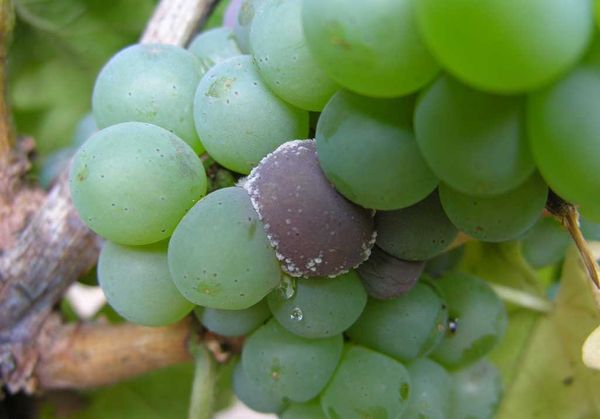
Black rot, however, only develops in a humid environment. Otherwise, the fungus simply won't penetrate the fruit. Bushes growing near bodies of water are particularly susceptible to this disease. Sometimes, infection occurs after mechanical damage to the bush. If dew falls at night, this creates ideal conditions for the fungus to penetrate the host cells.
Treatment
White and black rot of grapes are very difficult to treat. Moreover, experts don't always recommend that winegrowers purchase expensive chemical treatments. They are generally ineffective. In general, it's much easier to prevent a fungal disease than to eradicate it. For grapes, it's best to adhere to the following guidelines:
- It is not advisable to plant European varieties in heavy soils that allow virtually no air to pass through;
- When fertilizing grapes, it is better to use mineral fertilizers rather than organic ones;
- If leaves or fruits fall from the branches, it is recommended to get rid of them immediately, as they may be the first to be affected by the fungus;
- If a bush is severely affected by rot, it should be uprooted and discarded to prevent further spread of the disease.
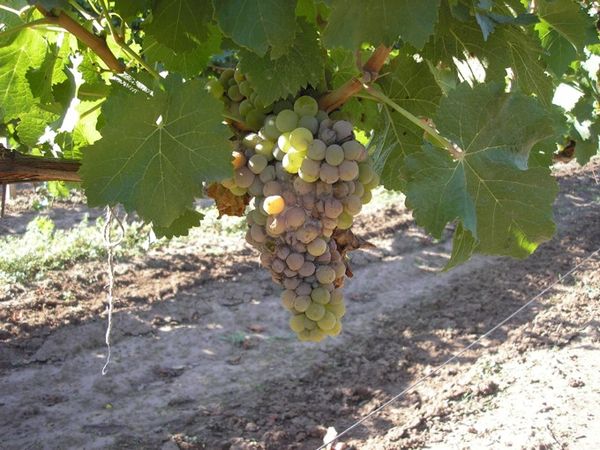
Treating grape bunch rot is a labor-intensive process. What should you do in this situation? You can use chemicals or combat the problem yourself. However, it's important to learn how to prevent this disease in any case.
Gray mold
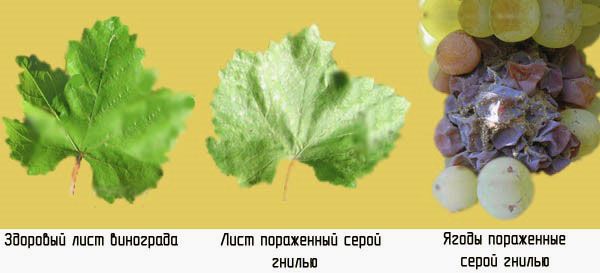
Gray mold on grapes is another fungal disease that can cause serious damage to the entire grapevine. However, it most severely affects the grapes. Interestingly, gray mold appears as a fluffy coating that becomes dusty when touched. This spreads to other parts of the grapevine. The grape clusters themselves will lose not only their aesthetic appearance but also their flavor.
Causes of occurrence
Before purchasing treatments for gray mold on grapes, it's important to understand where this disease originates. High temperatures and humidity are ideal conditions for this fungal growth. Under these conditions, combating gray mold on indoor grapes becomes more challenging, as the entire vine is affected.
Treatment
If gray mold has appeared on grapes, how can I combat it effectively? Gray mold can be cured by treating the vines from planting until harvest. A solution of liquid soap can help combat this fungal growth. However, it must be sufficiently concentrated to be effective. Alternatively, you can use Bordeaux mixture, which can also be mixed with liquid soap. If you prefer to use chemicals, benomyl or cercobin are recommended.
For effective treatment, it is very important to promptly detect the symptoms of the disease and determine the causes of damage to grape bushes.
Effective prevention
Knowing why your homegrown grapes are rotting can help you get rid of fungal diseases. However, the simplest and most cost-effective treatment is timely prevention. For treatment, the following procedures should be followed:
- It is recommended to prune and shape the bushes at least once a season;
- in spring and autumn, you should not neglect fertilizing the plant;
- During the growing season, be sure to spray the bushes with either home remedies or professional preparations;
- If individual fruits are already rotting, they must be removed.
Treat your vines for fungus at an early stage if you want the bush not only to survive this disease, but also to continue to bear fruit generously.
Video: "Dangerous Grape Diseases and Their Treatment"
This video will tell you about the dangerous diseases that grapes can suffer from and how to treat them.