
Description and treatment methods for the most dangerous grape diseases
Fungal
Even the most delicious and easy-to-care-for grape varieties aren't immune to fungal diseases. Fungal diseases of grapes can destroy an entire vine if left untreated. The most common are mildew, powdery mildew, and late blight. Most of these affect the grape berries (capable of destroying the delicious berries), although the leaves and vines are also affected. Sometimes, as with late blight, the roots are affected (late blight is considered one of the most common and dangerous diseases).
There are varieties resistant to diseases caused by fungi. The most resistant are considered to be Timur, KoKl Bely, Vostorg, Alden, Fredonia, and others. Of course, controlling grape diseases is labor-intensive (most fungal diseases, such as late blight, are treated with fungicides), but it is important to know how to combat each of them.
Mildew
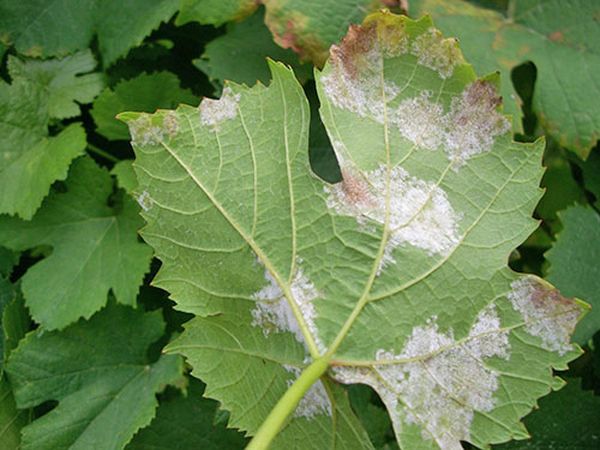
The disease is dangerous because it affects absolutely every part of the grapevine. Identifying a vine infected with the fungus is quite simple: oily spots resembling islands appear on the grape leaves, which then spread, occupying an ever-increasing area. When a leaf is completely infected, it dries up and falls off. The same fate awaits the remaining parts of the grapevine (fruit and vine) affected by the spots.
How to treat stains? Bordeaux mixture, copper oxychloride, and "Hom" and "Oxyhom" solutions are used to combat them. Unfortunately, there are very few varieties that are resistant to this disease.
Oidium
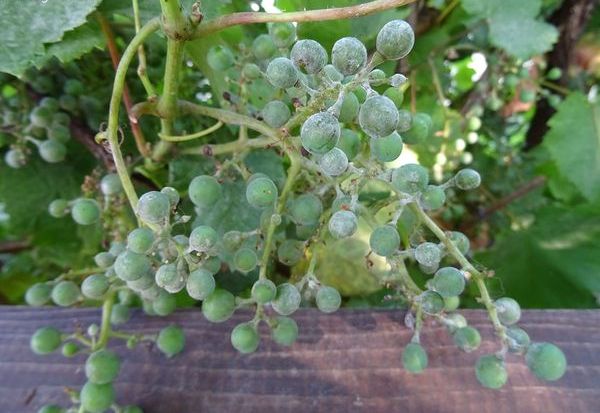
The plant's leaves become covered with an unpleasant white coating, which can be spotted with black spots. Over time, dark spots appear on the vine, and the buds that have formed drop off. The main symptoms of this disease are leaves covered in a white, dust-like coating.
How to treat powdery mildew? Treat the affected plant with a colloidal sulfur solution and Acrobat MC and Cabrio Top.
Anthracnose
Dry, dark brown spots first appear on leaves and shoots, and then holes form in their place. The affected leaves and shoots dry out and crack. The berries also crack and dry out very quickly, and entire clusters can dry out.
How to cure this grape disease? We combat this infection with the fungicides "Skor" and "Arcerid." To prevent other vines from becoming infected, remove all dried fruit, leaves, and branches, then burn them.
Alternaria
First, numerous light-colored spots appear on the leaf surface, and then the entire leaf turns black and becomes covered in mold. Mold on grapes is one of the most common problems. The fruit also becomes infected with Alternaria wilt, becoming completely covered in a film and shriveled.
We're saving the plant with Quadris and Skor. To prevent the infection from spreading from diseased plants to healthy ones, remember to remove fallen leaves and dried shoots.
Apoplexy
Unfortunately, this disease cannot be cured. The plant simply begins to rapidly wither without any warning. To protect the plant from diseases like apoplexy, follow proper grape care and boost its immunity.
Cercospora leaf spot
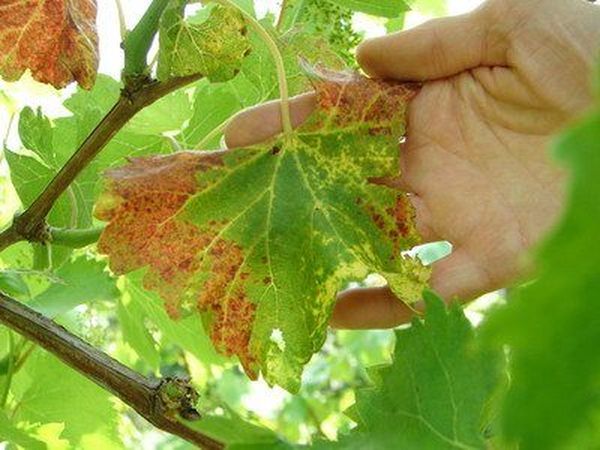
Small brown spots begin to appear on the underside of the leaves, which soon dry out completely. The fruits themselves also dry out and soon fall from the bush along with the affected foliage.
This disease is treated with Bordeaux mixture. If this is unsuccessful, the bush should be removed.
Escoriosis
Another name for the disease is grape black spot. Dark spots begin to spread across virtually the entire above-ground portion of the grapevine. Black spot is an extremely dangerous disease; if left untreated, the plant will soon turn black and wilt completely.
Grapevines should be treated as soon as the first symptoms are noticed. The plant should be treated with Bordeaux mixture, and all affected areas should be removed and burned.
Gray and white rot
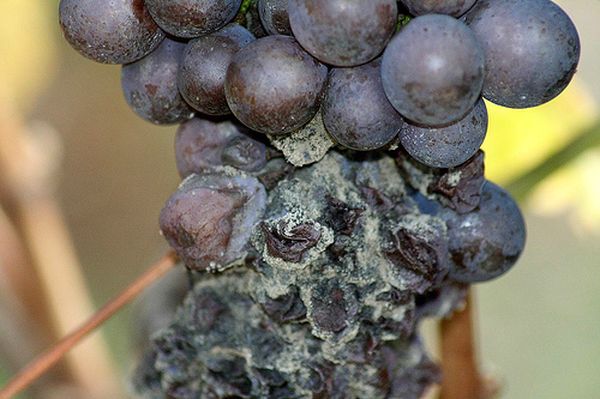
This disease progresses extremely quickly: in just a few hours, it can cause irreparable damage to your vineyard. With white rot, the fruit shrivels and develops a whitish coating. With gray rot, the fruit bursts, followed by a very unpleasant gray coating.
The control methods are simple: use Fundazol (for white rot) or treat the bush with a soda solution (for gray rot).
Armillariasis
This is a root rot that, unfortunately, has no cure. Because the roots are affected, the plant dries out rapidly. To protect your vineyard, dig up and burn the affected vine, and treat the soil with fungicides to prevent the spread of the disease.
Bacterial
Bacterial diseases of grapes are dangerous because they are virtually impossible to cure, but you can do everything possible to prevent them from affecting your vineyard. Let's look at bacterial diseases of grapes and their descriptions.
Bacterial cancer
An incurable disease. Tumor-like growths form under the bark, which soon burst. As a result, the plant's bark cracks.
To protect the plant from the disease, it's important to cover it well during frosts and treat cuts. If the disease has only just begun, remove all affected areas and treat the wounds with garden pitch.
Bacteriosis
Brown or pinkish spots appear on the fruit, which soon cause the berries to dry out. This condition can be caused by sunburn.
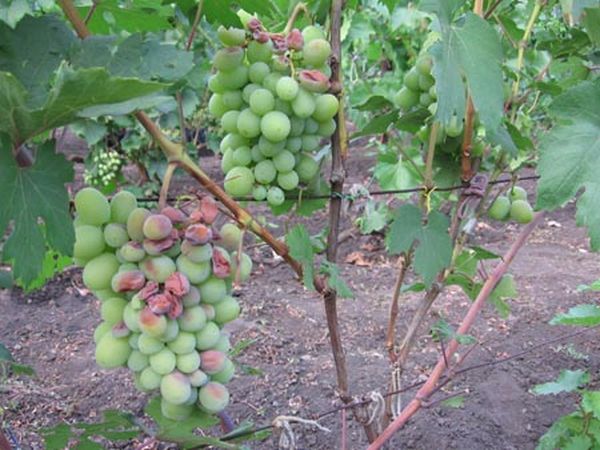
It can only be controlled in the early stages by removing all damaged berries. Care must also be taken to prevent the plant from getting sunburned.
Bacterial necrosis
The fruit begins to develop dark spots, and the grapevine shoots quickly dry out. As soon as you notice these symptoms, remove the damaged areas and disinfect the wounds. If the disease hasn't progressed too far, you may be able to save the plant.
Sour rot
The berries turn brown and begin to rot. If the affected fruits are not harvested, the entire crop will be lost. Insecticides are also used to combat the effects of the disease.
Viral
Viral diseases are also virtually untreatable. The only effective treatment is preventative measures or the purchase of resistant grape varieties.
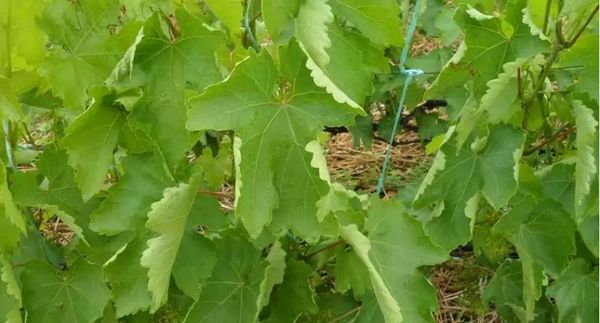
Marbling of leaves
The leaves become pale and appear "marbled." They become very brittle, easily falling from the plant. Remove all affected leaves immediately. If this doesn't help, remove the entire plant.
Vein mosaic
Light green stripes, spots, or veins begin to form along the leaf veins. The bush stops growing, and berries and shoots may fall off en masse. As in the previous case, remove the infected leaves immediately. However, saving the grapevine is usually almost impossible.
Leaf vein necrosis
The leaves of affected plants darken, curl, and wilt. The vine itself stops growing and begins to wither completely. Unfortunately, there's nothing you can do about it, so simply remove the infected plant as quickly as possible to prevent your vineyard from becoming jeopardized.
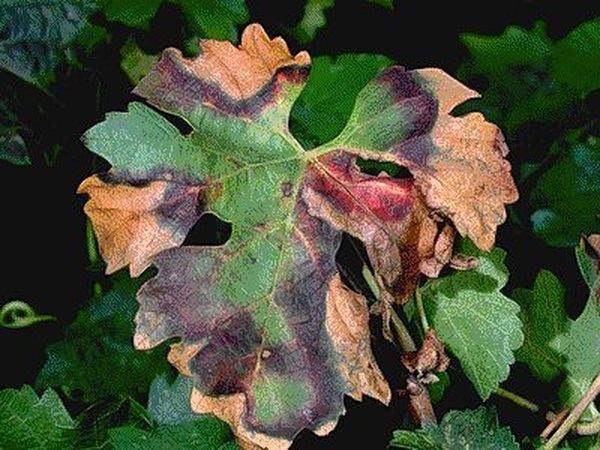
Chlorosis
Grape leaves rapidly turn pale, and photosynthesis is disrupted. Shoot growth slows significantly, and following the foliage, shoots turn pale and fall off.
You can try to save the plant by treating it with ferrous sulfate, but unfortunately, this method offers no guarantees. You can also use a product called Brexil.
Short-knotted
Infected grapevines develop leaves resembling parsley: uneven in shape and covered with yellowish spots. The shortened nodes may vaguely resemble chlorosis. Affected leaves dry up and soon die, followed by grape berries falling off.
There is no cure for short-node vines, but you can protect your vineyard by planting healthy seedlings and treating the soil against nematodes, which spread the disease.
Video: "Treating Grape Mildew"
This video will show you how to treat grape mildew.