
Causes of white and gray plaque on grape leaves
Content
Signs of infection
The appearance of a white or gray coating is a symptom of a fungal infection. White coating on grape leaves is most often a sign of powdery mildew (including downy mildew). If left untreated, the infection will spread, affecting all parts of the plant. This can result in reduced yields or even death of the plant.
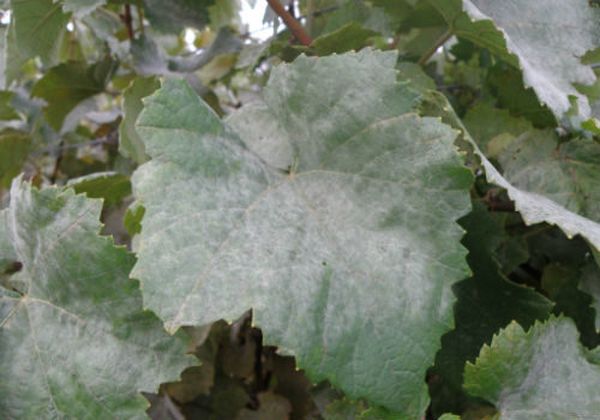
Carefully examine the grape fruits and leaves to understand what disease you are dealing with.
Infection with the harmful fungus oidium (also known as powdery mildew) appears as fuzzy white spots on the berries and leaves of the plant. Over time, the light spots darken, and the leaves dry out, but they remain on the vine, continuing to spread fungal spores.
If the white coating appears only on the undersides of the leaves, with corresponding yellow, oily spots on the top, it's downy mildew. The spots gradually merge into one, and the affected leaf turns brown, dries up, and falls off. The disease affects all above-ground parts of the plant. The berries also become covered in a white coating. They gradually dry out, turning blue, then brown.
A gray coating indicates a gray mold infection. The infection begins at the bottom and gradually spreads upward. The fungus appears on leaves, inflorescences, green shoots, and grape berries, which take on a brown tint. Infected vines become covered with white or yellow spots.
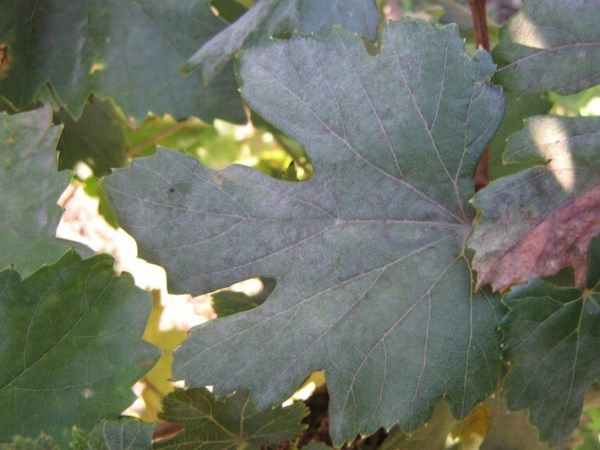
If the gray or silvery spots contain necrotic areas, it's most likely Alternaria wilt. As the disease spreads, spots also appear on the trunk. The berries become wrinkled and develop a metallic sheen. The disease may show little symptoms on the vine, but a few infected berries can cause rapid growth after harvest, causing spoilage during storage.
Reasons for occurrence
Since fungal spores are spread by wind and rain, it's impossible to completely prevent their appearance in a vineyard. However, this doesn't necessarily lead to infection. The disease most often manifests itself in poorly maintained and neglected vineyards.
Infection is facilitated by dense plantings, insufficient light, and insufficient fresh air (stuffy conditions are conducive to all types of fungi). Insufficient soil care may also be the problem. If there are weeds and last year's leaves under the bush, the risk of infection increases.
Plant immunity is often weakened by a lack of fertilizer or, conversely, an excess of it. Excess nitrogen is the most dangerous.
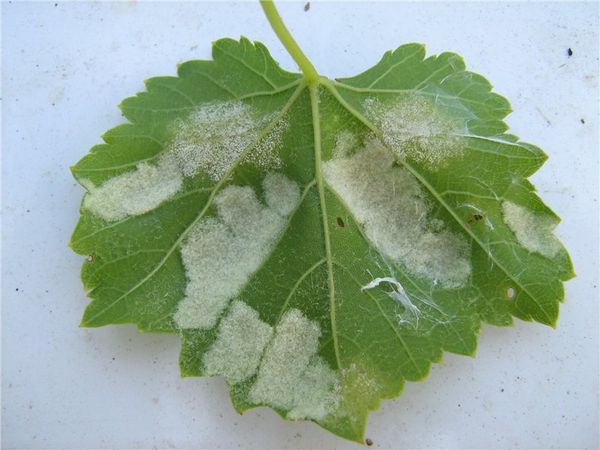
Regarding weather conditions, mildew and Alternaria prefer warm, damp weather. Rapid spread often begins after overnight summer rains. Odium is undemanding: it thrives in any humidity, and its favorable temperature range is from 5 to 35°C. Gray mold thrives in cool, damp conditions.
Methods of combating plaque
Now let's look at how to fight this or that infection.
To combat white bloom on grapes, whether it's powdery mildew or mildew, gardeners recommend first treating the bush with sulfur-containing products: fungi readily absorb it, but as a result of metabolism, it turns into hydrogen sulfide, which kills the mycelium.
For prevention, use a solution of 30–40 g of sulfur per 10 liters of water. If the disease has already manifested, it can be treated with a stronger concentrate: 100 g per 10 liters.
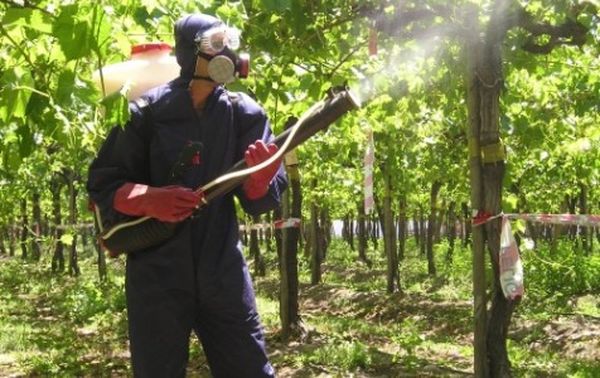
For the treatment to be effective, the temperature during processing must be at least +20 °C. Spray only before sunrise or after sunset, otherwise the solution can cause severe leaf burn. The infected bush should be treated every 10–20 days.
What should you do if the leaves have turned white, but the temperature is below the required level? Use colloidal sulfur.
When a white coating appears on the leaves, a 1% Bordeaux mixture can be used (a higher concentration will cause burns). It can be applied 6-7 times per season: the first time immediately after removing the covers, and the last time no later than 3 weeks before the harvest is ripe.
To control overwintered spores, use DNOC (1%) or Nitrafen (3%). Spray immediately after removing the covers.
Fungicides effective against powdery mildew include "Acrobat CM," "Skor," "Vitaros," and "Topaz." Two treatments are often sufficient. If the fungus has already covered most of the plant, four sprays can be applied at 12-15 day intervals. These treatments should not be carried out during the ripening period.
When spraying, it is important to pay attention to the back of the leaves as well.
If gray mold appears on bunches and leaves, treat with Topaz, Ronilan, Topsin-M, or Rovral. These treatments should be alternated, otherwise the fungus may develop resistance. If the gray mold covers the inflorescence, treatments containing captan, folpet, methylmethiram, or captafol will help. These should also be alternated.
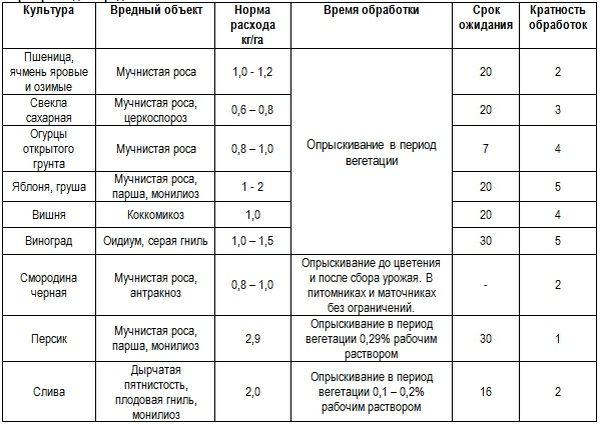
If necrotic spots of Alternaria appear on the plant, copper-containing products and fungicides containing mancozeb (Ridomil Gold or Ditan M-45) are used in the spring. These should not be used during harvest. After the berries have closed in the cluster, the plant should be sprayed with systemic fungicides such as Quadris or Skor every 10-14 days.
When using any drug, it is necessary to strictly follow the instructions and observe all necessary safety measures.
Prevention
To prevent any fungal disease, it's crucial to follow proper agricultural practices. Vines must be properly tied to ensure each receives sufficient light and ventilation. The soil beneath the bush must be regularly cleared of fallen leaves and weeds.
The plant must receive balanced fertilizers on time.
Check the bush periodically to notice the infection in time and prevent the moment when the plaque covers almost the entire plant.
Video: "Fighting Powdery Mildew"
Many plants face a dangerous disease called powdery mildew. But it can be controlled.