
Causes and treatment of grape anthracnose
Content
Description and signs of the disease
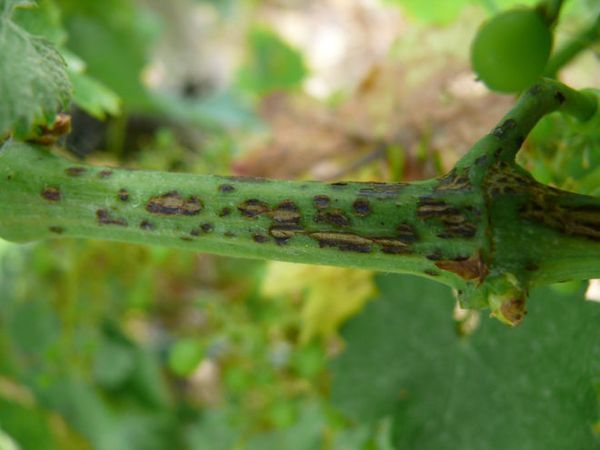
Anthracnose of grapes (also known as "bird's eye") is a common fungal disease in countries with hot and humid climates. The disease can quickly affect all parts of the plant, including young tissue. It typically appears on varieties resistant to mildew, as these plants are treated with fungicides less frequently than other varieties.
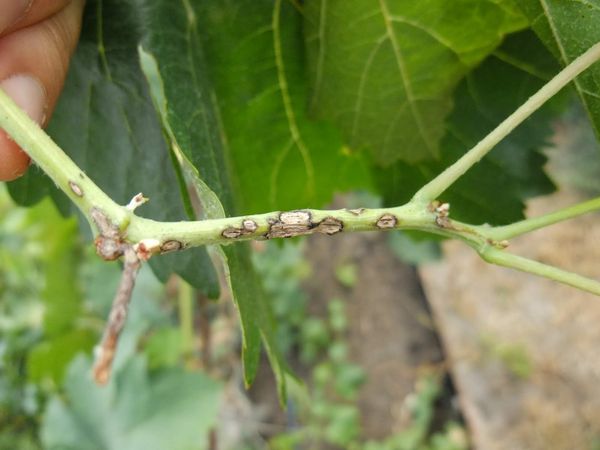
Anthracnose is a very dangerous disease, so as soon as you notice the first signs on your grapes, you need to begin treatment immediately. If you delay and do not take any control measures, the disease will destroy most of your vineyard.
The symptoms of this disease are as follows:
- small brown spots begin to appear on the leaves and shoots of grapes, which over time grow and merge;
- affected leaves and shoots begin to crack;
- the affected areas of the plant become very fragile, capable of breaking from one touch;
- the inflorescences also turn brown and dry out quickly;
- grape clusters die off completely or partially;
- Infected fruits undergo noticeable deformation and dry out quickly.
As we can see, anthracnose causes enormous damage to the plant, so when the first signs of infection appear on grapes, measures should be taken to combat the disease.
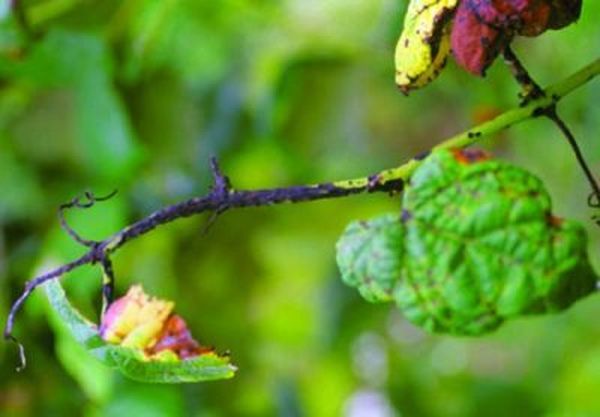
Causes of occurrence and harm to the plant
In general, the fungus itself can remain on grape leaves for quite a long time without causing any symptoms. Only when optimal conditions (suitable temperature and humidity) arise does it begin to develop. This usually occurs in the spring, when the air temperature rises to the required level (25–35°C).
The fungus itself may take a liking to your vineyard for several reasons:
- High amounts of precipitation. Since fungi reproduce very quickly in high humidity, the risk of disease increases with high amounts of precipitation;
- Incorrect pruning of bushes. For example, if you used unsterilized instruments or failed to disinfect the cut areas, you'll likely soon face negative consequences;
- Mechanical damage to plant shoots. If broken branches and shoots are not removed promptly, the risk of anthracnose increases;
- insufficient amount of fertilizers containing potassium and phosphorus;
- too acidic or salty soil.
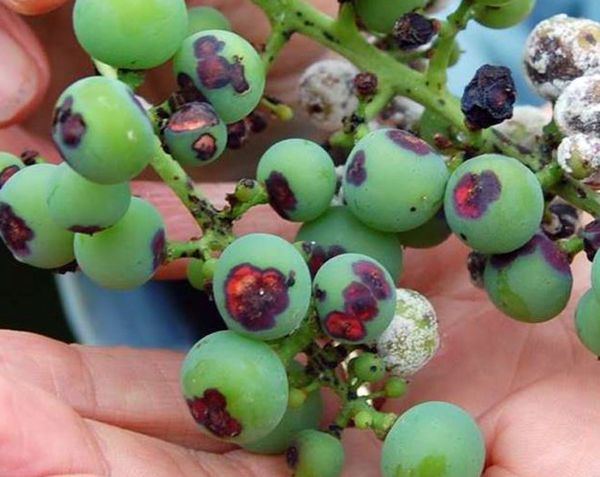
As mentioned above when we described the symptoms of the disease, the damage to the plant is enormous. Everything is damaged: leaves, shoots, and even the fruit itself, which becomes unfit for consumption. If the disease progresses, there's a risk of losing the vineyard entirely, as the wind easily carries spores from one vine to another. So, don't delay treatment—the disease won't go away on its own.
Treatment Features
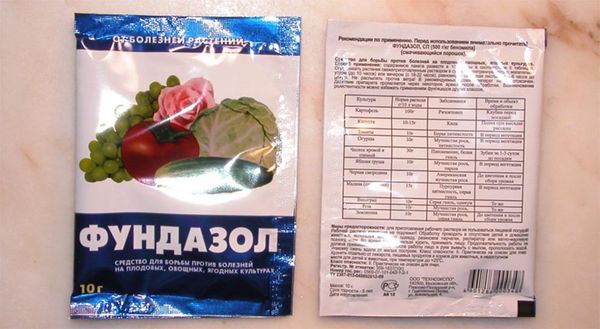
Once the disease has been identified, immediately remove all infected areas. They should be cut off and then burned. The remaining plant should be treated with special preparations. The most reliable method of control is the use of a fungicide. A fungicide is a special product designed to combat fungal plant diseases. There are a wide variety of products, but the following have shown the best results: Fundazol, Previkur, and Antracol.
For example, let's look at the instructions for the fungicide "Antracol." Although "Antracol" is primarily used to treat scab and leaf curl, it can also be used to treat this disease. So, dilute about 10 grams of "Antracol" in a bucket of water and spray the grapes with the fungicide after a few hours. One of the most significant advantages of this product is that "Antracol" continues to combat the fungus even after rain (it doesn't wash off the leaves).
Of course, you can just as easily purchase another suitable product, which can be recommended to you at a specialty store. Alternatively, you can use a well-known remedy – Bordeaux mixture. In this case, the grapes are treated twice: the first time with a 3% solution, and the second time (2-3 weeks later) with a 1% solution. The treatment should be carried out either early in the morning or in the evening, after sunset.
When treating with fungicides or Bordeaux mixture, be aware that fungus develops on the underside of the leaves. Therefore, spraying should be done primarily on the underside.
Prevention
We've already described methods for treating anthracnose, but when growing grapes, it's important to take all necessary measures to ensure this disease doesn't bother your plants at all:
- Provide the plant with regular ventilation. As we've already mentioned, fungus thrives in high humidity, so do everything possible to maintain optimal humidity levels.
- Do not overwater the grapes when watering.
- Feed the plant with the necessary fertilizers on time.
- From time to time it is worth wiping the leaves with a weak solution of potassium permanganate.
- When pruning branches and shoots, always disinfect your tools and don't forget to cover the cut areas with garden pitch.
- Regularly remove damaged, broken, or dried branches. After cutting them, don't throw them away; burn them to kill any potential fungus once and for all.
- Perform preventative spraying in the spring. Before flowering, treat the stems and leaves with a one-percent Bordeaux mixture and repeat this procedure two weeks later.
Video: "What is grape anthracnose?"
This video will tell you about grape anthracnose and its treatment methods.