
Growing large-fruited grapes in Novocherkassk's Anniversary
Content
General information about the variety
Yubiley Novocherkasska is a table variety developed by amateur gardener V.N. Kraynov through complex hybridization. The exact breeding material used is unknown, but experts speculate that the "parent pair" was Talisman and Kishmish Luchisty, as all three are closely related.
Description of the vine and bunches
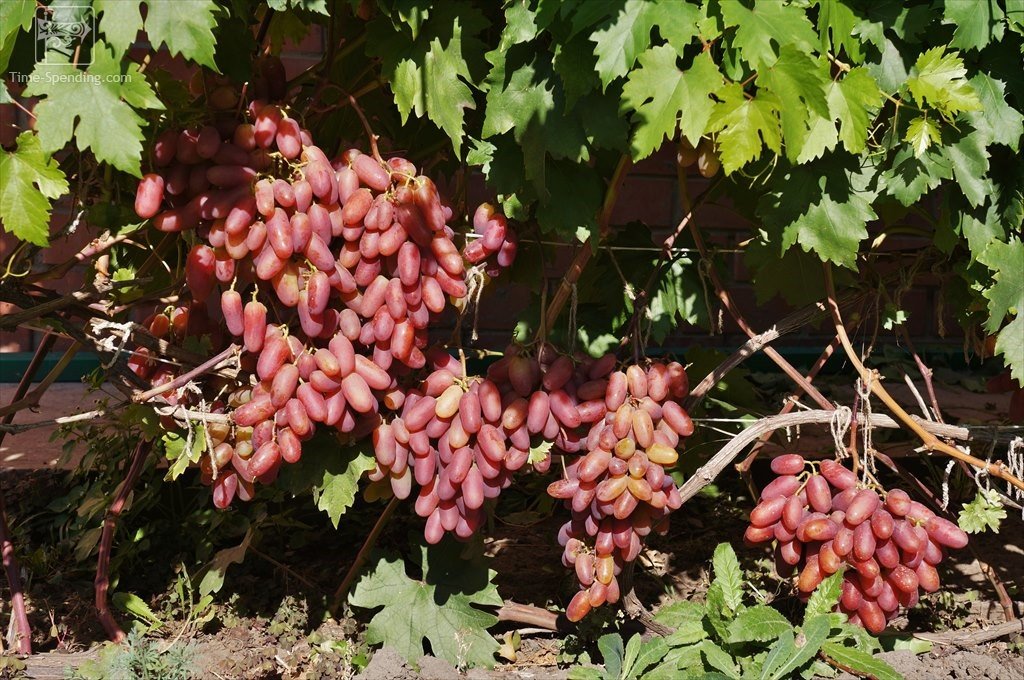
The bushes are massive, and the vines are characterized by vigorous growth. Already in the first year, the shoots completely cover the trellis and require shaping. The leaves are also large, rich green, moderately dissected, and smooth, with petioles that are not pubescent.
The vine blooms in early summer. The flowers are bisexual, so pollination occurs intensively, without the help of pollinators. Ripe bunches are cone-shaped, sometimes elongated-oval, dense and quite heavy, weighing about 1.5 kg, with some reaching 2.5-3 kg.
Description and taste of berries
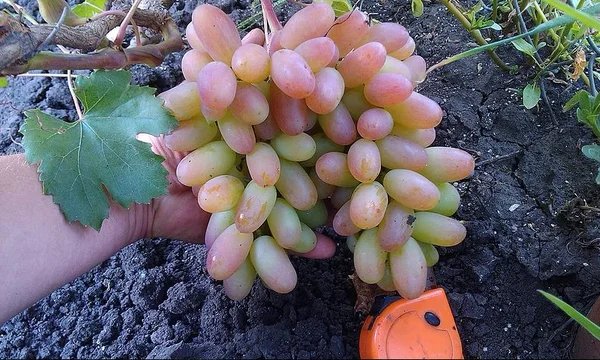
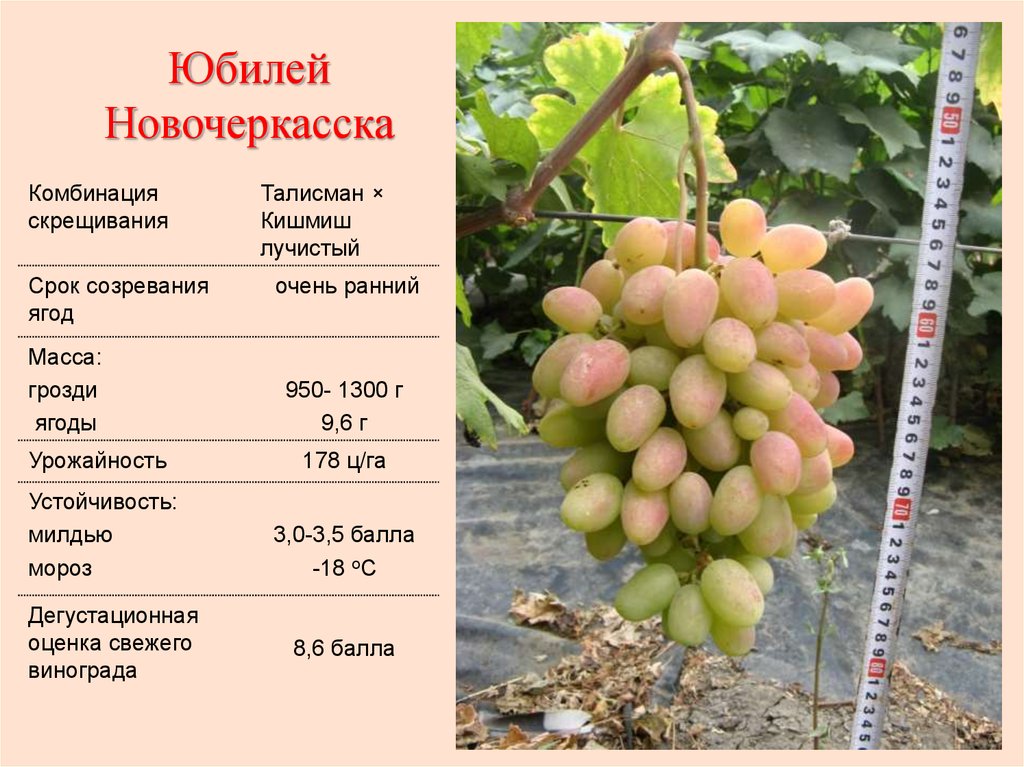
The berries are uniform, beautifully elongated and slightly tapering at the base. They are quite large – 3-4 cm long and 2-2.5 cm in diameter, weighing 15-18 g. The color is pink or pinkish-gold, and the skin is covered with a thin waxy coating. The flesh is tender and crisp, with no hard seeds, only small ones that are barely noticeable when eaten. The flavor is sweet, but not cloying, without a pronounced aftertaste.
Interesting fact: The grapes don't fall off as they ripen, and this can be used to improve the flavor of the berries. Leave them on the vine for 1-2 weeks longer, and all the acidity will dissipate.
Ripening time and yield
Novocherkassky is an early variety, producing fruit 110-120 days after the start of the growing season. For most regions, this is mid-August; in the south, it's early August. The berry yield is impressive: one bush can yield around 20 kg, which is equivalent to approximately 260 centners per hectare. Already in the second year, the young vine begins to bear fruit, and its productivity increases every year.
Use of fruits
The berries are used in a variety of ways. They are primarily eaten fresh. They also make delicious juice, compote, jam, and preserves. This variety is not suitable for winemaking, as it is not a commercial variety, but gardeners still make small quantities of homemade dessert wines from it.
Shelf life and transportability
The attractive bunches transport well and retain their marketable appearance for a long time, making this variety often grown commercially. The berries have a fairly long shelf life – even at room temperature, they can last up to 10 days, and even longer in the refrigerator.
Resistance to weather disasters
The vine is quite resistant to temperature fluctuations and severe frosts (it can withstand temperatures down to -23°C without cover), so it can be grown in any climate. As noted, the berries do not fall off due to overripeness or wind, but during prolonged rainfall they become watery and acquire a neutral flavor.
Video "Description of the Novocherkassk Jubilee grape variety"
This video presents the main characteristics of the variety.
Advantages and disadvantages of the variety
The Yubileiny variety is very popular among gardeners and consumers, as evidenced by their reviews.
- attractive commercial appearance of bunches;
- pleasant dessert taste of berries, thin skin and soft seeds;
- good transportability and preservation of the harvest;
- early ripening;
- annual yield;
- resistance to frost and fungal infections;
- high survival rate of seedlings;
- intensive bush growth;
- ability to self-pollinate.
- intensive formation of stepchildren and the need to pinch them off;
- the tendency of the vine to be overloaded with crops and the need to regulate them;
- deterioration of taste with humidity;
- susceptibility of berries to damage by birds and wasps.
Features of growing and caring for the variety
This variety isn't particularly demanding or capricious, but to achieve a high yield, many nuances need to be considered regarding placement, soil selection, planting, and subsequent care.
Growing regions
This hybrid is recommended for cultivation in all regions, including risky farming zones. Gardeners successfully cultivate this variety in the central and central regions of the country, but given its early ripening period, it can even produce fruit in Siberia, though the vines will require winter cover there.
Site and soil requirements
Because the bushes grow so widely, they require ample space. A sunny, wind-protected spot on the south side of buildings is ideal. It's important not to plant in a low-lying area, as groundwater can be detrimental to the roots.
The plant prefers well-drained, slightly rocky but fertile soil, such as black soil or loam. Planting holes are prepared a month in advance. The soil is mixed with humus, ash, and 40 g of superphosphate, and then backfilled to form a small mound.
Planting recommendations
The best time for planting is spring, mid- to late April, when the soil has warmed up sufficiently. There are several ways to plant seedlings:
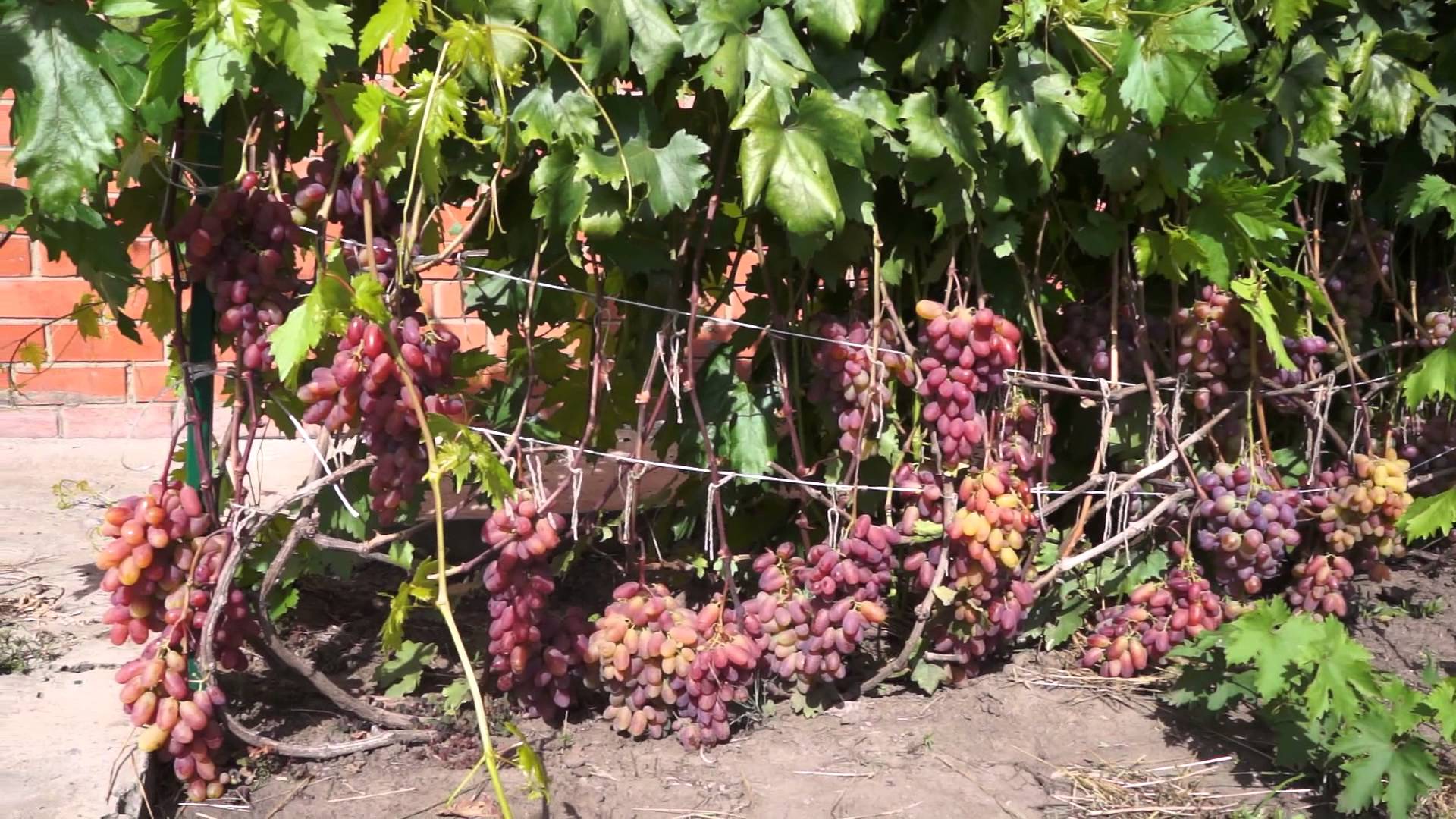
- wall-mounted - the vine is planted along the walls at a distance of 1 m, the height of the support is selected so that the shoots do not fall to the ground;
- trellis - for this method, a trellis of a certain design is immediately formed, such that the entire vine is well illuminated;
- Arbor - involves constructing a frame along which vines will climb, creating a beautiful green area for relaxation.
How to water and fertilize
Mature bushes are watered three times throughout the season: in early spring, before flowering, and during berry ripening. Seedlings are watered as the soil dries out. Water consumption per bush is 2-3 buckets. To prevent moisture from evaporating, the soil between the bushes is mulched.
The vine needs to be fed at least twice a year. In the spring, apply a mineral complex containing potassium and phosphorus, or add liquid manure at a ratio of 1:20. In the fall, add organic matter (humus, compost) to the trunk circle; this will also keep the roots warm during the winter.
Preparing for winter
In northern and temperate climates, it is recommended to cover shrubs for the winter. Before doing this, the shoots are pruned to 8-10 buds, all diseased and broken ones are removed, and the bush is shaped into a fan to allow it to be easily laid on the ground. The bent shoots are covered with straw, sawdust, or leaves, and covered with burlap.
-
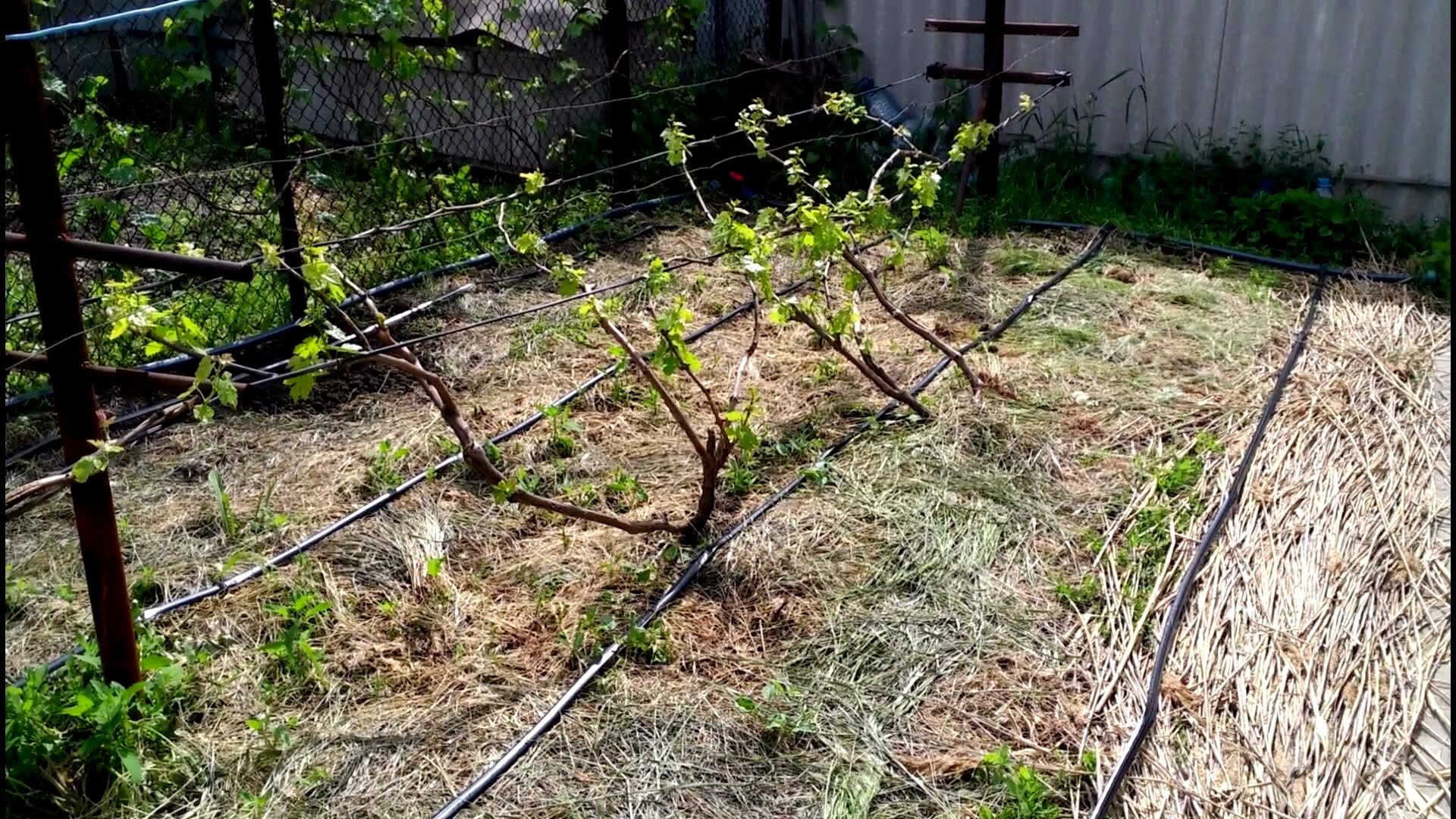
- Drip irrigation system
-
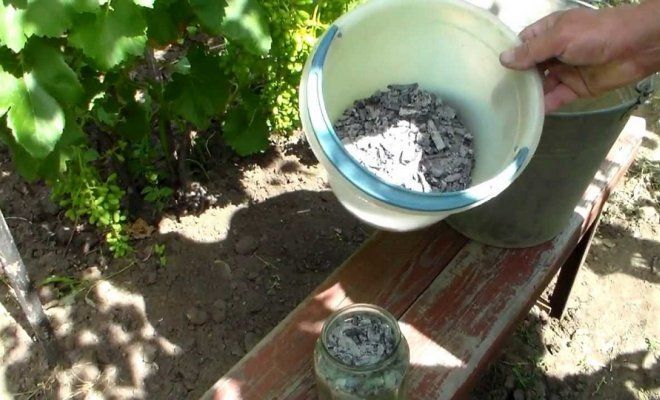
- Fertilization
-
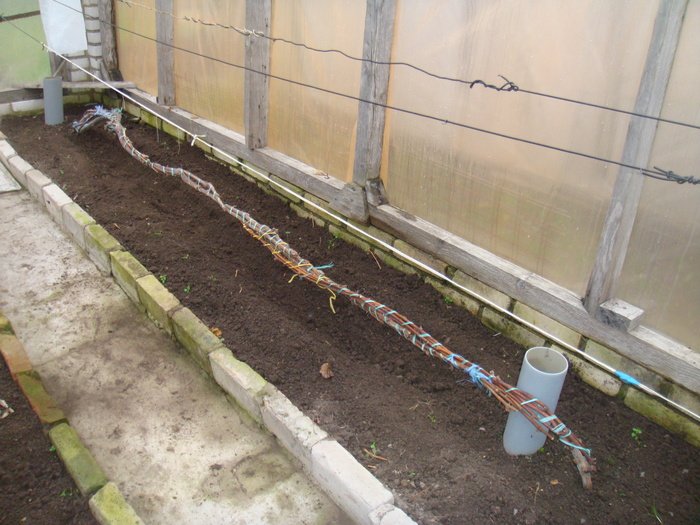
- Preparing vines for winter
Pest and disease control
The bushes are fairly disease-resistant, but to prevent mildew and powdery mildew, it is recommended to treat them in the spring with copper sulfate, colloidal sulfur, or the fungicide Thiovit Jet. To control pests, spray the vines with Fitoverm and Iskra Bio 2-3 times during the season.
It is recommended to cover ripening bunches with netting to prevent wasps and birds from damaging the entire crop.
Reviews from gardeners
I really like this variety; the berries are large, sweet, and almost seedless. It's just a shame that I have to constantly remove some of the ovaries.
Everyone writes that the vine needs to be sprayed, but I don’t spray mine, and it doesn’t get sick – it probably depends on the climate.
This hybrid is ideal for private gardens. It thrives in any region, is productive, and undemanding, so even a novice gardener can grow it for home or retail.