
How to plant and grow seedless grapes of the Veles variety in your garden
Content
Features of Veles grapes
There are many grape varieties, but Kishmish remains the most popular. This variety also serves as a productive base for developing hybrids. And while it's difficult to make the best even better, the painstaking work of breeders has resulted in new varieties with unique characteristics.
Veles was bred about 10 years ago by Ukrainian V.V. Zagorulko and quickly found fans in Eastern Europe and the former Soviet Union. And for good reason – the yields are truly impressive. Incidentally, the variety was named after the Slavic god of fertility. The Zaporizhzhia breeder based his work on Rusbol and Sophia. The result was so successful that the very next year after its introduction, it received several gold awards at the Crimean Vine Exhibition.
Description of the bush and vine
Veles bushes are strong and vigorous, with excellent survival rates from seedlings and cuttings. The vine grows quickly and ripens along almost its entire length. Two to four flower clusters form on a single fruiting shoot. The leaves are classically shaped, with a glossy surface and slight roughness on the back of the leaf blade. The leaves typically have three lobes, though five-lobed specimens are rare.
The inflorescences are voluminous, consisting of small yellowish-green flowers. The flowers are bisexual, so the bush does not require pollinators. However, artificial pollination can be used to increase yield. However, it is important to keep in mind that the vines are thin and may not be able to support the weight of the bunches, so the weight will need to be reduced.
Description of bunches and berries
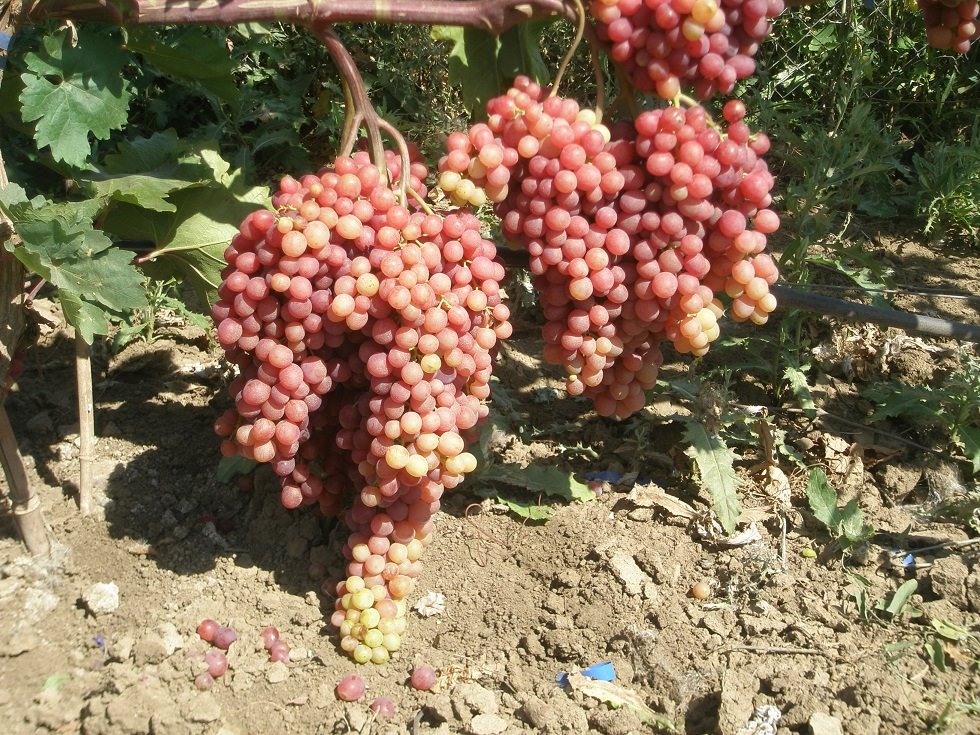
The flower structure contributes to the formation of very large clusters. On average, a single cluster is up to 30 cm long and about 20 cm wide. The cluster is cone-shaped, highly branched, and moderately dense or loose, giving it volume. A ripe cluster weighs between 700 g and 2 kg. However, specimens weighing around 3 kg have been recorded on several occasions.
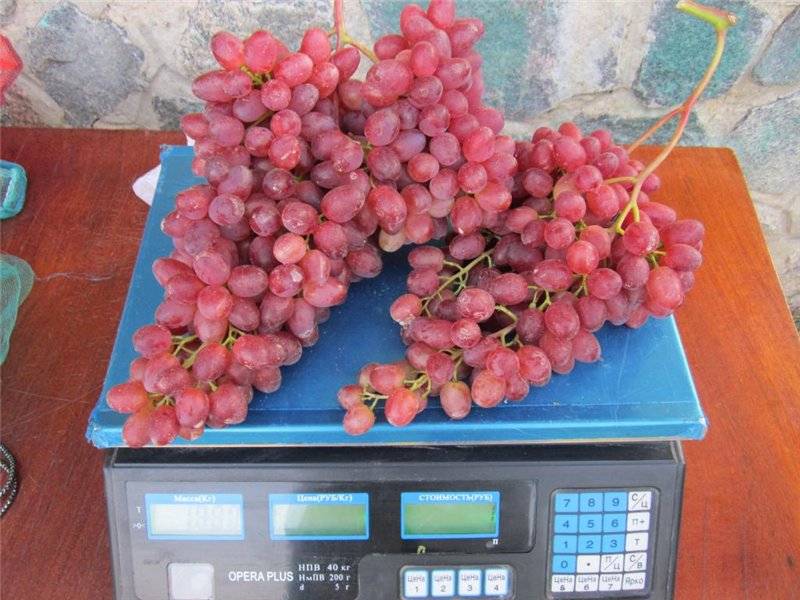
The grapes' attractive appearance is due not only to their large, branched vines but also to the berries themselves. Pink sultana berries are uniform in size, oval-round in shape, and a delicate lilac hue when ripe. The skin is thin and unnoticeable when eaten, but can crack from excess moisture and be damaged by wasps. The flesh is firm and juicy, with a distinct muscat aroma.
Small rudimentary seeds may develop in the berries, but they are so underdeveloped that they are not felt when eaten.
Taste and use of fruits
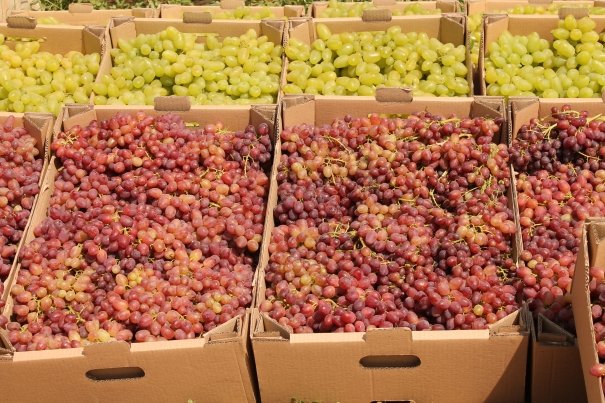
The jelly-like yet dense flesh of Veles berries is delicious and aromatic. Under favorable conditions, the bunches retain their marketable appearance for up to 40 days. If the weather is sunny and dry, the berries not only remain fresh but also accumulate sugar content. They transport well. The grapes are suitable for fresh consumption and for making wine.
Ripening time and yield
It will take a little over 3 months for the bunches to ripen. In the southern regions, with proper care, the harvest can be harvested twice, in August and October. Grapes produce abundantly and reliably. An average of 7 kg can be harvested from a single vine in a single harvest.
Drought resistance and winter hardiness
Veles can withstand temperatures down to -22°C. However, in regions with damp, cold winters, the bush requires covering. In southern regions, only the roots are covered. The bush tolerates short-term droughts well, but prolonged dry periods can negatively impact the harvest.
Advantages and disadvantages of the variety
Hybrid varieties boast a number of advantages, and Veles is no exception. However, it's fair to say that the variety also has its drawbacks.
- early ripening and long shelf life on the vine;
- stability and generosity of fruiting;
- versatility of peduncles;
- high commercial and taste characteristics of berries;
- average frost resistance and immunity to major diseases.
- intolerance to waterlogging;
- tendency to rot;
- demanding soil type;
- susceptibility to wasp attacks;
- susceptibility to leaf roller infestation.
Veles bushes are often used as pollinators for varieties with unisexual flowers.
Video “Description of Veles grapes”
This video describes the main characteristics of the variety.
How to increase grape yields
Veles's yield depends primarily on growing conditions and proper care, and only then on additional pollination.
Selecting a location and soil
Sufficient sun and warmth are essential for the taste and commercial quality of grapes. Therefore, it is recommended to plant grapes in sunny areas, with rows oriented north to south.
Black soil is the most favorable for growing grapes. However, Veles can also grow in sandy, loamy, and clayey soils. The key is to properly fertilize the soil and ensure drainage if surface water is too close to the surface.
Features of reproduction
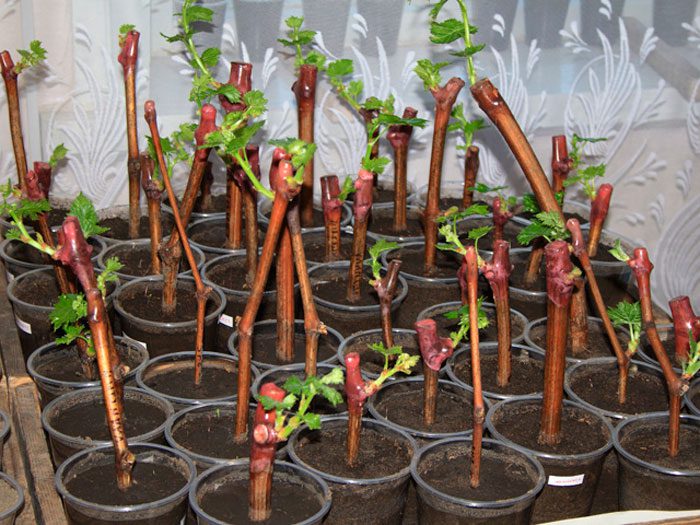
Veles is propagated in two ways: by cuttings or by planting mature seedlings. The first telltale fruits may appear on the vine as early as the second year in both cases. However, it is recommended to remove the inflorescences in the first few years to direct all the plant's energy and vital juices toward shoot development.
Bushes grown from seedlings yield a faster harvest. Experienced gardeners advise against purchasing specimens with leaves and bare roots, as well as early seedlings. The seedling should also be moist and have well-developed roots. A cutting can be taken from an existing Veles bush. This should be a healthy, strong shoot, often pinched to a suitable rootstock.
The size of the hole depends on the root size of the planting material, but it should be at least 80 cm in diameter and depth. The hole should be generously enriched with organic matter, so add peat, humus, or compost. A small amount of superphosphate and potassium salt can also be added. 0.5 kg of ash can also be added. Broken brick or expanded clay should be placed at the bottom for drainage. For tall seedlings, it is essential to provide support.
Winegrowers also recommend planting cuttings and seedlings so that the planting level is approximately 35 cm below the surrounding soil. This makes it easier to protect the young plant from the cold.
Watering recommendations
Young plants are often mulched with peat. It not only helps regulate moisture evaporation but also prevents weed growth. Young plants are watered when the top layer of soil dries out, but not too much. For mature plants, a few waterings per season are sufficient if rainfall is insufficient.
When and what to feed
Organic fertilizers are usually used as mulch for the bush. Mineral fertilizers, however, are applied during watering. Phosphorus-potassium complexes are essential, as are periodic additions of iron, zinc, and boron. It's important not to fertilize grapes before flowering.
Forming a bush and supporting the vine
Veles is usually trained into four branches, leaving six to eight buds on each shoot. Fruit-bearing and damaged shoots are always pruned. Infected vines should not only be pruned but also burned.
Trellis are commonly used to support grapevines. However, grapes can also grow along fences and support themselves on arched structures.
Disease prevention and pest control of the variety
Veles has moderate immunity to common grape diseases such as mildew and oidium. Therefore, the vine requires preventative treatment with fungicides, Bordeaux mixture, or colloidal sulfur.
-
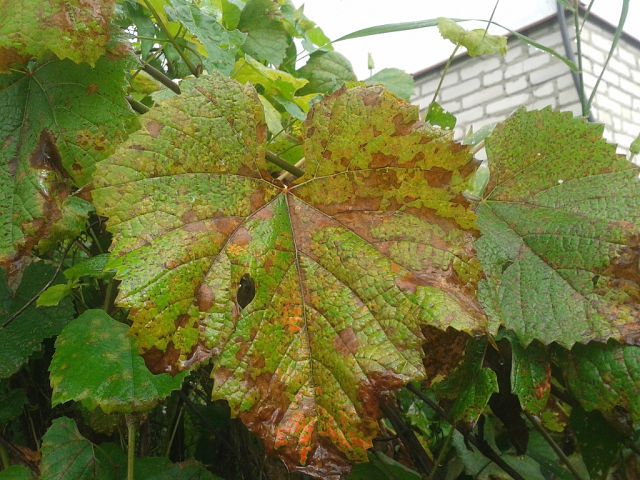
- Mildew
-
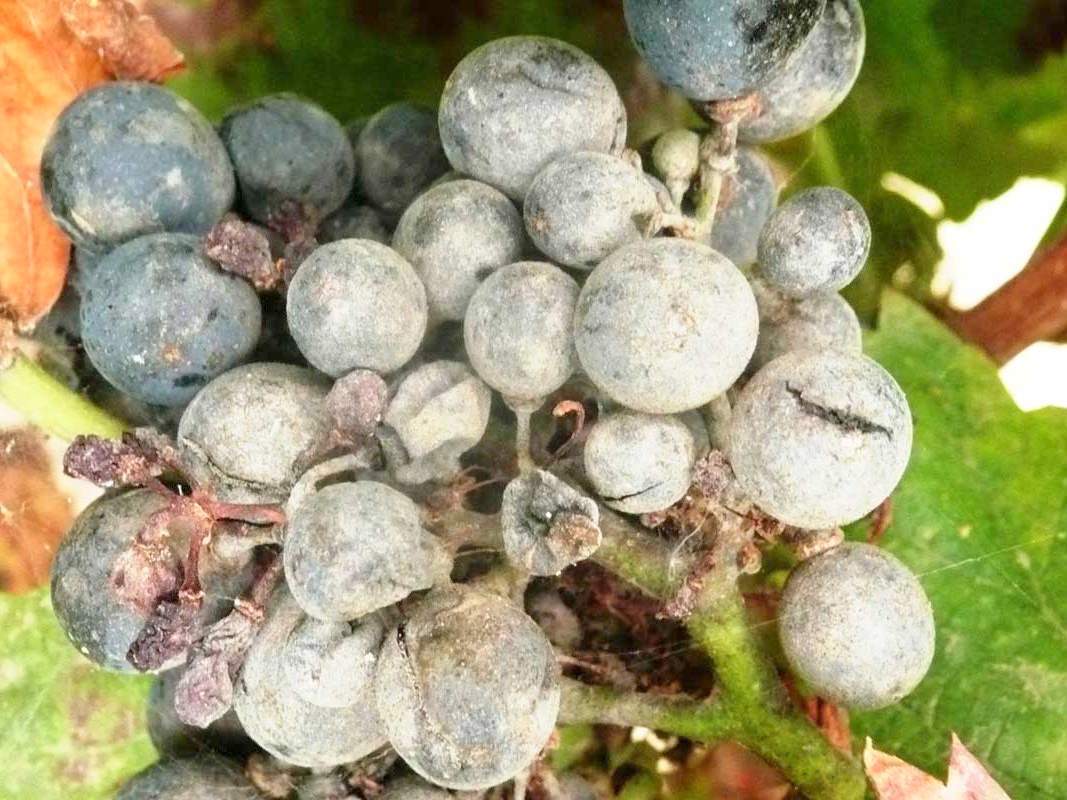
- Signs of oidium
-
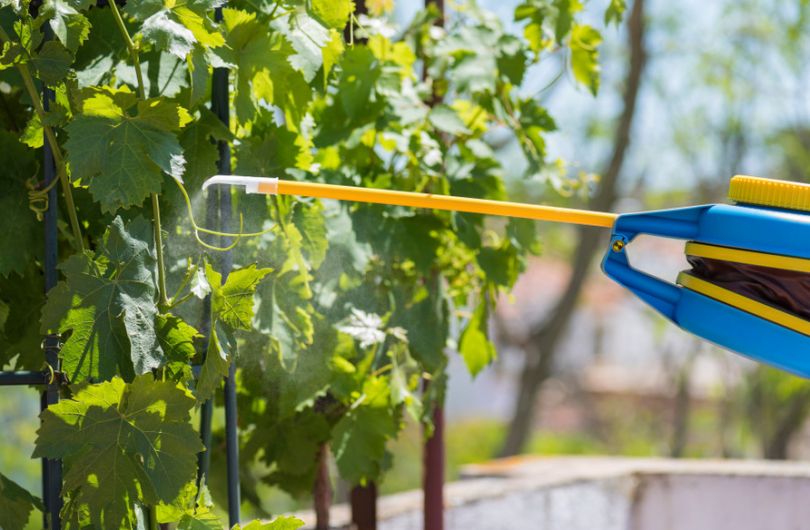
- Treating vineyards with fungicides
Reviews from winegrowers
"An excellent choice for our region. It produces a generous and delicious harvest. The only problem is that the large clusters mean the berries ripen unevenly and can crack if there's frequent rainfall."
"Very tasty, but capricious grapes. They require treatment against powdery mildew and careful soil moisture."
If you're a raisin lover, you'll definitely love this pink version. But remember, a good harvest can only be achieved with proper care.