
A Review of the 13 Best Versatile Grape Varieties
Content
The best varieties
To help beginning winegrowers, we've tried to highlight those varietals that have received the most positive reviews from experienced gardeners.
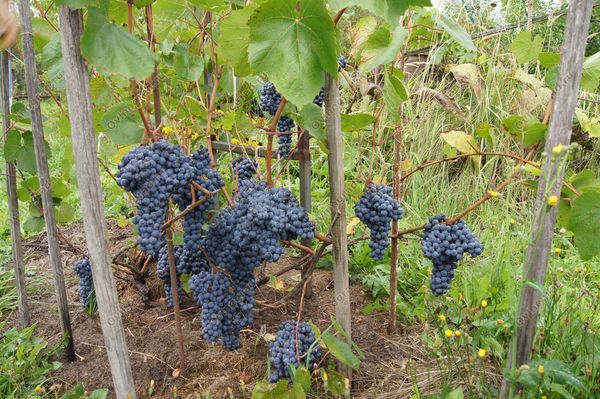
In memory of Dombkovskaya
We owe the development of this variety to domestic breeders. Their efforts have resulted in the development of a successful drought- and frost-resistant grape variety capable of producing impressive yields in both the central and western Siberian regions. The berries are seedless, and the vines themselves are known for their vigorous growth, reaching heights of up to 6 meters even in challenging growing conditions.
Large clusters of dark blue, almost black berries. This variety produces fruit frequently, from August to late September, depending on climate conditions. The fruits have a distinct sweet and sour flavor, with a slight bitterness when biting into the skin. The crop begins to bear fruit at the age of 3 years, and consistently produces about 12 kg of berries from one bush.
Valiant
Valiant grapes are another versatile variety, distinguished by their resilience to adverse conditions. Gardeners also love them for their rapid growth, using them to create arbors and pergolas. They produce small but very dense clusters, each weighing around 100g. The berries are black, have a dense skin, and taste vaguely reminiscent of strawberries.
Valiant's distinctive feature is its remarkable frost resistance—many gardeners don't even cover the plants for the winter. However, in regions with harsh winters, it's better to be on the safe side and protect the plant's root system.
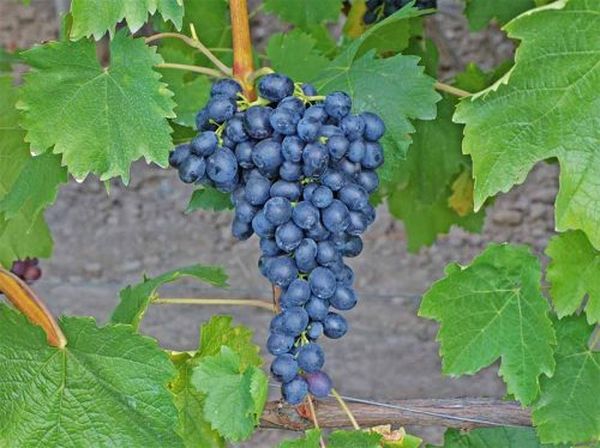
Black Maria
An early, large-fruited variety, each berry can weigh up to 20g. The fruits are bluish-black, with a pleasant, distinctive aroma and a slightly tart flavor. The berries are gathered in massive clusters, each weighing up to 1 kg, and are loosely packed. This variety is characterized by a high sugar content—approximately 19%; however, its tart flavor makes it unpopular for fresh consumption: the fruits are more often used for processing, such as juices, jams, and wine.
This variety isn't particularly productive, but the fruit you harvest will withstand long transportation and store well. Its frost resistance is average, down to -25°C, so it requires winter protection.
Muscat Blau
The Swiss Muscat Blau grape is grown in its native land primarily for one purpose: to produce delicious and aromatic wine. However, our gardeners also plant it for fresh consumption—the grapes have a wonderful aroma and a traditional, subtle flavor. Farmers also value it for its excellent resistance to diseases and growing conditions. This variety produces a moderate yield, so it's best to have several vines in your garden.
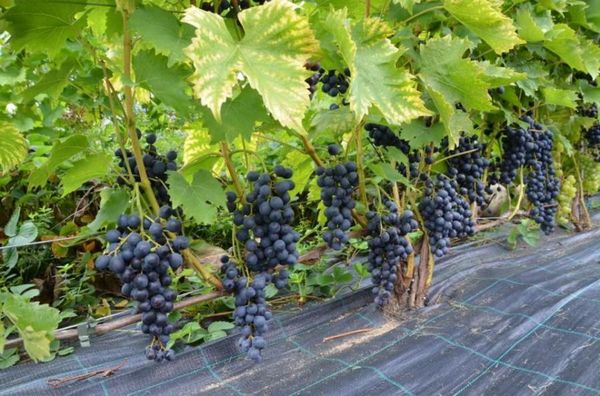
Insects present a challenge in growing the bush—they simply "love" Muscat Blau. Another important consideration is the need to monitor the fruit load on the vine—if too many clusters ripen, the berries can lose their flavor and become smaller.
Gloria
The Gloria variety arrived in our gardens from Hungary and, it must be said, has thrived here. The berries are round, covered in a nearly black skin, and have a distinctive sweet flavor and excellent aroma. They contain a high sugar content (up to 19 g), with acidity ranging from 7 to 8 g. This variety tolerates moderate frosts and requires little care, but is susceptible to pests and certain diseases. A single bunch can weigh up to 800 g.
Chit
The Kroshka grape is an early-ripening hybrid that appeared quite recently. It forms a beautiful cluster of uniformly sized berries, weighing approximately 600g. The berries are oval, crisp when bitten, and have a pleasant, harmonious flavor. They transport well.
Given the variety's youth, its resistance to disease and cold is currently being actively studied by breeders.
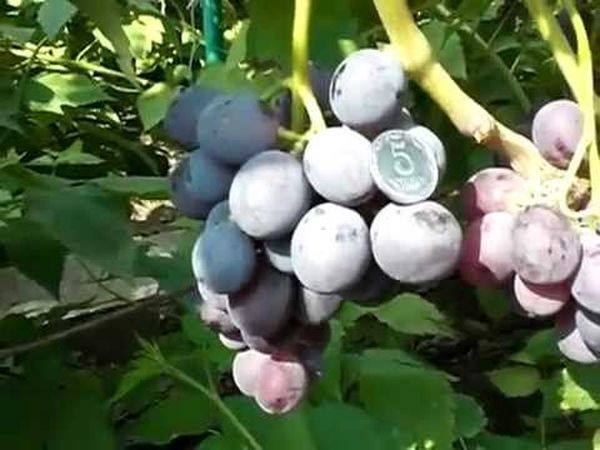
Lyana
A classic Moldovan white grape popular in Russia. This mid-season, frost-resistant table grape with a harmonious Muscat flavor forms strong vines that produce medium-sized, slightly loose clusters. The fruit has a fleshy, juicy pulp covered with a thin skin. This variety is characterized by its low maintenance and disease resistance.
Adele
Adele is a versatile, high-yielding hybrid, characterized by self-pollination and early fruiting. A key feature of Adele is the need to control the number of clusters on each vine—gardeners leave no more than three, as the variety is prone to overcrowding. The fruits are small, round, and dark blue, with sweet, juicy flesh and a pleasant flavor. Adele grapes are frost-resistant (down to -30°C) and resistant to gray mold.
Rusven
Rusven is an early-ripening, medium-sized grape with large, juicy berries. Its drawbacks include its attractiveness to wasps and the tendency of the fruit to crack when exposed to excess moisture. The variety is cold-hardy but not transportable.
Beauty of Balok
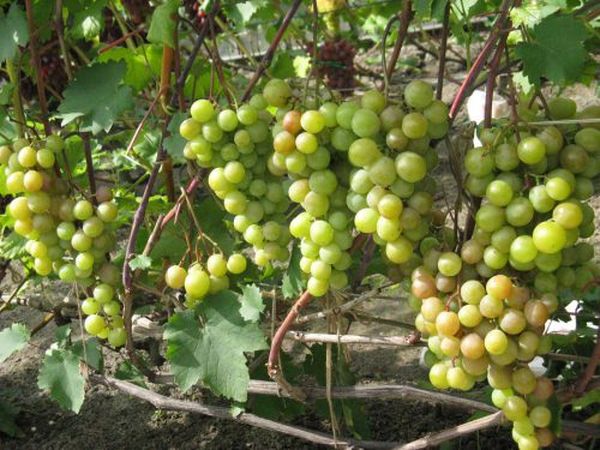
The Krasa Balok grape variety has only recently become known, and its origin is generally considered accidental. It is an early-ripening, vigorous variety with average cold tolerance. Characteristic features of this cultivar include good seedling survival and low maintenance. The fruits are very large, with a pleasant flavor, ending with a slight acidity.
Catawba
This variety produces fruit with an attractive purple hue, a pleasant flavor, and no seeds. The flesh is very juicy, with a distinct muscat aroma. It is winter-hardy, withstanding temperatures down to -32°C (-32°F). Sugar content is high, exceeding 25%. This variety is characterized by average yields, good transportability, and moderate resistance to fungal diseases.
Zilga
A very early variety with large, dense clusters. The berries are quite large, dark blue, with slightly slimy flesh. This variety is characterized by high sugar content—up to 22 g—and a light Isabella aroma. The plant is rarely susceptible to fungal infections, and the fruits are easy to transport. It is often used as an arbor shrub.
Juodupė
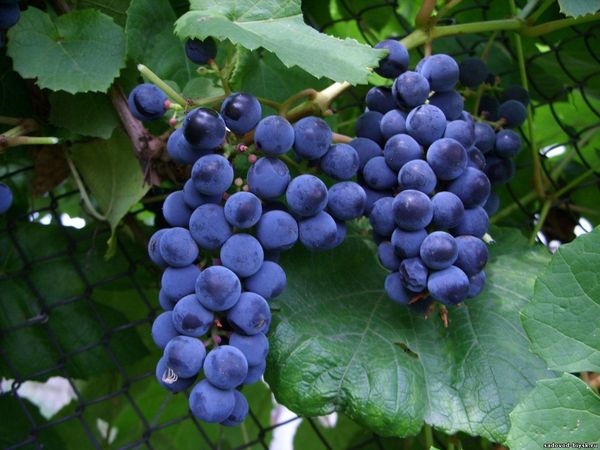
Juodupė is a true record-breaker in terms of ripening time, an ultra-early variety. It tolerates Russian winters well and rarely suffers from fungal diseases. Juodupė is native to Lithuania, but thrives in our central climate. Juodupė is characterized by small clusters weighing around 150g. The berries have a dense skin with a distinct bloom. Beneath the skin, Juodupė reveals a slightly oily flesh with an intriguing strawberry-pineapple flavor.
Another feature of the Juodupė variety is the high growth rate of the vineyard and the rapid ripening of the crop.
Video: Caring for Grape Seedlings
This video will teach you how to properly care for grape seedlings after planting.