
Tips for Beginner Winegrowers: How to Plant and Grow Rochefort Grapes
Content
History and descriptive characteristics of the variety
The Rochefort grape, often called a masterpiece of Russian selection by winegrowers themselves, was developed in 2002 by amateur breeder Evgeny Pavlovsky.
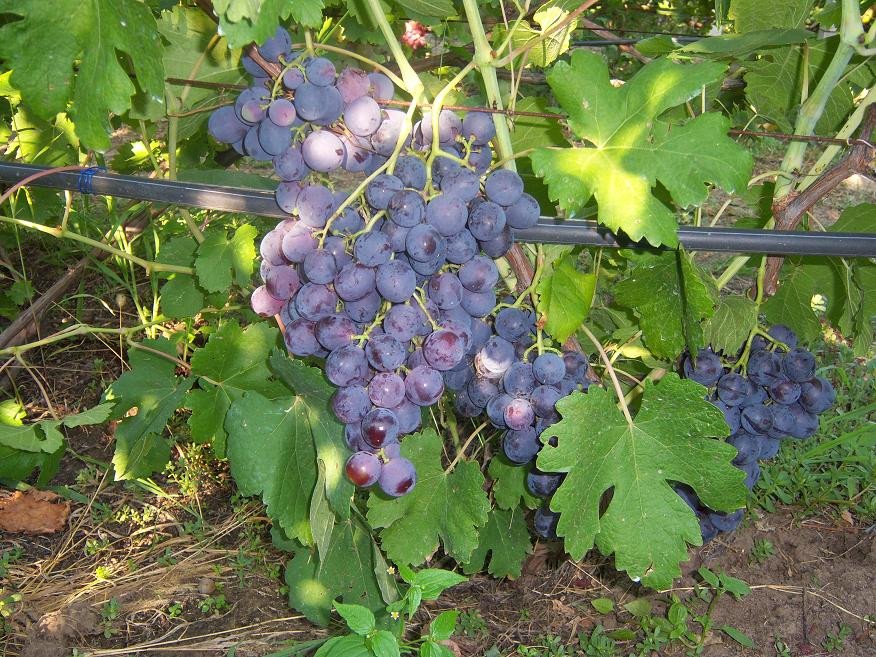
The Cardinal and Talisman varieties were used as the parent stock, along with a pollen mixture of European and Amur hybrids. Scientifically, such a breeding experiment rarely yields positive results. However, the hybrid variety obtained through such a complex process exceeded even the experimenter's expectations – the Rochefort grape inherited the best qualities of its "parents." Rochefort is a benchmark variety with high varietal characteristics.
The appearance of a grape bush and vine
Rochefort forms a robust, vigorous bush. The vine matures well and produces vigorous growth—at least 1.3 m per season. The shoots are characterized by abundant foliage. For this reason, the variety is often used in landscape design for garden plots. The leaves have a classic shape and are bright green, with slight pubescence.
Description of bunches and berries
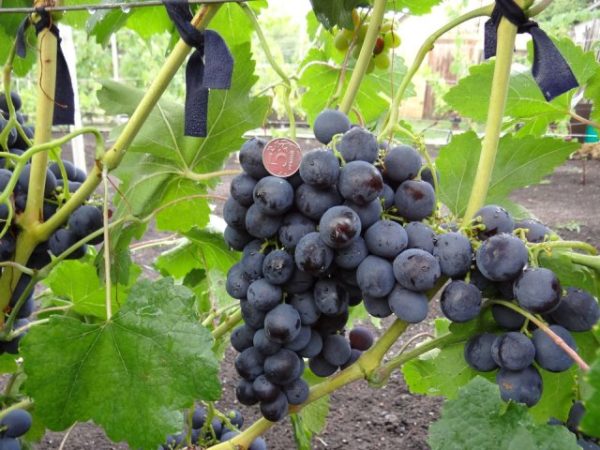
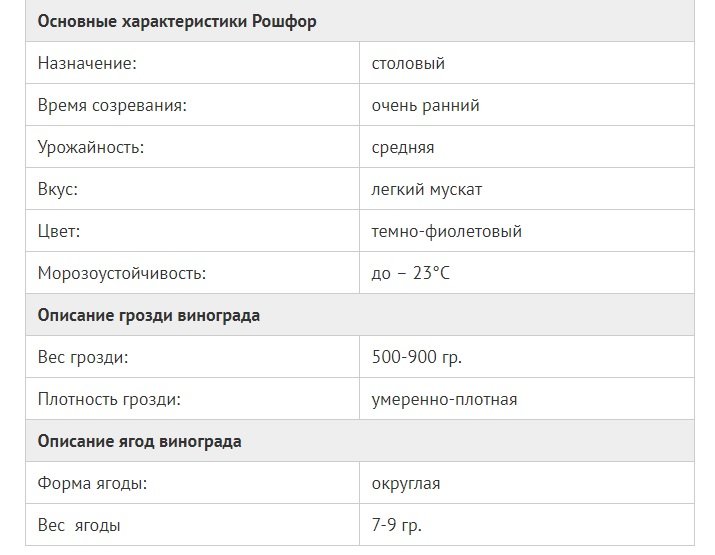
The clusters are massive, cone-shaped, and moderately dense. The weight of a single cluster ranges from 0.5 to 1 kg. Specimens weighing 1.2–1.5 kg are extremely rare. This variety is characterized by excellent transportability: short, strong stems prevent the berries from falling off.
A ripe, harvestable berry weighs 8–12 g. The fruits are large, round, and dark purple, almost black. The skin is firm and crisp, with no bitter or astringent flavors. The flesh is tender, juicy, and fleshy. Rochefort grapes have a sweet taste with a pleasant and unobtrusive Muscat aftertaste.
Fruiting and ripening time
Rochefort is an early-ripening variety. It begins blooming in early summer, and the growing season lasts approximately 110–120 days.
The plant does not require additional pollinators, as it has bisexual flowers. In fact, Rochefort is often used to pollinate other varietals and hybrids of grapes.
Productivity and use of fruits
Fruit and berry yields are determined by growing conditions and care. A single mature bush yields between 4 and 10 kg of ripe, juicy berries.
Grape clusters can remain on the vine until early October. The berries retain their marketability and flavor. However, excessive precipitation can cause the skins to crack.
The berries, with their harmonious flavor, can be eaten fresh. Rochefort grapes are also widely used in home and industrial winemaking to produce Muscat wines.
Winter hardiness and drought resistance
The Rochefort variety does not tolerate drought well. A lack of soil moisture negatively impacts the marketability and flavor of the fruit. The berries become smaller, losing their juiciness, tenderness, and sweetness.
This hybrid is a winter-hardy fruit and berry crop. The variety description claims winter hardiness down to -23°C. However, experienced winegrowers claim the yield figures are slightly overstated. The crop is susceptible to frost and cold winds.
Advantages and disadvantages of the variety
Rochefort Muscat grapes have many positive qualities and significantly fewer negative ones. It's best to learn the variety's pros and cons before planting.
- undemanding to growing conditions and care;
- self-pollination;
- immunity to most fungal diseases;
- early ripening period;
- stable and active fruiting;
- commercial appearance of bunches;
- interesting taste qualities;
- universal use of berries;
- high transportability.
- average winter hardiness;
- tendency to pea formation when there is a lack of moisture in the soil;
- the presence of seed stones in berries.
Video "Descriptive Characteristics of Rochefort Grapes"
This video presents the main characteristics of the fruit and berry crop.
Recommendations for growing Rochefort grapes
Growing the Rochefort hybrid doesn't require much time or effort. Following simple farming practices will yield a good yield.
Landing rules
You can plant seedlings in open ground in either spring or fall. In the former case, it's best to complete planting by mid-April; in the latter case, by the end of October. A sunny, well-heated area of the garden is ideal for planting grape vines. The plant should also be well protected from wind and drafts.
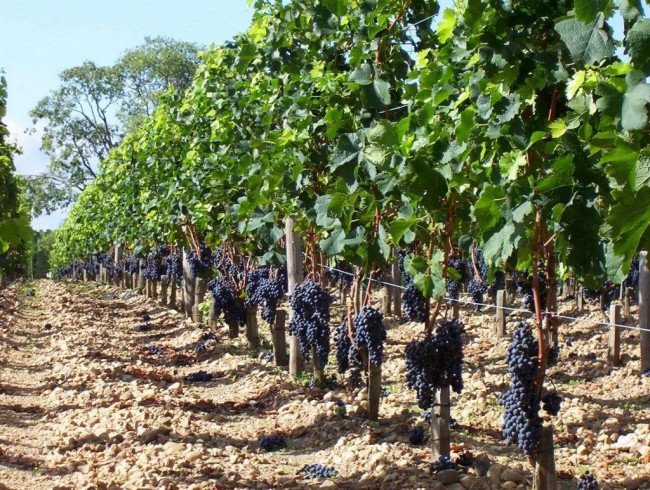
Rochefort grows well in a light, fertile soil. The soil should be well-draining but not water-retentive. Grapes don't like dense or highly acidic soil. Also, try to avoid areas with a high water table.
A healthy-looking root system is the main criterion for choosing planting material. The seedling's root system should be extensive and robust. Broken or damaged roots should be trimmed off, and the cut areas should be treated with Kornevin solution.
Watering and mulching
The Rochefort variety appreciates intensive and frequent watering. During the fruiting period, at least 5 liters of settled water should be poured under each bush. Water the plant around the edges of the trunk.
Once the water has been absorbed, the soil around the tree trunk is gently loosened and mulched. This prevents weed growth.
Top dressing and fertilization
For the first 3-4 years after planting in its permanent location, the plant is not fertilized. Subsequently, each spring, the grapevine is fed with nitrogen-containing fertilizers. During the period of ovary formation and fruit set, the hybrid is fertilized with potassium and superphosphates.
Pruning grape vines
Vines are pruned twice a season – in spring and fall. Old, broken, and diseased shoots are removed down to living tissue. Healthy vines are pruned so that no more than 35 buds remain on the bush.
-
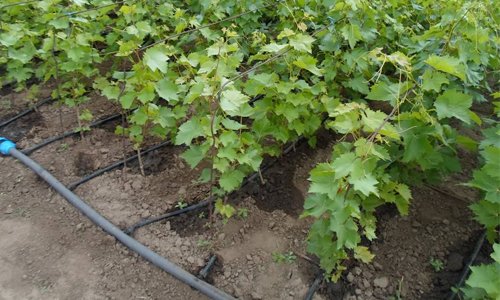
- Drip irrigation of the vineyard
-
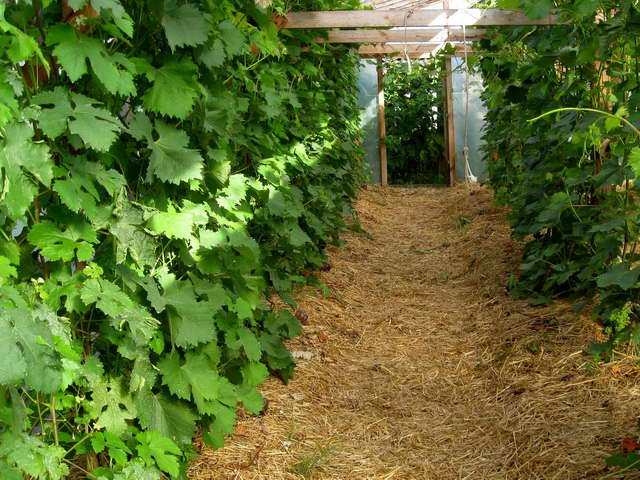
- Mulching grapes
-
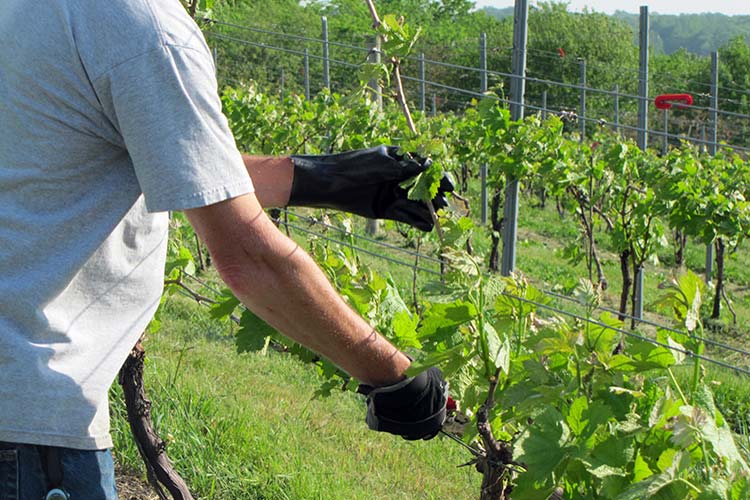
- Pruning the vines
Preparation and shelter for winter
After the fall pruning is complete, the vineyard is prepared for winter. The shoots are bent to the ground and covered with dry fallen leaves. The top of the plant is insulated with spruce branches and pine needles.
Main diseases and pests, methods of control
Rochefort is characterized by good resistance to most diseases. To prevent the development of powdery mildew, the shrubs are periodically sprayed with a soda solution.
If infection cannot be avoided, they resort to the help of “heavy artillery” - drugs such as “Topaz”, “Horus”, “Strobi”, “Skor”, etc.
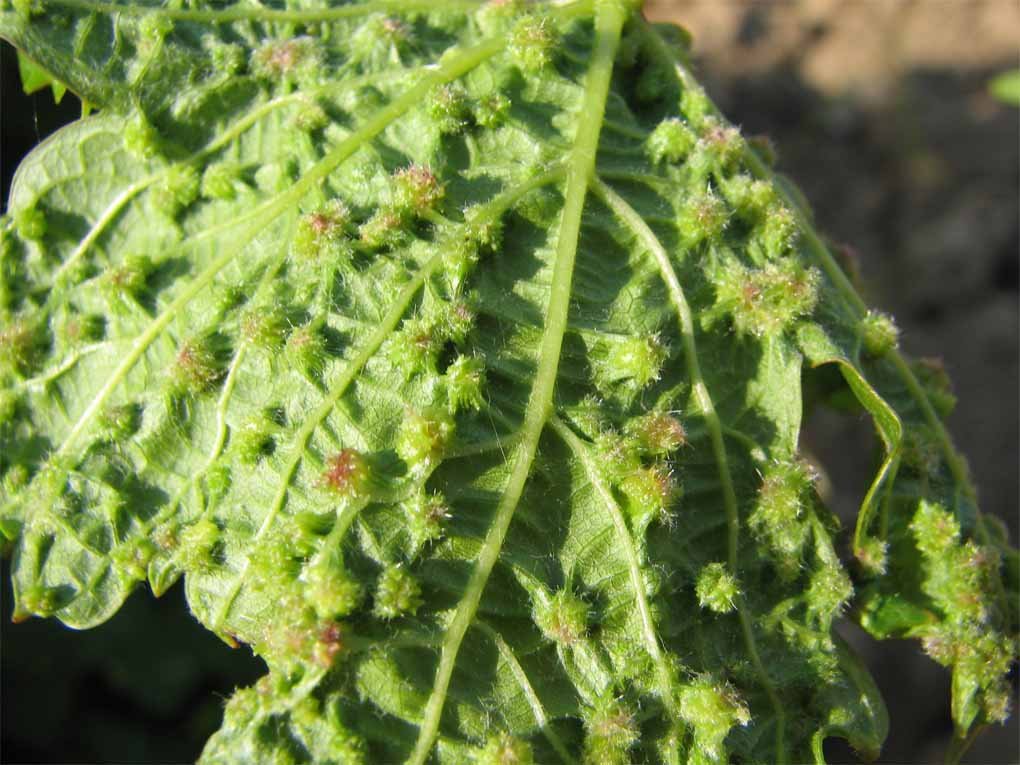
The most dangerous pest of this variety is the grape aphid, or phylloxera. If infested, the entire vineyard can be destroyed. This tiny insect feeds on the roots, shoots, and leaves of the plant. For prevention and treatment, use the products "Aktara," "Condifor," "Napoval," and "Mospilan."
Reviews from gardeners
"I've been making wine at home for many years, so I grow various grape varieties at my dacha. The most worthy of them all is Rochefort. The plant requires minimal care and is resistant to most diseases."
"Unfortunately, I had a negative experience growing Rochefort Muscat grapes. After carefully studying the variety's characteristics, I decided not to cover the bush for the winter. As a result, the vine completely froze over the winter."
Easy to grow, Rochefort grapes are considered the leader among Muscat varieties. Large berries with an exquisite musky aroma are the main advantage of this fruit crop.