
A review of early grape varieties of different ripening periods
Content
Features of growing early varieties
Early and very early grape varieties can be grown in regions with warm and temperate climates. Initially, it's important to choose the right planting site. This berry dislikes drafts, so it's best to choose a site protected from wind and well-drained throughout the year. As is well known, late and early grapes are often grown in mountainous areas, where the uneven terrain provides excellent natural shelter from wind currents.
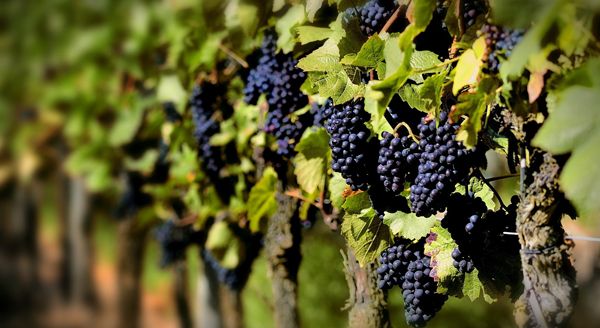
Early and late-ripening varieties are planted as seedlings, for which holes up to 50 cm deep and at least 80 cm apart are dug on the plot. A drainage layer in the form of crushed stone is placed in the holes, as well as auxiliary elements - a support is dug in, a pipe for irrigation is installed, and either a layer of sawdust or a layer of thick cardboard is placed on the drainage.
Once the hole is prepared, you can place the seedling in the hole and then cover it with soil. A 1:1 mixture of soil and peat is used. A small amount of nitrogen or superphosphate fertilizer can be added to this mixture, if necessary.
After adding the first layer of soil (about 20 cm), water is added to the hole. After this, you can continue filling the hole with soil. After this stage, the seedling is tied to a support, and after a week, watered again.
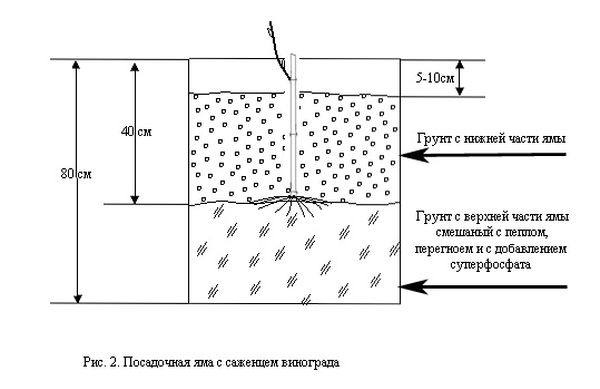
Early and express-early grape varieties are typically planted in the spring. After planting, care follows standard guidelines:
- Watering is done four times a year. Young shrubs are watered through tubes dug into the hole, using a solution of 3.5–4 liters of water and ash. The first watering is necessary in the spring, the second before flowering, and the third as soon as flowering ends and fruit formation begins. The fourth watering is done before the dormant period begins, that is, in winter.
- Pruning is performed only in the fall. Spring pruning is strongly discouraged. In the summer, pinching is done to prevent the vines from growing taller than 1.7 m, as well as removing excess foliage and shoots that shade the fruit. In the fall, pruning is performed in two stages: the first involves removing old and weak shoots, and the second involves removing excess stems and branches growing on established vines.
- Fertilizers are applied starting in the fifth year of the shrub's life. Both organic and mineral compounds are used. Growth-stimulating compounds are applied in the spring, manure and superphosphate are applied 20 days before flowering, and phosphorus-potassium solutions are beneficial before fruit formation.
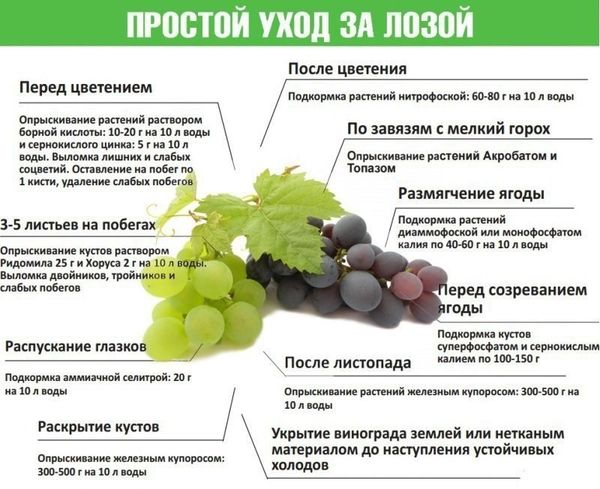
In addition to the necessary care, preventative treatments against pests and fungi should be carried out on the shrub. Also, in temperate climates, winter protection of the vines is essential.
Very early
Ultra-early grape varieties are best suited for the northern regions of the country, as they require the least amount of sunshine. These varieties ripen in 90–105 days, counting from the moment the first bud appears. These varieties require planting at 2°C (39°F), but temperatures below 20°C (68°F) during the ripening period can adversely affect the flavor of the fruit.
Express early varieties include:
- White Miracle grapes, which are known not only for their excellent taste characteristics, but also for their vegetative qualities - White Miracle is frost-resistant, drought-tolerant and resistant to pests;
- The express early varieties also include the Lorano grape, which does not have an outstanding taste, but tolerates transportation and storage well;
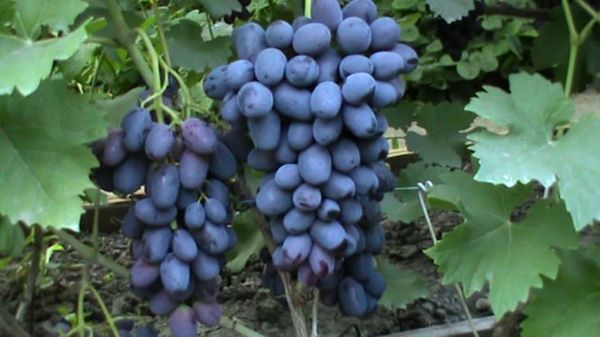
- Lepsna grapes produce small but neat clusters. This versatile express grape is used in winemaking, fresh, and for decorating arbors.
- The express early grape variety Azalea produces crimson clusters, which is loved by farmers for its resistance to frost and disease;
- The express early grape Muscat Black got its name due to the color of the berries - the black matte fruits have a round shape and ripen well only with plenty of sunlight;
- Rosemus grapes are distinguished by their incredibly sweet flavor. The fruits of Rosemus grapes are medium-sized and purple. The characteristics of Rosemus grapes have not been fully studied, but it has been noted that Rosemus grapes are relatively frost-resistant. Due to their flavor, Rosemus grapes are often used in winemaking.
- The Yubiley Khersonskogo Dachnik (YUKhD) grape is a relatively new variety that has proven itself to be very cold-tolerant and produces high-yielding yields. Furthermore, YUKhD produces medium-sized bunches with delicious pink berries.
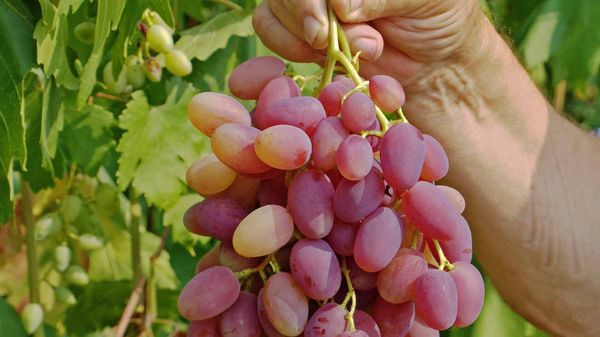
- Elegy grapes are a versatile variety, most commonly used in winemaking. This is because the Elegy berries are small but possess a unique muscat flavor with a complex aroma.
- The Muscat White Ultra-Early grape has an even more unusual flavor profile—its aroma combines notes of orange, tea rose, spicy cinnamon, and clove. The clusters are small (up to 350 g), light yellow, with neat oval berries.
- The Super Early Red Muscat variety received high ratings from tasters. The bush produces medium-sized clusters of round, bright purple fruits. Super Early Red Muscat is resistant to mildew and gray mold, the fruits are easy to transport, and are popular with consumers.
Very early
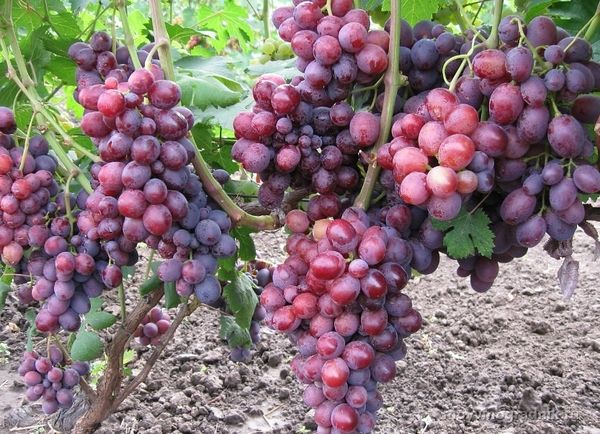
Very early varieties ripen in 105–115 days. These varieties are characterized by good tolerance to low temperatures and high soil moisture requirements. Fruit from very early vines can be harvested as early as late July. Very early varieties include:
- Zarya Nesvetaya grapes are a dark-colored variety. The clusters are large, and the berries are round, covered with a matte skin. Zarya Nesvetaya has a subtle, muscat flavor, and is therefore often grown for home-made wine.
- The Moscow White grape is well adapted to a variable climate. Although the clusters are small (up to 200 g), the berries have excellent flavor;
- Prometheus has average disease resistance, but its berries are very sweet. Prometheus also has a wonderful muscat aroma. While Prometheus isn't particularly frost-hardy, its fruits are versatile;
- Russian Purple has medium-sized bunches. The name Russian Purple comes from the color of the berries, and it gained widespread popularity due to its flavor. Russian Purple is often found in the northernmost regions of the country;
- Varduva is not known for its large fruit, but it has a very pleasant taste. The Varduva bush tolerates low temperatures well. It is easy to transport, and it produces very high yields.
- The Rizaush variety is new to the seedling market. Rizaush exhibits moderate cold resistance and high resistance to pests. Rizaush was developed in Central Asia, which is why it produces its best yields in the south of the country. Rizaush berries are lilac-colored and large.
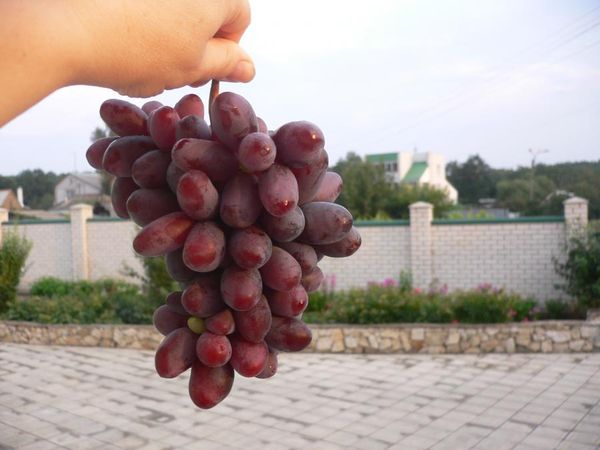
- The relatively new Zarnitsa grape variety has become popular for its abundant harvests and undemanding nature regarding climatic conditions – Zarnitsa can be found in the area from the Urals to Sochi;
- The Dashunya grape produces very large clusters—over 1.2 kg. This variety is often confused with the Dasha hybrid, but unlike the latter, Dashunya has better resistance to fungal infections and insect damage, as well as excellent consumer characteristics;
- The Senya grape variety was bred in southern Ukraine, but despite this, it tolerates severe frosts well and is virtually immune to fungal diseases and parasites. By the 110th day, the bush produces large, purple fruits with sweet flesh and a muscat aroma.
- Aysar grapes have proven themselves to be an excellent table variety, the taste of which has been highly appreciated not only by consumers, but also by juice and compote producers – the berries are large, soft and very juicy;
- The relatively recently developed Present grape is a rootstock variety, meaning it's recommended to plant other varieties in the same plot. Breeders note the bush's resistance to frost and certain diseases.
Early
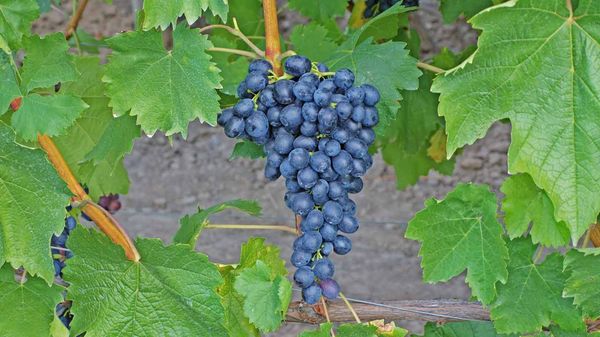
Early varieties require 115–120 days to ripen. Despite this small difference in the number of days it takes to ripen, there are significant differences between berry bush varieties, including in terms of flavor and disease resistance. Early varieties include:
- Daria grapes have a high resistance to parasites and fungi. The clusters are large, light green in color, and have a very sweet taste;
- Cleopatra grapes have a very attractive appearance - bright purple berries of an elongated shape abundantly decorate the bunch, the weight of which can be more than 1.5 kg;
- Dunav grapes have an interesting sweet-muscat flavor and attractive large red clusters. However, Dunav grapes are susceptible to frost and disease.
- The Japanese hybrid grape Gold Finger is listed in the Guinness Book of Records for its extremely high ability to accumulate sugar, which makes the variety incredibly sweet;
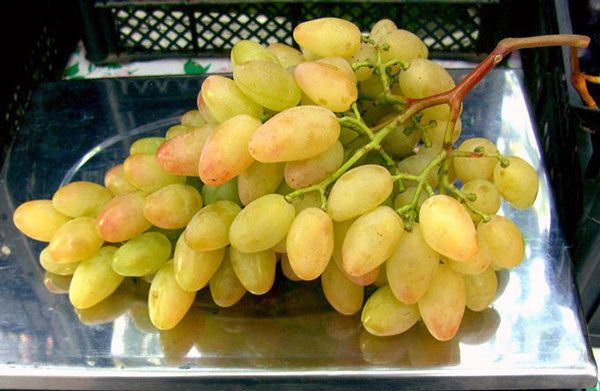
- The Pamyati Smolnikova grape produces high yields of very large berries, collected in clusters weighing 1.5–1.8 kg. It is rarely affected by mildew and oidium. It is also cold-resistant;
- The Muscat Summer grape produces medium-sized, elongated, yellowish-colored berries. The variety received its name for its bright flavor;
- Viktor Kraynov developed nearly two dozen grape varieties, but the Kraynov Troika group includes the Yubiley Novocherkasska, Preobrazhenie, and Viktor varieties. All three varieties of Kraynov Troika differ in appearance. However, they are commonly grouped under the common name of Kraynov Troika based on their taste and marketability characteristics.
- Despite its name, Sicilia was developed by domestic breeders. Sicilia's clusters are very large, and its berries are large, oval, and green. Sicilia's berries are often seedless. Overall, Sicilia is resistant to infections and is well suited for cultivation in southern latitudes;
- Hadji Murat is remarkable for its flavor. Furthermore, Hadji Murat's clusters are very large (almost 2 kg). Hadji Murat's fruits have only recently appeared on our tables, thanks to its exceptionally heat-loving nature. Hadji Murat produces large, dark-blue berries, and its taste is sweet and slightly tart.
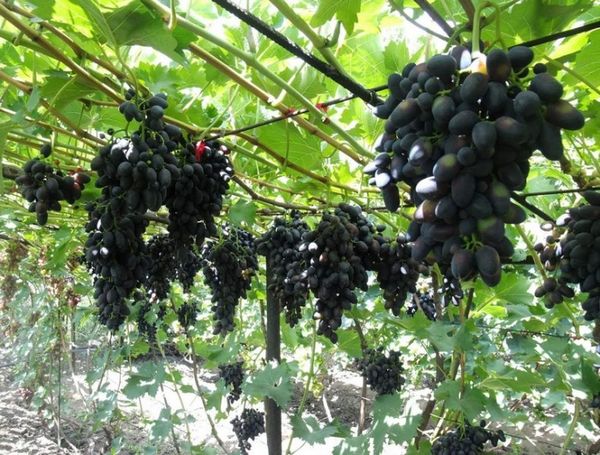
- The Middle East is considered the homeland of Shahini Iran, which contributes to its cold hardiness. Shahini Iran grapes are medium-sized, and the berries are dark crimson in color. Shahini Iran has a major drawback: a lack of immunity to infections.
- The Nakhodka sultana has an unusual color for sultana varieties—pink-red. The fruits are medium-sized, sweet in taste, and have a pleasant aroma;
- Pineapple early grapes are not eaten fresh. However, Pineapple early grapes grow successfully in cold climates and are virtually immune to rot.
Other early varieties include White Pearl, Pink Super, Nelson grapes, Einsent Seedless grapes, Leon Millau grapes, Muscat Pink Early grapes, and Everest grapes.
Video: "Grape Care Rules"
This video will teach you how to properly care for grapes.