
What is the Preobrazhenie grape and how to grow it in your garden?
Content
History and description of the Preobrazhenie grape variety
Advice from the author: do not overload the vines, otherwise the berries will lose their flavor and become bland and watery.
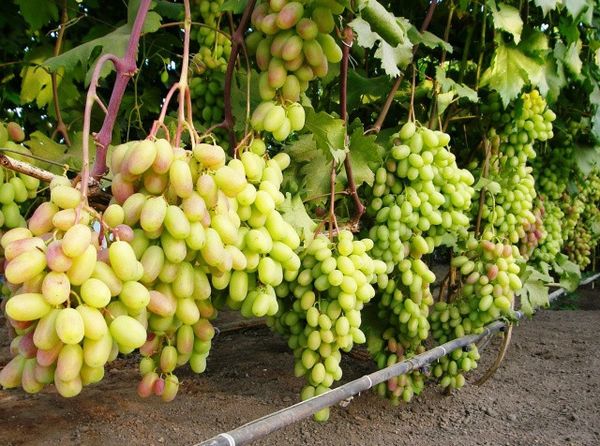
The Preobrazhenie variety is a hybrid created by amateur breeder V.N. Kraynov from Kishmish Luchisty and Talisman. He also created the Viktor and Yubiley Novocherkasska varieties. Together with Preobrazhenie, these varieties make up the "Kraynov Troika." The hybrid has not yet been added to the state register and is currently undergoing testing, which has not diminished its popularity in private gardens and vineyards.
Video: "The Process of Pruning Grapes"
This video will show you how to prune grapes correctly.
The appearance of a grape bush
This variety grows rapidly and produces well-formed side shoots. Cuttings quickly take root and grow. The vine matures to half its length. Pollination is easy thanks to the bisexual flowers. It can be grown in greenhouses or outdoors.
Description of the vine and bunches
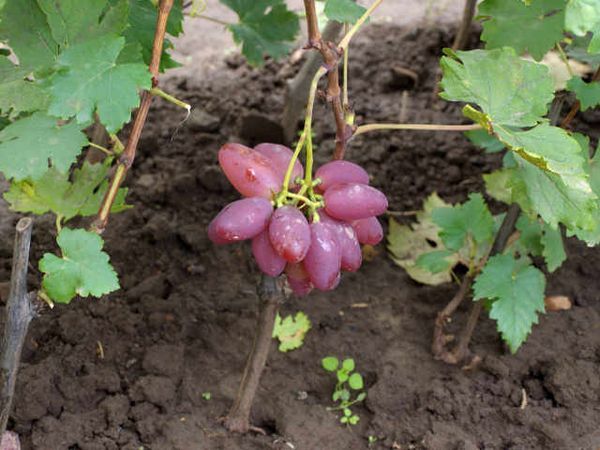
The fast-growing vine twines around natural or artificial supports, creating dense walls. The clusters are loose, conical or cylindrical, and sometimes shapeless. A ripe bunch weighs 1–3 kg. The berries are oblong, with a dense but edible skin and a waxy coating. The average size is 3.5 x 2.5 mm, weighing 14–19 g. The color is yellow-pink or yellow with a pink "tan," which may not develop if the bunches are shaded. The flesh is juicy and firm.
Commercial and taste qualities of berries
The flavor is simple and sweet, without a refined aftertaste. A slight acidity is noted, absent in overripe berries. There are 19 g of sugar per 100 cm³, which is considered high.
This variety is grown for fresh consumption, wine, and raisins. Ripe bunches are transportable and retain their marketable appearance for a long time. Ripe grapes should be stored in cool, well-ventilated places.
Productivity and fruiting
Tip from the author: To determine if a berry is fully ripe, squeeze it from the side. Ripe grapes squeeze easily and don't crack.
Full ripening of the clusters takes approximately 115 days from the start of the growing season. When grown in southern regions, harvesting can occur in the third ten days of July. Proper care and pruning of the vines allows for two harvests—one in summer and one in October. A single bush can yield up to 20–25 kg of ripe berries.
-
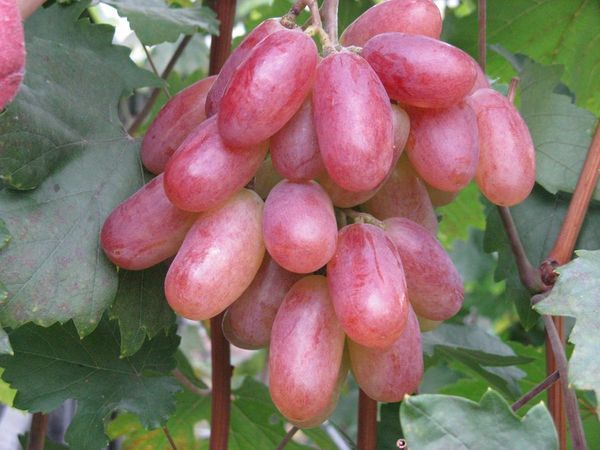
- The weight of a ripe bunch is 1–3 kg
-
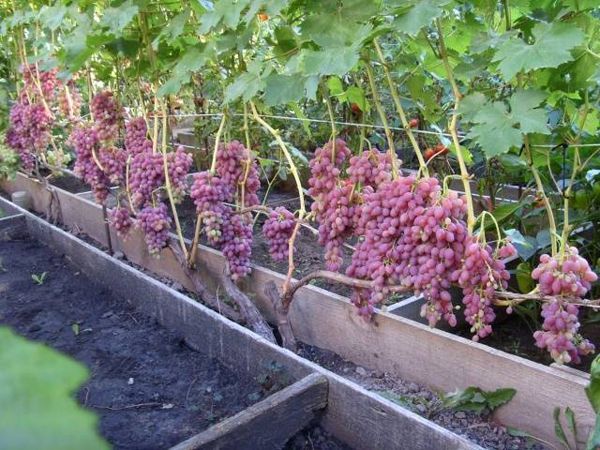
- The yield of one bush reaches 20–25 kg of berries
-
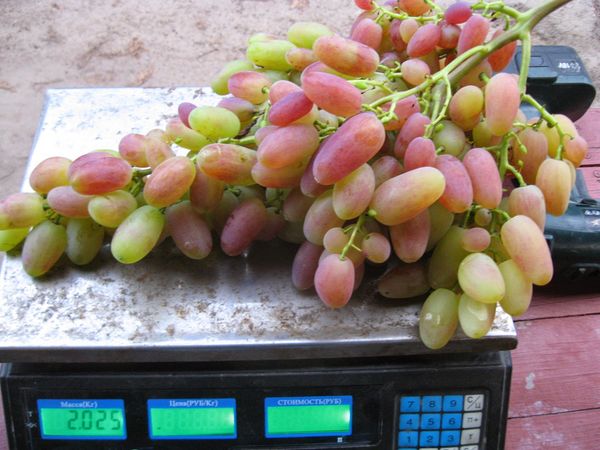
- It takes about 115 days for the brush to fully mature.
Drought resistance, frost resistance
The variety boasts good characteristics: average frost resistance and flexible adaptation to temperature fluctuations and climate change. Official sources indicate that Preobrazhenie can withstand temperatures down to -23°C. However, actual gardener reviews indicate that vines can die at -18°C. Its drought tolerance is average.
Advantages and disadvantages of the variety
Prestige is prized by winegrowers for its high yields, easy maintenance, and lack of special soil requirements. The beauty of the grape clusters enhances the prestige of a private garden.
- early maturity;
- productivity;
- good pollination;
- absence of pea formation even in bad weather during flowering;
- large size of bunches and berries;
- high taste qualities;
- berry tolerance to transportation;
- aesthetic difference of the brush;
- intensive bush growth;
- obtaining a larger yield due to the fruiting of stepchildren;
- cold resistance.
- dense pinching of side shoots, which requires control and pruning;
- to avoid the development of diseases, 3 preventive treatments are required during the growing season;
- It is necessary to standardize the inflorescences and leave one per shoot to avoid reducing the taste of the berries;
- need protection from wasps;
- In cold regions, vines require winter protection.
Features of agricultural technology of the Preobrazhenie grape
Soil and growing site requirements
Advice from the author: the best time to plant new seedlings is May, when the weather becomes consistently warm.
When choosing a landing site, the following features should be taken into account:
- the plant does not like drafts;
- the vine needs a lot of light and warmth;
- The fast-growing bush will require support.
To ensure the plant receives the proper conditions, the grapevine should be planted on the south side of the plot, in a secluded area. It's important to avoid large fruit trees nearby, otherwise the plants will compete for nutrients and sunlight.
Although seedlings should be planted in spring/summer to allow them to harden before the cold weather sets in, the soil should be prepared in the fall. This will allow the soil to settle and absorb the fertilizers applied.
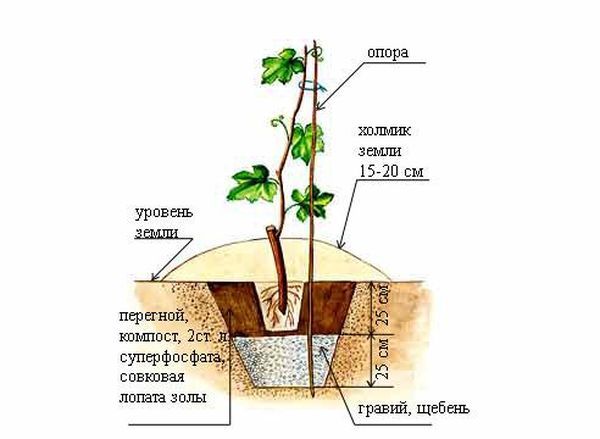
Prepare a 0.6 x 0.6 m hole of similar depth. Add well-rotted manure or compost, 100 g of phosphorus-potassium fertilizer, and half the soil removed from the surface when digging the hole. Mix everything together and add the same amount of organic and mineral fertilizer. Add the remaining soil from the surface and mix again. The top layer of the hole is made from the soil removed from the bottom.
This approach will encourage the root to grow deeper rather than seek nourishment on the surface. This will protect it from winter frosts and summer drought.
Planting algorithm
Advice from the author: in the evening before planting, soak the seedlings in water, adding a growth stimulant, and leave overnight.
Landing features:
- the holes are distributed at a distance of 1 m, preferably 2–3 m between the bushes;
- the root collar should rise above ground level by 4 cm;
- the roots should be carefully straightened out before being covered with soil;
- The soil around the grapes is compacted slightly and watered.
Care tips
To get a good harvest, you should follow a number of simple procedures:
- Transfiguration prefers moist soil, but it's important to avoid stagnant water. Water sparingly as needed. More intensive watering is needed at the beginning and end of flowering.
- Fertilizers, especially mineral ones, are applied when the plant begins to bloom, during the formation of the ovary and before covering the bush for the winter.
- In spring and autumn, bushes are mulched by placing peat or humus around the bush.
- Pruning is done before the branches open. The fan method is recommended. The vines are shortened by 6–8 buds. Up to 48 shoots should be left.
How to prepare for winter?
Before insulating, 25% of the vines are left. Flexible, strong vines are pressed to the ground and covered with soil, then topped with a layer of straw, hay, spruce branches, or sawdust. To prevent branches from rising from under the cover, they are secured with boards or slate.
Resistance to diseases and pests
The variety is threatened by the following diseases and pests:
- Grape flea beetle. Opening buds require insecticide spraying.
- Grapevine vine borer. Removed manually.
- Grapevine moth. Treat with insecticides, promptly collect fallen leaves, and loosen the soil.
- Powdery mildew. Killed by fungicide treatment.
- Bacterial canker develops when unsterile instruments are used during processing. There is no treatment, and the plant will die.
- Spotted necrosis. Treatment is carried out with copper-containing agents.
Reviews from gardeners
The first variety I've planted. It completely lives up to my expectations.
Care is simple, but you need to cut off the side shoots constantly, otherwise the berries will be tasteless.
The Preobrazhenie variety is suitable for beginning gardeners. It produces a high yield with relatively low maintenance.