
Growing the Monarch table grape variety: practical tips
Content
Description and history of the Monarch grape
Evgeny Pavlovsky, an amateur wine breeder from the Krasnodar region, created a hybrid of two well-known varieties, "Talisman" and "Cardinal." Thanks to his efforts, the white table grape "Monarch" was born. A black technical (wine) variety, with which it is often confused, was developed in Germany, but the two are not related.
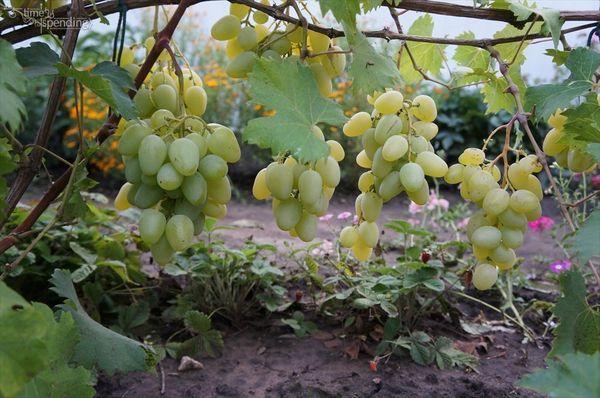
Appearance of the bush and vine
The Monarch grape variety is distinguished by its vigorous, robust vines, reaching 2.5-3 meters in height. They form numerous light-green shoots up to 140 cm long. Due to its size, the vine requires additional support.
Video: Fertilizing and Feeding Grapes in Spring and Fall
This video will show you how to properly feed grapes in spring and fall.
Description of bunches and berries
The grapes tend to produce abundant berries, with the average bunch weighing over 500–600 g. The berries are oval, tapering slightly toward the tip. They weigh up to 20 g. Ripe grapes take on a yellow-amber hue, sometimes with a slight tan caused by excessive light.
Features of taste and use of berries
The tasting score is "good." The grapes have a pleasant, harmonious flavor with a muscat undertone. However, the aftertaste is subtle. The tasting reveals dense, yet tender and juicy flesh, covered with a soft, edible skin.
Productivity
This is a mid-early variety. The growing season lasts 120-140 days. The grapes ripen quickly due to their high sugar content. Over 7 kg of ripe, large berries are harvested from a single bush per season. You can enjoy delicious grapes from the end of August or the second half of September: it depends on the planting region.
Drought resistance, frost resistance
This variety is unpretentious and produces fruit even in adverse weather conditions. The bush tolerates short-term droughts well and overwinters well at temperatures as low as -25 degrees Celsius. However, experienced gardeners recommend playing it safe and covering the plant for the winter.
-
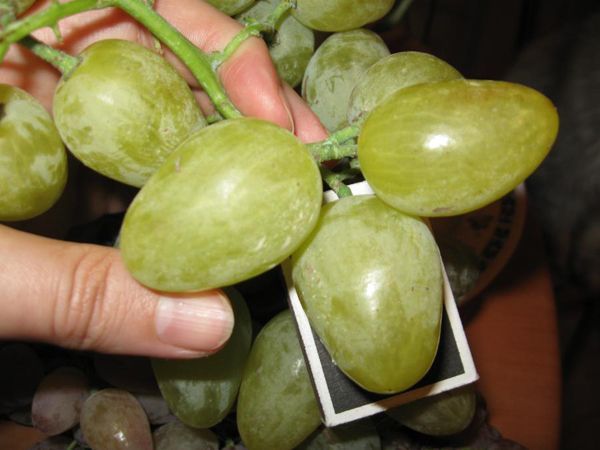
- The weight of berries reaches 20 g.
-
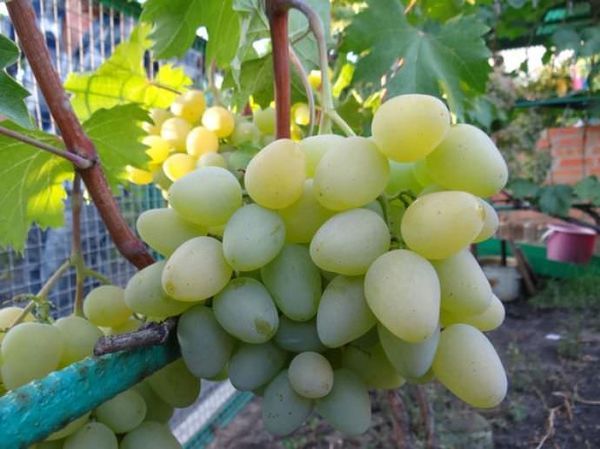
- The grapes are prone to abundant fruit set.
-
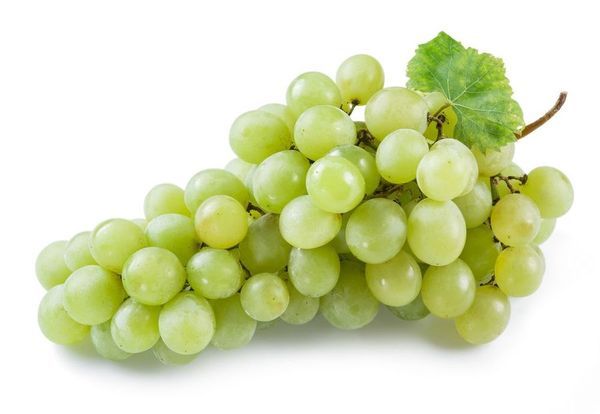
- The average weight of one bunch exceeds 500 – 600 g
Advantages and disadvantages
A description of the Monarch grape variety would be incomplete without highlighting its positive aspects:
- taste and presentable appearance of berries;
- ripe fruits do not require immediate removal from the vine;
- resistance to drought or waterlogging;
- low percentage of grape rot;
- genetic immunity to a number of diseases;
- preservation of commercial qualities during transportation.
Planting and growing Monarch grapes
The Monarch grape variety is easy to care for, making it an ideal choice for novice winegrowers. However, it does require adherence to key agronomic requirements that impact yield.
When and where to plant
The hybrid is considered a heat-loving species, requiring ample sunlight for its berries to ripen. Cuttings are planted in the southern part of the garden, as they do not tolerate northerly winds well. The vineyard is located near buildings, which will not only provide protection but also support for the tall plant.
Grapes are planted in light, moderately moist soils. Black soil, which contains sufficient nutrients and allows oxygen to reach the roots, is best. Sandy or clayey soils are not suitable for planting cuttings. The groundwater level should not be higher than 1.5 meters; otherwise, a good drainage system is required.
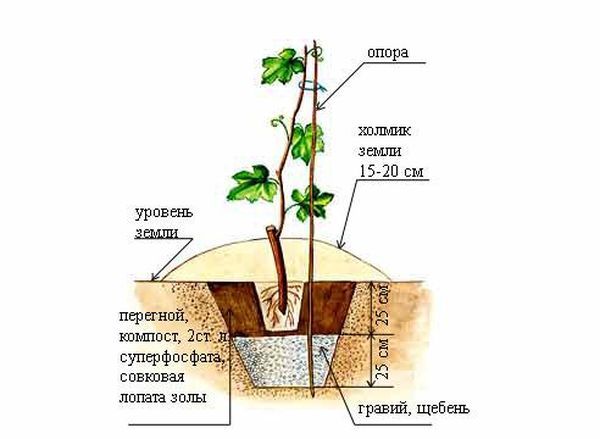
Selection and preparation of planting material
The survival rate and yield of a planting directly depend on the quality of the planting material purchased from specialist stores. When purchasing cuttings, it's recommended to pay attention to the following:
- the root system must be strong;
- a healthy seedling has a green cut;
- the shoot must have 3 formed buds;
- The root branches should be whitish in color.
Before planting in open ground, the cutting is placed in water or moistened soil. After the root system has grown and the green mass has emerged, the seedling is planted in the chosen location.
Watering and mulching
The grape's description indicates that it doesn't require frequent and abundant watering. Cultivation techniques call for two mandatory waterings when the grapes enter flowering and begin to form ovaries. The rest of the year, it's recommended to rely on weather conditions and the condition of the plant.
Mulching, which uses various materials and substances, helps retain moisture in the soil. Regular compost, spread around the bush, is effective. The thickness of the mulch should not exceed 3 cm, otherwise the root system will stop breathing and begin to rot.
Pavlovsky's pruning
Many winegrowers have encountered one of the main problems with this hybrid variety: unexplained berry drop. The creator of this hybrid form concluded that the drop occurs on the fattened shoots. His secret to preserving the harvest lies in pruning the grapes not in the fall, but in the spring, when the berries are in the "pea" stage.
Feeding and fertilization schedule
Grapes respond well to fertilizer, but untimely application can delay fruiting. Fertilizers are applied 2-3 times per season: after flowering, 14-21 days before harvest, and in the fall. The final application must include horse manure or cow manure. At other times, ammophos, nitrophoska, and Rastvorin can be used. Fertilizers are placed in specially dug trenches around the trunk, 0.2-0.5 meters deep.

Protection from diseases and pests
The days when copper sulfate treatment was sufficient are gone. A new, more effective treatment method was later developed:
- budding – the drug “Tirovit Jet 800 WG”, ratio 40 g per 10 l;
- leaf growth (size of a nail plate) – “Topaz 100 ES”, concentration 6 ml per 10 l;
- before flowering – “Quadris 250 SC”, 6 ml per bucket;
- after flowering – “Ridomil Gold MC 68 WG” 50 g per 10 l of water;
- fruit ripening - "Ridomil Gold MC 68 WG" 50 g per 10 l, after 3 weeks repeat spraying with "Quadris 250 SC" in a ratio of 12 ml per 10 l of water.
By constantly changing fungicidal preparations, harmful substances do not become accustomed to or accumulate in the vine.
Reviews from winegrowers
The Monarch table grape has won my family over. The vines grow quickly and produce a bountiful harvest. I use the wall of an outbuilding as a vineyard, but the quality of the grapes doesn't diminish.
The grapes are amazing with their flavor and large berries. Last year, some of the berries dropped, which was a bit of an embarrassment. Otherwise, I had no complaints about the variety.
The Monarch grape variety was developed by a Russian breeder and meets all the requirements of a variable climate. It is genetically resistant to most known diseases and produces large, tasty berries suitable for table use.