
Agricultural practices for high-yielding table grapes Laura
Content
The history of Laura grape selection
The Laura grape is the brainchild of Ukrainian breeders from the V. Ye. Tairov Institute of Viticulture and Winemaking (Odesa). In the 1990s, a group of scientists decided to conduct a breeding experiment to develop a new table grape variety. By crossing the Muscat Hamburg, Kober, Khusaine, Queen Tairovskaya, and Muscat de Saint-Vallier varieties, a new hybrid was created.
This fruit and berry crop is listed in the State Register of Breeding Achievements of Ukraine under the name Flora. However, winegrowers have adopted a different name: Laura.
Description and characteristics of the variety
Having inherited the best qualities from its parent varieties, the Flora grape variety has become widely popular in gardens in Russia, Ukraine and Moldova.
Appearance of the bush and vine
The plant is a medium-sized fruit and berry crop. The vine is vigorous yet flexible. The trunk and skeletal shoots are covered with brown-gray bark. Young vines typically have a brown-orange color.
The leaves are large, palmately lobed, with serrated edges. Leaf color is determined by weather conditions and the growing climate: light or dark green. The degree of foliage is high.
Description of bunches and characteristics of berries
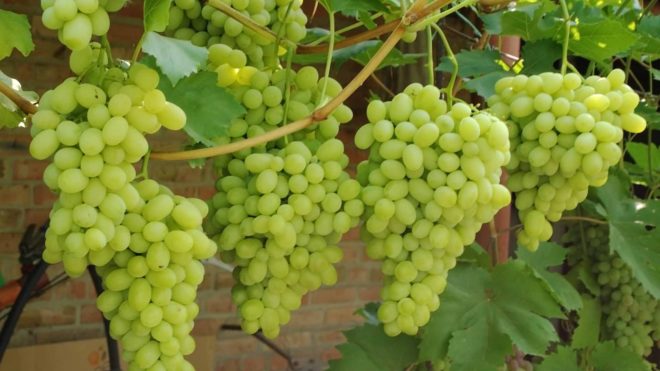
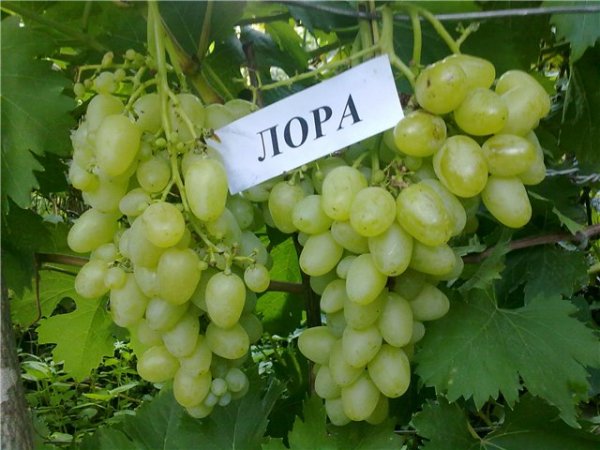
Laura grape clusters have a traditional conical shape. The average length of a single bunch is 40 cm. Their weight can vary from 1 to 2.5 kg. Each vine produces clusters of virtually identical weight and size.
The berries are characterized by a rounded-oblong shape. The skin is thick but translucent. When ripe, the berries are greenish-olive in color and have a waxy coating. The flesh is firm, juicy, and slightly crunchy.
Laura has a harmonious taste: sweet and sour notes with a pronounced nutmeg aftertaste. However, the acidity level depends on the composition of the cultivation soil.
Productivity and fruiting
The first harvest is collected 2-3 years after planting the bush in its permanent location. Ripening period is 115-120 days. With a large number of ovaries, the ripening period may be longer.
Laura is a highly productive variety. A single vine yields 35 to 50 kg of ripe berries. Yields are affected by weather conditions and proper agricultural practices.
Application of fruits
These sweet and juicy berries are recommended for fresh consumption. They can also be used to make juices, fruit drinks, compotes, and homemade wines. The Laura variety is rarely used to make raisins because of its seed content.
Drought resistance, frost resistance
The fruit and berry crop's drought tolerance is average. Grapes react equally negatively to both excess and insufficient soil moisture. For this reason, experienced gardeners recommend establishing a proper irrigation regime for vineyards.
As for winter hardiness, the hybrid is not afraid of cold. With proper winter preparation, the shrub can withstand temperatures down to -25°C.
Advantages and disadvantages of culture
- active and stable fruiting;
- increased productivity;
- harmonious taste of fruits;
- universal use of the crop;
- good transportability;
- long period of lying down;
- undemanding to growing conditions;
- good frost resistance;
- high decorative value of the bush.
- presence of seeds in fruits;
- juicy berries attract the attention of wasps and birds;
- dependence of the taste of fruits on weather conditions;
- tendency to intensive growth of shoots.
Video "Description of the Laura grape"
This video describes the main characteristics of the culture.
Growing Laura grapes
The Laura grape is considered an easy-to-grow fruit and berry crop. The following cultivation guidelines will help increase the plant's viability and improve yields.
Planting recommendations
Grapes grow well in sunny areas. Preferably, the area should be sheltered from wind and drafts. A mini vineyard can be set up near a fence or the wall of a house.
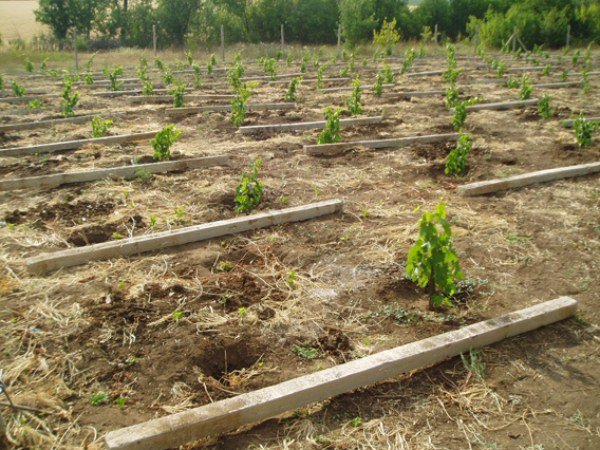
The soil should be fertile and loose. Drainage is essential when preparing the planting hole. However, areas of the garden dominated by salt marsh, loam, or clay should be avoided. A high water table is also undesirable.
It's best to plant grapes outdoors in early spring. The average daily temperature should be around 15°C.
Methods of reproduction
The hybrid can be propagated by seedlings and cuttings. It's best to purchase seedlings from specialized gardening nurseries.
Planting material must be healthy and fresh. For propagation of fruit and berry crops, use one- or two-year-old seedlings with multiple shoots. The root system is fibrous and well-developed. Mechanical damage to the bark, a poorly developed root system, a rotten smell, and insect residue are the main signs of poor-quality planting material.
Propagation by cuttings is used to renew vines. The optimal cutting length is 15-20 cm. The planting material should have several developed buds. It is believed that plants propagated by cuttings yield faster because they are grafted onto an already established and established plant.
How to water and fertilize
This variety appreciates abundant and frequent watering. During the fruiting period, approximately 10 liters of settled water are poured under each mature bush.
If the summer is rainy, the plant needs to be watered as the top layer of soil dries out.
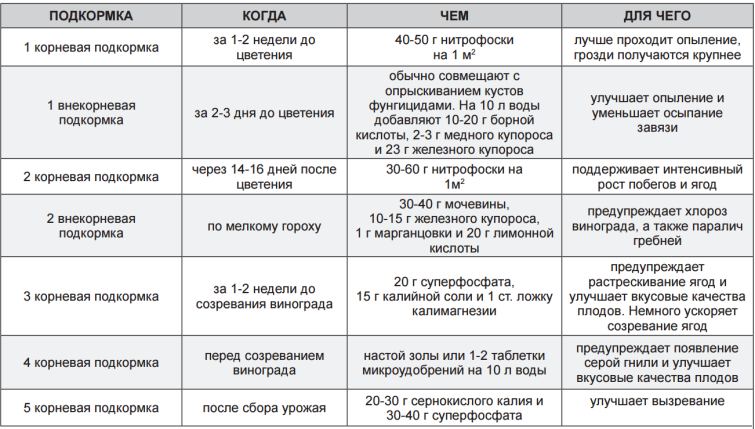
Many beginning gardeners believe that fruit and berry crops require frequent fertilizing. Incorrectly selected fertilizers and application schedules can lead to reduced yields and even plant death.
We offer you the following algorithm for applying fertilizers:
Pruning grapes
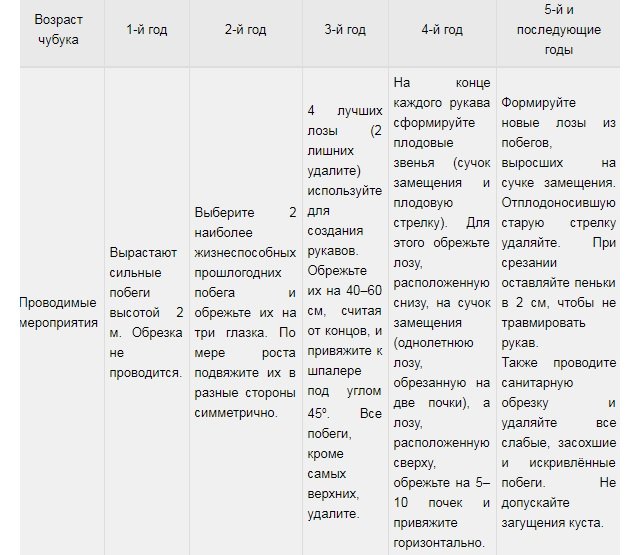
For the first two years after planting, the vines are not pruned. Subsequently, sanitary pruning is performed every autumn. All damaged, dried, and injured shoots are removed.
To properly shape a grape bush, you can follow the scheme described below:
Preparing crops for winter
Hybrids grown in central and northern regions are pruned. The pruned vines are bent to the ground and insulated with pine branches. White polypropylene bags or spunbond non-woven covering material can be used as insulation.
Protecting plants from birds, insects and diseases
One of the variety's drawbacks is its weak resistance to powdery mildew. When affected by this fungal disease, the fruit becomes smaller and cracks, and leaves and vines die. To protect the crop, use Bordeaux mixture, colloidal sulfur, or Storbi and Cumulus DF.
Sweet and aromatic berries attract birds and wasps. To save the harvest, winegrowers recommend "hiding" bunches of grapes in mesh bags. To combat aphids, leaf rollers, and spider mites that attack fruit and berry crops, insecticides such as Actellic, Fufanon, Kinmiks, and Fozalon are used.
-
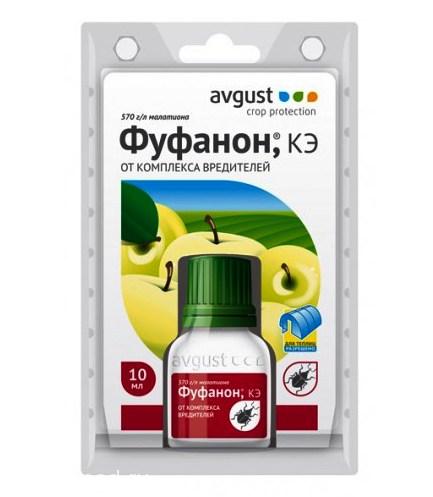
- Fufanon
-
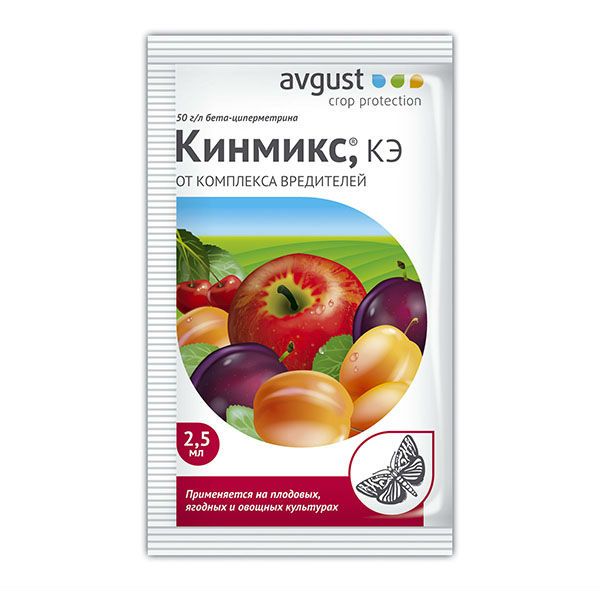
- Kinmix
-
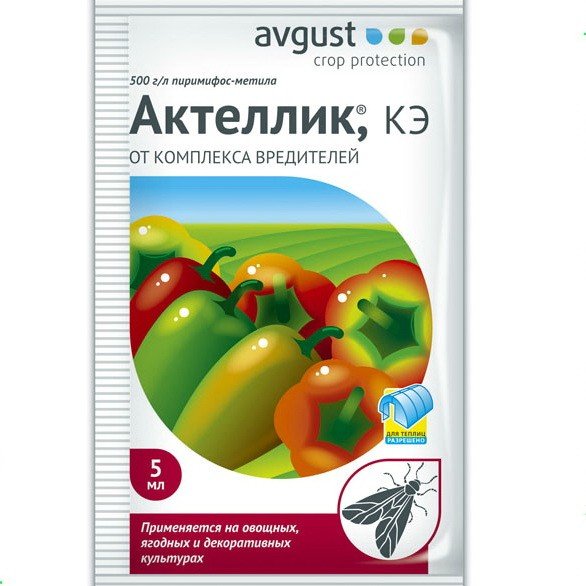
- Actellic
Reviews from winegrowers
"I've been growing grapes for a long time. Among the many fruit and berry crops, I've chosen the table grape variety Laura. With minimal care, the plant produces vigorous and abundant fruit."
"Laura is a popular table grape variety in our area. Vineyard maintenance doesn't require much time or effort. The plant quickly establishes itself and withstands various weather conditions."
The Laura grape is a great addition to your garden. Not only will this plant delight you with its bountiful harvest, but it will also be a beautiful addition to garden gazebos, arches, and seating areas.