
Description and subtleties of growing Californian grapes Cardinal
Content
The history of the Cardinal grape
The new variety was developed in 1939 in the United States. Breeders E. Snyder and F. Harmon crossed the varieties Alphonse Lavallee and Queen of the Vineyards. Cardinal gradually gained recognition among European winegrowers, and in 1958 it was brought to Russia. Variety testing only began in 1964, and 10 years later, Cardinal was included in the State Register of Breeding Achievements.
Features and characteristics of the variety
Description of the bush and vine
Cardinal's vines are vigorous, reaching up to 3 meters in length. They mature at half or two-thirds of their length. With proper care, each plant produces 70 shoots, each producing 1-2 clusters. The foliage is dense, pubescent, and glossy. Cardinal's flowers are bisexual, preventing pollination issues.
Description of bunches and berries
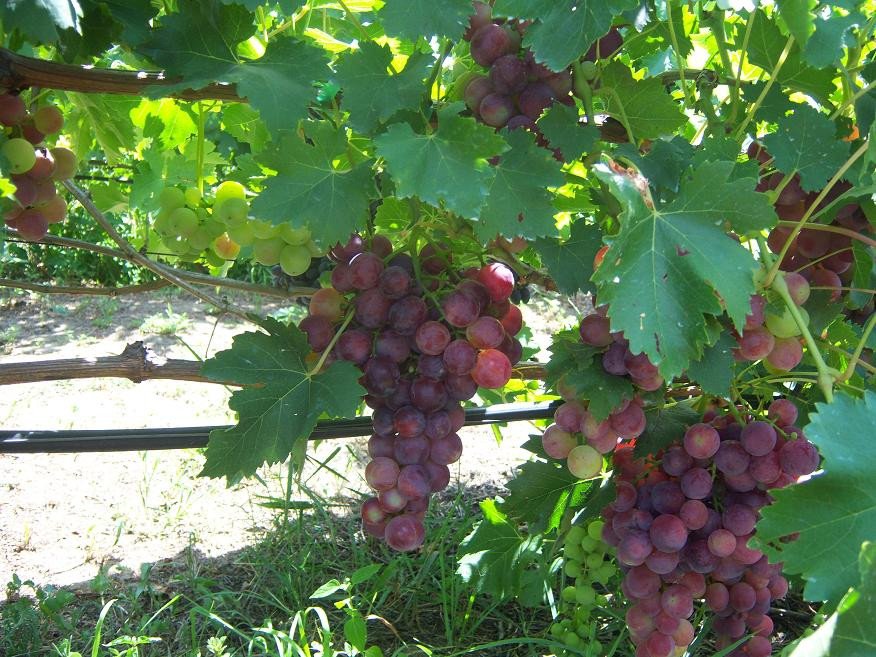
If the grapes are too wet, their thin skins crack and the berries rot. The bunches are cylindrical-conical, sometimes with an additional wing. Weight ranges from 200-900 g, with heavier bunches sometimes occurring. Due to their low density, a bunch up to 30 cm long can weigh 300-600 g.
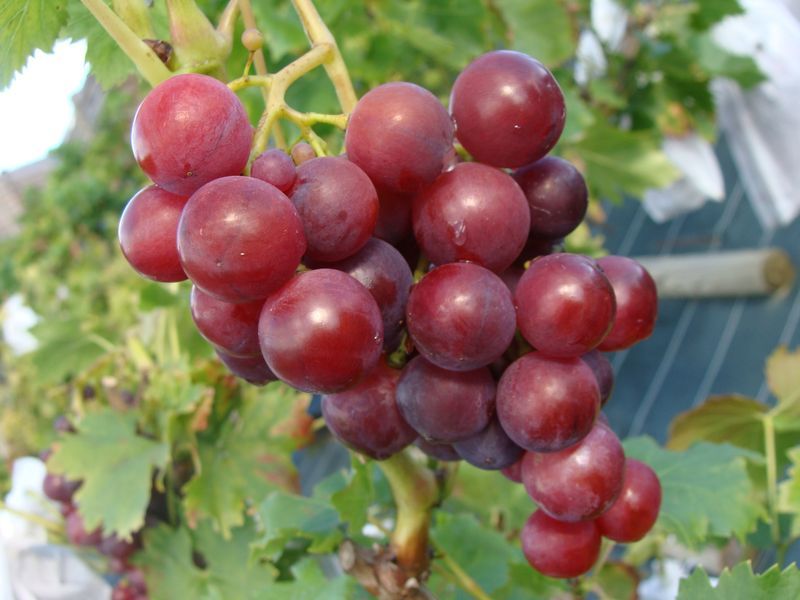
Initially black, Cardinal grapes produce purple or red berries depending on soil conditions. Ripe berries are round or slightly oval, distinguished by a slanted groove at the top. Each berry measures 1.5-3 cm and weighs up to 10 g. The grapes are sweet, with a hint of acidity and a muscat flavor. The sugar-to-acid ratio is 2:1, with a sugar content of less than 18%.
Ripening time and yield
Cardinal is considered an early, classic table grape. With proper care, the first bunches ripen 105-110 days after the start of the growing season. In Russia, during warm summers, ripe bunches of grapes are picked in August. For maximum yield, Cardinal requires a mild climate, similar to that of Mediterranean countries. Yields range from 11-15 tons per hectare.
Harvesting, storage and use of crops
Cardinal grape clusters ripen unevenly, beginning in the second ten days of August. They should be cut one by one with pruning shears, leaving a stalk of up to 5 cm on the vine. Fresh grapes can be stored for up to three months. Choose cool, dark places with stable humidity. If a cluster contains damaged berries, it should not be stored.
Whole, firm berries transport well in shallow baskets and wooden crates. Before transporting, the bunches should be stacked tightly together. These grapes are used to make wine, juice, jams, compotes, and dried raisins.
The Californian Guest's Family
New varieties capable of growing and bearing fruit in northern regions are developed year after year using the Cardinal grape variety. Popular varieties include Arcadia, Sofia, Monarch, and Crimean Cardinal. To ensure frost resistance, the Cardinal and Criulensky grapes are crossed, which can withstand temperatures as low as -28°C without shelter. The Cardinal AZOS and Lux varieties were developed at the zonal experimental station in Anapa, where 16 hybrids based on the Californian parent are grown. The new varieties are characterized by their cold tolerance and resistance to rot and spider mites.
Video: "Introduction to Cardinal Grapes"
This video shows what a fruit and berry crop looks like.
Advantages and disadvantages of early ripening varieties
- rapid ripening;
- increased yield (up to 70 fruiting shoots per bush);
- large-fruited;
- high taste qualities of ripe berries;
- storability, transportability;
- does not require special care, is accessible for growing by novice gardeners;
- wide range of uses for ripe berries.
- fear of frost;
- intolerance to temperature changes;
- shedding of flowers, cracking and rotting of berries due to high humidity;
- susceptibility to fungal diseases;
- uneven maturation of brushes.
Planting and caring for grape bushes
Growing regions
Gardeners' reviews indicate that grapes are suitable for southern regions of Russia, where winters are mild: Stavropol, Rostov Oblast, and Krasnodar Krai. Large vineyards are located in Crimea. In areas with a less mild climate, vines will require additional care and winter protection. Grapes do not grow in cold climates.
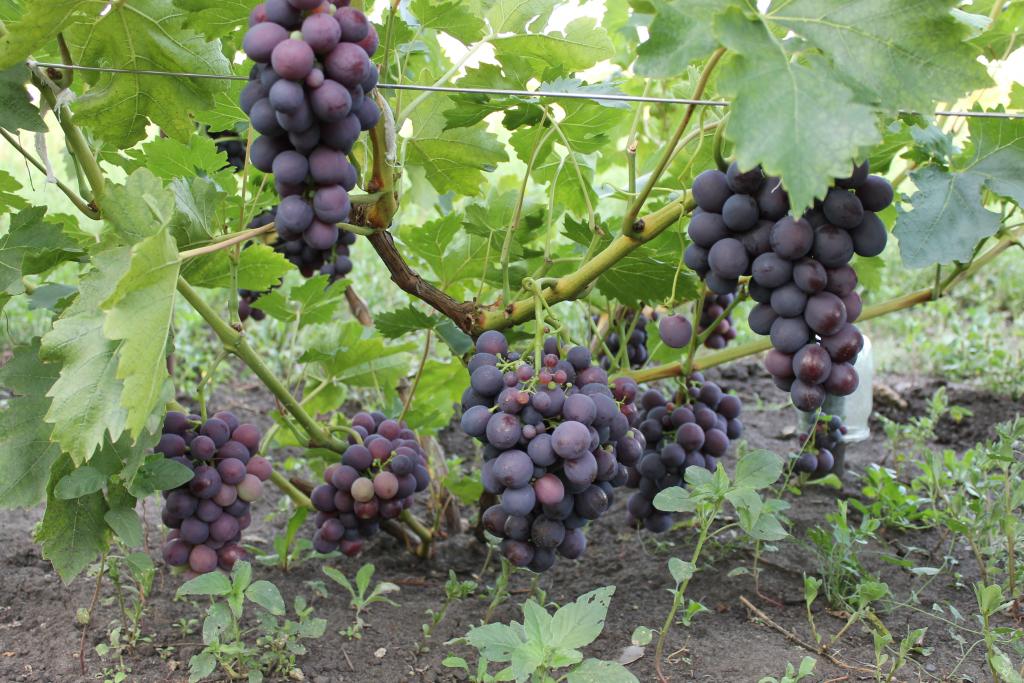
Vines are planted in open, sunny areas, providing the grapes with warmth and light. Shade reduces yield, and the bunches don't have time to ripen. The soil should be well-drained, loamy or black soil. A low water table is essential.
Methods of grape propagation
A reliable method of propagating Cardinal is grafting cuttings onto mature rootstocks. Bushes of varieties with high tolerance to adverse conditions are used. Cuttings are prepared in the fall during the plant's winter preparation. They are selected from the middle part of the shoot. The cuttings should be up to 1 cm thick and up to 8 cm long. At least four branches are gathered into a bundle, with leaves and shoots removed. To ensure the cuttings last until spring, the cuts are coated with paraffin. Cardinal grafting is done in late April and early May.
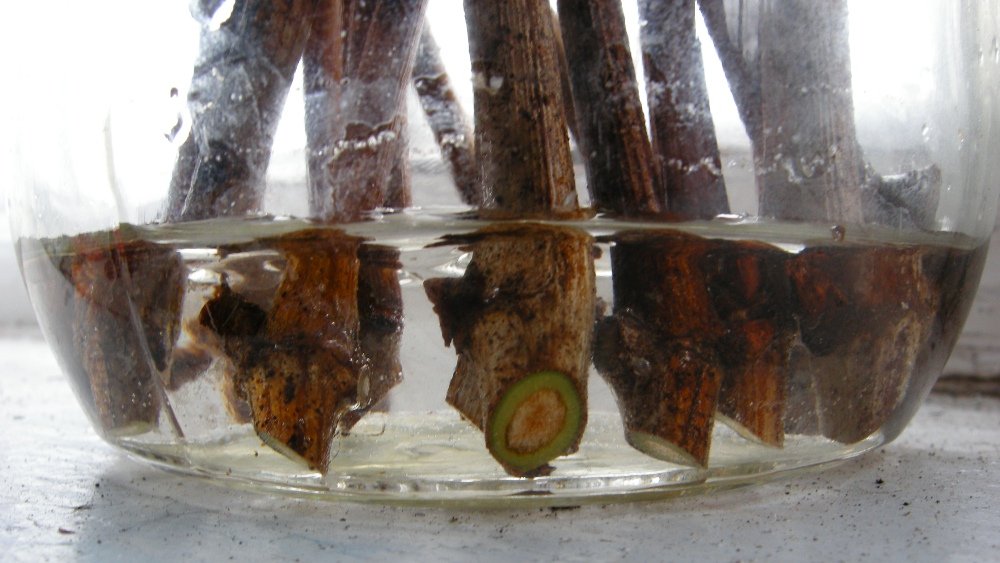
Planting from cuttings is considered a less reliable method for growing this grape variety. Select branches with two to three buds and germinate them in water until roots appear. The weak point of this method is temperature. The soil must warm to 10°C and the air to 15°C. Otherwise, the cuttings will die.
-
- Treatment with Kornevin solution
-
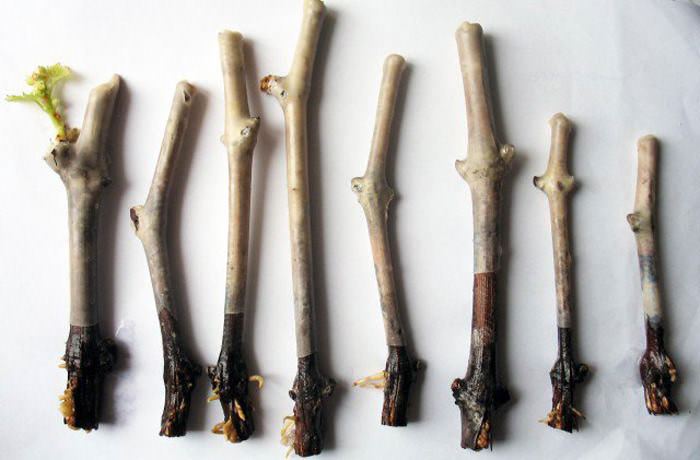
- Cuttings ready for rooting
-
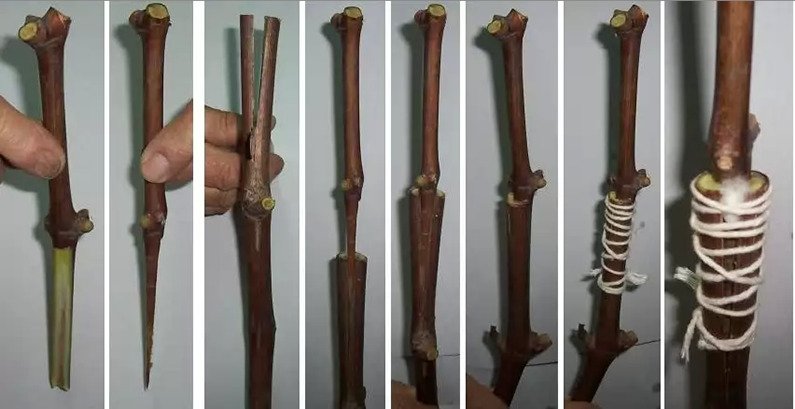
- Grafting a cutting
Watering and fertilizing requirements
Cardinal grapes are drought-tolerant, so they require moderate but consistent moisture. Excess moisture causes the berries to crack. Stagnant water should be prevented by drainage. With normal soil, watering should be done up to four times per season, especially during budding and fruit set. One to two buckets of warm water are sufficient for each vine. To retain moisture in the soil, the area around the trunk is mulched with grass or sawdust.
Fertilize three times per season. Nitrogen fertilizers are applied in early spring. This stimulates plant growth. After flowering and harvest, superphosphate and potassium sulfate are applied. Organic fertilizers are applied once per season.
Rules for pruning and shaping
The Cardinal grape variety requires pruning, which it tolerates well. Three to six buds are left on the shoots. In southern regions with a consistently warm climate, the grape is grown as a tall-stemmed tree.
Shaping is done during pruning. The fan-shaped method involves preserving 14 fruiting shoots and 25-30 buds. The standard section is created immediately, then up to 4 "sleeves" are created the following year, and the fruiting shoots are established the following year.

Protecting grapes from diseases and pests
The Cardinal variety is not resistant to fungal diseases, so it needs to be sprayed with fungicides in a timely manner. Use Ridomil or colloidal sulfur. Dilute the chosen solution in water according to the instructions and spray all parts of the plant, including the undersides of the leaves. The first treatment is carried out after flowering has finished.
The main pests of Cardinal grapes are wasps and birds. To protect the harvest from them, each bunch is wrapped in gauze. This method requires time and effort, but it guarantees the preservation of the berries.
Preventative antifungal treatments are essential for Cardinal. If the bush becomes diseased, the prognosis can be unfavorable. To promote faster growth and strength, use ferrous sulfate.
Reviews from gardeners
"Cardinal grapes are the benchmark for flavor and ripe bunch size. If I want to try a new variety, I look to Cardinal. Yes, they're susceptible to diseases and require care, but the effort is worth it."
"We've been growing Cardinal grapes for a long time. It's a labor-intensive process, but the investment pays off. The berries begin to ripen in the first ten days of August. Any self-respecting winemaker should have this variety."
The Cardinal grape variety is prized for its early ripening but has a weak immune system. It requires careful care and a mild, warm climate. The abundance of ripe berries covers all the costs of cultivation. The harvest stores well when fresh.