
Instructions for use and mechanism of action of the fungicide for grapes "Strobi"
Content
Description and mechanism of action
A cutting-edge development, the fungicide "Strobi" is successfully used on grapes and provides excellent fungal prevention. It has also proven effective in treating many plant diseases caused by certain types of fungi. It is produced by a German manufacturer in convenient water-soluble granules and sachets.
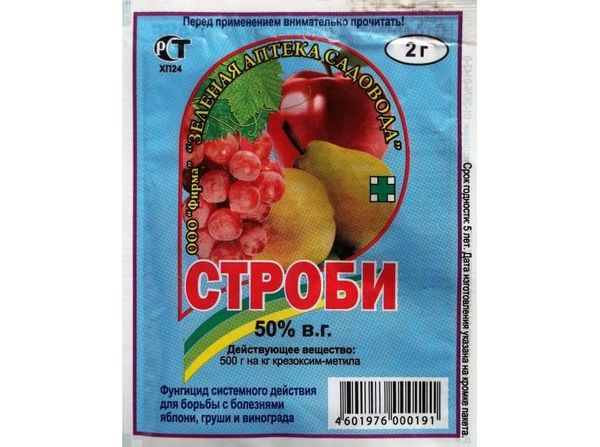
The key active ingredient is kresoxim-methyl. It belongs to the strobilurin class. It works by disrupting the normal functioning of parasitic fungi. The main component of the product is classified as hazard class 3.
Instructions for use
When purchasing "Strobi," a modern fungicide, gardeners often look for instructions on how to use it on grapes to ensure the treatment is effective. This product helps protect the shrub from many common ailments. It combats rhizome canker, rust, powdery mildew, scab, and black spot. Dissolve 5 grams of the fungicide, or 1 teaspoon, in 10 liters of water (1 bucket).
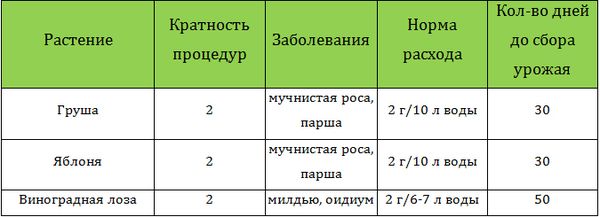
Spraying should be carried out strictly during the shrub's active growing season. Treatment should be applied to parts such as the trunk, leaves, and berries. Don't forget the soil around the roots. The fungicide is recommended to be applied twice over a period of 7-10 days. The final treatment should be applied one month before the planned harvest. There is no need to worry about the product harming the fruit, as its residues do not settle in the fruit after spraying. The active ingredient decomposes quickly in the soil, preventing penetration into deeper layers. In water, it decomposes to an acidic state and poses no risk to groundwater.
The fungicide can be used simultaneously with pesticides such as Fastak, BI-58, Kumulus, Poliram, and Delan. Before combining Strobi with any of the above-mentioned products, check their compatibility. It's best to use other non-stribilurin fungicides before and after treating grapes with this product. Frequent use of the fungicide can lead to the development of resistance. It's also recommended not to apply this product more than three times a year. Scheduled treatments should be carried out in the morning or evening.
Precautionary measures
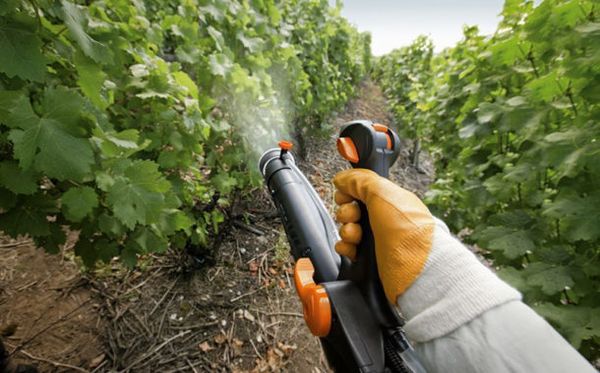
The product is a moderately hazardous compound with low toxicity to mammals and fish. When used at the correct dosage and within a protective zone of up to 2 km, it is harmless to bees. Humans should avoid direct contact with the product.
Before treating garden crops, wear protective clothing, gloves, and goggles. If the fungicide comes into contact with your skin or eyes, rinse them immediately with running water. If inhaled, move outside to fresh air. If swallowed, rinse your mouth and call a doctor. There is no specific antidote for this product.
Pros and cons
The product is popular among consumers due to its optimal price-quality ratio and cost-effectiveness. Another advantage is the ability to distribute the product evenly over the foliage surface. Since the main component penetrates the tissue structure, even one-sided application of the leaves is effective.
The product is not washed off by precipitation and is not less effective with temperature fluctuations. It can be used during active flowering of shrubs. It allows for the treatment and protection of plants from a wide range of parasitic fungi. It is successfully used on many crops grown in garden plots. A drawback of this fungicide is its high toxicity to human health if safety regulations are not followed.
Video: "Features of the Strobi fungicide"
This video will tell you why plants need to be treated with the fungicide Strobi.