
Varietal forms and cultivation of Amur grapes
Content
Description and characteristics
This is the oldest representative of the grape crop, still found wild in the Far East and China. Throughout its history, the Amur grape has remained virtually unchanged and has always demonstrated excellent adaptability to any climate. It thrives in both the Moscow region and Siberia, and its productivity remains high everywhere—60–80 centners per hectare. This high yield is due to the fact that 80% of the shoots are fruit-bearing, and the vines are very long—without proper pruning, they can reach 30 meters.
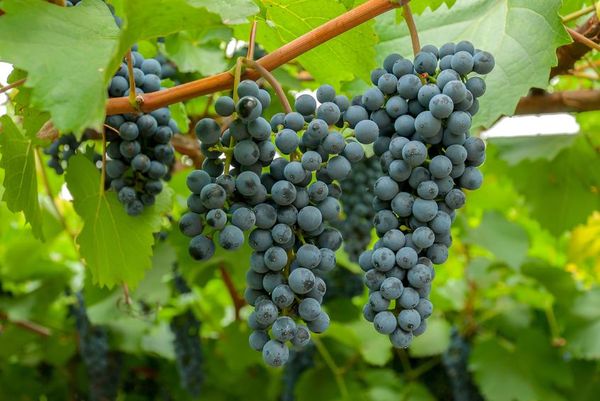
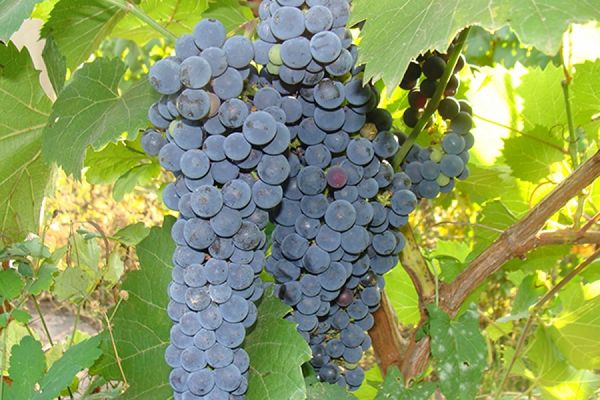
The bunches of Amur grapes are cylindrical, sometimes conical, with a total weight of 150–500 g. The berries are small (1–1.2 cm), round, traditionally black with a blue or purple tint, however, among the hybrid forms there are also white and pink grapes. The skin of the berries is very dense, due to which the bunches do not deform and are easy to transport.
The flesh is light-colored, with a slightly tart or sweet-and-sour flavor (depending on ripening conditions and varietal characteristics). The berries are primarily used for industrial purposes (juice, wine, vinegar), but most hybrids have excellent flavor.
Almost all Amur grape varieties are mid-season and ripen in early autumn. Good weather and timely pruning can speed up this period to the second half of August, as more space in the vineyard allows the bunches to receive more sun and warmth.
Hardiness and resistance to adverse factors (pests, diseases, frost) are hallmarks of Amur grapes. However, they are not grown commercially, as preference is given to selective varieties with higher-quality fruit.
Varietal forms
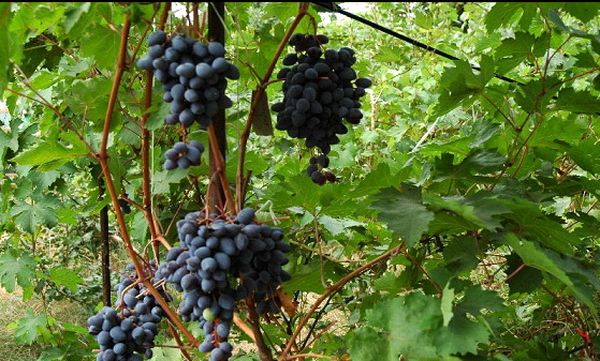
Having appreciated the highly adaptable qualities of Amur grapes, breeders began crossing them with well-known classic varieties. This resulted in new varieties with the same characteristics, but with sweeter and larger berries:
- A grape with the symbolic name "Amur Breakthrough." This is one of the very first hybrids obtained by breeder Ya. I. Potapenko from wild Amur grapes. In terms of yield and taste, it is almost equal to renowned European varieties and can be eaten fresh. It ripens in late summer. The berries are relatively large, pinkish-purple, with a light bloom, and a sweet and sour taste.
- Amur Triumph. Another table hybrid with high yields and excellent flavor. The Triumph grape variety is characterized by early ripening and has a wide variety of uses. The clusters are large (up to 500 g), with black berries covered with a blue bloom. The Triumph grape variety has a rich, muscat flavor;
- Victoria. One of the most successful table hybrids in this line. It is very disease-resistant and ripens early. The clusters are large, the berries are oblong, a rich pinkish-raspberry color. The flavor is pleasant and sweet.
- The Amursky Zolotoy Potapenko and Liepajas Dzintars grapes are white grapes with a very attractive varietal description. When fully ripe, the berries of these hybrids are transparent, amber-colored, sugary, with a pleasant muscat aftertaste.
For winemaking and juice production, the following technical varieties are used: Neretinsky, Ametistovy, Marinovsky, In Memory of Thor Heyerdahl (Amursky No. 9), Agat Donskoy and many others.
Features of cultivation
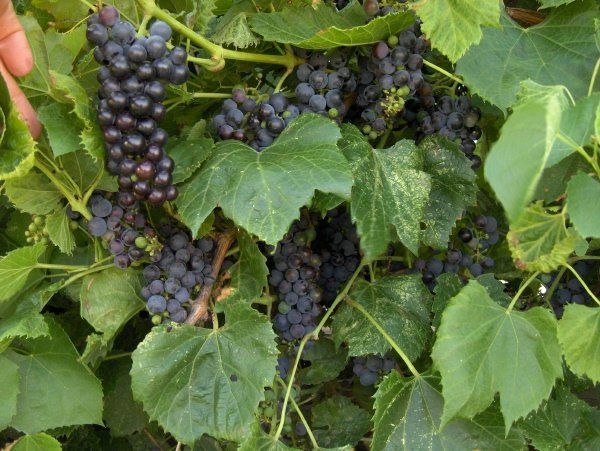
Amur grapes are easy to grow, so planting and caring for them are straightforward. They thrive in any plot of land except for areas with excessive shade, but for varietal seedlings, a sunny, wind-free spot is best – this will yield sweeter berries. Since Amur hybrids are often planted in regions with unstable climates, they are planted in raised beds or trenches.
When digging trenches and planting holes, ensure drainage, topped with a soil mixture of soil, coarse sand, high-moor peat, and humus. Ash and complex mineral fertilizers are also added. Grapes grow vigorously, so the distance between vines should be at least 0.8–1 m, and between rows up to 2.5 m.
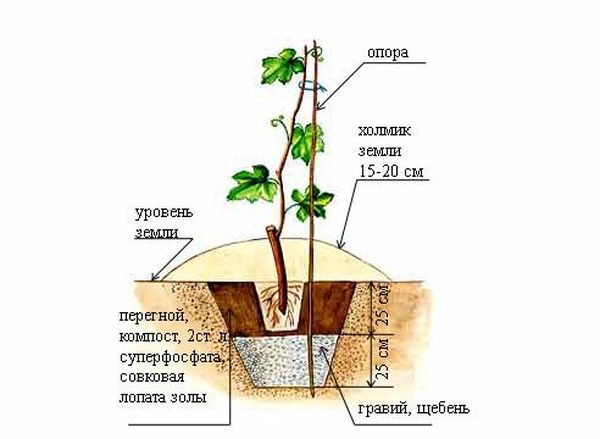
Caring for a young vineyard consists of watering and loosening the soil. Trellis should be installed immediately to allow the vines to grow.
During vigorous growth, the tops of the shoots should be pinched. Formative pruning is carried out in the fall, starting in the second year. Otherwise, the berries will become smaller and sour. In northern regions, the vines are covered for the winter.
With the trench method, it is placed in a trench and covered with earth, after which it is covered with agrofibre and spruce branches.
Advantages and disadvantages
Despite the rather mediocre taste of some Amur hybrids, gardeners find many advantages in this line of varieties:
- extremely frost-resistant (up to -40°C), thanks to which the vine can withstand any winter, and when grown in the Moscow region it does not require shelter;
- natural immunity to diseases;
- good survival rate and intensive plant growth (up to 2.5 m per year);
- early maturity of hybrids and the possibility of harvesting before the first frost;
- wide use of berries;
- The decorative qualities of vineyards are that they can be used as a hedge.
The only obvious drawback of these varieties is the strong growth of the bushes, which means that some bunches cannot be removed during harvest.
Video: Growing Grapes from Cuttings
This video will show you how to grow grapes from cuttings.