
Growing Benincasa Sweet Winter Squash
Content
Description and characteristics
The plant's native land is the tropical regions of Southeast Asia, where it grows wild. Cultivated forms of Benincasa are widespread in China, India, Japan, and other Asian countries, where the plant is considered not only a valuable food product but also a medicinal remedy for many ailments. Benincasa, or wax gourd, is a fast-growing, creeping annual with a well-developed rhizome. The stems are faceted, thin along their entire length (comparable to the thickness of a pencil), and can reach 4 meters in length. The leaves, compared to other pumpkin varieties, are small and rounded, like those of a cucumber.
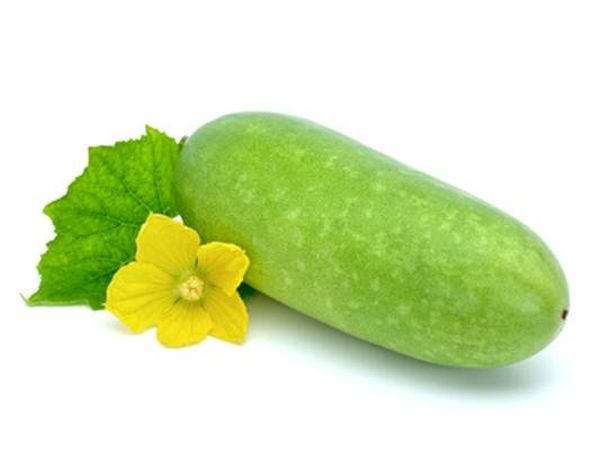
The flowers are also similar to cucumber flowers, consisting of 5 petals, only much larger – 8–15 cm in diameter. During the flowering period, pumpkin beds look very decorative: yellow-orange fragrant inflorescences against a background of bright green create an unforgettable contrast and attract many insects. The fruits of Benincasa have a very unusual description.
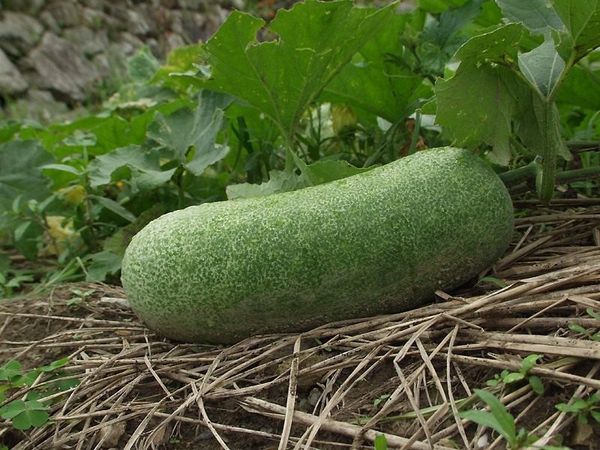
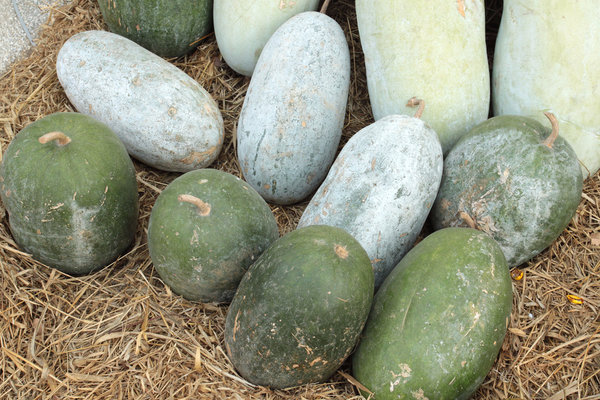
When unripe, they can be confused with zucchini—they're similarly green, oblong, and covered with fine bristles and a sticky coating. As they ripen, they become smooth, the skin thickens, and develops a dense waxy layer that protects the pumpkin from damage and loss of flavor. The pumpkin's flesh is white, sweet, and juicy, and has medicinal properties.
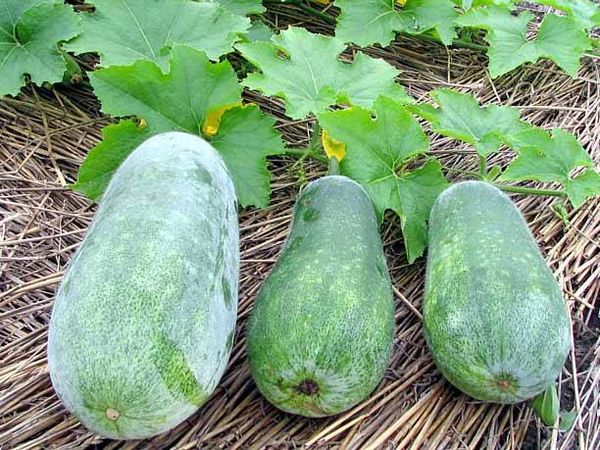
Wax gourds come in several varieties, varying in size, fruit shape, and ripening time. They can be round, oblong-oval, or long like a zucchini. Ripening time varies from 60 to 120 days, depending on the variety and climate, but Benincasa is generally a late-ripening winter squash, harvested no earlier than October.
Thanks to a thick layer of bluish-gray wax, the fruits keep well at home for about 2-3 years. Both young and ripe fruits are edible. Young pumpkins are eaten like zucchini: fried, pickled, stewed with vegetables, and stuffed with meat. Ripe fruits have a juicier, sweeter flesh and are used primarily for candied fruit, but they also make excellent hot appetizers and even soups.
In mild tropical climates, wax gourds can reach 10 kg in weight, but in our latitudes, even with careful care and proper agricultural practices, they rarely exceed 5 kg. The ripe fruits are harvested during October.
Pumpkin should be stored not in the cold, as we are accustomed to, but in a warm place, preferably at room temperature.
Features of cultivation
The Benincasa pumpkin, described above, is very heat-loving and somewhat finicky. Given this characteristic, it's best grown from seedlings, as the tender sprouts may not survive spring frosts on the surface. However, even this isn't always a smooth ride—gardeners who haven't had a good harvest the first time around note that Benincasa doesn't transplant well either. Therefore, it's best to try planting it directly in the ground, using various insulation methods, such as plastic sheeting or a heated garden bed.
For planting, choose a sunny, wind-free area. It's best to dig the soil beforehand, adding humus (5-6 kg/m²) and phosphorus and potassium fertilizers at 20-40 g/m². Seeds or seedlings should only be planted in well-warmed soil. Space the plants so that each bush has at least 1.5 m² of space. Wax gourds are not picky about their predecessors or neighbors and can be grown alongside other cucurbits.
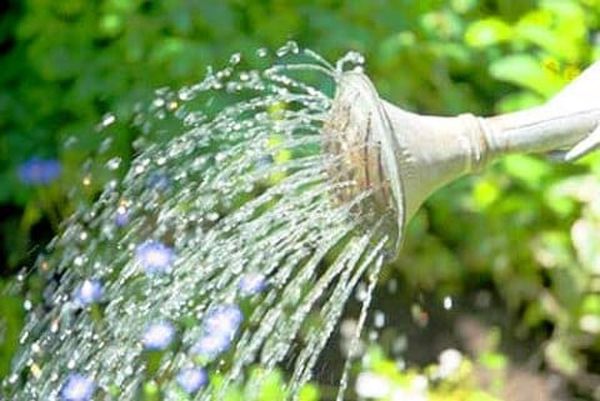
Care is the same as for other pumpkins: regular watering, loosening and weeding the soil, and hilling up once or twice. Long stems should be covered with soil to strengthen the bush and provide it with additional nutrition. It's best to remove some of the ovaries, leaving only two or three of the largest on the bush.
Pros and cons of the variety
Benincasa's long-term shelf life, allowing for enjoyment of its healthy fruit over a long period, is undoubtedly its main advantage. Only the domestically bred Gribovskaya Winter pumpkin boasts similar characteristics, and even then, it can only be stored until the next harvest. Therefore, the arrival of this new exotic variety has sparked increased interest among gardeners.
Moreover, the Benincasa pumpkin has medicinal properties. Almost all its parts—the pulp and seeds—are successfully used in traditional medicine in Eastern countries. For example, in China, the pulp is used as an antipyretic, analgesic, and diuretic. Pumpkin seeds have a tonic effect, are used to treat nervous disorders, and are a delicacy when roasted.
And, of course, its culinary value is precisely the quality for which the Benincasa variety is cultivated here. Young fruits can be eaten without cooking, used in salads and cold appetizers. Ripe pumpkins are excellent in casseroles, soups, hot vegetable dishes, porridges, and also as sweet and healthy treats, such as juices and candied fruits.
It's difficult to assess Benincasa's shortcomings, as the product is not entirely familiar to us, but the only thing that can be noted is its poor adaptability. Wax gourd doesn't tolerate low temperatures well, including the recurrent frosts typical of our climate. Otherwise, the variety is very promising.
Video "Benincasa or Wax Gourd"
In this video you will hear a description of the Benincasa pumpkin variety.