
Rules and secrets for growing pumpkins in open ground
Content
Peculiarities of pumpkin cultivation
Knowing how pumpkins grow and what conditions they require can help you achieve excellent fruit production without any problems. Lighting is crucial. Grow this vegetable in well-lit areas. The light duration should be 10-12 hours. Otherwise, the plant will produce few ovaries and be susceptible to various diseases. Also, when choosing a location for pumpkin plants, avoid strong winds and drafts.
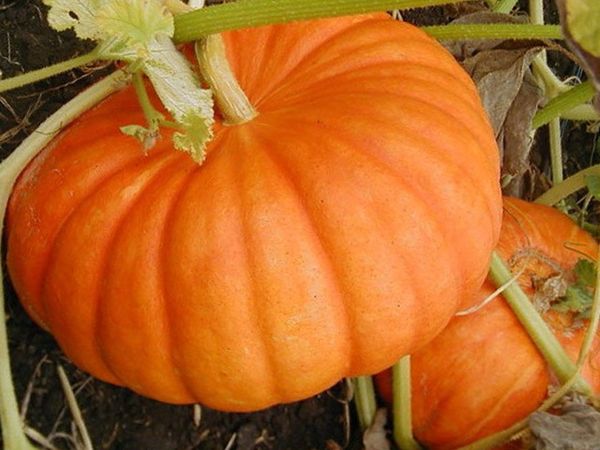
Planting of seedlings or seeds is carried out in wide beds (up to 3 m).Raised beds are best to protect the bushes from excessive moisture. Many experienced gardeners (for example, Oktyabrina Ganichkina) recommend maintaining a distance of 150–300 cm between plants. For varieties that produce small fruit, this distance is reduced to 70–100 cm.
How to plant a pumpkin
How to grow pumpkin outdoors? There are two methods:
- using seeds;
- using seedlings.
Both methods have their own secrets. However, they also share many common features. It's important to remember that pumpkins, grown and cared for in different regions, have specific agricultural requirements. This requires considering the climate of the growing area (in Siberia, etc.), as well as post-planting care requirements.
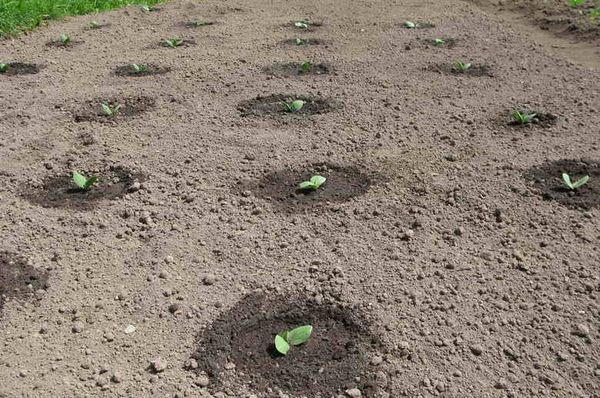
Predecessors of culture
How to grow a large pumpkin? First, you need to choose the right predecessors. The best predecessors for pumpkins are considered to be:
- cruciferous;
- legumes;
- corn;
- beet;
- eggplants;
- carrot;
- potato;
- tomatoes;
- pepper;
- sunflower;
- onion.
This crop can be grown in the same place only after 4–5 years.
Selecting soil
It's important to know that pumpkin growth depends directly on soil type. Pumpkins grow best in light and medium loamy soils. The more fertile the soil, the larger the pumpkin yield. To improve fertility, the soil is prepared in the fall. It is dug up and then manure or compost is added (5–8 kg per square meter). If the soil is heavy, urea and sawdust are added. If the soil is highly acidic, slaked lime is used.
Planting by seeds
To understand how to grow a pumpkin from seed, you need to read the relevant literature. You can also watch instructional videos created by experienced gardeners (Oktyabrina Ganichkina and others).
Planting of seedlings in open ground begins after May 15th. By this time, the soil should have warmed to 12 degrees Celsius.
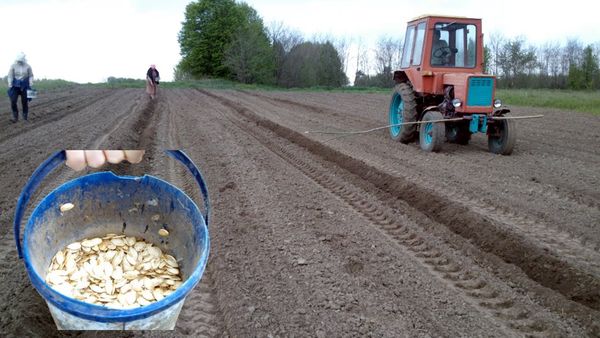
Planting by seeds is carried out as follows:
- a bed 70 cm wide is made;
- without a bed, the distance between rows is 2 m, and between depressions - 1 m;
- the holes have a diameter of 30-40 cm;
- Place a spoonful of potassium or phosphorus fertilizer at the bottom of the hole. Add manure or humus on top. Ash, peat, and other fertilizers can also be added.
- then the fertilizers are poured with warm water;
- Place 2-3 seeds per hole at a depth of 3-7 cm;
- then the soil is mulched with humus/peat;
- The bed is covered with film on top.
Pumpkins are grown from seeds in many regions of our country (for example, in the southern regions), as well as in Belarus, Ukraine, etc.
Planting with seedlings
To obtain seedlings, the seeds are germinated and treated with a growth stimulant. They should be grown in separate containers—peat pellets or plastic cups. Seedlings should be grown indoors, creating optimal conditions for humidity, temperature, and light (different from those for houseplants).
Seedlings are planted in late May. At this time, the sprouts will be approximately 30 days old. Planting young plants in the ground follows the same pattern as for seeds.
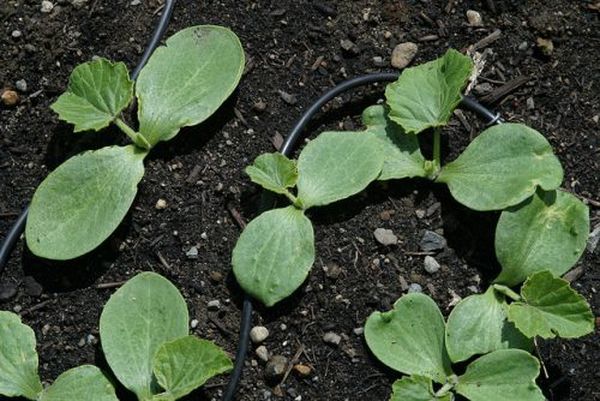
This planting method is practiced in many regions (in the Leningrad Region, the Urals, etc.). To understand how to grow a good pumpkin, it's important to understand the agricultural techniques required for each individual variety. Pumpkin cultivation is simple, and even a novice gardener can handle it. Therefore, growing this crop can be considered a business idea.
Watering
Pumpkin is a moisture-loving crop. It requires water to form female flowers. Therefore, caring for pumpkins outdoors always includes watering. Watering is done frequently and requires generous amounts of warm water. Before watering, the soil should be loosened. During flowering, watering should be reduced.
Top dressing
Caring for this crop involves weekly fertilization. Liquid fertilizers are best. Bushes should be fed alternately with organic and mineral fertilizers. Throughout the growing season, pumpkin beds are fertilized with ash (1 cup per bush).
Formation
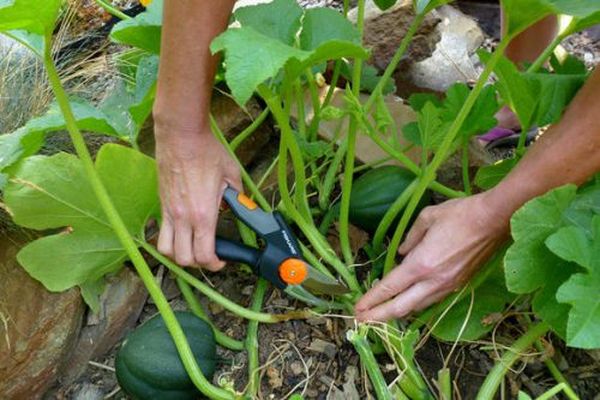
Pumpkin care also involves shaping the bushes. The plant should have no more than three shoots. Pinching is done when the shoot reaches 1.5 m. There are several methods for shaping pumpkins. They involve stimulating the formation of a pair of lateral stems with a small number of ovaries. Remember that proper care of pumpkins in open ground will help you achieve large fruits.
Powder
Pumpkin cultivation involves covering the vines. This is done when the vines reach 1 meter in length. First, they are untangled, then covered with soil in 2-3 places. This prevents the vines from breaking and promotes the formation of a sufficient number of ovaries. This care is the key to a tasty and abundant harvest.
By following all the above instructions, you can start growing pumpkins as your own business.Once you learn how to care for pumpkins, you can grow enormous pumpkins. After all, with proper care, you can get a giant berry from almost any large-fruited variety.
Diseases and pests
By understanding how to grow this crop properly, you can protect it from diseases and pests. If you don't maintain your pumpkin patch, the plants can suffer from the following ailments:
- black mold;
- Ascochytosis;
- powdery mildew;
- anthracnose;
- white rot.
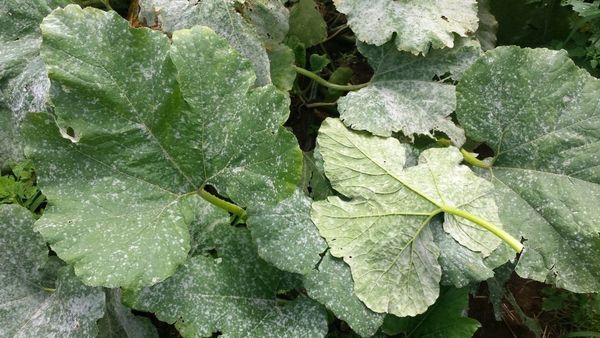
Due to parasites, bushes often suffer from springtails, melon aphids, slugs, wireworms and white springtails.
Harvesting and storage
In the fall, once the pumpkins have been grown, they are harvested. A sign of ripeness is a withered stem. Harvesting takes place in dry weather. Properly prepared pumpkins, once thoroughly dried, can be stored for a long time (6 months or more). Store the fruits in a warm, well-ventilated area.
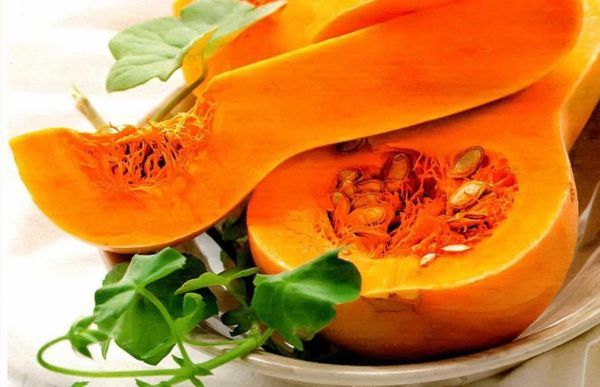
Humidity should be 60–70%, and the temperature 15–20 degrees Celsius. Knowing how to properly care for pumpkins allows you to grow almost all varieties in your garden, yielding tasty, large fruits.
Video: Planting Pumpkins in Open Ground
This video will show you how to plant a pumpkin in open ground.