
Growing pumpkins outdoors in the Urals
Content
Suitable pumpkin varieties
Night frosts lasting until mid-June are common in the Urals, so the best pumpkin varieties for this region are early and fast-ripening ones that ripen further during storage. According to Ural gardeners, the following varieties produce the best harvests:
- Pearl. A mid-early variety that ripens in just over 100 days. The plants tolerate extreme weather fluctuations and light frosts well and deliver high yields (15 kg/m²). The fruits are quite large (5–7 kg), pear-shaped, fleshy, with a small number of seeds, and have a long shelf life. The flesh has a wonderful sweet flavor and a muscat aroma.
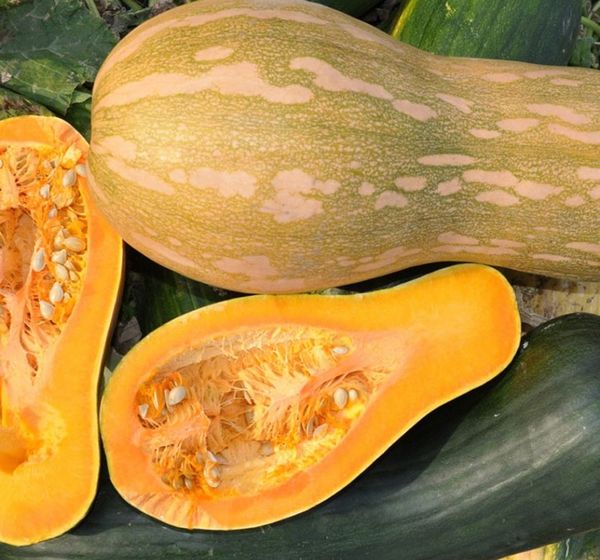
- Orange Bush Pumpkin. An early pumpkin, maturing in 90–102 days. The bushes are compact and non-trailing. The fruits are round, with orange skin, and weigh 4–7 kg. The flesh is very tender and sweet, with a high carotene content.
- Golden Bush. Another variety with compact bushes. The fruits are rounded and flattened, with visible segmentation on the surface. They are bright orange and ripen in 90–100 days. Pumpkins weigh 2.8–4 kg, with a yield of approximately 15 kg per square meter.
- Dachnaya. One of the earliest ripening varieties (75–85 days), it's also very cold-hardy. The fruits are medium-sized, weighing 3–4 kg. The skin is firm, green with yellow stripes. The flesh is yellow, aromatic, and sweet. It can be stored for up to 4 months.
- Medicinal. An early variety (90–95 days), characterized by high resistance to cold and high humidity. The fruits are round, flattened, ribbed on the surface, weighing 3–5 kg. The skin is gray-green, the flesh is bright orange, sweet, and contains a lot of carotene.
How to prepare seedlings
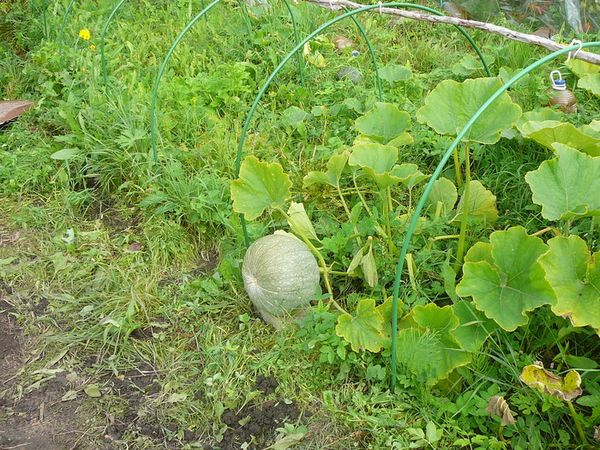
Pumpkin planting in the Urals can be done directly in open ground or through seedlings. In the first case, the bed must be kept under plastic for quite a while, until the threat of night frosts has passed, so many gardeners prefer to plant seedlings. Seedlings are grown in the usual way, but to ensure a satisfying harvest, special attention should be paid to seed preparation. First, they need to be warmed up and then germinated.
You can warm the seeds by placing them in the sun or near a radiator for a few days. Then, select the smaller but heaviest seeds, disinfect them in potassium permanganate or another solution, and place them in a damp cloth until they open (the sprouts appear). Next, sow the seeds in a soil mixture consisting of peat, sod, and humus (2:2:1), or in peat pots.
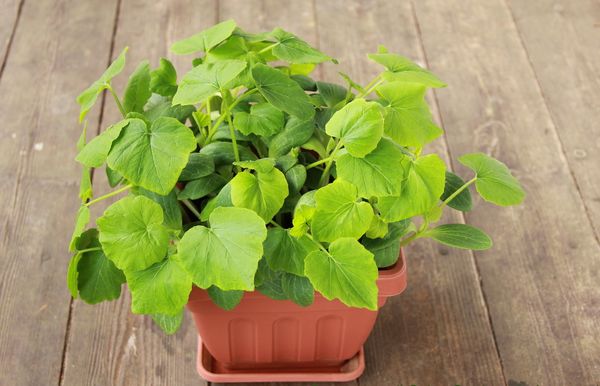
When the first shoots appear, the temperature should be reduced to 15–18°C to prevent the seedlings from becoming too tall, and after 6–7 days, the temperature can be raised. Seedling care consists of timely watering. At 7 days old, the first fertilizing with nitrophoska (15 g/10 l of water) is applied. Once warm weather sets in, the seedlings are moved outdoors to harden off. When the plants have 2–3 dark green true leaves, they are planted in the ground.
Planting a crop
Pumpkins should be planted in the most open area of the garden, where the sun will shine on the bed for most of the day. It's best if this area was previously used for growing potatoes, carrots, tomatoes, or legumes. Planting other melons and gourds near pumpkin beds is undesirable, as there's a high risk of disease and pest infestation.
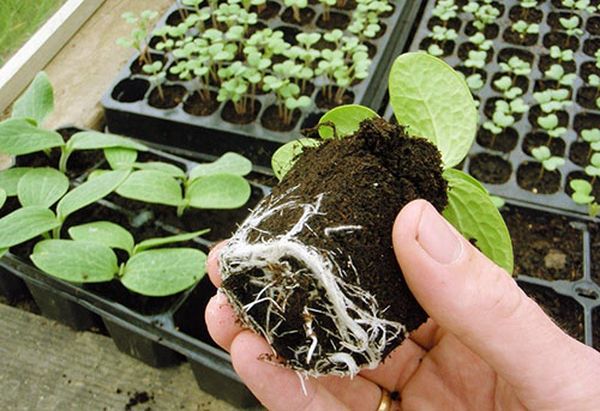
Growing pumpkin seedlings outdoors in the Urals will only be successful if the soil is warm. To achieve this, it's recommended to water the prepared holes with boiling water. It's best to transplant the seedlings along with the soil, ideally a peat pot. Plants should be spaced 0.7–1 m apart, depending on the variety. Initially, consider providing a plastic cover to protect against night frosts.
Caring for pumpkin
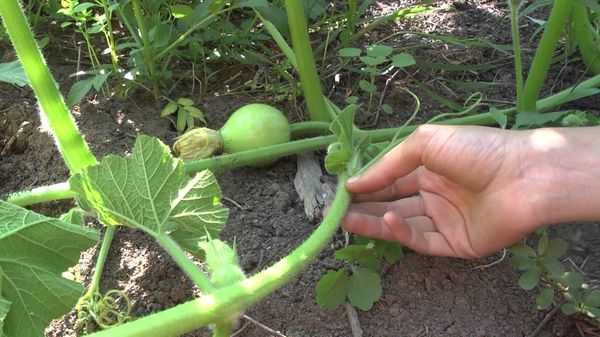
Until the plants bloom, water them once a week. Watering should be uniform and deep (at least 1 m), as pumpkins have deep roots. During flowering and fruiting, water more frequently. If the variety is a climbing plant, it's recommended to cover stems longer than 1 m with soil in several places. This encourages additional root formation, strengthening the plant and providing it with nutrients.
Before the bush becomes established, it's time to hill it up, then begin shaping the plants. Typically, pumpkins are trained into 1 or 2 stems, leaving only the 2-3 largest ovaries. The rest are removed, and excess stems are trimmed.
Pumpkins are fairly resistant to diseases and pests, but cold nights and hot days in the Urals can trigger the development of diseases such as bacterial blight and rot. At the first sign of disease, plants should be treated with Bordeaux mixture and watering should be reduced.
Problems in growing
Pumpkins thrive on warmth, and growing them in the Urals can be quite challenging. Most often, problems arise from recurrent night frosts, which can occur in this region even in June. Local vegetable growers have learned to solve this problem by using a heated bed. This is a simple raised bed, under which a trench is dug, filled with a layer of brushwood, compost, and humus, and then topped with soil. Once the fertilizer has burned off and the soil has cooled, pumpkins can be planted in about a month.
Seeds are also sown under plastic film. Once sprouts emerge, the film is cut, allowing the plants to grow outside. Alternatively, pumpkins can be planted in a plastic greenhouse, and then the mature vines can be moved outside for further ripening.
Video: Planting Pumpkin Seedlings in Open Ground
This video will show you how to properly plant pumpkin seedlings in open ground.