
Planting pumpkin seeds in open ground
Content
How to select and prepare seeds for planting
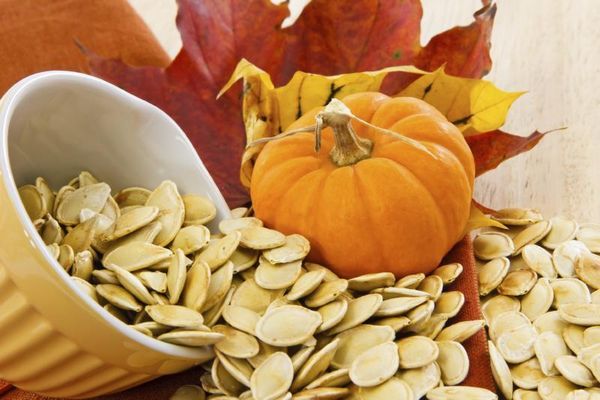
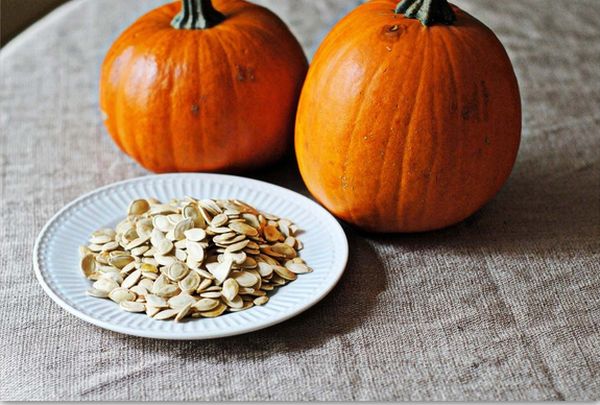
Pumpkin seeds for planting can be purchased at the store or collected from pumpkins planted in your garden in previous years and fully ripened. Everyone knows how to collect seeds: simply remove and rinse them after cutting a ripe pumpkin, then dry them and store them in a natural fabric bag for future planting. They are considered good for up to four years, but fresh seeds are not planted; it's better to store them for a couple of years, as this will significantly increase germination. A large, full-bodied seed will produce a healthy plant, so the planting material is calibrated by size and unsuitable seeds are discarded. To do this, simply soak the pumpkin seeds in salted water before planting – the worst seeds will float to the surface.
Vegetable growers often talk about how to properly prepare seed. It needs not only to be selected, but also disinfected and stimulated to germinate. To protect future plants from diseases, seeds are treated with various substances. Most commonly, they are soaked in a bright pink solution of potassium permanganate for several hours, but potassium humate, crezacin, and wood ash infusion can also be used.
All these measures are designed to protect the plants after planting pumpkins outdoors. Is it possible to do without them? Of course. Whether or not to soak pumpkin seeds before planting is a personal decision. But, as a rule, all the preparatory work takes little time and attention, while improving germination and plant quality.
We germinate and harden the seeds
Before planting pumpkin seeds outdoors, soak the seeds first, or wait until the sprouts emerge, then harden them off. This will help speed up germination, reducing overall growth time and allowing you to harvest even if summer ends early. Pumpkins, being a short-day plant, thrive in shorter periods of daylight, with fewer than 12 hours. Hardening off the seeds will also boost the plants' immunity, making them stronger in changing weather conditions.
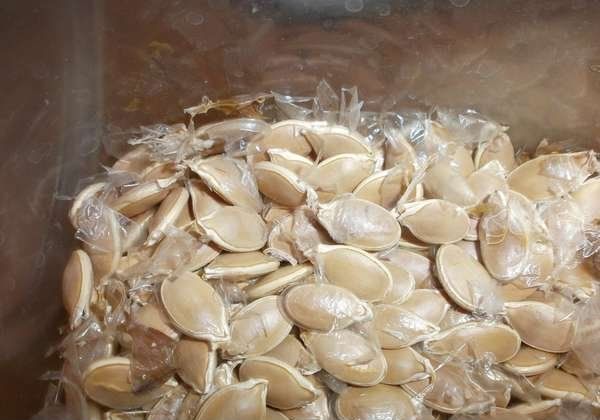
To help the sprout penetrate the seed skin, the seeds are heated for 8-9 hours at 50-60 degrees Celsius. You can use an oven for this purpose or simply hold them in the sun, turning them periodically for even heating. After this, they are placed in an ash solution (2 tablespoons of wood ash and 1 liter of boiling water, steeped until the temperature reaches an acceptable level of about 50 degrees Celsius) for 12 hours. Alternatively, they are simply wrapped in gauze soaked in the solution, folded several times beforehand.
Before planting, sprouted or hatched seeds are placed in the refrigerator for the last 24 hours, leaving them on the bottom shelf. Sometimes they are simply kept in the refrigerator for 10 hours at a time, then 2 hours at a time, before planting.
Fertilizing and other soil preparation
A sunny location for a pumpkin patch is chosen, although many varieties grown in partial shade perform equally well when harvested. The soil should be non-acidic, fertile, and loose enough to prevent water stagnation and allow air to reach the roots. Fertile sandy loam or loamy soil is best. Pumpkins should be planted in the same spot no sooner than every five years. Good predecessors include grains, legumes, cabbage, green manure, and perennial grasses.
Before planting pumpkin seeds in the garden, it's worth doing some preparatory work. It's best to prepare the plot in the fall. It should be cleared of weeds, dug to the depth of a spade, and filled with humus and compost, even unrotted cow manure, at a total rate of up to 10 kg per square meter.
Add superphosphate and potassium fertilizers (up to 20 g each) and a 1-liter jar of wood ash. If the soil is too heavy, add sawdust (preferably semi-rotted) and sand; if it's too sandy, add loam. If the soil is acidic, add dolomite flour or even lime in the fall. Those who didn't have time to enrich the soil in the fall usually apply fertilizer directly to the bottom of the hole before planting.
Planting dates
Pumpkin planting times depend on the region's climate. Pumpkins are usually sown outdoors in early May in the south, and towards the end of May in the north. In summer (if the weather doesn't permit it earlier), it's best to grow this vegetable from seedlings rather than directly from seeds. Before planting pumpkins outdoors, ensure the soil has warmed to a depth of at least 10 cm, reaching 12 degrees Celsius. At lower temperatures, pumpkins will germinate very slowly and may even rot.
The planting time is calculated as follows: the harvest must be collected before the onset of frost; from the emergence of sprouts to the ripening of the fruit, it usually takes 3.5–4 months; prepared seeds germinate in less than a week, unprepared seeds – from 10 to 14 days.
Knowing when the cold weather arrives in the fall and when the soil warms up to the required temperature in the spring can help you determine the right sowing time.
Planting seeds in the ground
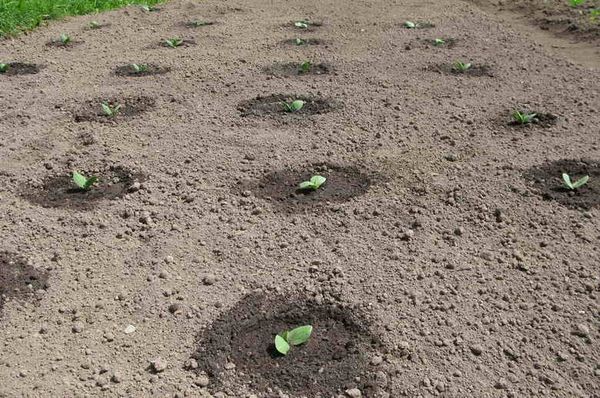
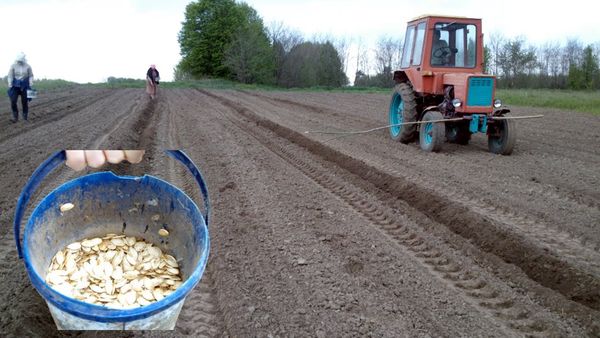
Now it's time to talk about how to plant pumpkin seeds. In the selected and prepared garden plot, remove any weeds in the spring, dig (or simply loosen) the bed, and dig shallow holes 30 cm in diameter at intervals of 80–100 cm. Leave a distance of 1.5 to 2 meters between rows. It's best to stagger the holes. If fertilizer wasn't applied in the fall, add at least 5 kg of organic fertilizer, 1 tablespoon of complex mineral fertilizer, and wood ash to the bottom of each hole (which should be dug deeper). Mix this lightly with the soil. Add 1–1.5 liters of hot water (around 50°C) to each hole. Once it's absorbed, plant the seeds.
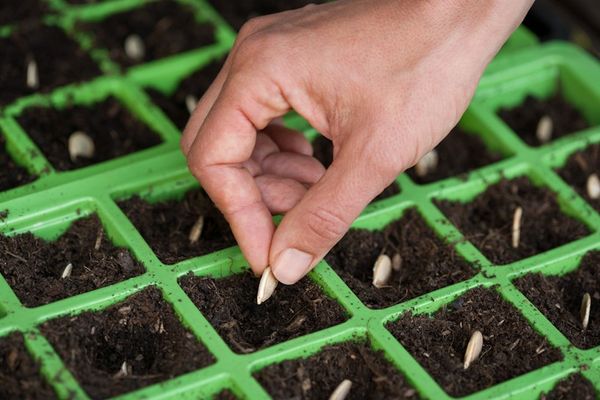
Place 3-5 pumpkins in each hole, 5 to 8 cm deep, planting them not next to each other but as far apart as possible. Then cover them with soil, sawdust, or compost. Once all the plants have sprouted and developed a pair of true leaves, only two are left. Their condition will determine which pumpkin to choose; the rest are pinched off at ground level.
Video: Planting Pumpkins in Open Ground
In this video you will hear useful tips on planting pumpkins.