
Description of the aromatic butternut squash variety Zhemchuzhina
Content
Description and characteristics
This is a vigorous plant that forms approximately 4-7 lateral shoots. These produce medium-sized leaves. They are dark green with faint white spots. The leaf blades are undissected and pentagonal.
Muscat Pearl is considered a mid-late variety. To get a ripe harvest after planting seeds in the ground, it takes about 100–110 days. Although it often takes approximately 115–130 days for the variety to fully ripen, it produces fruits known as false berries.
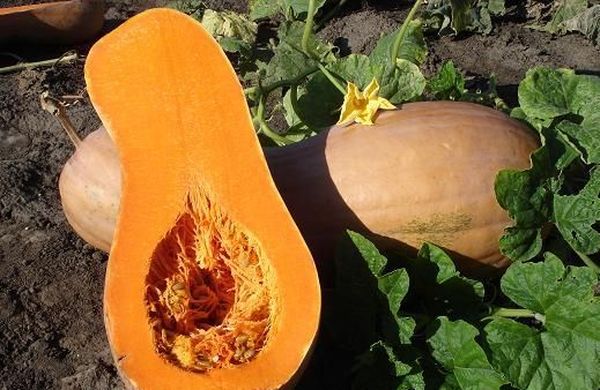
Pumpkins of this variety have the following description:
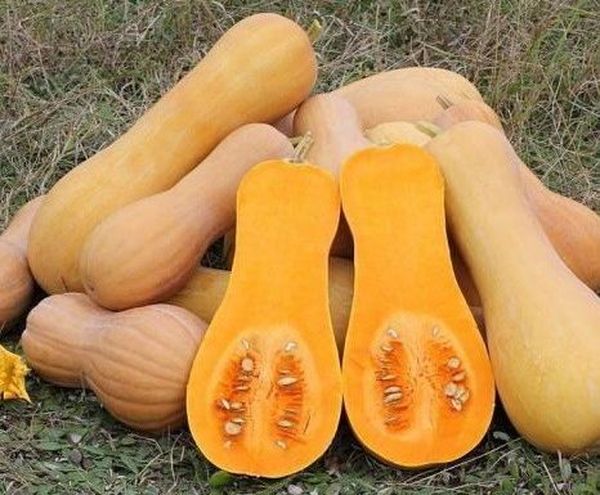
- Cylindrical-round shape. However, there are also pumpkins of round and oval shapes with a pronounced ribbed structure;
- The peel has a bright orange color. This color is due to the high content of carotenes. During ripening, the peel changes from gray-green to greenish-orange.
- the skin is flexible and thin;
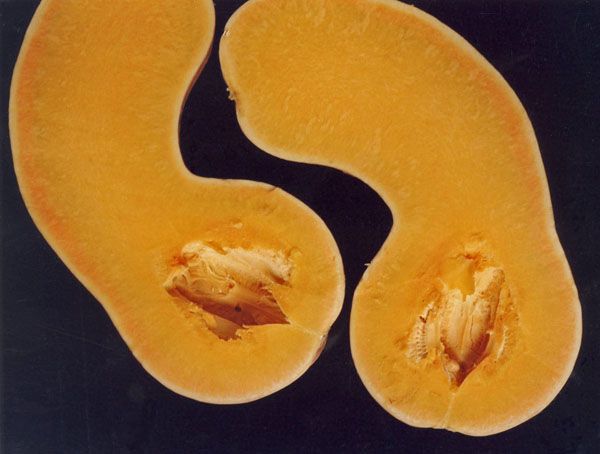
- The flesh is thick and soft and juicy. All Muscat varieties have a fibrous texture. It usually has an orange-yellow hue.
The fruits are large, often weighing around 8 kg on average. The pumpkins reach 50 cm in length. It's worth noting that this variety has a small seed nest.
The fruits have an excellent flavor, which has contributed to the variety's popularity. Many gardeners claim that its flavor is the best of all members of the Cucurbitaceae family. The berries are often used in cooking for a variety of dishes.
The characteristics of the variety include the following parameters:
- good yield;
- cold resistance;
- drought resistance.
Harvesting takes place in dry, sunny weather. When removing pumpkins from the beds, do not break off the stems all the way to the base. The stems should be at least 5–10 cm long. After removal from the bush, the berries should be left in the sun for 3–4 days (weather permitting).
Properly harvested berries can withstand long-distance transportation. Under favorable conditions (warm and dry), they can be stored for extended periods. Storing them in a basement is not recommended, as they will mold and rot. Significant quality deterioration is observed when stored for more than six months.
The variety can be grown both for sale and for personal use.
Features of cultivation
This pumpkin variety requires specific growing conditions. These must be adhered to to ensure a bountiful harvest of delicious fruit at the end of the season.
To grow this variety, choose a well-lit site that warms up quickly in the spring. The plant does not tolerate drafts, so the site should be protected from strong winds. Ideally, the soil should be light loam or sandy loam.
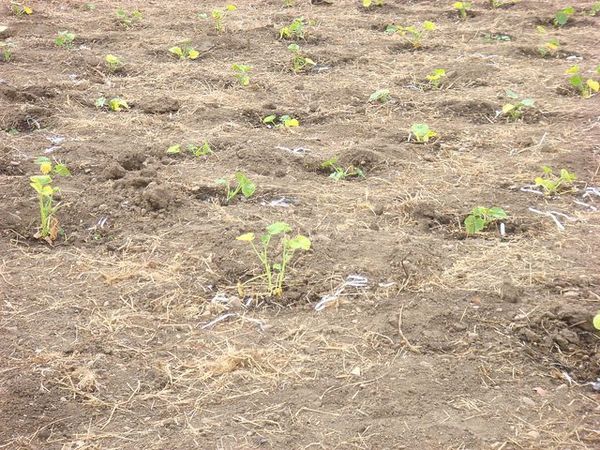
Seeds are sown in late May, but can also be planted in early June. Before planting, it's recommended to prepare the seeds. To do this, soak them in potassium permanganate. The seeds are also treated with a contact fungicide (preventative for many diseases).
Holes are dug 1–1.4 m apart. A distance of 1.4 m is maintained between adjacent beds. Two seeds are placed in each hole, 5–6 cm deep. Active development begins at temperatures of 18–25 degrees Celsius.
Once the seedlings emerge in the garden bed, they are thinned out. Proper care will ensure healthy growth of young plants. If the summer is cold, the stems are pruned. No more than three should remain. The top is pruned when the shoot reaches 0.5 m in length. This will stimulate the development of lateral shoots.
Branching internodes should be covered with moist soil. This procedure is performed 2-3 times during the season. This will result in the formation of a sufficient number of adventitious roots, which leads to active development of the vegetative part. This is where the harvest is formed.
For pollination to be successful, air humidity of 60–70% and a temperature of +20 degrees are required.
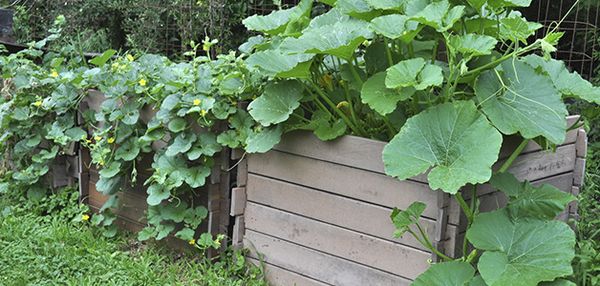
Despite the plants' good drought tolerance, pumpkins respond well to irrigation. Watering is applied at the roots. Watering is especially important during the period of active inflorescence formation, as well as during flowering and fruit set.
Watering is reduced after the bush has formed the bulk of its fruit. Otherwise, excess moisture will significantly reduce the quality of the ripe pumpkins.
As you can see, caring for this pumpkin is simple and doesn't require much time or effort. Therefore, this variety is suitable for novice gardeners.
Advantages of the variety
The Pearl nutmeg pumpkin's description of the variety includes the following list of advantages:
- high yield rates;
- the ability of plants to tolerate drought and low temperatures;
- excellent taste of pumpkins;
- good transportability of fruits;
- excellent appearance of the harvest;
- high concentration of carotenes in fruits;
- Large-fruited. With proper care, pumpkins grow to a large size.
The fruits of this variety are used in folk medicine. They help in the treatment of diseases of the liver, kidneys, gallbladder, gout, etc.
The variety has no obvious drawbacks. The Pearl pumpkin boasts numerous advantages and requires very little care. Therefore, it is very commonly grown in domestic gardens.
Video: "Everything You Need to Know About Pumpkin"
This video will tell you what every gardener needs to know about pumpkin.