
Features of growing ornamental pumpkin varieties
Content
Varieties of ornamental pumpkins
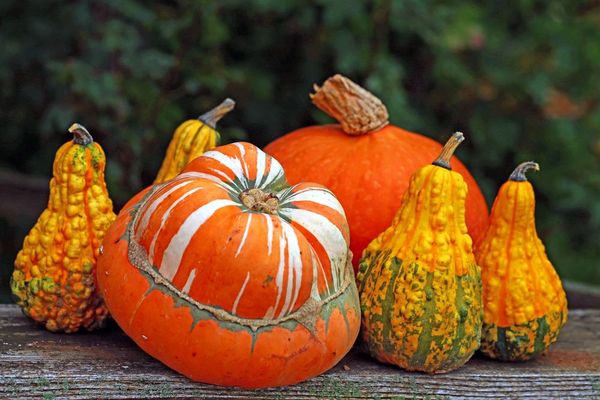
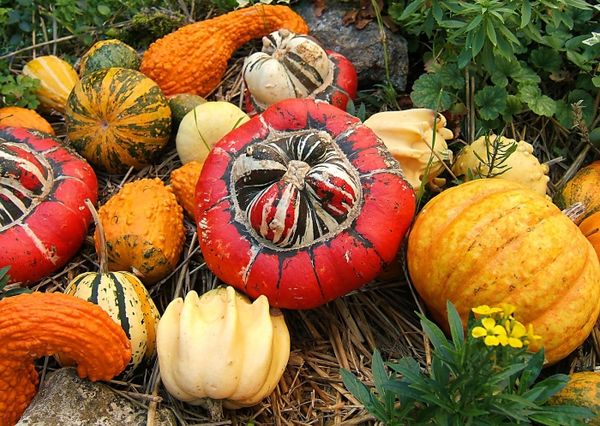
Today, the variety of these amazing plants is incredible. Everyone can find a pumpkin to suit their taste. The fruits vary in shape, size, color, and texture. The most popular varieties today are those that resemble other plants in appearance, such as "Orange" or "Lemon." The "Pear" variety is characterized by its pear-shaped fruits.
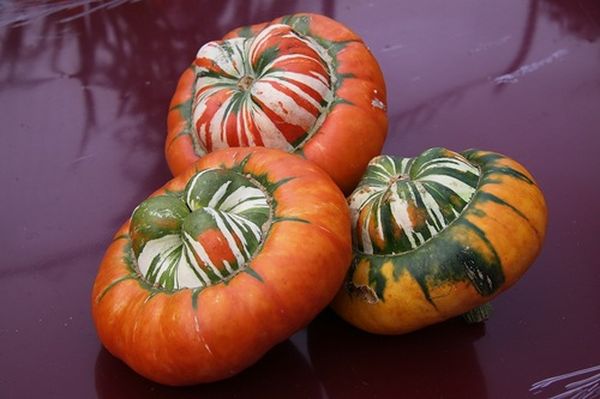
Ornamental pumpkins often feature varieties with bizarre shapes, such as the turban-shaped "Turkish Turban" pumpkins and the star-shaped "Crown" pumpkins. Thanks to their incredible shapes, the "Scheherazade" and "Ku-tur Hativ" varieties have earned well-deserved popularity among enthusiasts. The fruits of "Scheherazade" resemble cosmic stars, while the pumpkins of the latter variety are shaped like swans.
Landing
Ornamental pumpkins are attractive not only for their shape and size, but also for their ease of cultivation. You can grow ornamental pumpkins in your garden, vegetable patch, or even in a pot. Growing from seeds involves cultivating the plants in small pots. Using seedlings, you can plant your new plants directly in the ground.
Ornamental pumpkins are easy to plant and care for. Planting all varieties of ornamental pumpkins is the same as for regular pumpkins. In warmer climates, seeds are sown directly into the ground as early as May, at a rate of two seeds per half meter. To speed up the growth of the seedlings, it is recommended to plant already sprouted seeds from the ground.
In colder regions, this fruit can only be grown from seedlings, which should be planted in the ground after all frosts have passed.
Care
Ornamental pumpkins require proper care. It's recommended to plant pumpkin seeds in a well-lit, warm area. To ensure your ornamental pumpkin produces fruit quickly, remember two rules for proper care.
- Rule number one: frequent and abundant watering.
- Rule two: regular feeding.
In general, most varieties don't require any specific care. Organic fertilizers are applied after germination and then during fruit set. Some people pinch off meter-long climbing shoots from the side shoots to stimulate growth.
A prudent gardener also remembers that most varieties of these plants have climbing stems. Therefore, they absolutely require reliable support.
Pest and disease control
Although ornamental pumpkins generally don't have any problems growing, in some cases you may encounter pests and diseases of this crop.
Fungal pathogens are among the most common pathogens. These include powdery mildew, white mold, and root rot. These diseases are sometimes present inside seeds and affect their germination. To eliminate pathogens, it is recommended to treat seeds with a solution of potassium permanganate before planting.
Powdery mildew is a disease familiar to many gardeners. It appears as a white coating on plant leaves. The parasite inhibits growth and nutrition, and prevents fruit from developing properly.
White rot appears as a wet, rotting process that begins at the root collar or on the leaves. Root rot causes the entire plant to dry out for no apparent reason. Root rot directly affects the roots of the plant.
Pumpkins are also often susceptible to bacterial rot, caused by harmful bacteria of the genus Pseudomonas. These diseases can develop during wet periods or when the crop is overwatered.
Besides insects, slugs are also among the pests that cause great harm to pumpkins.
To combat all these diseases, do not forget to treat plants with various preparations in a timely manner.
Now you know how to grow ornamental pumpkin.
Harvesting
By growing ornamental pumpkins, you can enjoy not only the appearance but also the taste of their fruits. Harvesting occurs during the first frosts, as damaged fruits will not keep well.
Benefits of growing
There are countless advantages to growing this easy-to-grow crop. Not only are almost all ornamental varieties edible, but they also have a wide range of other uses.
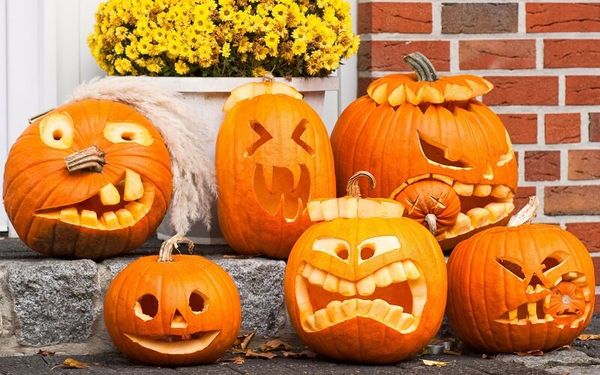
Beautiful pumpkins are often wood-burned or decorated with various artistic designs. Dried pumpkins are an excellent material for crafts. Therefore, growing this crop in your garden can help you develop your artistic talents.
Video: Growing Ornamental Pumpkins
This video will show you how to grow ornamental pumpkins on your balcony.