
What is Tatarian honeysuckle and how to grow it in your garden?
Content
Description of Tatarian honeysuckle
Tatarian honeysuckle (Lonicera tatarica) is a spreading deciduous shrub in the Caprifolia family. It grows wild in European Russia, as well as in the Altai Mountains and the Tien Shan foothills. Honeysuckle caprifolium and Tatarian honeysuckle are particularly popular in landscape gardening.
Lonicera tatarica reaches a height of 4 meters. The crown of this tree-like shrub is broad and massive. The average diameter is 2–2.5 meters. The hollow shoots are a beautiful yellow-brown hue. As the tree matures, the bark changes to light gray, and shallow longitudinal cracks appear. The leaves are oblong-ovate and dark green. The shrub has a dense foliage, making it a striking plant at any stage of development.
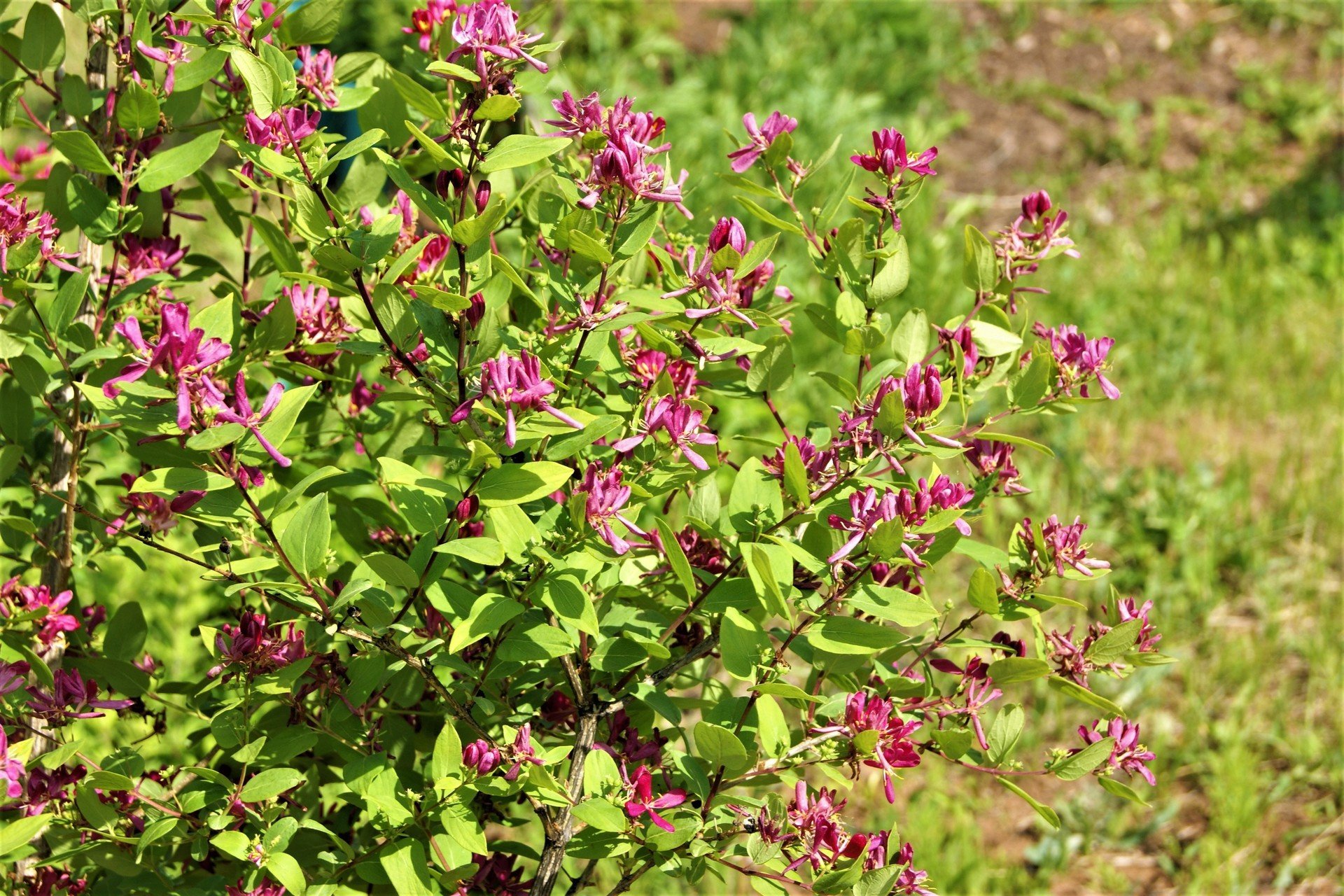
During the flowering period, which occurs in May and June, small, twin, bell-shaped flowers appear. The average bud length is 1.8 cm. Flower color varies by variety. Petals can be white, milky, cream, or various shades of pink and red.
The plant bears fruit from midsummer to early fall. The berries are small, spherical, and red, yellow, or orange. Many people wonder if the berries are edible. Tatar honeysuckle berries contain hydrocyanic acid, which can cause gastrointestinal upset. Consume the berries in minimal quantities and consult a doctor beforehand.
Popular varieties in gardening
The description of this ornamental plant lists several varieties: large-flowered, red-flowered, broad-leaved, narrow-leaved, etc. The varieties described below have become widespread in horticulture.
Rosea
The Rosea variety blooms in late May. Large pink buds appear on the slender, pyramidal shrub. Toward the end of the flowering period, the flowers close into distinctive bell-shaped clusters. This variety produces small orange berries, which are not edible.
Hack Red
A highly ornamental variety. This spreading shrub with numerous bright purple flowers is widely used in landscape gardening. The plant's fruits are inedible.
Arnold Red
Due to its high gas and smoke resistance, the Arnold Red variety is used in urban landscaping for parks and squares. The leaves are oval-lanceolate and dark emerald in color. The flowers are carmine-red.
Elegance
The very name "Elegans" speaks to the remarkable appeal of this variety. The spreading shrub is adorned with small, dark green leaves and deep red flowers with a pink tint.
-
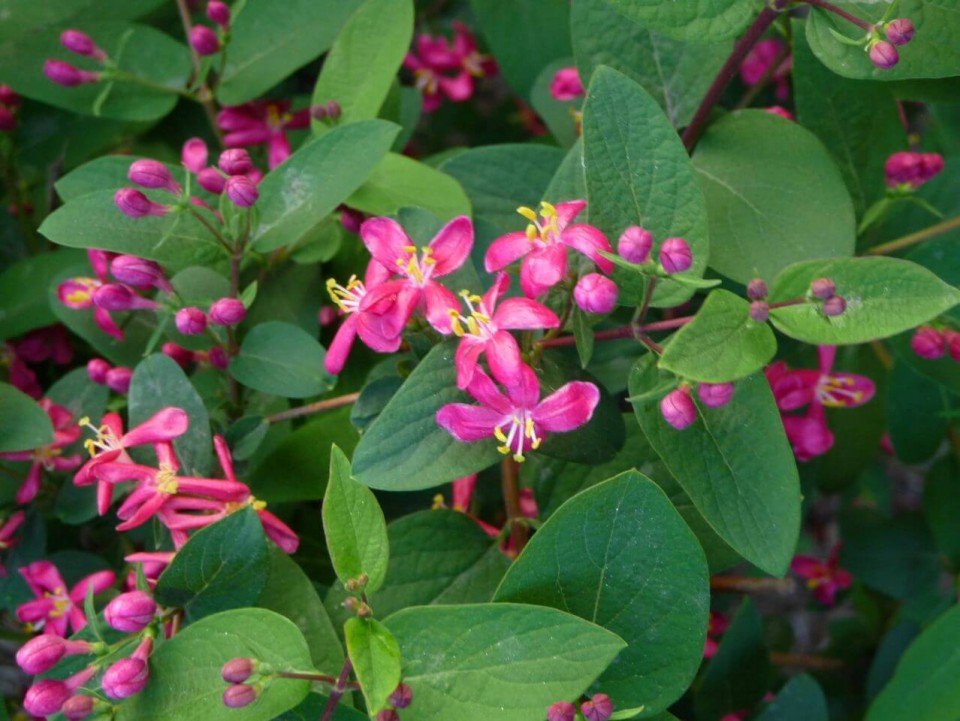
- Elegance
-
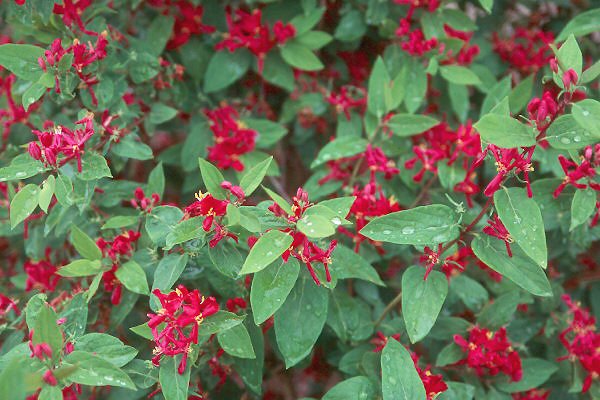
- Arnold Red
-
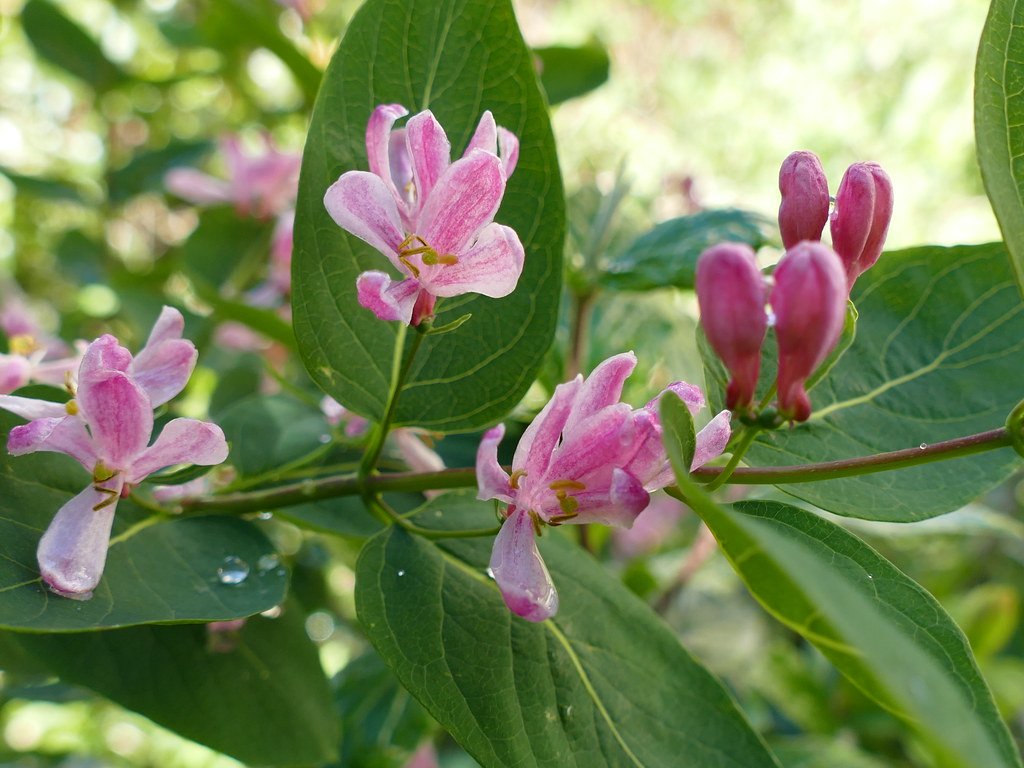
- Rosea
-
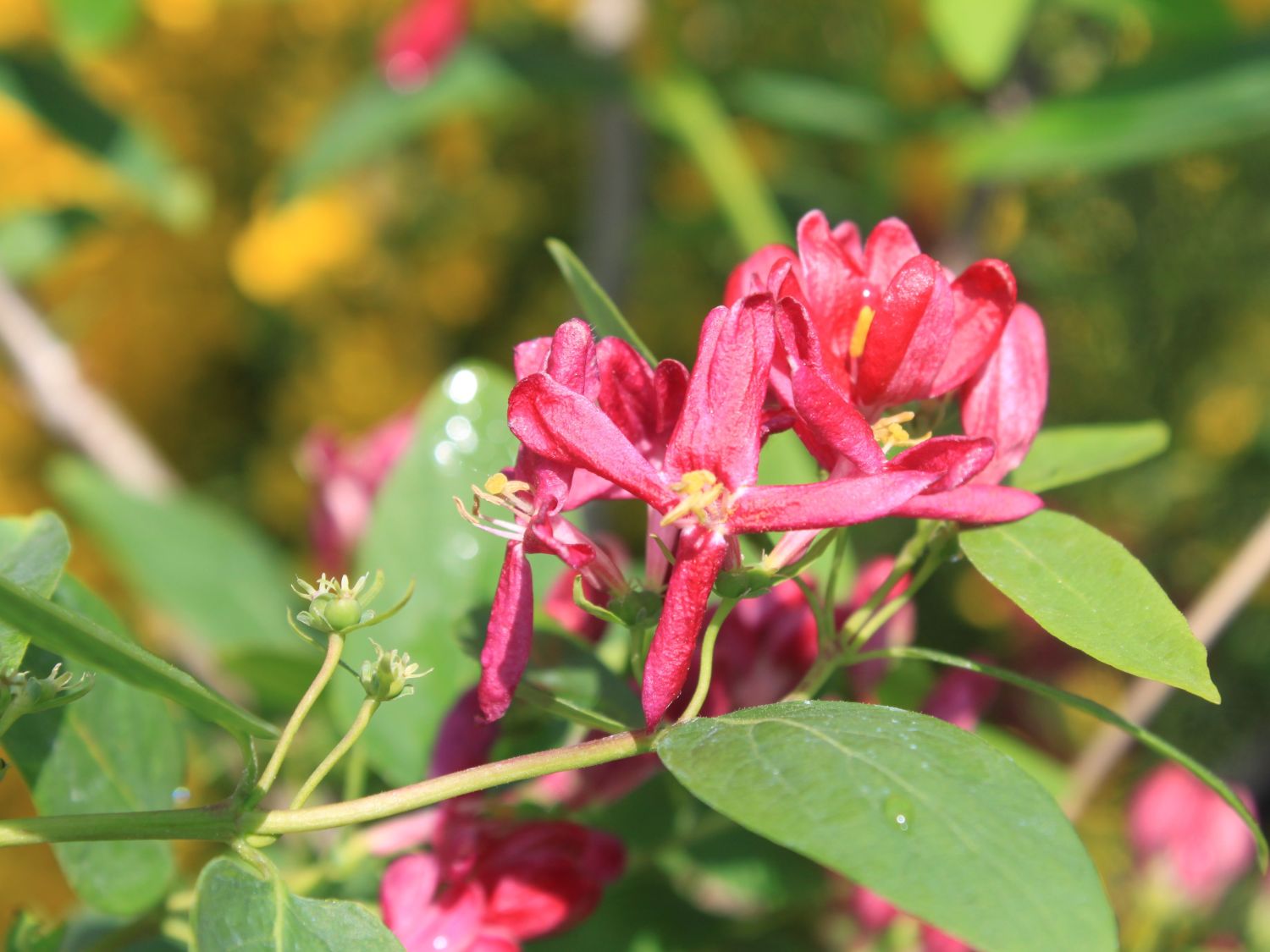
- Hack Red
Zabelii
The Zabelii variety is used for solitary cultivation and to create striking group arrangements. It is distinguished by its rich and long-lasting blooms. The buds are burgundy-red.
L. Morrowii
This low-growing shrub blooms towards the end of May. Its leaves are oblong and pointed. The flowers are snow-white with thin petals.
Grandiflora
The Grandiflora variety is distinguished by its large flowers. The petals are broadly oval and pure white. This plant is considered an excellent honey plant.
-
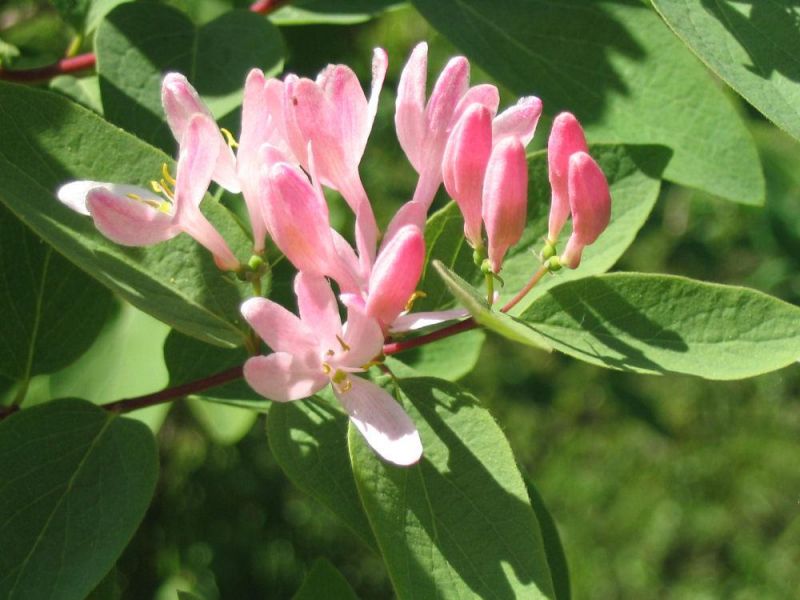
- Zabelii
-
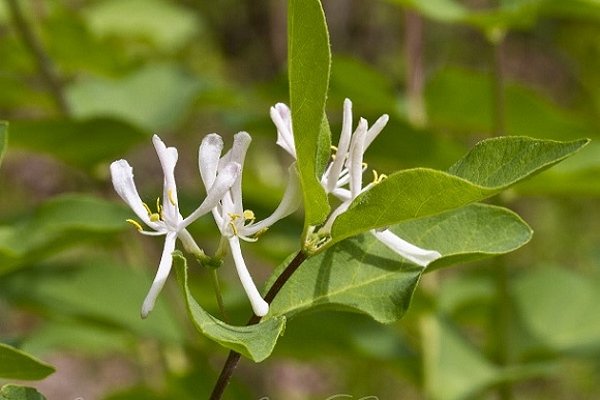
- L. Morrowii
-
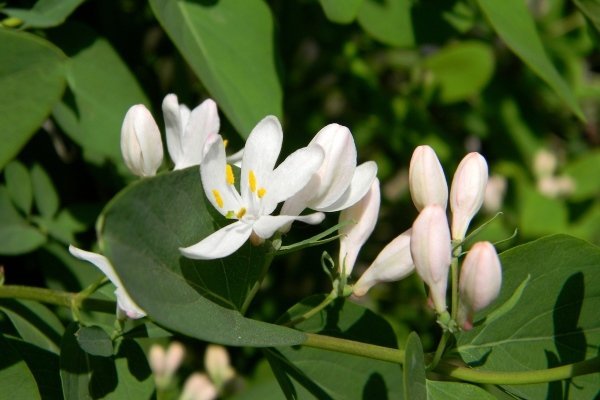
- Grandiflora
Video: "What Tatarian Honeysuckle Looks Like"
This video provides a description of a deciduous shrub.
Planting and growing
Tatarian honeysuckle is considered an easy-to-grow ornamental shrub. Let's look at the basic rules for planting, propagating, and cultivating this garden and park crop.
Landing dates and location
It's best to plant honeysuckle seedlings outdoors in the fall. Experienced gardeners note that fall planting results in a higher survival rate. When choosing the planting time, consider the weather: the average daily temperature should be around 10°C.
This ornamental deciduous shrub prefers a sunny location with some midday shade. It grows well near natural and artificial ponds. However, it dislikes excessively waterlogged soil. It can be grown in loamy or sandy loam soils with a neutral pH.
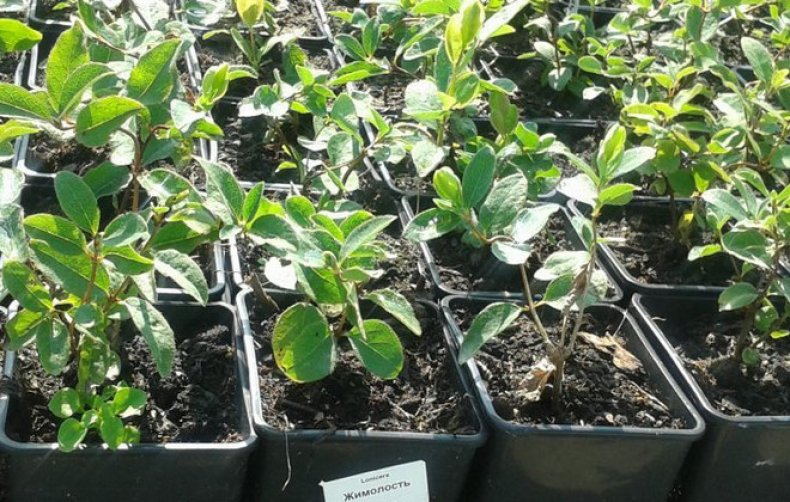
Step-by-step planting of a seedling
To plant the seedlings, prepare 40x40 cm holes, keeping a distance of 1.5–2.5 m. The holes are dug 5–7 days before planting. The bottom is lined with expanded clay, crushed stone, broken brick, or any other drainage material. The layer height is approximately 15 cm.
Then, fill the holes with a nutritious soil mixture consisting of fertile soil, river sand, and peat/compost/humus in a ratio of 3:1:1. Be sure to add 1 kg of wood ash and 50 g of superphosphate.
The planting material is carefully inspected for damage and signs of rot. The seedling is positioned so that the root collar remains level with the ground. The area around the trunk is mulched with sawdust, hay, peat, humus, or spruce branches.
Methods of reproduction
Ornamental shrubs growing in the garden are propagated by layering or green cuttings. The algorithm for propagating by green cuttings is described in the diagram below:
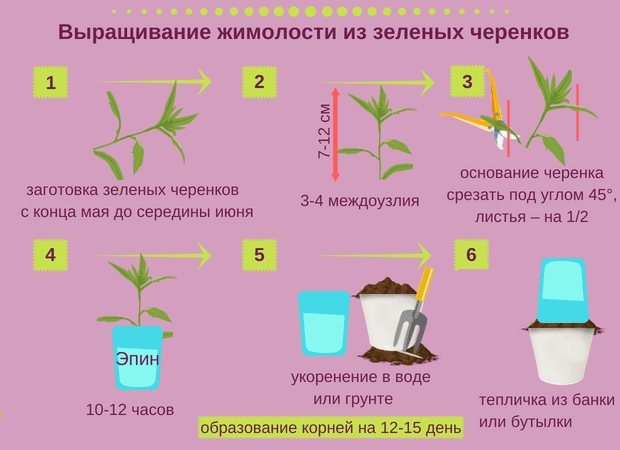
To propagate Tatarian honeysuckle by layering, select a healthy-looking lateral shoot. Gently bend the sturdy branch toward the soil surface and secure it with a metal pin. Sprinkle the shoot with fertile soil mixture. Green shoots emerging from the ground indicate successful rooting. Separate the shoot from the mother plant the following spring.
Watering and fertilizing
For the first month after planting in its permanent location, water the seedling daily. Subsequently, increase the interval to once every 7 days. A mature bush is watered as needed or 2-3 times per season. The average water consumption per watering is 10 liters.
Fertilizing with organic and mineral fertilizers begins when the ornamental shrub is 3-4 years old. In early spring, before buds begin to appear, nitrogen-containing fertilizers are applied. Before flowering, root fertilization with potassium-phosphorus complexes is applied. In the fall, wood ash is applied to the shrub. No more than 20 grams of ash is required per square meter.
Is pruning necessary?
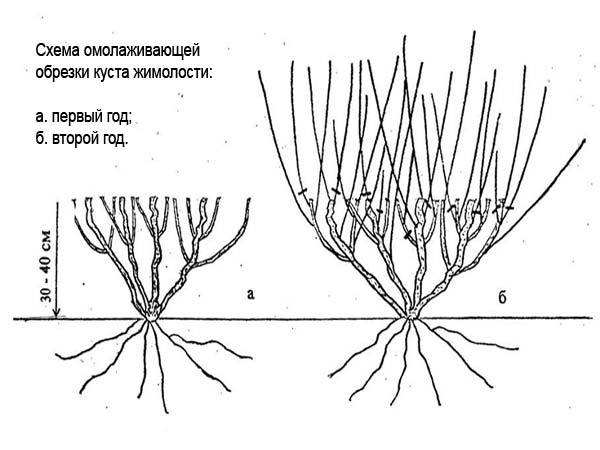
Tatarian honeysuckle requires pruning, otherwise the plant will grow too large and lose its decorative appeal. Sanitary pruning to remove dead and damaged shoots is performed in the fall after leaf fall.
Rejuvenating pruning, the diagram for which is presented below, is performed in the spring. It's important to complete the procedure before the active sap flow begins. Don't forget to seal the cut areas with garden pitch—this is the best way to prevent infection.
How to prepare for winter
Tatarian honeysuckle, a wild plant, is characterized by high winter hardiness. However, the plant prefers the harsh climate of Siberia and the Urals.
Cultivated honeysuckle has retained its hardiness and resistance to low temperatures. This deciduous shrub requires no winter cover. Only seedlings planted in the fall need to be insulated. Young bushes are generously mulched and covered with agrofibre or regular burlap.
Protection from diseases and pests
A unique feature of the Tatarian honeysuckle is its high resistance to diseases and pests. Only if agricultural practices are not followed can the plant be affected by powdery mildew or cercospora leaf spot. If unexplained spots or white patches appear on the leaves, use fungicides such as Topaz, Ordan, Fundazol, and others.
The main pest of this ornamental plant is the honeysuckle aphid. Signs of infestation include drying and curling of leaves. These insects can be controlled by spraying the crown with Actellic or Actara insecticides.
Tatar honeysuckle in landscape design
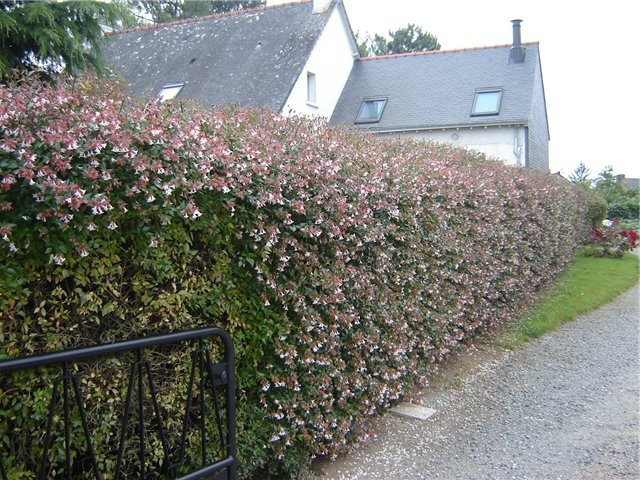
This spectacular shrub is in demand in landscape gardening. Honeysuckle is widely used to create hedges, form decorative elements, shade garden pavilions and seating areas, and decorate fences and outbuildings.
The most beneficial “neighbors” for Tatar honeysuckle are conifers, creeping roses, and park roses.
Reviews from gardeners
"Among the vast number of fruit and ornamental plants growing in our garden, I'd like to highlight the exquisite Tatarian honeysuckle. The bush looks gorgeous throughout all growing seasons."
"Tatar honeysuckle is a unique ornamental shrub that can withstand even the coldest and harshest winters. It requires minimal care, making it easy for even a novice gardener to manage."
Beautiful dark green leaves, striking buds, an exquisite aroma, and vibrant fruits make Tatarian honeysuckle stand out from other plants. Furthermore, the plant quickly adapts to growing conditions and requires minimal care.