
30 of the most beautiful and interesting types of creeping plants for the garden, with photos
Content
General description of creeping plants
Groundcovers are perennial, long-stemmed plants that rarely grow taller than 0.5 m. Their main characteristic is their rapid growth and independent rooting. As a result, the flowers quickly form a lush, dense carpet.
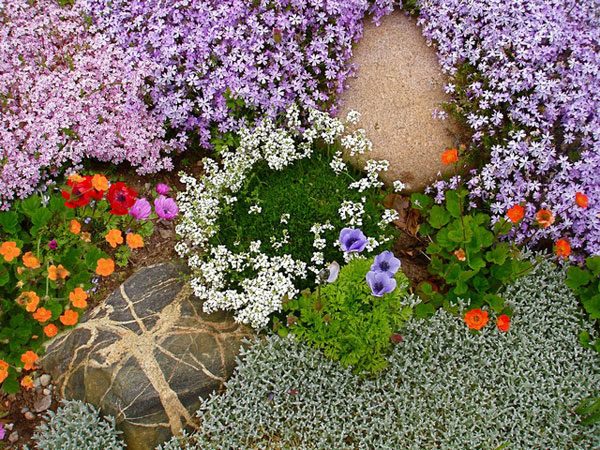
Creeping crops are planted not only to decorate a garden plot."Mats" protect the top layers of soil from wind and rain washout. They also prevent weed growth. They are often planted as mulch to improve moisture retention.
Today, botanists know a huge number of species and varieties of groundcovers. Some are evergreen, maintaining their decorative appearance all summer long and continuing to grow their leaves even in winter. We'll discuss the most well-known below.
Video: "Popular Ground Covers in Gardening"
This video presents the most interesting varieties of long-stemmed perennials.
Low-growing ground covers
These plants grow to a height of no more than 0.2 m, making them ideal for rock gardens, alpine rockeries, and other stone arrangements. These "carpets" look great with coniferous shrubs or tall flowers.
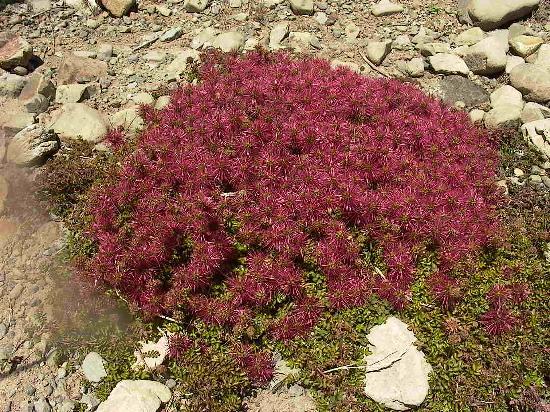
Acena
This evergreen perennial is native to Australia, Chile, and New Zealand. It thrives in rocky areas and grows up to 15 cm tall. The leaf blades are ovate, finely serrated along the edges, and have a metallic sheen. The inflorescences are spherical and, after flowering, become covered in multicolored needles.
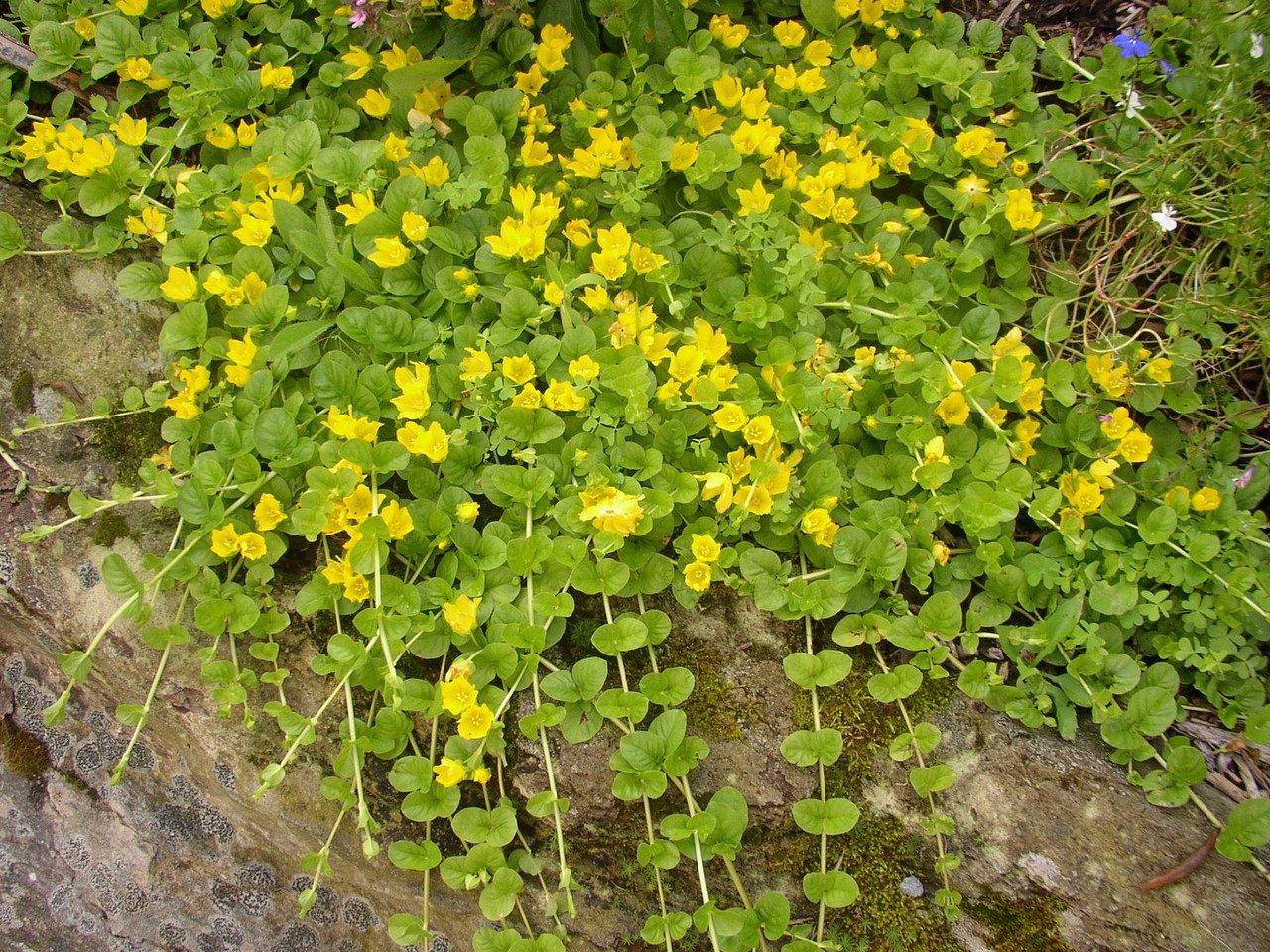
Lysimachia nummularia
The plant thrives near bodies of water or in damp areas. Its creeping stems range from 0.2 to 0.6 m in length. The leaves are coin-shaped, opposite, and silky to the touch. It blooms continuously, producing simple, lemon-yellow inflorescences. It is resistant to trampling.
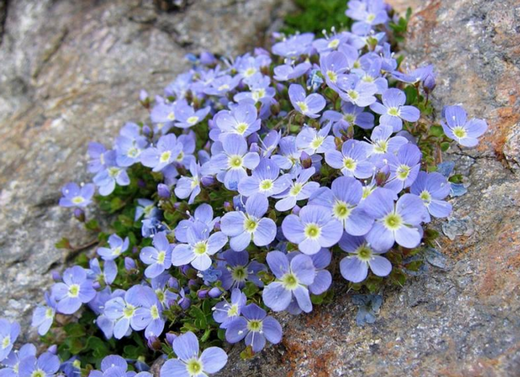
Veronica
A very common groundcover, growing in temperate climates. Its creeping stems can be very long, sometimes reaching a meter. The leaf blades are dark green, heart-shaped, with serrated edges. The surface is covered with fine hairs. The flowers are simple, a forget-me-not shade.
Bryozoan
This plant's natural habitat is the Northern Hemisphere. This perennial, similar to Irish moss, grows 15-20 cm tall. The leaves are very narrow and small, bright green. The inflorescences are miniature, snow-white, and densely cover the entire "carpet." During flowering, the moss plant emits a delicate, light fragrance.
Omphalodes, or umbilical cord
These flowers come to us from the forests of Southern Europe and the Caucasus. This "carpet" grows no taller than 0.2 m, and after flowering, it produces strawberry-like tendrils. The leaves are ovoid, elongated, with a pointed tip, and light green. The inflorescences are small, bright blue, with a white center.
Creeping thyme, or wild thyme
A brightly flowering perennial groundcover growing 15-20 cm tall, found throughout Eurasia. Over time, the flexible stems become covered with a tough bark at the base. The leaves are elongated and oval. The inflorescences are small, lilac-purple, sometimes with a pinkish tint. After flowering, dark brown berries form in their place.
-
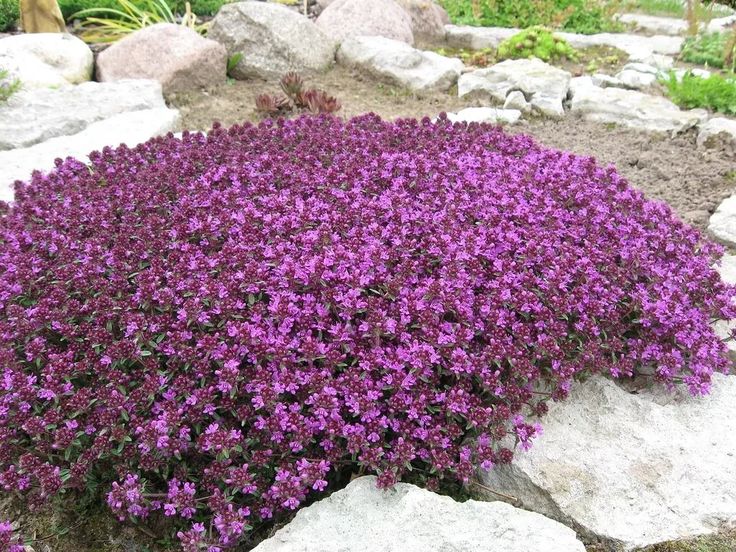
- Creeping thyme, or wild thyme
-
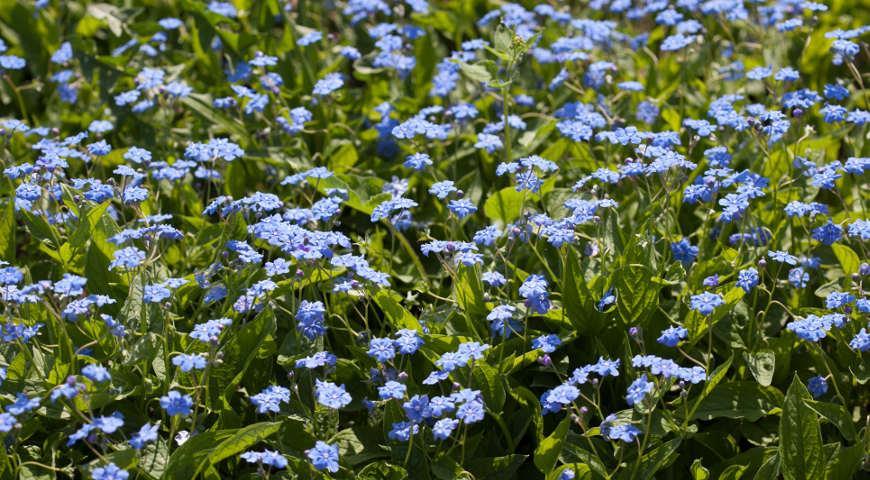
- Omphalodes, or umbilical cord
-
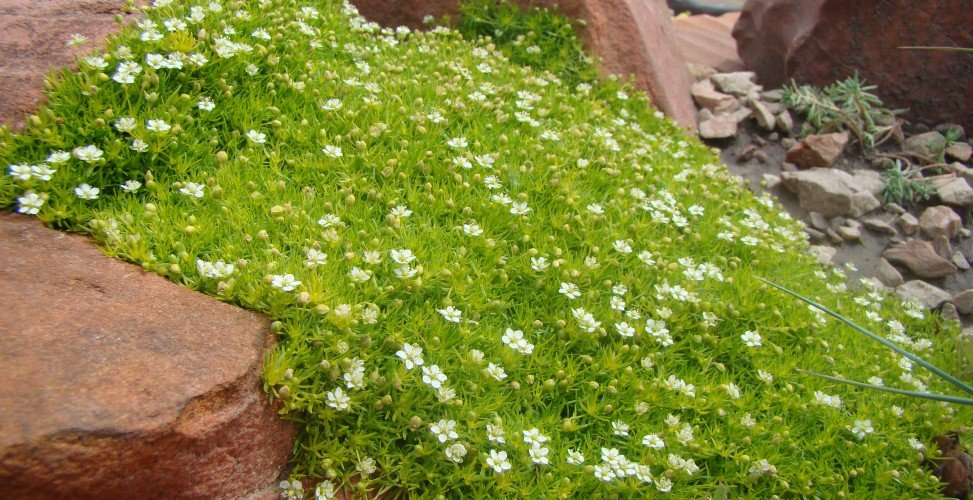
- Bryozoan
Subulate phlox
This plant, native to North America, has many species. Its stems range from 15 to 50 cm in length. As it grows, the perennial forms a dense, vibrantly blooming mat. The leaf blades are lanceolate and dark green. The inflorescences are simple, consisting of five petals. The coloring is varied.
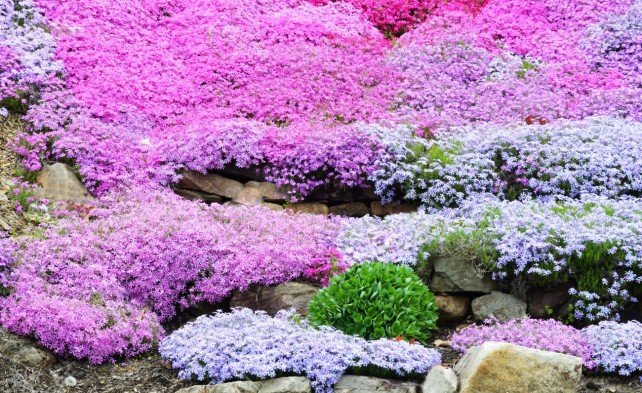
Shade-loving flowers
This group of groundcover plants thrives even in complete shade. They can be safely planted on the north side of a plot or used as a decorative feature around tree trunks. Even in the absence of sunlight, they will bloom profusely and retain their vibrant color.
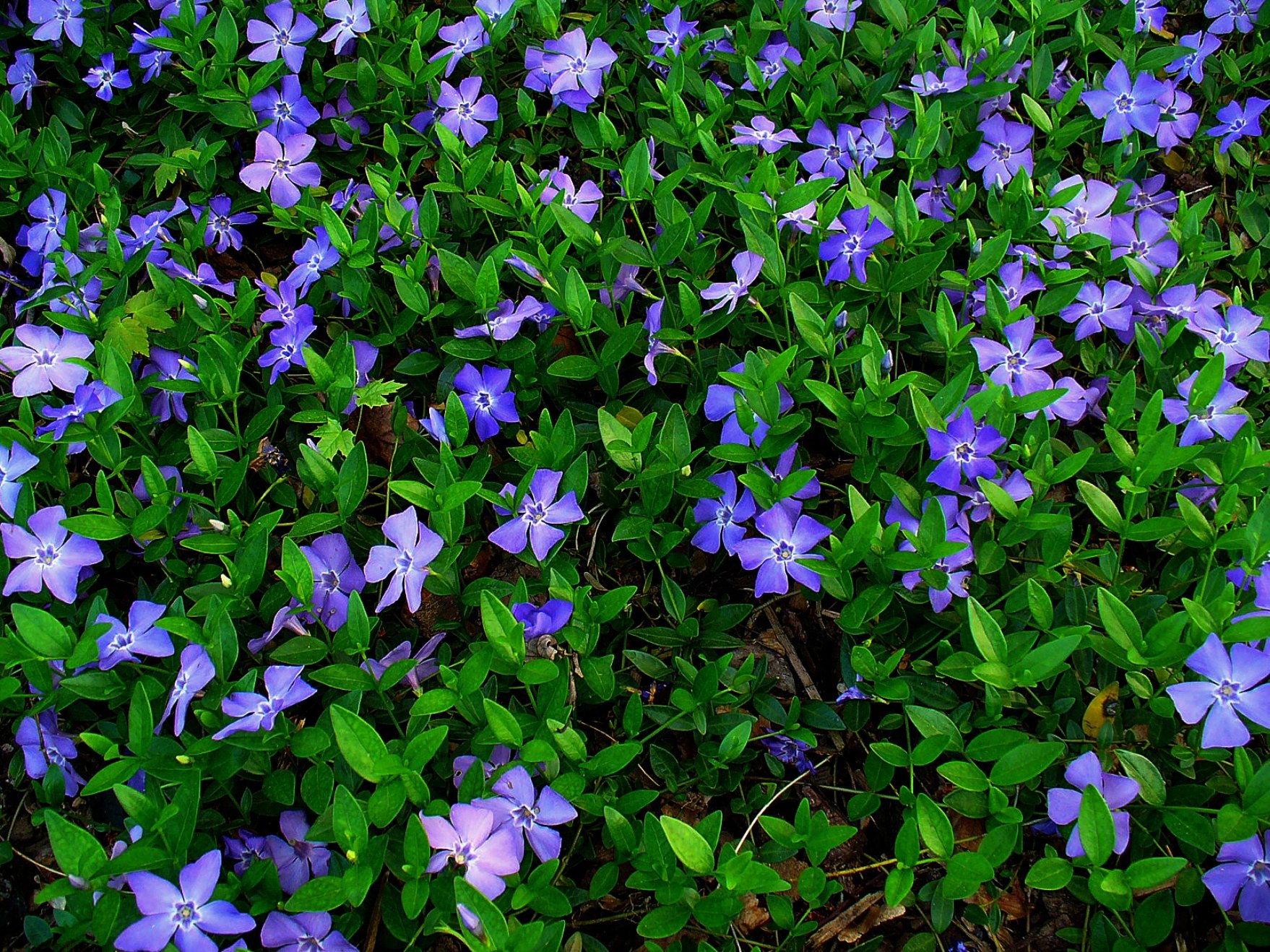
Periwinkle
A fast-growing ornamental plant reaching a height of no more than 0.2 m. Its leaves are glossy, ovate, and pointed at the tip. During flowering, it is densely covered with flowers of various colors (snow white, soft blue, or pale pink). Variegated varieties are sometimes found.
The evergreen periwinkle is quite frost-resistant, and therefore does not shed its leaves even in cold winters.
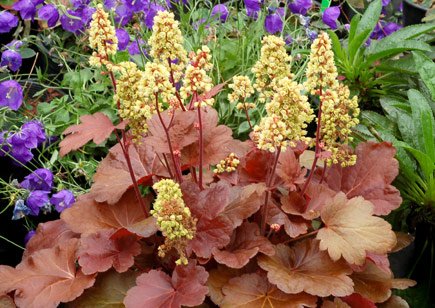
Heuchera
The plant originates from North America and Mexico. Its shoots are approximately 50 cm long. It grows in compact bushes covered with sprawling, jagged-edged leaves. Their color ranges from yellow-green to deep burgundy. Heuchera blooms in light pink panicles.
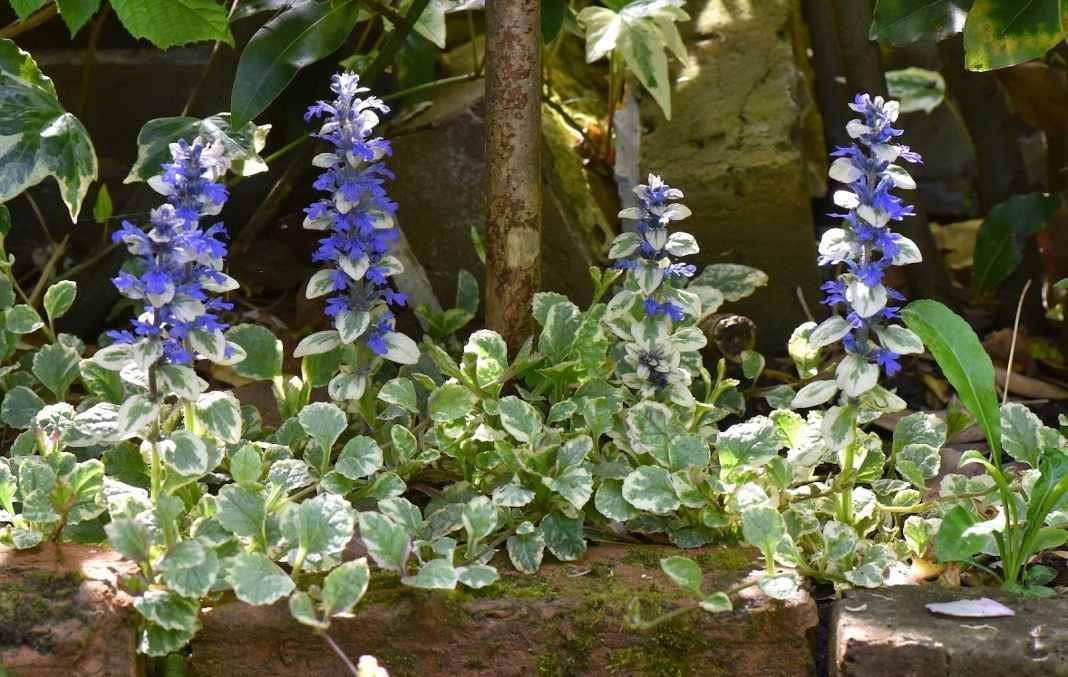
Creeping Jenny
This perennial is found throughout almost all of Europe. Stems 20-35 cm long form a lush bush with violet-blue candle-shaped inflorescences. The leaf blades are dark green, oval-elongated, and slightly wavy. Some species have a predominantly purple hue or soft yellow speckling on the foliage.
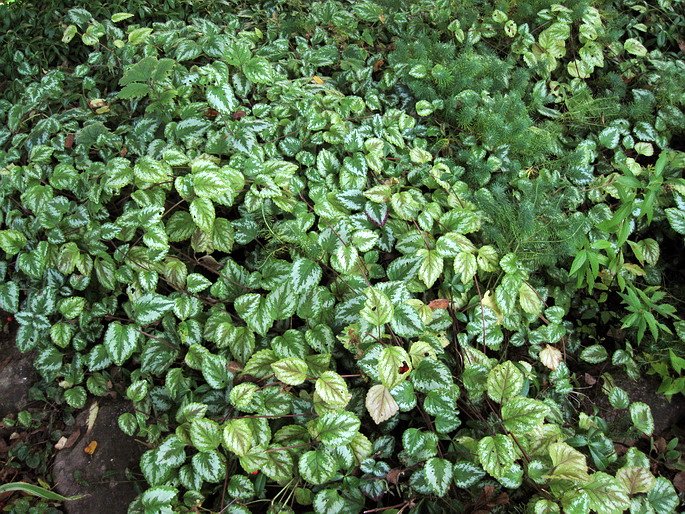
Zelenchuk
This groundcover plant's natural habitat is temperate deciduous forests. Its prostrate stems grow up to one and a half meters long and are densely foliated. The leaves are spotted, lanceolate or cordate, serrated, and covered with fine hairs. The inflorescences are small and lemon-yellow.
-
- Zelenchuk
-
- Creeping Jenny
-
- Heuchera
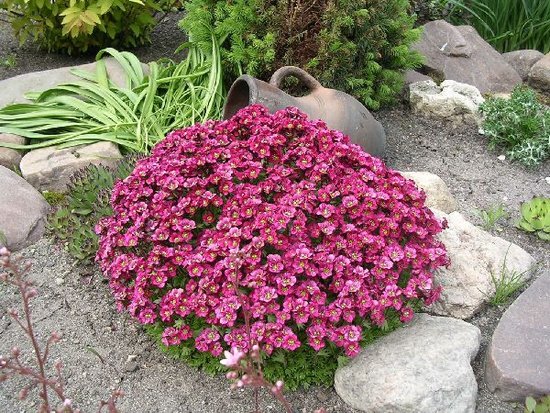
Saxifrage
An ornamental perennial native to alpine meadows, it rarely exceeds 15-20 cm in height. Its shoots are prostrate, and its oval leaves form rosettes. The flowers are simple, with five petals, snow-white or raspberry-pink in hue. In shade or partial shade, the color fades.
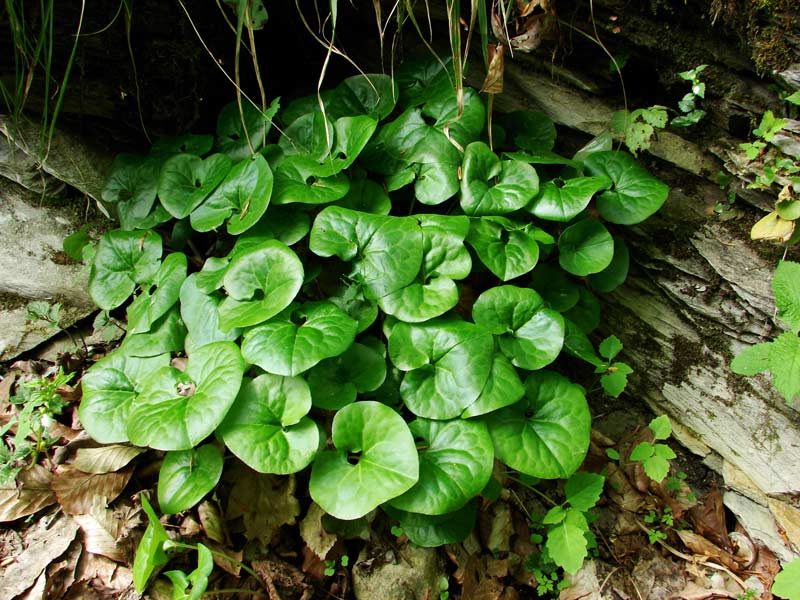
Asarum
A slow-growing groundcover native to Southeast Asia, it thrives in shady areas and moist soil. It features large, rounded leaves of a dark emerald hue. The surface is smooth and glossy. The small, burgundy-red flowers, hidden beneath the foliage, are almost invisible.
Ivy
The plant is native to Australia and the Northern Hemisphere. It is a creeping shrub that can grow vertically or spread along the ground. Its stems can reach several meters in length. The leaf blades are spreading, with angular edges, and covered with fine hairs. Ivy is often used to decorate hedges, walls, and fences.
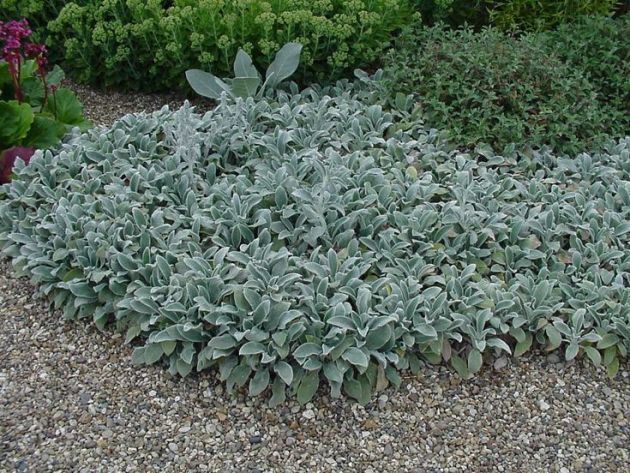
Woolly Stachys
This perennial is found throughout Eurasia. It grows to about 0.3 m tall. Stachys spp. is characterized by its double, silvery-gray, hairy leaves. They are lanceolate, with sharp edges and a slightly pointed tip. This groundcover blooms with lilac-pink spikelets.
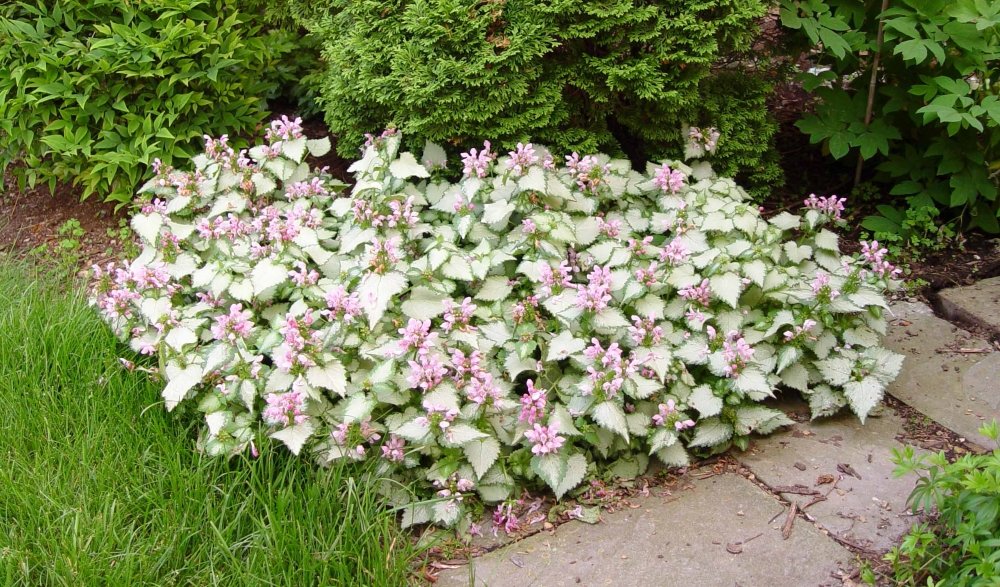
Dead-nettle
This plant is native to Europe, North Africa, and Asia. Deadnettle is characterized by long, creeping stems and heart-shaped leaves with a marbled pattern. This perennial blooms with small, purple inflorescences. It dislikes overdried soil but quickly recovers once moisture returns.
-
- Dead-nettle
-
- Woolly Stachys
-
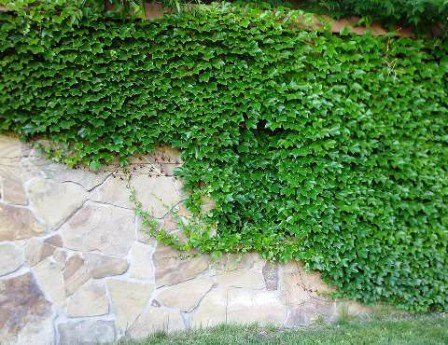
- Garden ivy
Creeping on the ground
The ability to spread quickly, forming a dense, flowering carpet, is the main characteristic of creeping perennials. They are ideal for filling gaps in garden plots or camouflaging soil imperfections. These "carpets" look beautiful alongside conifers and rocks.
Arabis
A creeping groundcover with stems about half a meter long. It grows naturally in North Africa. The leaves are elongated, deeply dissected, and prickly at the edges. It blooms in a variety of shades, from pure white to lilac-purple.
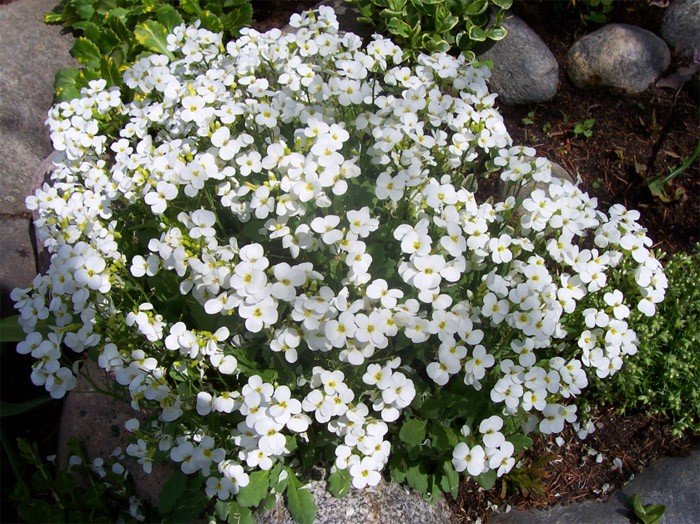
Budra
This plant originates from the forests of Eurasia. It is distinguished by its long, creeping stems, densely covered with pubescent, heart-shaped leaves with serrated edges. When blooming, it produces small, lavender-blue inflorescences.
Ground rue does not form a long-lasting “carpet”, but looks good in individual pots or against the walls of buildings.
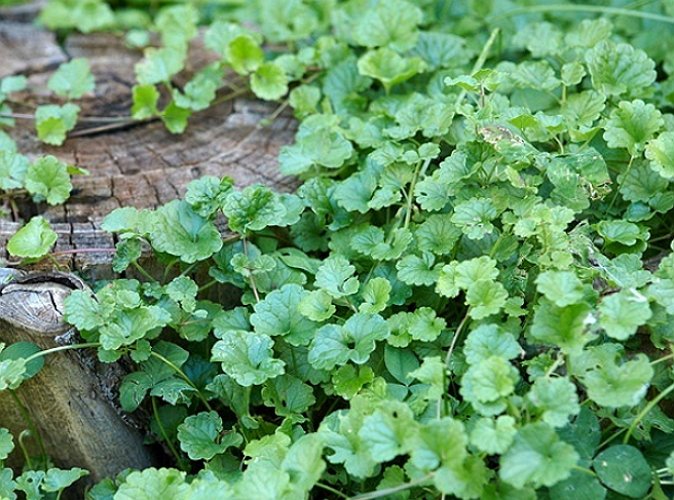
Dianthus herbaceus
A low-growing perennial, no more than 0.3-0.4 m tall. It grows naturally throughout the temperate climate zone. It thrives in full sunlight. The leaf blades are very narrow, long, and dark green. The flowers are simple, with serrated petals, and come in a variety of vibrant hues.
Iberis
This evergreen groundcover is native to Asia Minor and Southern Europe. It grows to 0.2-0.3 m, forming clumps up to one meter in diameter. The leaves are narrow and lanceolate. The complex inflorescences, approximately 15 mm in size, are densely arranged. The petals are snow-white, but may also have pinkish or lilac hues.
Sandwort, or Arenaria
The plant grows very quickly, forming a "carpet" no more than 0.3 m tall. It grows throughout the Northern Hemisphere. The leaf blades are oval-elongated, pointed, and glossy. The flowers are simple, star-shaped, and come in soft lilac or snow-white.
-
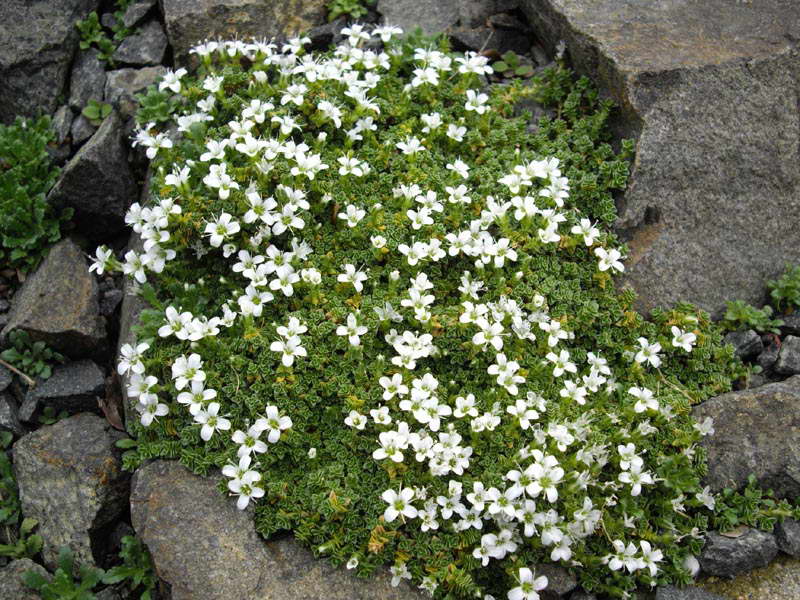
- Sandwort, or Arenaria
-
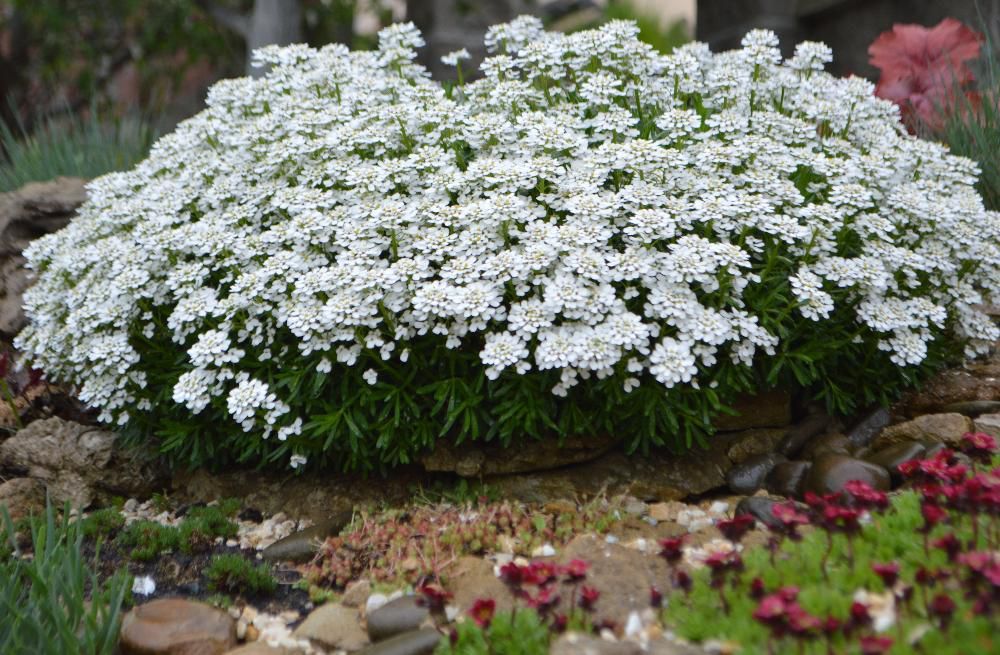
- Iberis
-
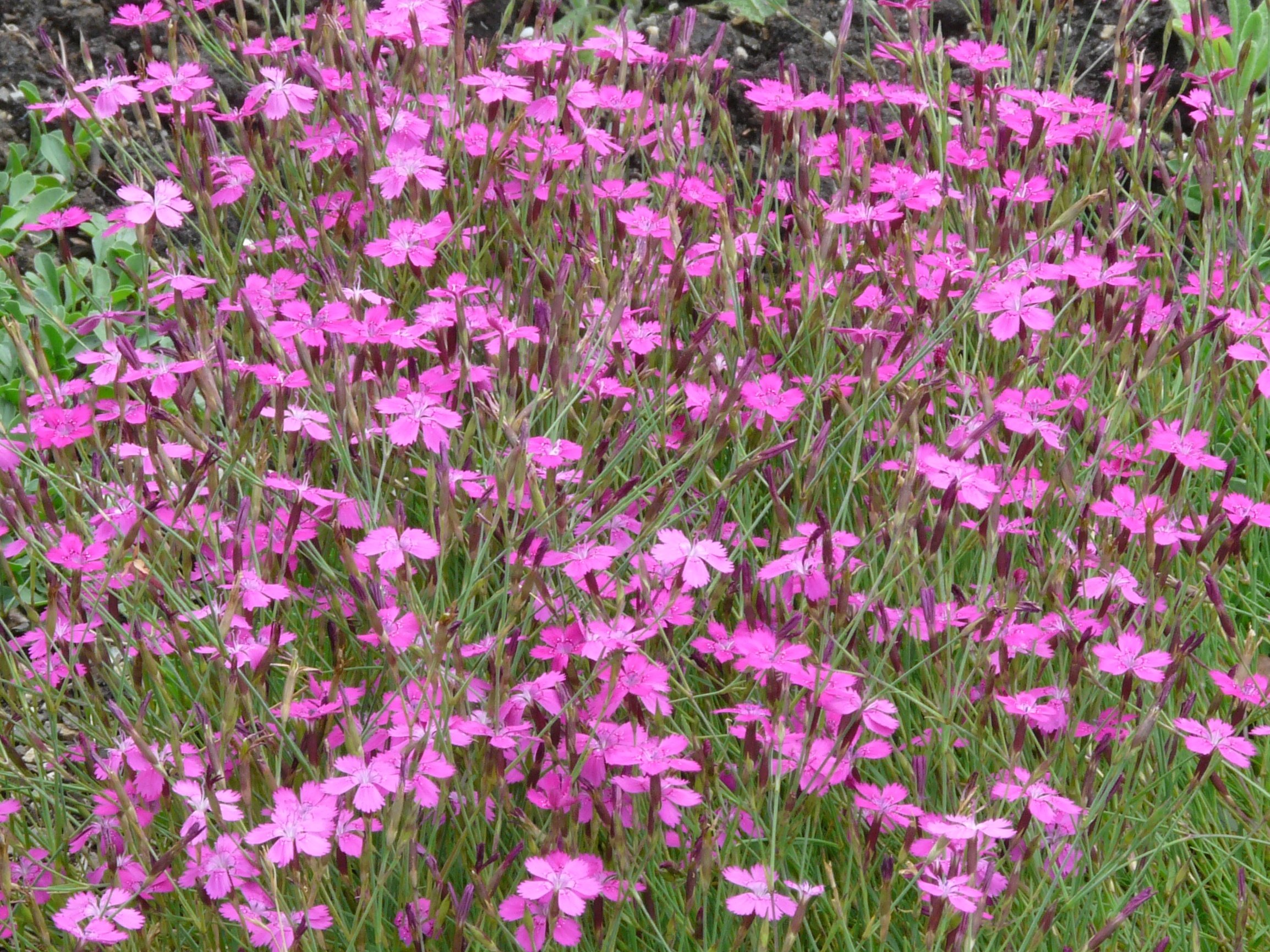
- Dianthus herbaceus
Aubrieta
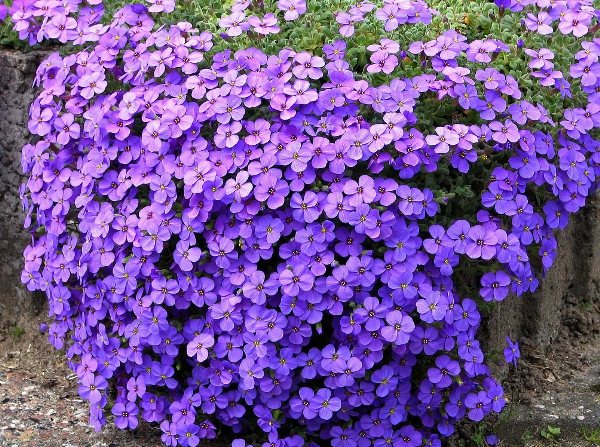
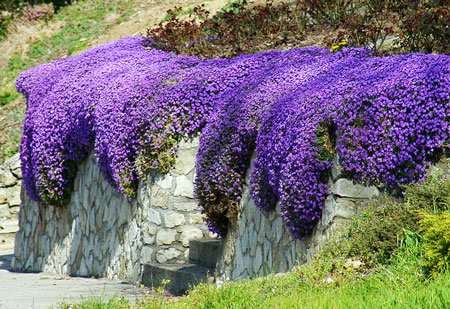
This long-blooming perennial from Southern Europe thrives in rocky areas or near water. Its long stems spread quickly, forming a dense "carpet" 0.2-0.3 m tall. The small, bright purple flowers are so densely packed that the dark green foliage beneath is almost invisible.
Cerastium
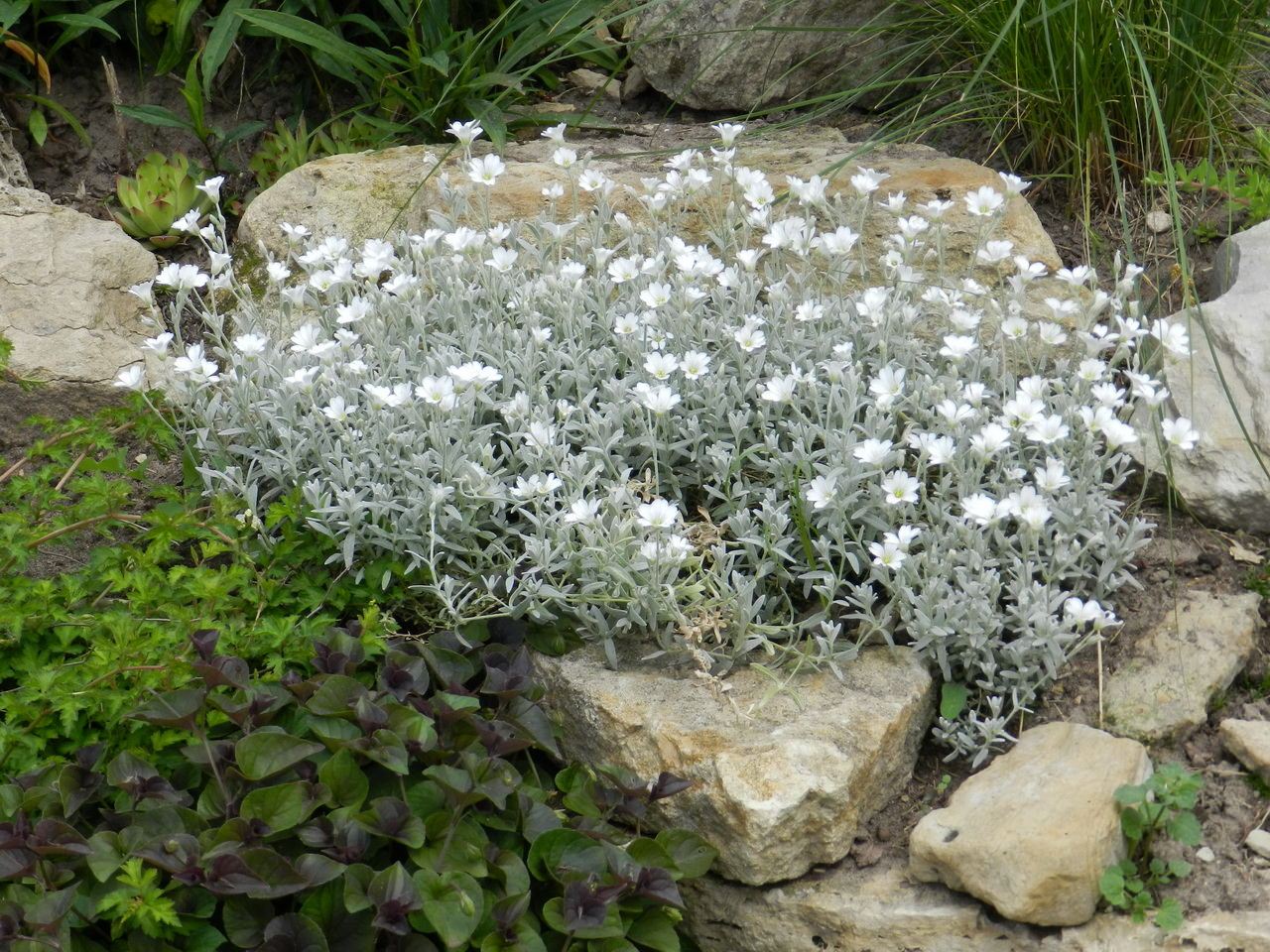
It grows throughout the Northern Hemisphere and is the most undemanding groundcover. The plant grows up to 15 cm, occupying a fairly large area. The leaves are lanceolate, very thin, and covered with fine silvery hairs. The flowers are simple, snow-white, sometimes with a subtle cream tint.
Blooming all summer
The advantage of this group of groundcover perennials is their continuous blooming from early summer until late fall. By planting these plants in your garden, you don't have to worry about it losing its aesthetic appeal.
Alyssum
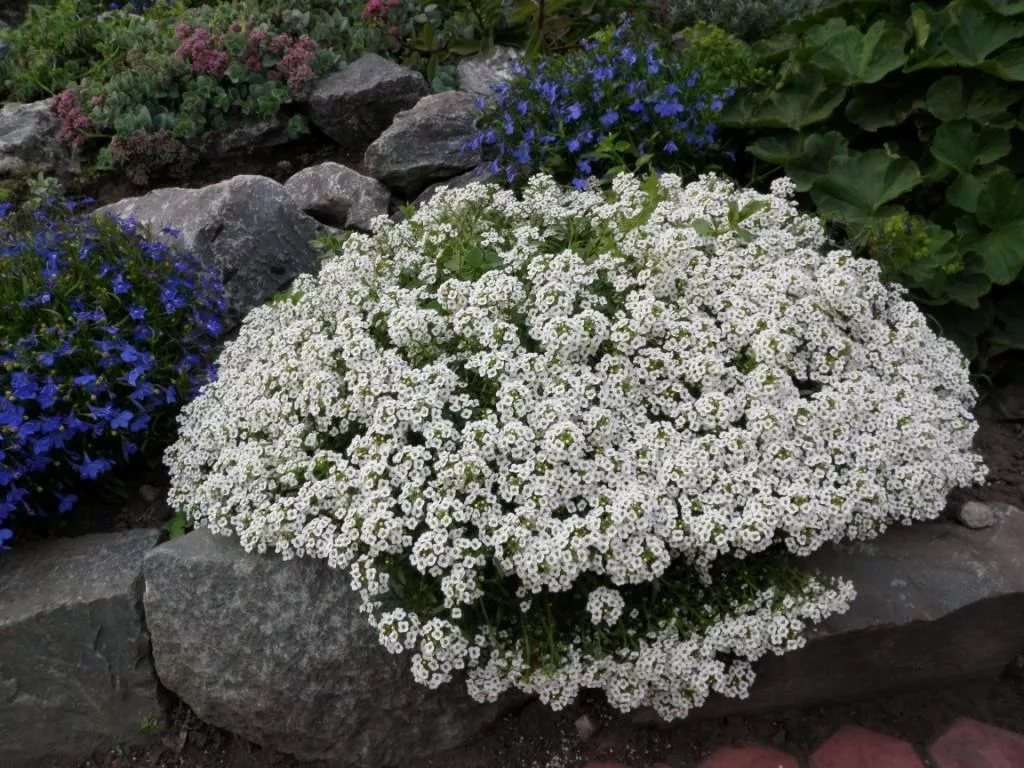
A common ornamental plant, growing approximately 0.4 m tall, it features highly branched stems in a wide range of colors. The leaves are elongated-oval with pointed tips. The inflorescences are spherical, formed by numerous buds. Alyssum is characterized by a long flowering period.
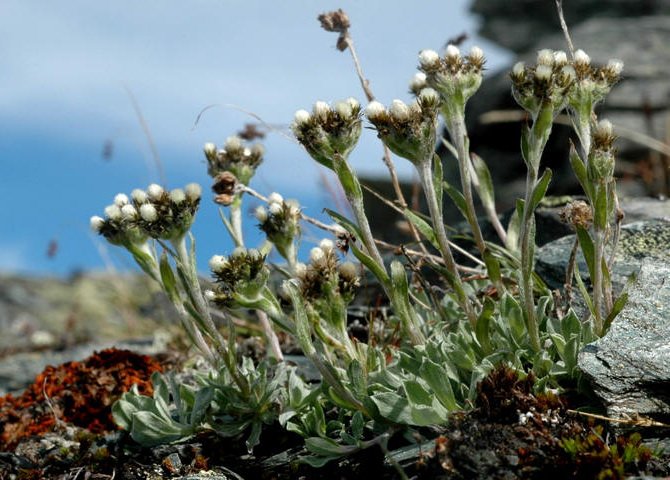
Antennaria alpina
This perennial is native to South America. The height of its spreading "carpet" is no more than 15 cm. Its decorative appeal lies in its unusual leaves. They are ovoid, elongated, and covered with a glaucous hair. Swaying in the wind, the antennaria shimmers silver in the sun.
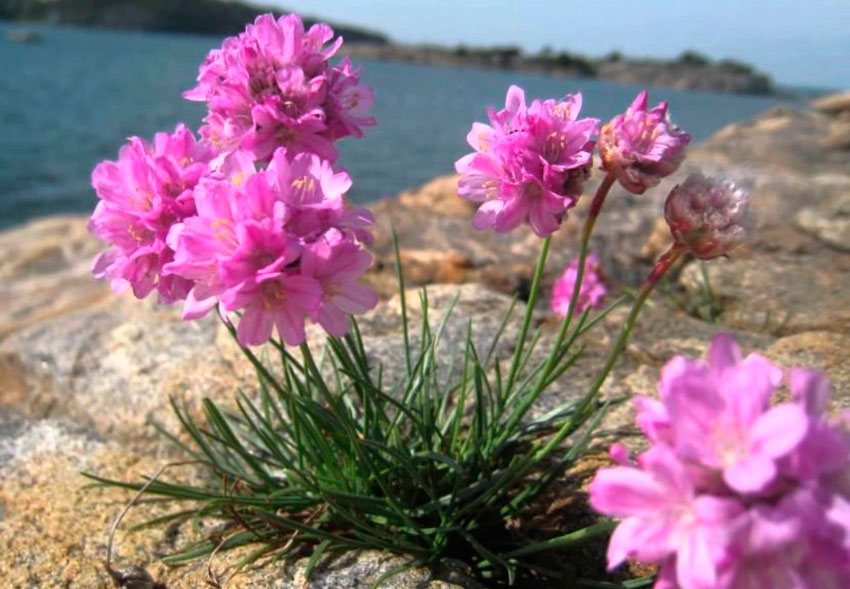
Thrift
It is found throughout the temperate climate zone, and sometimes even in Siberia. It grows up to 0.3 m and is highly ornamental. The leaves are needle-like, thin, and dark green. During flowering, raspberry-purple "balls" form on the long shoots.
Highlander
This easy-to-grow groundcover thrives in rocky areas or near bodies of water. Its bright green bushes reach 15-20 cm in height. Its glossy, lanceolate leaves have pointed tips. Its candle-shaped inflorescences change color throughout the season, from pale pink to burgundy-brown.
Indian Duchesnea
The plant originated in Southeast Asia. As it grows, it forms a "carpet" up to 0.2 m thick. By all appearances, this perennial is easily confused with strawberries—it has the same leaves, flowers, and berries, which appear late in the season. The only difference is that the fruits of the Duchesnea are inedible.
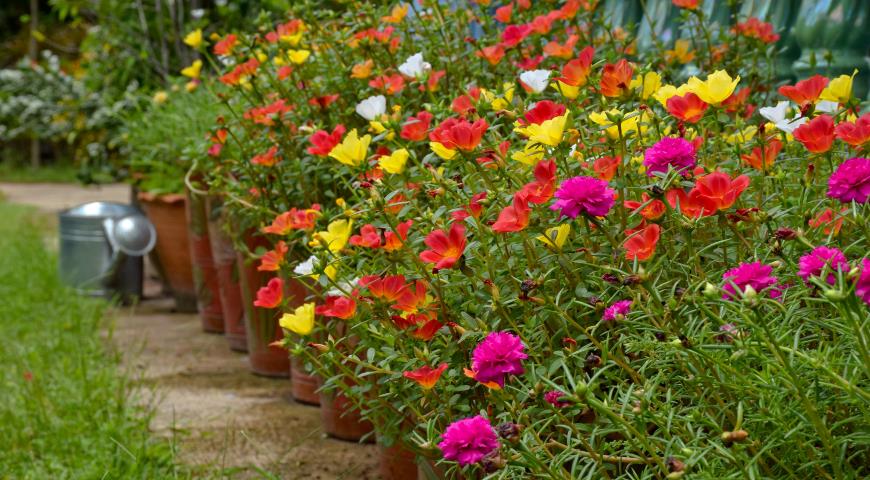
Purslane
A continuously blooming, highly ornamental groundcover native to the tropics. It has prostrate stems 15-30 cm long, densely covered with oval, glossy leaves of dense structure. The flowers are simple, with five petals, and come in a variety of vibrant colors that fade noticeably in shade.
-
- Purslane
-
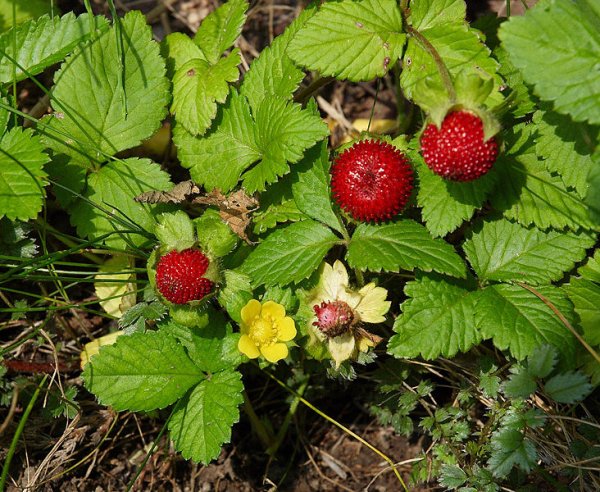
- Indian Duchesnea
-
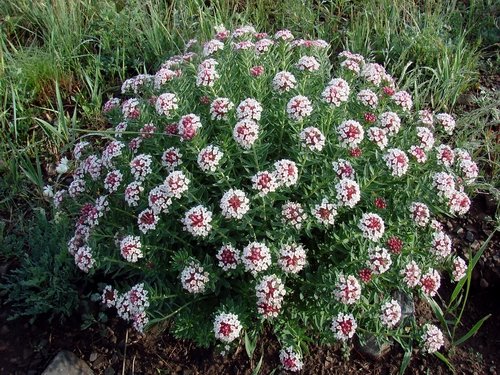
- Highlander
Sedum or sedum
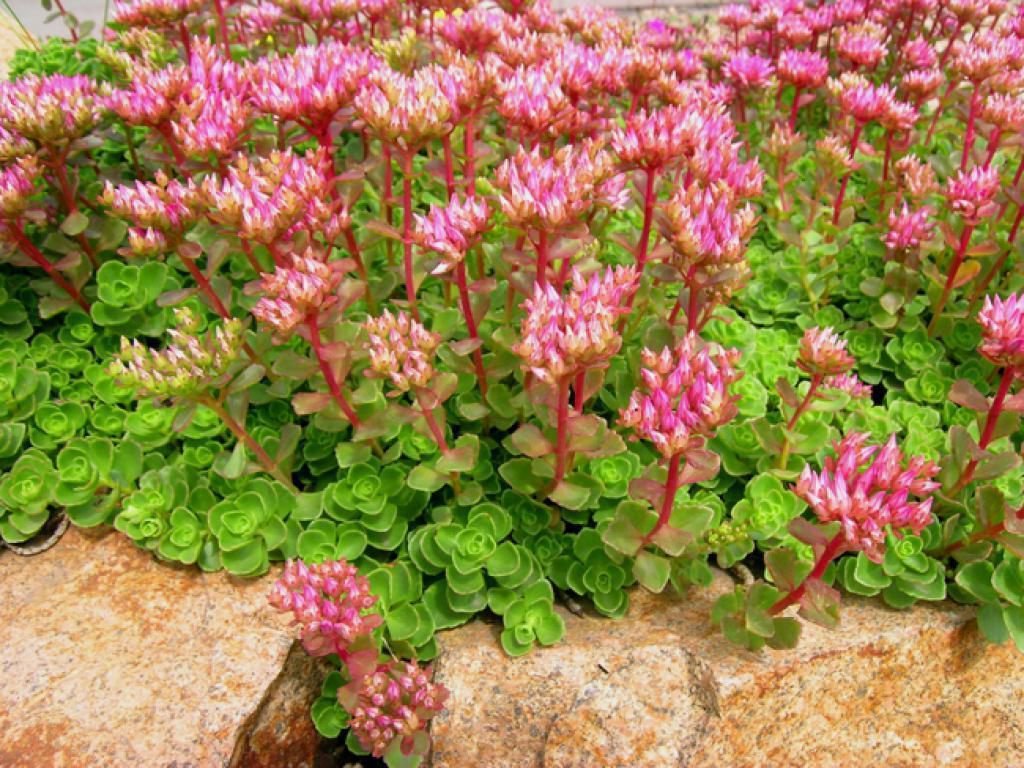
In its natural habitat, this succulent grows in spacious meadows or dry slopes. The dense "carpet," which blooms throughout the season, rarely exceeds 0.2 m in height. Depending on the species, sedums can have a variety of appearances, varying in color, shape, and size. They thrive in full sun or partial shade.
Groundcovers in landscape design
The advantage of creeping plants is their versatility. Using ornamental shrubs, you can achieve a variety of planting options:
- fill the voids on the site;
- frame borders or paths;
- decorate flower beds;
- decorate alpine slides;
- use to create rockeries;
- make "carpet" lawns.
To keep your garden looking neat, we recommend following a few landscape design rules:
- Place different varieties of plants next to each other, differing in color and shape;
- It is better to frame flower beds or borders with “rugs” of the same type;
- Succulents are more suitable for rock gardens, alpine slides or other stone compositions.
With their diverse species, these unpretentious groundcovers can give any ornamental plant a run for its money. Furthermore, they require little maintenance and maintain the garden's aesthetic appeal for a long time.