
How to properly care for the exquisite ornamental shrub Spiraea Bumalda
Content
Description of the Japanese hybrid
Spiraea Bumalda is a hybrid of the white-flowered and Japanese varieties. The hybrid grows to a height of 50 to 150 cm. The shoots are mostly erect and ribbed. Young branches are a beautiful shade of green. As they mature, the bark on the shoots turns reddish-brown.
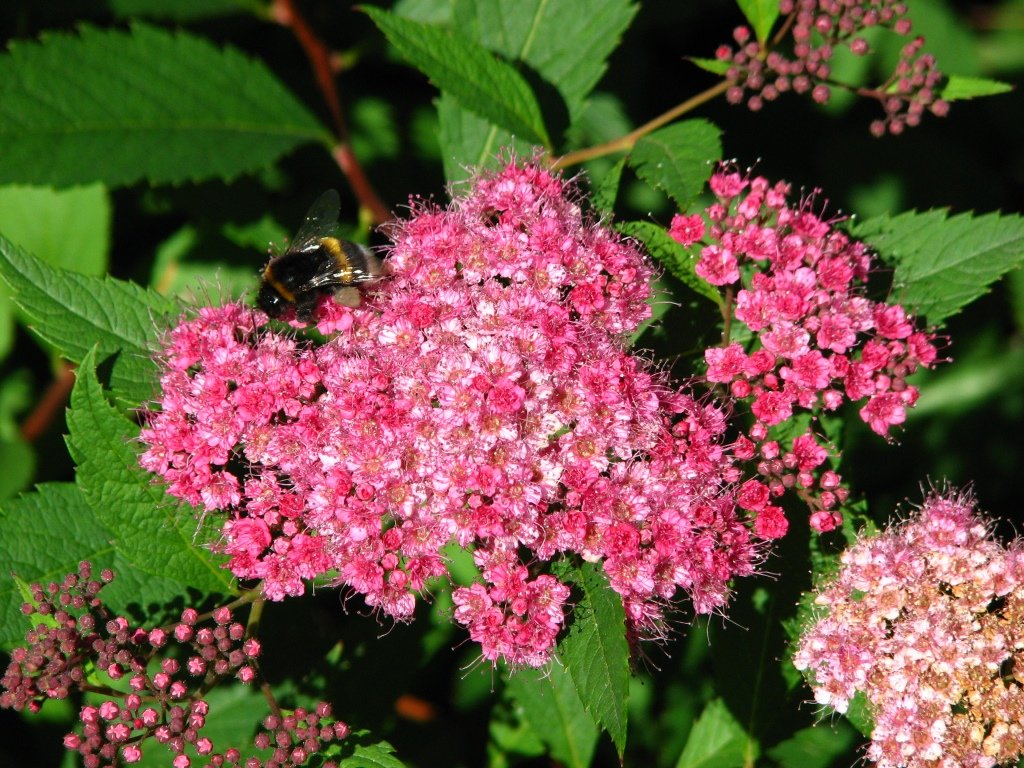
The leaves of this ornamental shrub are small and ovate. The color and shape of the leaf blades vary depending on the cultivar. Shrubs with red, burgundy, and various shades of green leaf blades are also found.
Most varieties of Bumalda spirea begin blooming towards the end of June. The flowering period lasts until September–October. Small flowers are gathered in lush inflorescences. In nature, inflorescences are found in light pink, purple, lilac, and crimson.
Spiraea Bumalda varieties
The following varieties of Bumalda spirea are considered the most common in gardening.
Anthony Waterer
A medium-sized Japanese hybrid. The maximum height of the shrub is 50 cm. This variety is distinguished by its lush, raspberry-pink inflorescences. The petals are dark green. As autumn approaches, the green shade turns to burgundy-red.
Froebelii
A spreading deciduous shrub up to 1.3 m tall. The flowering period lasts from mid-May to the end of September. During flowering, the plant is adorned with beautiful, vibrant lilac-hued inflorescences.
Crispa
One of the most highly ornamental varieties. The leaf blades are serrated. When the foliage is growing, the leaves are a wine-red hue. Crispa blooms twice: in June and September. The flowers are dark purple.
Dart's Red
As the season progresses, the petals change color: from pink to dark green, from dark green to red. This variety is characterized by large, dark crimson-colored inflorescences.
-
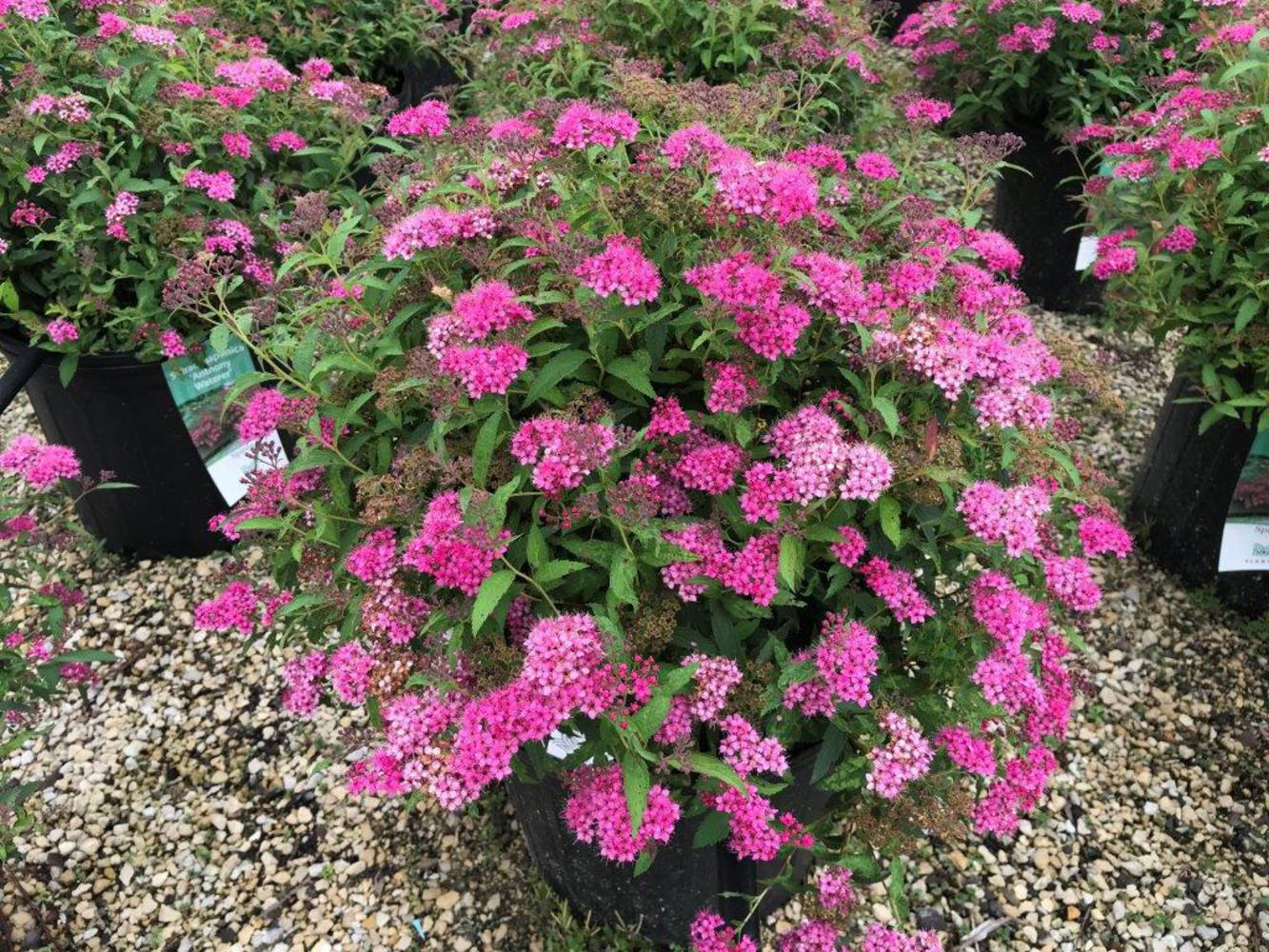
- Anthony Waterer
-
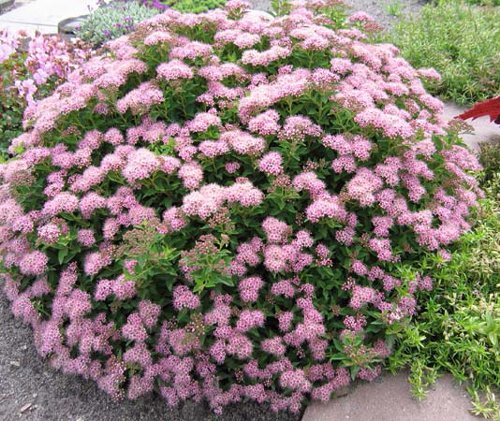
- Froebelii
-
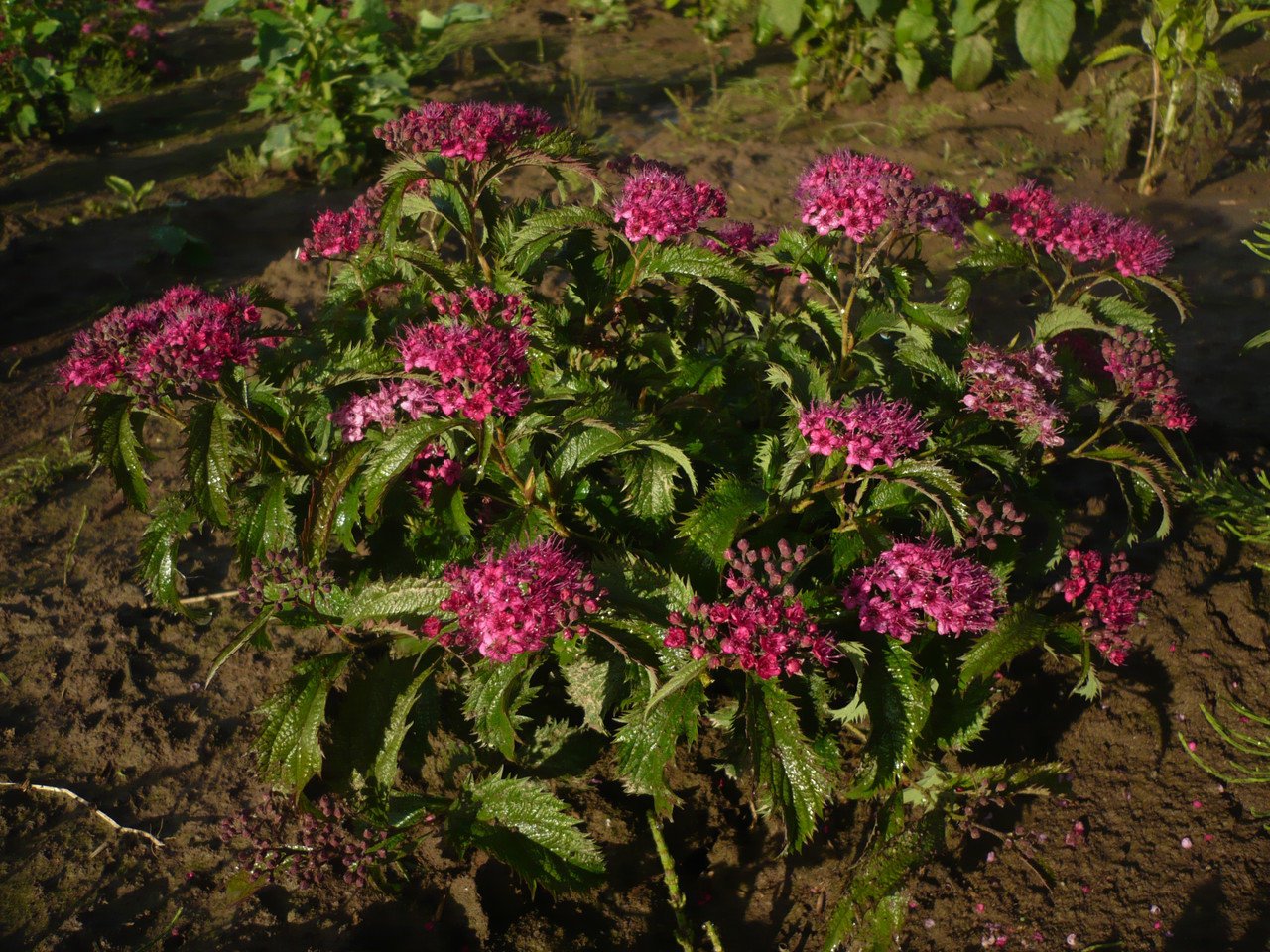
- Crispa
-
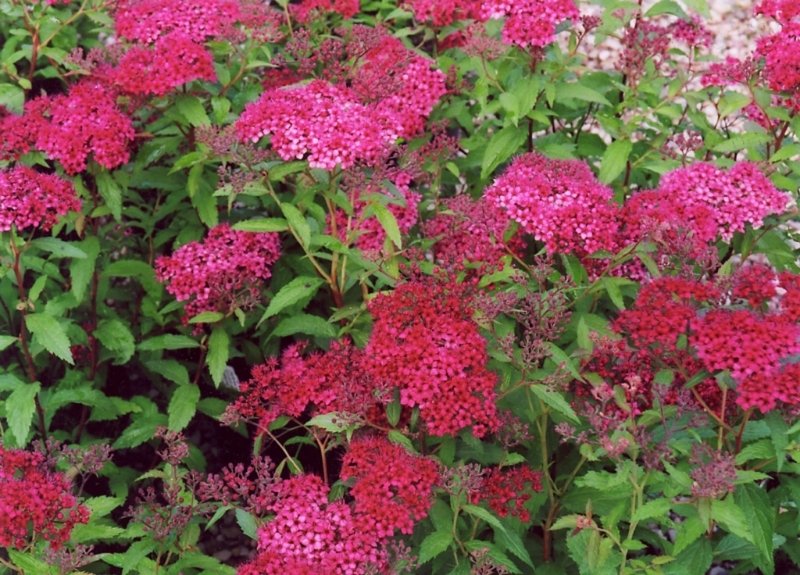
- Dart's Red
Video "Description of Spiraea Bumaldii"
This video shows what the ornamental shrub looks like during flowering.
Optimal conditions for growing
When choosing plants for their home garden, many gardeners prefer low-maintenance varieties. Among them is the ornamental deciduous shrub Spiraea bumaldii.
Requirements for location and lighting
The duration and intensity of flowering depend on the amount of sunlight. Therefore, growing in shade or partial shade is not recommended. A south or southwest-facing garden site with good protection from wind and drafts is ideal.
Soil requirements
Meadowsweet grows well in leafy or soddy soil, provided the groundwater level is no higher than 1.5–2 meters below the soil surface. It prefers a fertile substrate. To improve soil fertility, use a mixture of soddy and leafy soil, peat, and sifted river sand (2:1:1).
Planting and caring for Bumalda's spirea
It's equally important to know how to plant and care for Bumaldii spirea. Let's review the basic rules of cultivation for this crop.
Selection and preparation of seedlings
Planting spirea begins with selecting a seedling. High-quality planting material quickly adapts to new growing conditions. Shrubs damaged by insects or diseases will not only die during the rooting stage but can also infect other plants in the garden.
Buy seedlings in early spring. Look for high-quality planting material in garden nurseries. The optimal temperature for storing spirea seedlings is around 5°C. The plant can be stored in a basement or cellar. The average shelf life is 5–6 days.
Seedlings with closed root systems do not require pre-planting preparation. However, bare-root plants should be carefully inspected for signs of disease and pests. The cut surface of a healthy root shoot should be creamy white. Before planting, the root should be dipped for several minutes in a growth stimulant such as Kornevin, Epin, or Heteroauxin.
Bush planting scheme
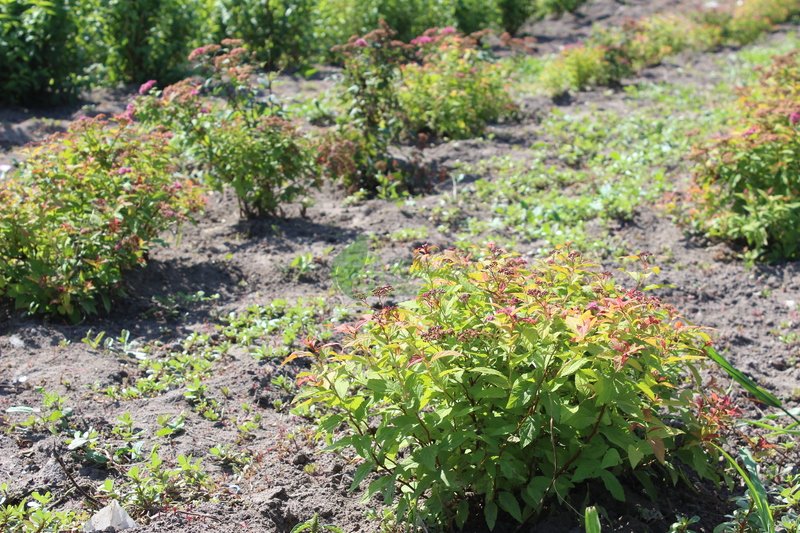
Prepare the planting hole 2-3 weeks in advance. The average diameter and depth are 40x40 cm. Note that the planting hole should be 20-40% larger than the seedling's root system.
Plant the shrubs in rows. We recommend maintaining a 35 cm spacing between rows and at least 50 cm between planting holes.
When planting a seedling, pay attention to the placement of the roots and root collar. Meadowsweet root shoots should be carefully spread out to prevent kinks and tangles. The root collar should be level with the ground.
Other methods of reproduction
Meadowsweet growing in the garden can be propagated by cuttings and layering. Both methods require little skill or experience.
Cuttings are taken after the shoots have completed their active growth phase—in early to mid-June. The average length of a cutting with 2–3 developed buds is 15 cm. The plants are rooted in a mixture of peat and river sand, covered with a glass dome, and moved to a warm, well-lit location. The cuttings are periodically aired, misted, and watered.
Propagation by layering is an equally simple method. Healthy side shoots are bent down to the ground and secured with metal staples. The attached areas are covered with fertilized soil. The plants are separated when a few leaves appear on the shoots.
Watering mode
A seedling planted in open ground requires ample water. For the first 10-14 days, the plant is watered daily. To prevent waterlogging, a watering groove is created around the edge of the tree's trunk.
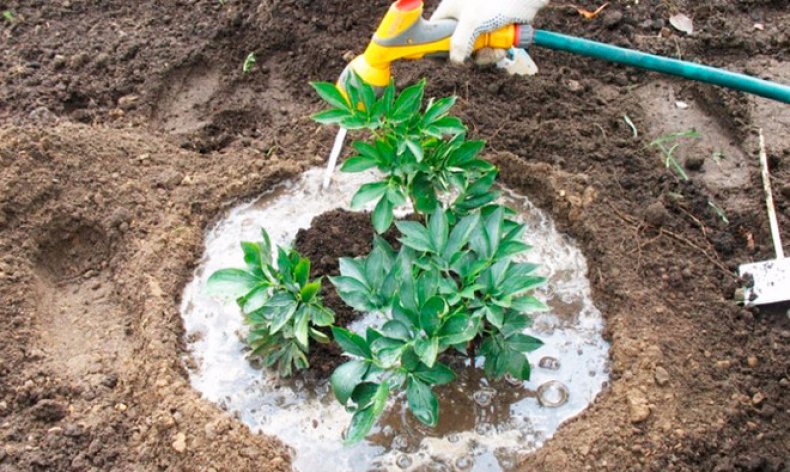
Subsequently, the bush is watered once every 5-7 days. Spiraea Bumalda is sensitive to watering. The plant tolerates both excess and lack of moisture in the soil. For this reason, experienced gardeners recommend moistening the soil around the trunk as the top layer dries out.
Fertilizing and pruning the plant
The fertilizing schedule is standard for ornamental deciduous shrubs. Fertilizers are applied three times per season: nitrogen-containing preparations in the spring, and potassium- and phosphorus-rich mineral complexes in the summer and fall.
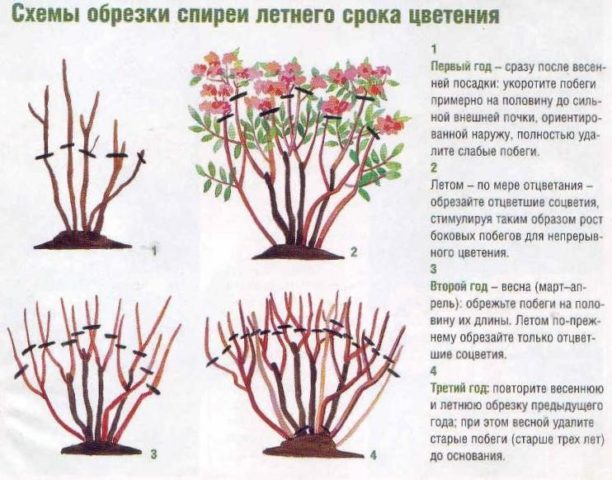
Spirea can be pruned in spring, summer, and fall. The plant recovers quickly. Throughout the season, remove dry shoots and those damaged by weather, insects, or disease. Cuts must be treated with garden pitch.
When it comes to crown formation, meadowsweet can be grown as a spherical, pyramidal, or spreading shrub. Formative pruning depends on the gardener's preferences and the growing conditions.
Preparing for winter
Despite its high winter hardiness (down to -28°C), the tips of young Bumalda spirea shoots can freeze. Pine branches and thick agrofibre will help protect the shrub from cold and frost.
Resistance of Spiraea Bumalda to diseases and pests
Spiraea bumalda has weak resistance to gray mold and various types of spotting. If infected, treat the shrub with the fungicides Fundazol and Fitostorin-M. A colloidal sulfur solution can also be used.
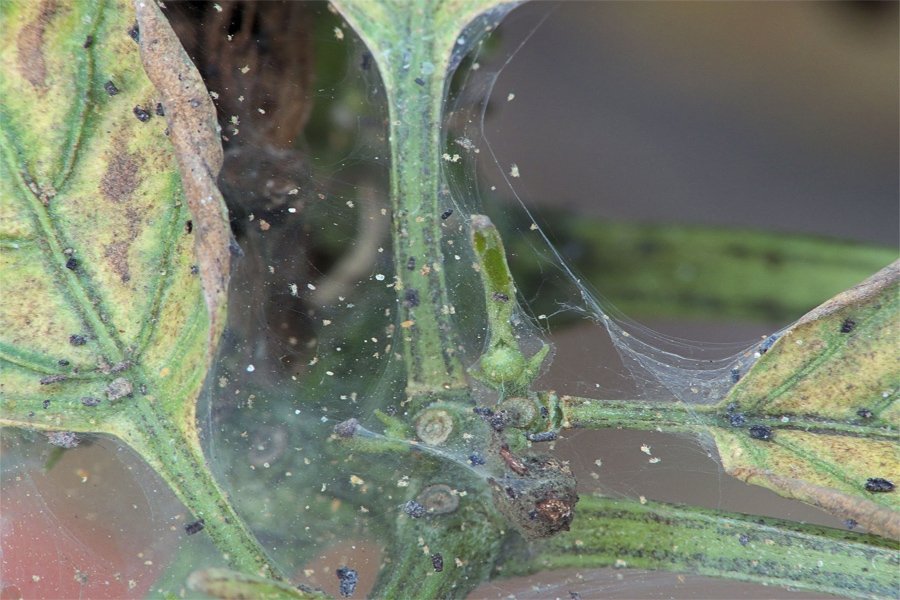
This ornamental deciduous shrub is often attacked by spider mites, aphids, whiteflies, and leaf rollers. To protect the plant from pests, insecticides and acaricides are essential, such as Fitoverm, Decis Profi, Metaphos, Keltan, and Fosfamide.
Reviews from summer residents
"When spring comes, my family increasingly goes to our dacha. Since we're not there all the time, we choose beautiful but low-maintenance plants to grow. Spiraea Bumalda is my favorite. This beautiful flowering shrub requires minimal care."
"I've been gardening for many years. Over the years, I've become familiar with many ornamental plants. If you're looking for a beautiful flowering shrub for your cottage or garden, I recommend checking out the Bumaldii Spiraea."
Spiraea Bumalda is popular not only with gardeners but also with landscape designers. The hybrid is often used for landscaping city parks and squares.