
Decorating your garden: planting and growing rules for Spiraea Billardii
Content
Botanical description of Spiraea billardii
There are approximately 80–100 species of spirea found in nature. Spirea is an ornamental deciduous shrub in the Rosaceae family. Only the most striking specimens are used in home gardening and landscape design, including the gray or silver spirea, the sharp-toothed spirea, the Japanese spirea, the oak-leaved spirea, the willow-leaved spirea, and others. Due to its high ornamental qualities, the billardii spirea is particularly popular.
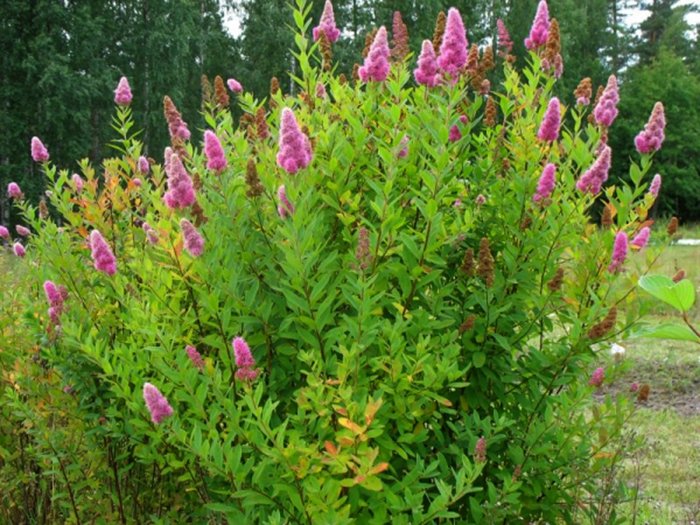
Spiraea Billardii was developed by hybridizing the willow-leaved and Douglas varieties. Developed through selective crossbreeding, this cultivar inherited the best qualities of its parent varieties: high winter hardiness, rapid adaptation to growing conditions, and a striking appearance.
Spiraea Billardii is a beautifully flowering deciduous shrub that can reach 2–2.5 m in height. Its upright stems form a spherical crown. The basal portion of the shoots is strong, robust, woody, and grayish-brown. The tips of the shoots and young twigs are reddish-brown. The leaves are broadly lanceolate and bipunctate. The average leaf blade length is 10 cm. The back of the leaf is a rich green, while the outer surface is glaucous-tomentose.
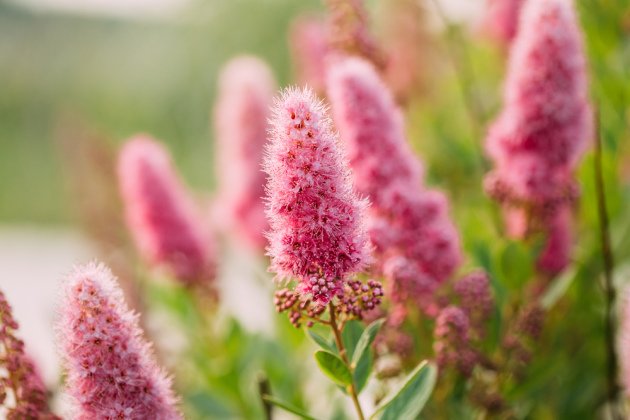
Billarda belongs to the group of late-blooming varieties. The flowering period begins in late July and lasts until the first autumn frosts. The inflorescences are characterized by an elongated pyramidal shape. The large peduncle, reaching 20 cm in length, consists of small raspberry-pink flowers and stamens. During flowering, the shrub exudes a delicate honey aroma.
Distribution and habitat
In its natural habitat, this ornamental plant is found in forest, forest-steppe, and semi-desert zones of the Northern Hemisphere. In Russia, this beautiful flowering shrub grows in the Caucasus.
Domesticated species can be found throughout Russia, from the Krasnodar Territory to the Arkhangelsk Region. They prefer forested and forest-steppe zones, and thrive near bodies of water and in mountainous areas.
Video “Description of Spiraea Billarda Triumphans”
This video presents the main characteristics of the culture.
Growing and caring for the plant
Spiraea billardii has recently become popular in home gardening. Therefore, many novice gardeners are interested in how to properly care for this ornamental shrub.
Site selection and soil quality
Spiraea is undemanding when it comes to growing conditions. In most cases, a seedling planted in open ground quickly takes root and adapts easily to its new environment. To ensure the shrub displays beautiful, vibrant blooms, it's best to select a sunny location.
As for the soil, the Billard variety prefers a loose and nutritious substrate with a neutral acidity level.
Planting technique
The best time to plant a seedling is the first ten days of September. Experienced gardeners recommend choosing a cloudy or rainy day for planting. If the weather is warm and sunny, reschedule the procedure for the evening.
Spirea roots are very delicate and fragile. For this reason, seedlings of this ornamental shrub are sold in containers. Pay attention to the condition of the bark when purchasing planting material.
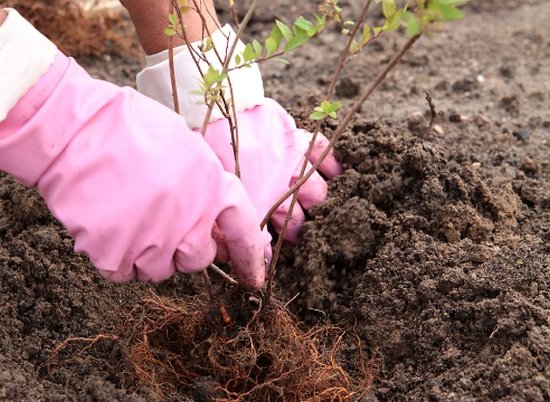
Before planting, carefully remove the seedling from its container and spray it with a spray bottle. Do not remove any clumps of soil from the root system. Otherwise, there is a high risk of damaging the root shoots.
The planting hole should be 40 x 40 cm. The first layer should be made of drainage material, and the second layer should be made of fertilizer mixed with soil. When planting, ensure that the root collar remains level with the ground surface.
If you plan to plant several Spiraea Billardii bushes, maintain a distance of 40–50 cm between the holes.
Watering and spraying
Water the ornamental shrub as the top layer of soil dries. Avoid overwatering. Billarda reacts negatively to excess soil moisture. After watering, mulch the area around the trunk with hay, straw, or peat. The mulch layer prevents weed growth and maintains moisture levels.
Spirea bushes are periodically sprayed with a spray bottle. This should be done late in the evening. Otherwise, burn marks may appear on the leaves.
Top dressing and fertilization
During the first year after planting in its permanent location, the Billard seedling is fed with nitrogen-rich cow manure and bird droppings. This organic matter helps the plant grow foliage.
In subsequent years, flowering shrubs can be fertilized with complex mineral compositions such as Kemira Lux, AgroMaster, Plantafol, Sudarushka, etc.
Pruning rules
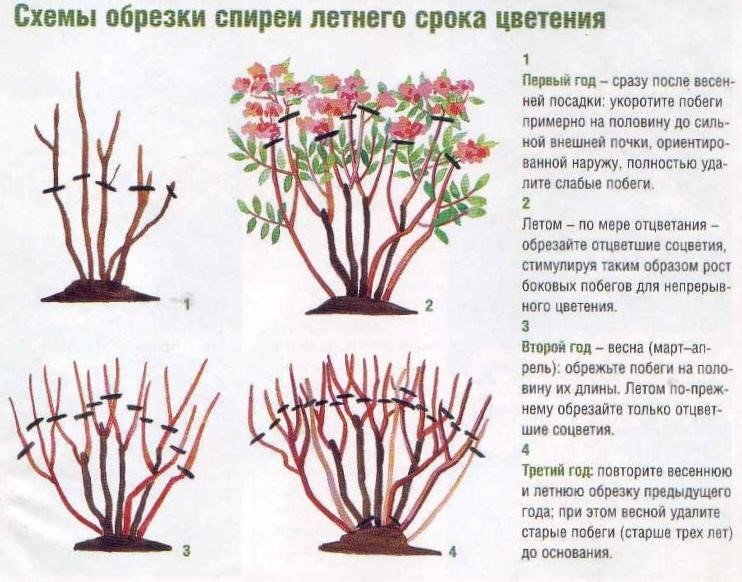
Spiraea billardiana, a summer-flowering variety, should be pruned in the fall, 1.5 to 2 weeks before the onset of frost. Old, dried, and damaged shoots are cut back to the ground. Healthy branches are shortened by a third. After pruning, the shrub's crown takes on a hemispherical shape.
Features of preparation for winter
Despite its high winter hardiness (down to -35°C), it's best to insulate this ornamental plant for the winter. Pine branches, white polypropylene bags, or agrofibre can be used as covering material.
The covering material protects the plant from potential temperature fluctuations. A sudden thaw often follows a frost, which can lead to the freezing of young shoots and rhizomes.
Methods of propagation of ornamental shrubs
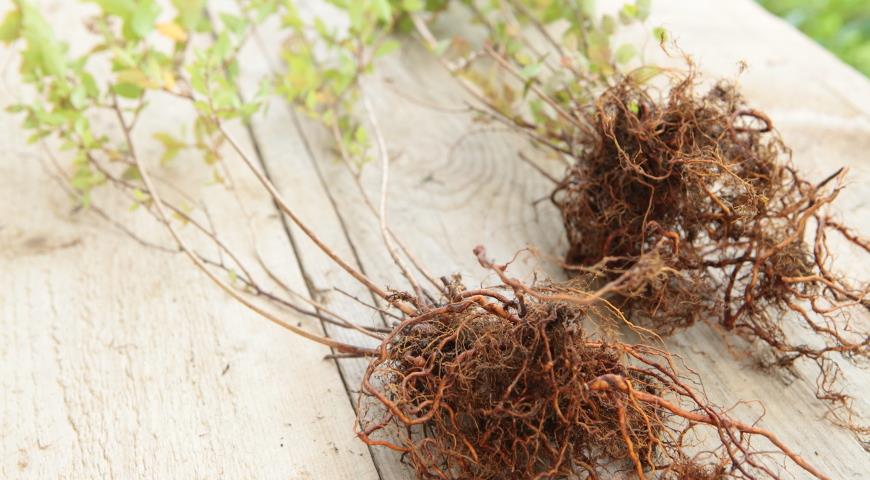
The Billarda variety is propagated vegetatively: by cuttings, layering, and division. Let's consider the most common method among gardeners: division.
After the fall foliage has ended, the shrub should be dug up. Rinse the rhizome under running water and allow it to dry thoroughly. Then divide the spirea root into several equal pieces. You can use a garden knife or pruning shears pre-treated with disinfectant.
The cut sites are sprinkled with crushed charcoal dust. Now the propagated plants can be planted in their permanent locations.
Prevention and protection from diseases and pests
If watering schedules are not met, Spiraea billardii can be affected by various types of rot. Inaction on the part of the gardener will result in the death of the shrub. Therefore, at the first sign of a fungal infection, the ornamental shrub should be treated with Fitosporin, Fundazol, or any other fungicide.
This beautiful flowering shrub attracts harmful insects, including spider mites, leaf rollers, and aphids. To quickly control these pests, use insecticides such as Karbofos, Fosfamide, Inta-Vir, Metaphos, or Fury.
Using Spiraea Billardii in landscape design
The Billarda variety is widely used in landscape design for garden paths, mixed borders, rockeries, and flower beds, as well as for creating hedges. The plant looks attractive both as a solitary specimen and in compositional plantings.
The best "neighbors" are considered to be juniper, thuja, spruce, pine, lilac, dogwood, viburnum, deutzia, and smoke tree. However, it's best to avoid them near fruit crops.
-
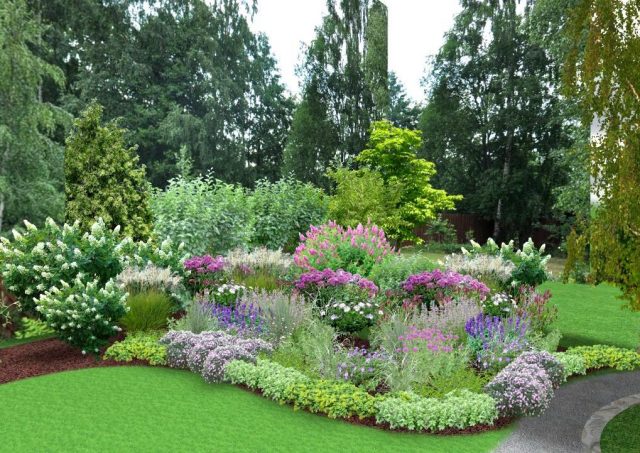
- Composite planting
-
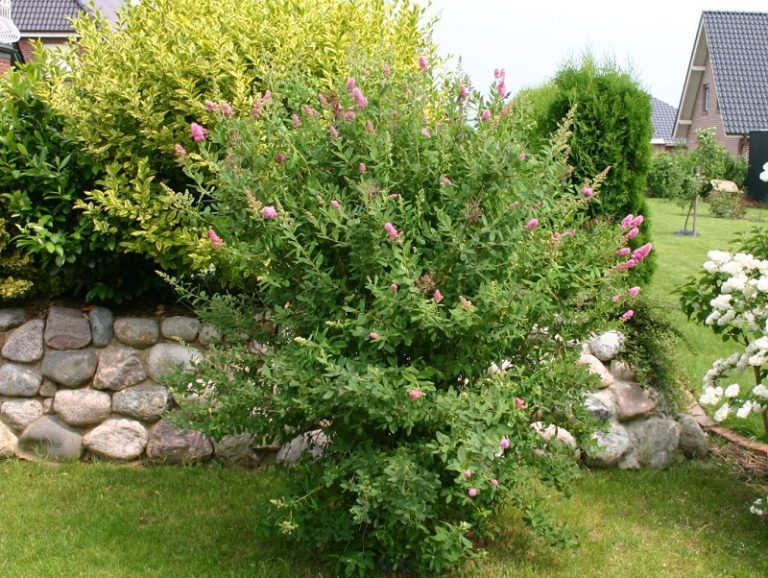
- Design of rockeries
-
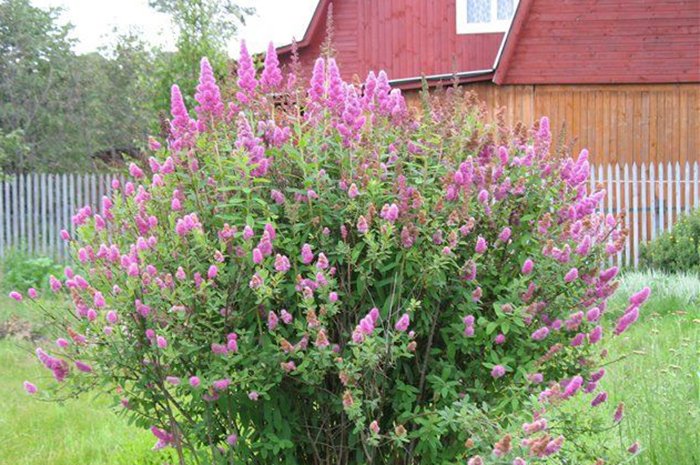
- Solitaire planting
Growing the summer-flowering Spiraea billardii is easy. A consistent watering schedule, timely fertilization, and annual pruning enhance the vigor of this ornamental shrub.