
Secrets of growing and using the birch-leaved spirea in garden design
Content
Description and distribution area of the birch-leaved spirea
Spiraea betulifolia is the Latin name for spirea. It is often popularly called "meadowsweet," which causes some confusion. Both plants belong to the same family, Rosaceae, but meadowsweet is a herb with paniculate inflorescences, while birch-leaved spirea is a deciduous shrub with corymbose inflorescences.
Spiraea is native to Asia, the Far East, and Siberia. It grows in coniferous and mixed forests, on mountain slopes and along coasts. It is a low-growing shrub, averaging 50-70 cm, rarely reaching 1 m. The crown is spherical and dense, with ribbed shoots curved in a zigzag pattern. The leaves are small, elliptical, with prominent veins and serrated edges, resembling birch leaves.
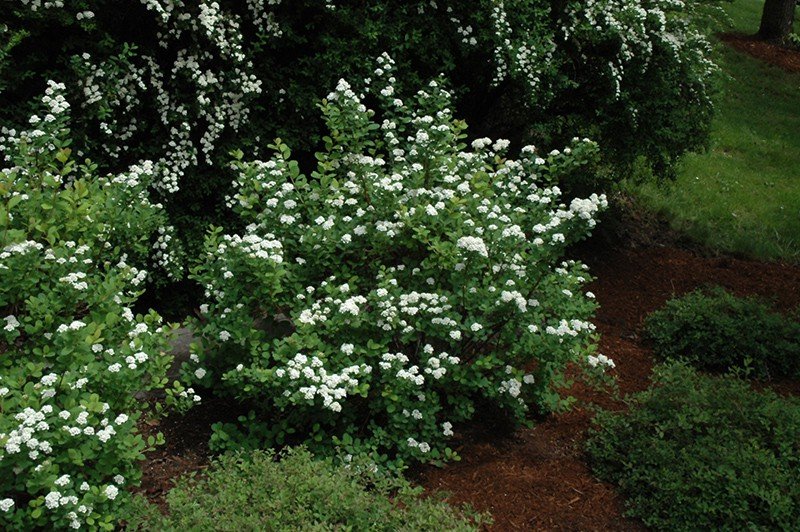
The shrub begins flowering in its third or fourth year. Flowering lasts for about three weeks, from late June to mid-July. The inflorescences are dense, 5-9 cm in diameter, and consist of numerous small white, cream, or pinkish flowers. The shrub is no less decorative in autumn. The foliage turns bright yellow or purple and falls in late October.
The best varieties of birch-leaved spirea
There are still not many varieties of Birch-leaved Spiraea, but there are still several popular cultivars.
Thor
Spiraea 'Tor' grows as a low-growing, spreading shrub (70-80 cm), reaching up to 1.5 m in diameter. Its dense, hemispherical crown, thanks to its glossy leaves, is decorative even without flowers. The inflorescences are creamy white and open in early July. In autumn, the shrub turns orange-yellow.
Thor Gold
The Thor Gold variety differs from the previous one only in the foliage color—it's more vibrant, greenish-yellow, with white inflorescences. Gold shrubs become especially decorative in autumn, when the foliage changes shades, from yellow with a golden sheen to red and even purple-violet.
Iceland
The Island variety is distinguished by its vigorous and full-bodied bushes, reaching a height of 1-1.5 meters with a crown diameter of 1.5-1.8 meters. Cream-colored inflorescences bloom from mid-June to August. In autumn, the foliage turns purple-crimson. Island spirea typically reblooms in the fall, which can be stimulated by removing spent inflorescences.
Pink Spuckler
Pink Sparkler is the most beautiful and decorative variety. The bush is low-growing, no more than 60 cm tall, with deep green leaves and pink inflorescences with a slight lilac hue. Blooming lasts for a long time, from June to August. Pink Sparkler is currently the only variety with this color of inflorescences, making it particularly prized.
-
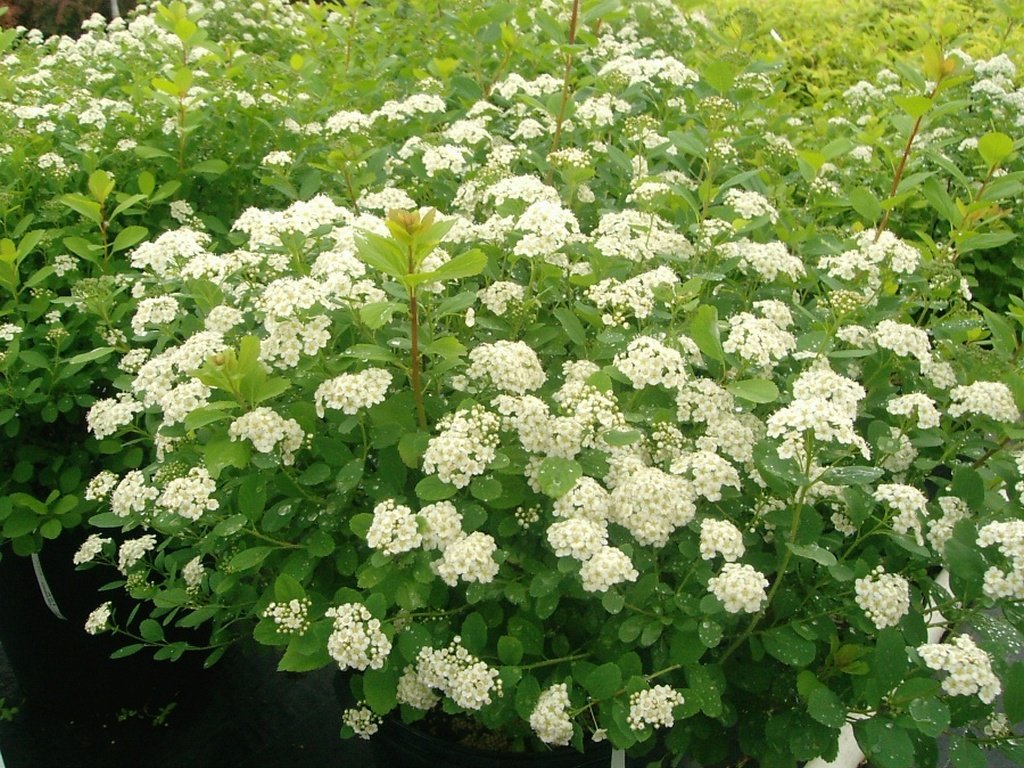
- Thor
-
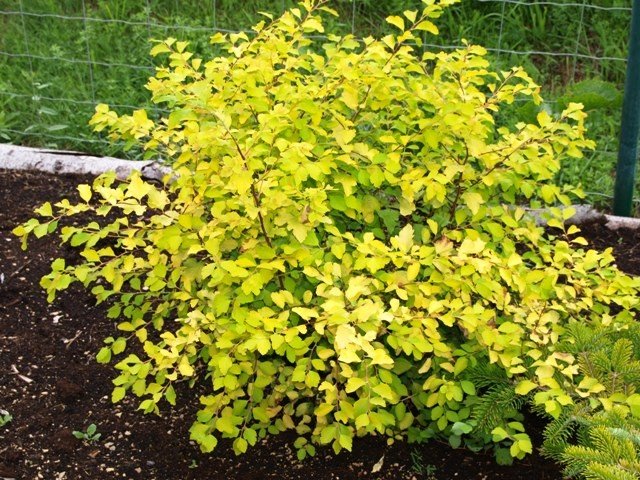
- Thor Gold
-
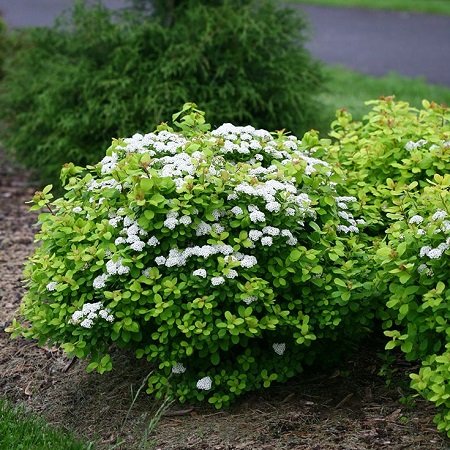
- Iceland
-
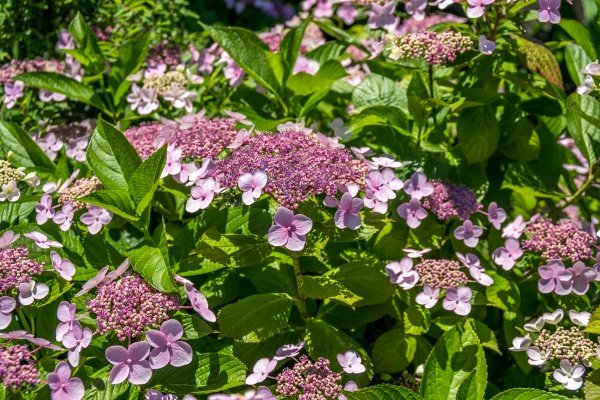
- Pink Spuckler
Video "Description of Birch-leaved Spiraea"
This video describes the main decorative qualities of the shrub.
Rules for planting and the intricacies of caring for shrubs
Spirea bushes can be planted in spring or fall. It's important to choose high-quality materials and follow the planting guidelines.
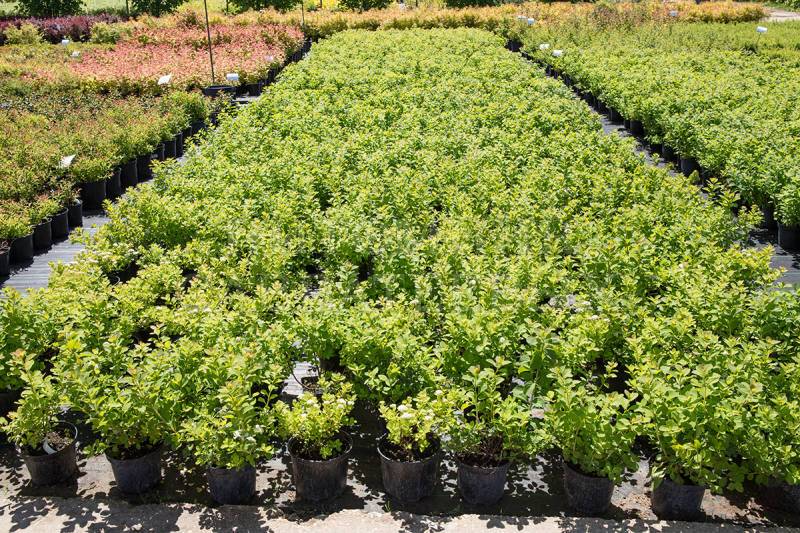
Selection and purchase of seedlings
It's best to buy seedlings from specialized stores or nurseries. They should have the following characteristics:
- the roots are fibrous, fresh and elastic;
- the shoots are smooth, the bark is not damaged;
- when purchased in autumn, the leaves are evenly colored, without spots;
- In spring, the buds should be swollen, but not yet open.
Before planting, bare-root seedlings are soaked in a growth stimulant. Containerized plants are watered to ensure easy removal of the rhizome and its root ball.
Selecting a site and preparing the soil
Spirea shrubs love the sun. They can also grow in the shade, but they won't produce profuse blooms. They aren't picky about soil composition, but they perform best in well-drained loams with neutral to highly acidic soil.
Interesting fact: In acidic soils, autumn foliage colors become more vibrant and saturated.
Planting holes 40-50 cm deep are dug in advance. Their width should be 1.5 times the root diameter. A 10-15 cm layer of drainage material is placed at the bottom. The soil is mixed with humus, then filled back in halfway, and left for a couple of weeks. When planting several bushes, maintain a distance of 70-80 cm between them.
Planting process and propagation methods
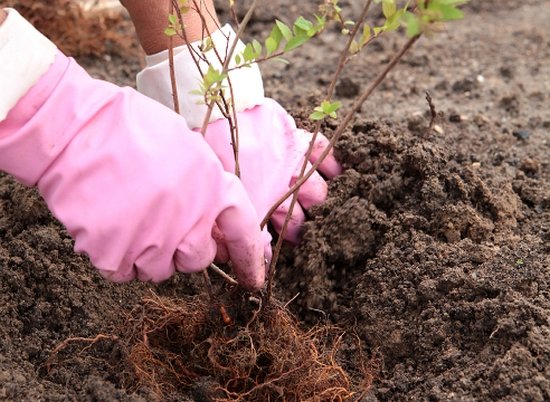
Planting of bushes occurs as follows:
- The seedling is placed in the hole so that the root collar is at soil level.
- The hole is filled with soil, compacting it periodically.
- At the end, the seedling is watered generously, making a furrow around the hole.
There are three ways to propagate spirea:
- seeds - they are collected in October, dried and sown for seedlings in the spring after 1-2 months of stratification;
- by layering - for this, a strong lateral shoot is dug in in the spring, and in the fall the young bush is transplanted;
- cuttings - 10-15 cm long cuttings are cut in late spring or summer and rooted in greenhouses with high humidity.
Watering and fertilizing
The plant does not tolerate prolonged drought, so water it once every two weeks at a rate of 1.5 buckets of water per plant. To prevent moisture evaporation, mulch the soil, or if there is no mulch, loosen the soil. Stop watering when the air temperature drops to 10°C.
Spirea is fed twice a season: in the spring, immediately after pruning, and before flowering. For the first feeding, use liquid mullein with added superphosphate (10 g per bucket of solution). The second time, apply a potassium-phosphorus fertilizer.
Pruning shrubs
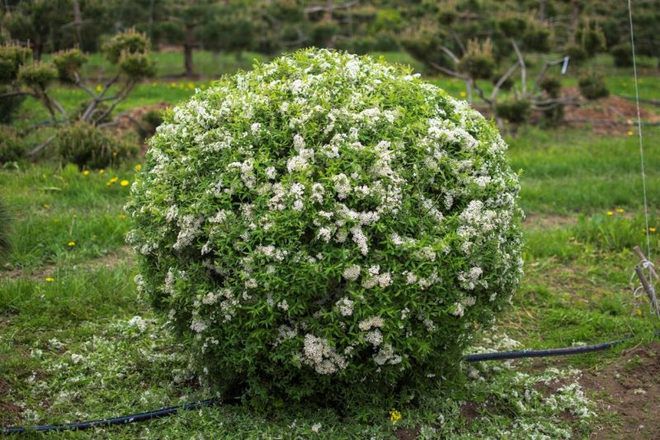
Formative pruning is performed in early spring, before the buds open. It involves cleaning and shortening all shoots: on young bushes, to the first outer bud; on 3- to 4-year-old plants, to a height of 25-30 cm. This deep pruning results in numerous shoots, giving the bush a fuller, fuller appearance. Old branches over 5 years old are pruned completely.
Preparing for winter
Spirea shrubs are quite frost-hardy, so they don't require shelter. Preparing for winter involves simply mulching the area around the trunk with peat or humus. As these materials decompose, they release heat and keep the plant warm. It's recommended to wrap the lower part of the shrub with netting to prevent damage from rodents.
Pest and disease control
Spirea bushes are very rarely affected by fungal infections, such as gray mold or leaf spot. To prevent this, spray the plants with Bordeaux mixture in early spring. If signs of disease appear, use the fungicides Fundazol and Fitosporin.
Aphids, spider mites, and whiteflies can damage the ornamental appearance of bushes. Signs of their presence include curled leaves, spots, and webbing. Insecticides such as Decis, Aktara, and Actellic are effective against these insects.
Birch-leaved spirea in landscape design
Its unpretentiousness and exceptional decorative qualities allow spirea to be widely used:
- in landscaping of city parks;
- in pure and mixed compositions with herbaceous and floral plants;
- as borders and hedges;
- for zoning of the territory;
- in rock gardens, mixborders, near fountains;
- as a striking element at the front of the house;
- for trimming tall bushes and trees.
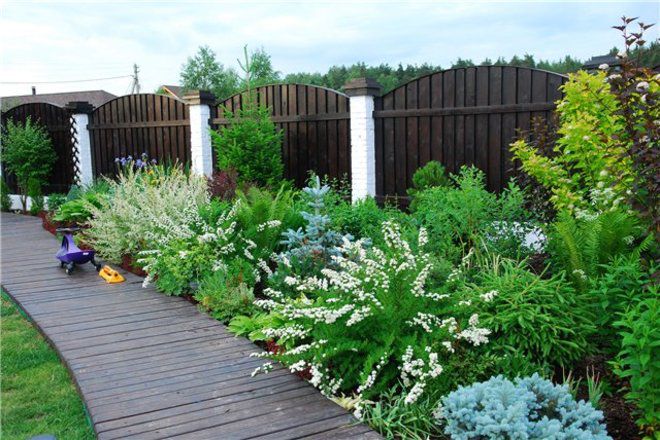
This ornamental beauty pairs well with other spirea species, roses, peonies, lilacs, and conifers. Low-growing shrubs should be planted so that other plants don't obscure them.
If you need to landscape your property but don't have time to care for plants, plant the Birch-leaved Spiraea. It's easy to maintain and always attractive—it blooms profusely in summer and graces the garden with crimson foliage in autumn, all without causing any hassle.