
An oriental beauty in the garden: photos of the most beautiful lily varieties
Content
Botanical portrait of a flower
The garden lily is a perennial bulbous plant that varies in size depending on the variety. The average size of the ovoid bulb is about 10 cm, but some specimens are three times larger in diameter.
Flowers with erect stems can grow up to three meters tall, with a corolla reaching over 35 cm. The stem is densely foliated, with lanceolate leaves with pointed tips. The buds consist of six petals of varying shades and shapes. A large pistil, surrounded by stamens, is located in the center. Grouped in groups of 7-16 flowers, they form umbel-shaped, cone-shaped, or cylindrical inflorescences.
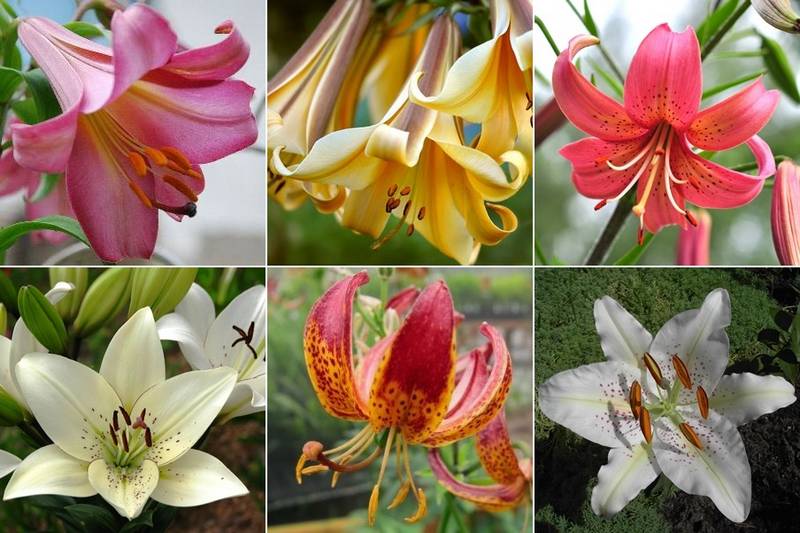
The blooming of a single corolla lasts from 3 to 10 days. The upper buds open first, then gradually give way to the lower ones. When the lilies finally finish blooming, the fruits, which are seed capsules, ripen on them.
The main international classification of lilies
Today, over ten thousand varieties of this ornamental plant are known. To avoid confusion among such a vast variety, American gardener Jan de Graaf developed a classification system, which became officially international in 1964. He divided all hybrids into 10 sections:
- Asian;
- curly (martagon);
- snow-white (candidum);
- American;
- long-flowered;
- tubular and Orleans;
- eastern (orientals);
- tiger;
- interspecific (including LA, OT, LO, OA hybrids);
- wild-growing.
Video "Types of Lilies"
This video shows the most interesting types and varieties of lilies.
Species diversity of lilies
To give you a better idea of each subspecies, below we provide a description of several varieties along with photos.
Asian
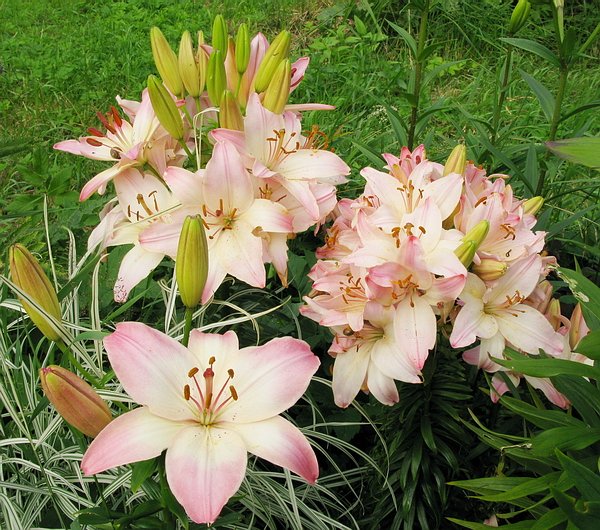
One of the world's numerous groups, comprising over five thousand species. Asiatic hybrids are relatively undemanding and adapt well to extreme temperatures. Flowering begins in June. The corolla is cup-shaped, medium-sized, and fragrance-free. Well-known representatives:
- Marlene. The stem length ranges from 0.7 to 1.2 m. The bud size is 10-15 cm. The petals are pink in various shades, lighter towards the center, sometimes white.
- Lionheart. A low-growing variety with bicolored corollas 12-15 cm in diameter. The color is dark purple, almost black, with lemon-yellow tips.
- Black Out. This hybrid grows over a meter tall. The flower is a rich burgundy-carmine hue with a blue-violet stripe down the center.
American
The varieties in this section are not very popular in their native lands due to their extreme fussiness. The large buds resemble a bell or turban in shape. When flowering, which begins in mid-summer, the plant emits a pleasant fragrance. The most common hybrids are:
- Lake Tulare. A tall hybrid growing up to 1.2 m. The petals are strongly curved backward. The center is white and yellow with dark burgundy speckles, with bright pink edges.
- Afterglow. A tall variety (about two meters). The corollas are distinctively turban-shaped. The color is crimson, turning yellow with brown spots toward the center.
Snow-white
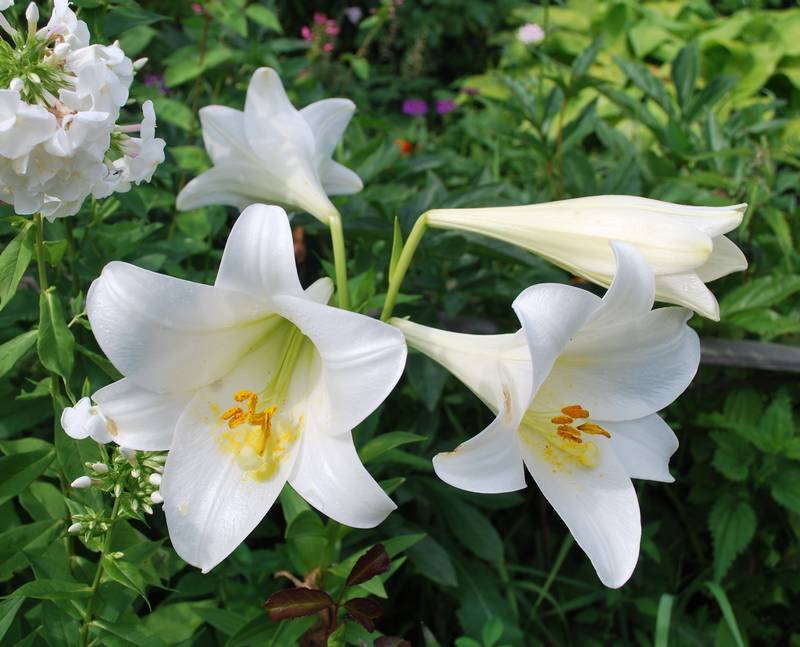
A small group, comprising only 1% of all species. Typically, the plants are distinguished by their remarkable height and tubular or funnel-shaped buds. When flowering, they emit a strong fragrance.
White lilies have low resistance to fungal infections and therefore require additional care.
The following varieties are especially loved by gardeners:
- Apollo. Grows up to 1.2 m. Flowering lasts only two months (June-July). The 10-12 cm corollas are snow-white with fine dark speckles around the center.
- Madonna. The hybrid's maximum height is 1.3 m. The medium-sized buds are pure white, without any extraneous blooms. The lily blooms only during the first half of summer.
Eastern
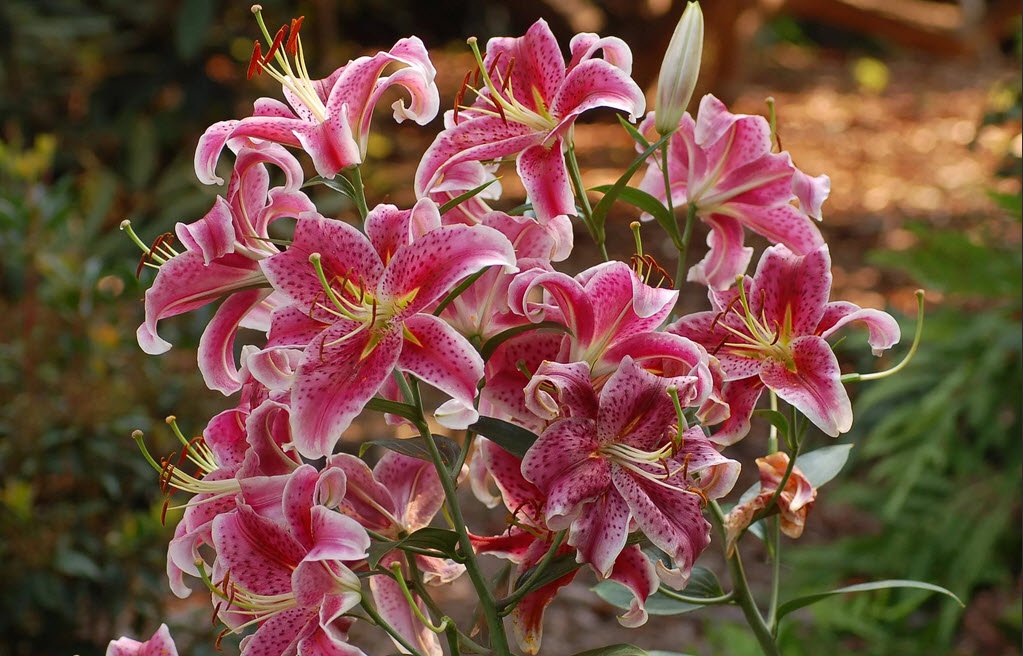
One of the most beautiful representatives of the genus Lily. The group is represented by a wide variety of shapes and colors. The stems vary in length, but the corollas are truly gigantic – 30-35 cm. Oriental hybrids are characterized by late flowering, beginning in August-September. The most common varieties are:
- Canberra. Lily height: 1.8 m. Color: lilac-purple, with small dark specks near the base. The center is pale yellow.
- Stargazer. Grows up to one and a half meters. Fuchsia-colored petals, covered with dark spots, with snow-white edges. Distinguished by a strong fragrance.
Longiflorum
A small section featuring tropical hybrids. Lilies in this group are rarely grown in Russia due to unsuitable conditions. The stems are medium-length (a little over a meter), with tubular corollas resembling bells. When flowering, the plant emits a subtle, pleasant fragrance. The following varieties are suitable for greenhouse conditions:
- White Heaven. A medium-sized hybrid growing up to 1 m tall. The corollas are snow-white, turning pale green toward the center. This lily blooms in the second half of summer.
- White Fox. The stems are 1-1.3 m long. The diameter of the opened bud is about 13 cm. The petals are snow-white with a slight creamy-yellow tint.
-
- Longiflorum
-
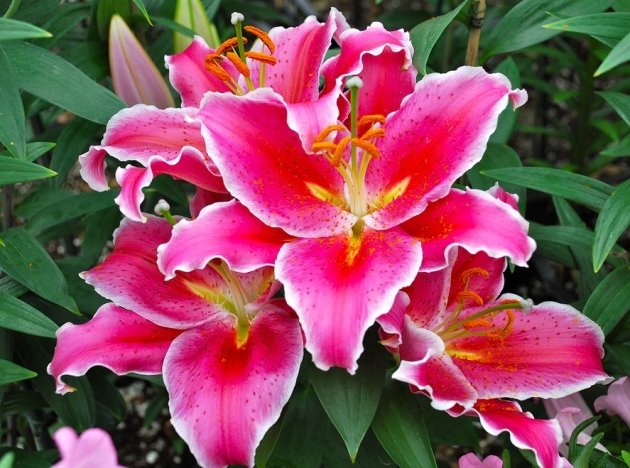
- Eastern
-
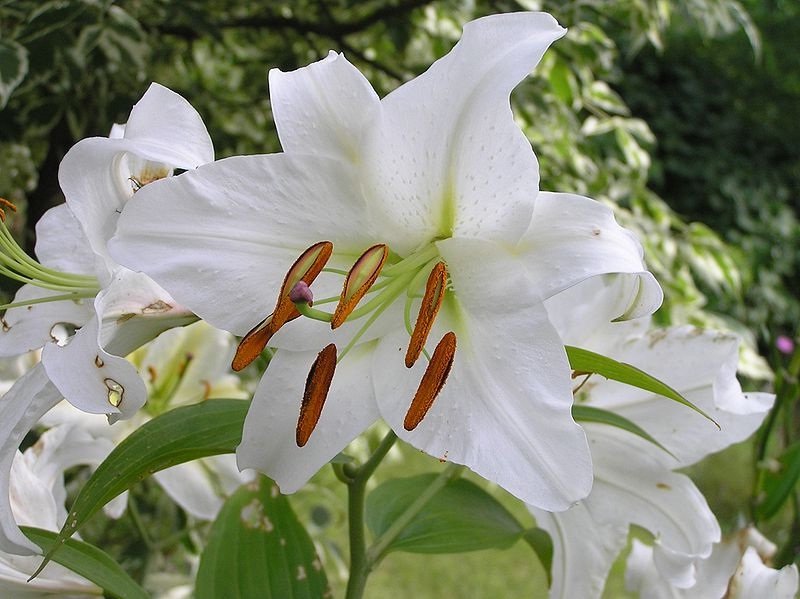
- Snow-white
Curly
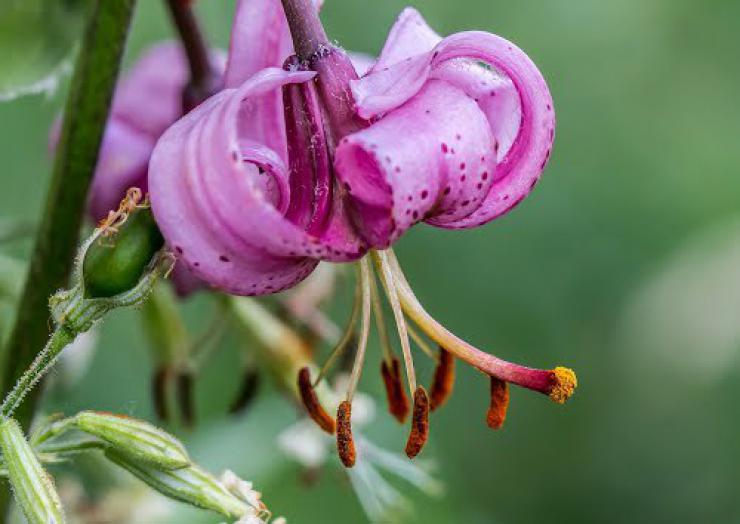
One of the most undemanding hybrids, capable of growing even in the north of the country. The corollas are turban-shaped with outward-curling petals. The buds are not too large, only about 10 cm in diameter. When fully open, the curly lilies have a subtle, unobtrusive fragrance. The most famous varieties are:
- Claude Shride. The shoots reach 1.5-2 m in length. Flowering begins in early summer. The color is dark burgundy with a deep purple hue and yellow speckles.
- Slate's Morning. Grows up to one and a half meters and blooms around the middle of June. The petals are white and pink with brown spots. The center is lemon-yellow.
Tiger
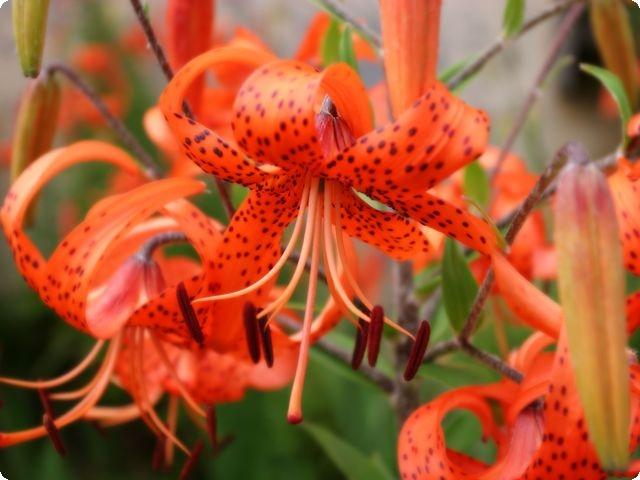
Lilies in this section are also called lanceolate lilies by some gardeners. Traditional tiger lilies have given rise to a whole line of hybrids in a variety of colors. The corolla is turban-shaped, and the petals are dotted with dark spots along their entire length. Here are just a few of the varieties:
- Flore Pleno. Grows just over a meter tall. Distinguished by its double buds, a uniform orange-coral hue with dark brown spots.
- Fluffy Leopard. A medium-sized variety, reaching a height of approximately 0.9 m. The corollas are lush and double. The bright orange petals are dotted with medium-sized brown specks along their entire length.
Tubular and Orleans
The second largest group after the Asiatic lily. This species is very hardy and also has strong immunity to fungal infections. The plants thrive in any soil but are quite sun-loving. Below we present a couple of the most beautiful Orleans lily varieties:
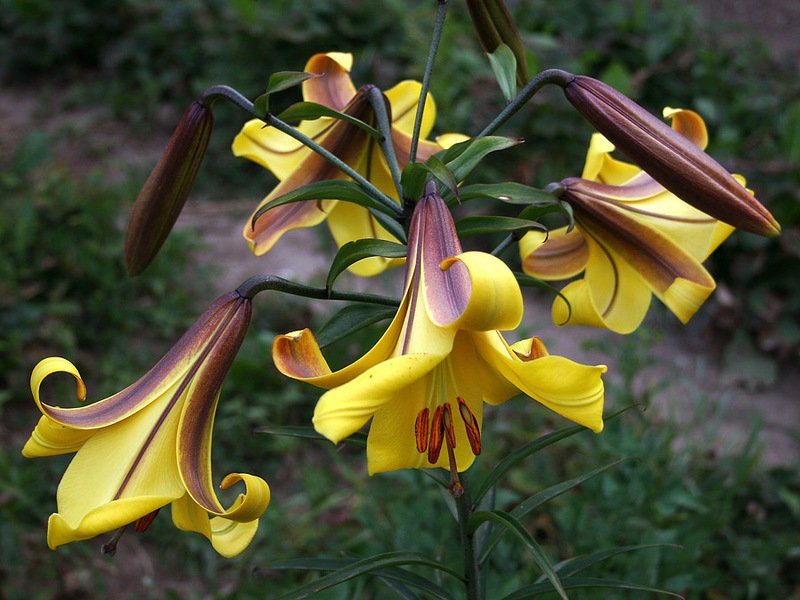
- African Queen. The stem reaches one and a half meters in length. The corollas are tubular, about 15 cm in diameter. The petals are yellow-apricot, slightly brownish on the outer surface.
- Pink Perfection. A tall variety (up to 2 m). The inflorescences are racemose, 10-13 cm in size. The color is purple-lilac, with a whitish stripe and a yellow-green center.
Interspecific hybrids
The selective breeding of various species has produced a multitude of easy-to-grow hybrids. They incorporate the best qualities of their parents and adapt well to any conditions.
LA hybrids
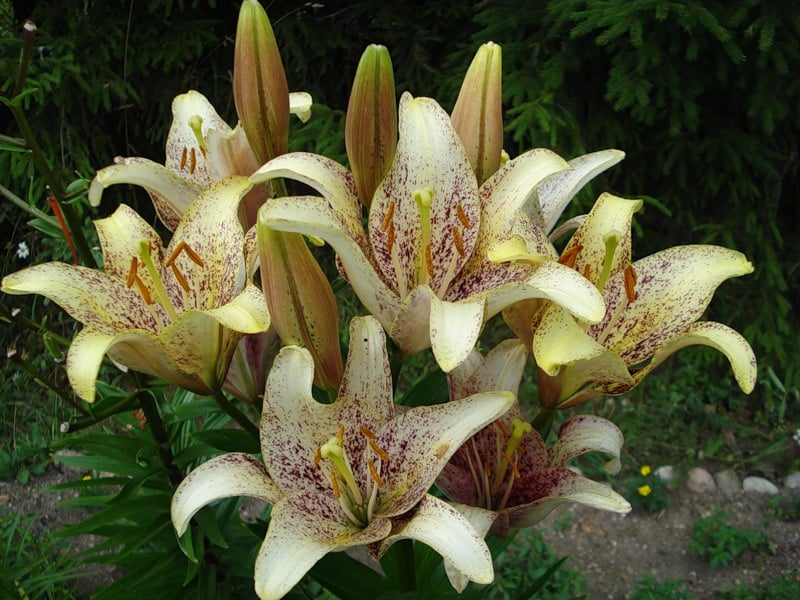
These lilies were created by crossing Asiatic and longiflorum varieties. This group is characterized by a variety of colors, a delicate fragrance, and elegant flower shapes.
Flowering of most representatives of this section begins in the second half of summer.
The most original are:
- A bestseller. A medium-sized plant, no more than a meter tall. The flower is quite large, a delicate creamy yellow, and has a finely speckled center.
- Mirage. The stem length is 0.9-1.1 m. The corolla diameter is approximately 20 cm. The petals are a uniform burgundy-red hue.
- Indian Diamond. The flower grows up to one and a half meters. The buds have a waxy texture, are large, and a rich yellow-orange color without unnecessary blotches.
OT hybrids
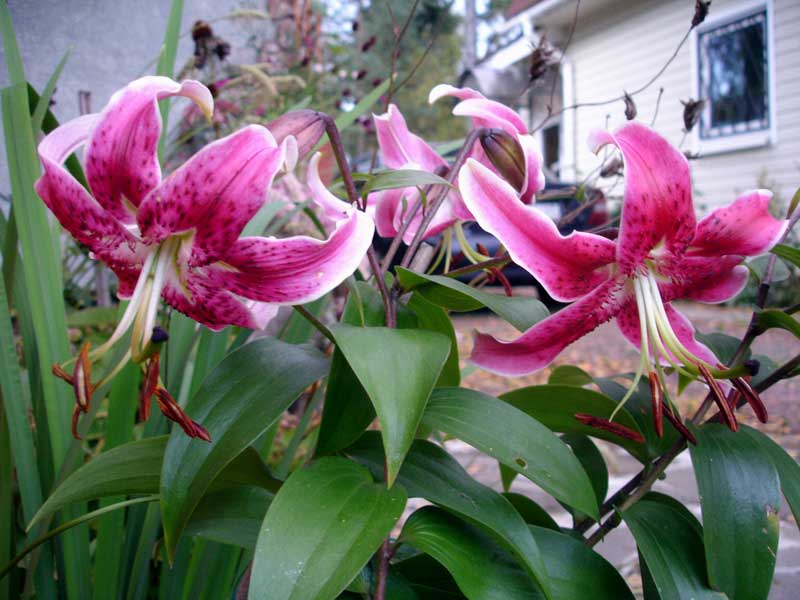
The parent pairs of this variety are oriental and trumpet lilies. Of all existing hybrids, these are the largest. Their large size even earned them the nickname "tree lilies." Here are some of them:
- Debbie. The stem reaches two meters in length. The funnel-shaped bud is about 25 cm in size. The petals are burgundy-brown at the base, with yellow-apricot edges.
- Labrador. The plant grows over 1.5 m. The size of the opened tubular buds is 25-30 cm. The color is uniform, rich pink.
LO hybrids
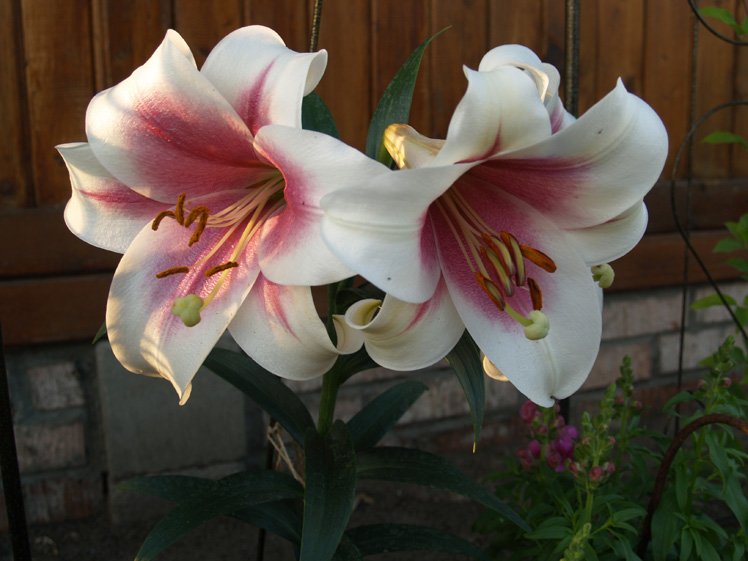
This variety was developed relatively recently by crossing oriental and longiflorum varieties. The corollas are tubular or funnel-shaped. The plants bloom in a variety of vibrant colors and emit a delicate, light fragrance. The most popular hybrids are:
- Prince Promise. Grows up to 1.3 m. The bud size is about 15 cm. The color is pearly pink, darker at the base and lighter at the edges.
- Divine. A medium-sized variety, growing to 0.8 m tall. The tubular corolla has slightly wavy edges. The petals are a uniform crimson hue.
- Sunny Crown. The stem length is no more than a meter. The color is lemon-yellow with wide, dark crimson strokes in the middle and light speckling near the center.
-
- LO hybrids
-
- OT hybrids
-
- LA hybrids
OA hybrids
To create this species, breeders crossed oriental and Asian varieties. The resulting lilies are slightly smaller in size than their parent varieties, but with greater immunity to viral infections. The most famous hybrids of this subgroup are:
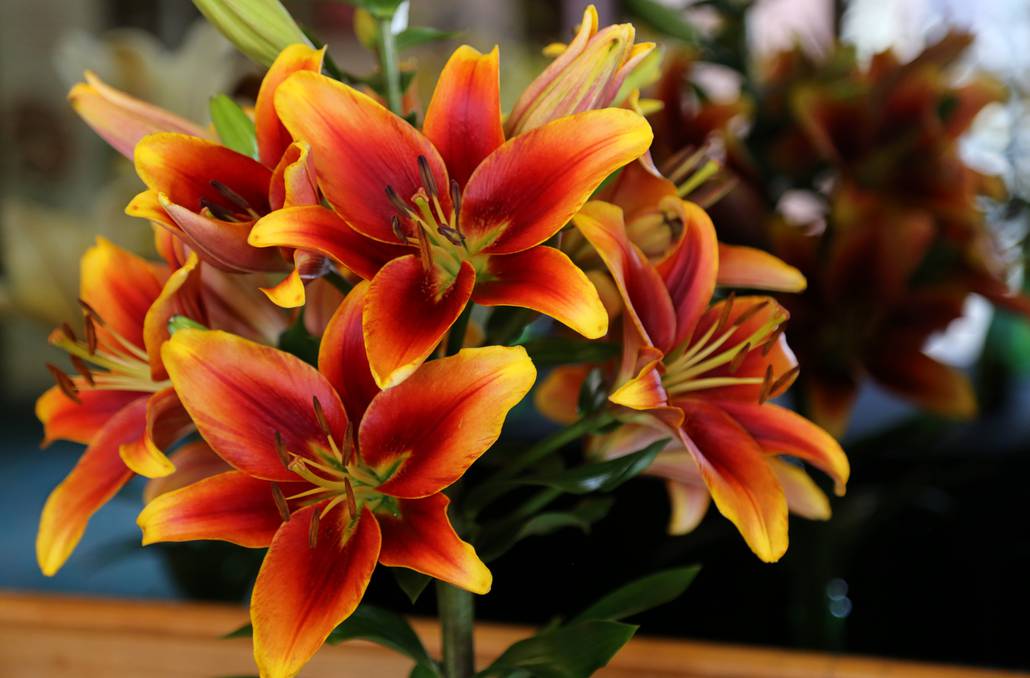
- Fest Crown. The plant grows to about a meter in height. Its color is yellow-orange, fading to a muted scarlet at the base. The center is sparsely speckled.
- Elegant Crown. A medium-sized variety (up to 1 m). Fuchsia-colored petals, without unnecessary blotches, are edged with a thin yellow border. The center is lemon-colored.
Wild species of lilies
The section of wild lilies is divided into several subspecies:
- Daurian;
- calloused;
- pretty;
- single-brothers;
- double-row;
- oatmeal;
- drooping;
- false tiger.
By collecting wildflower seeds, you can successfully plant them in your garden. These plants require no special care and easily survive the harsh northern winters.
History knows many examples of the lily becoming a heraldic symbol. Their popularity owes its popularity to numerous myths. The ancient Greeks associated the snow-white petals with the fertility goddess Hera, and Christians associated the flower with the Blessed Virgin Mary.