
30 David Austin rose varieties with descriptions and photos
Content
- 1 History of the series
- 2 General characteristics of Austin roses
- 3 Video: "David Austin Roses in Garden Design"
- 4 The best varieties of David Austin roses
- 4.1 Abraham Darby
- 4.2 Brother Cadfael
- 4.3 Charlotte
- 4.4 Christopher Marlowe
- 4.5 Claire Austin
- 4.6 Crocus Rose
- 4.7 Crown Princess Margareta
- 4.8 Eglantyne (Eglantyne)
- 4.9 English Garden
- 4.10 Gertrude Jekyll (Gertrude Jekyll)
- 4.11 Golden Celebration
- 4.12 Graham Thomas
- 4.13 Jubilee Celebration
- 4.14 Jude the Obscure
- 4.15 Lady Emma Hamilton
- 4.16 Lady of Shalott
- 4.17 LD Braithwaite
- 4.18 Mary Rose
- 4.19 Molineux
- 4.20 Othello
- 4.21 Pat Austin
- 4.22 Queen of Sweden
- 4.23 Teasing Georgia
- 4.24 The Alnwick Rose
- 4.25 The Pilgrim
- 4.26 Tradescant
- 4.27 Young Lycidas
- 4.28 William Morris
- 4.29 Wollerton Old Hall
- 4.30 William Shakespeare
- 5 Examples in landscape design
History of the series
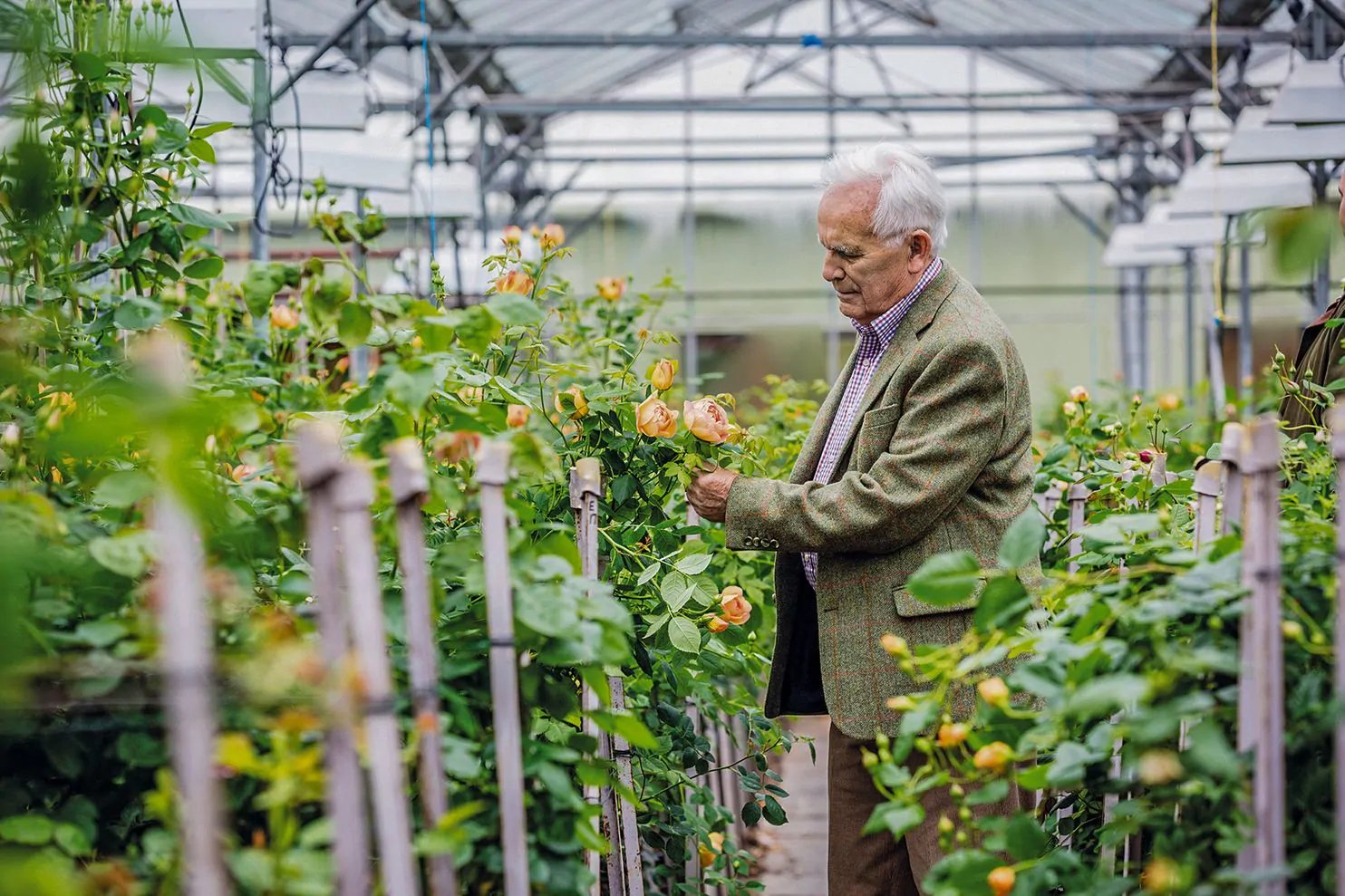
British breeder David Austin introduced his first hybrid, Constance Spry, to the world in 1961. The Englishman was inspired by antique roses he saw at a French exhibition. He then decided to improve on the vintage flowers, giving them a fuller shape and a more diverse color palette. The parent roses chosen were the Gallic variety Belle Isis and the floribunda Legras. The resulting specimen resembled a peony so much that the series was dubbed "peony-like."
Within two decades, the Briton had already developed around fifty hybrids, which he successfully presented at the Chelsea Rose Show. In addition to floribundas, he also used rose hips and tea roses as his basis. David Austin, the founder of a family business, is one of the most renowned breeders, and continues to develop new varieties to this day.
General characteristics of Austin roses
The appearance of peony roses varies by variety, but they all share some common characteristics. The plants can reach a height of two meters, with compact, often perfectly shaped bushes. The buds are cup-shaped, lush, and densely filled with petals, forming racemes. They emit a delicate fragrance during flowering.
When talking about these flowers, gardeners highlight the following features:
- frost resistance;
- increased immunity to infections and pests;
- formation of buds along the entire length of the shoot;
- original form;
- high decorative value;
- long flowering (some varieties bloom twice).
However, selectively bred hybrids also have their weaknesses. One of these is their poor tolerance to precipitation. Also, due to the large number of buds, the stems often droop and sometimes break. English roses of bright or dark colors are susceptible to black spot.
Despite their worldwide fame, these flowers have yet to be classified into any botanical classification – they continue to be called shrubs or bushes. The best varieties are officially recognized by the Royal Horticultural Society and have received prestigious awards.
Video: "David Austin Roses in Garden Design"
This video shows options for using flowers in landscape design.
The best varieties of David Austin roses
Today, over two hundred hybrids have been developed. Most of them adapt well to climate conditions and can grow even in regions with cold winters. We'll introduce you to the most striking representatives of the series, which have earned worldwide recognition.
Abraham Darby
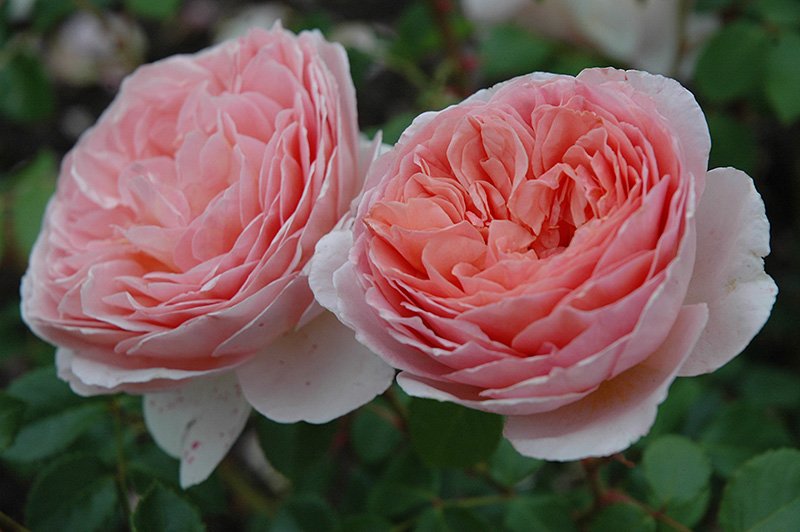
This rose was bred in 1985 by Austin. Its stems reach 1.2 to 1.5 m in height. The bud diameter is approximately 14 cm. The petals are double, creamy pink, and darken noticeably toward the center.
Brother Cadfael
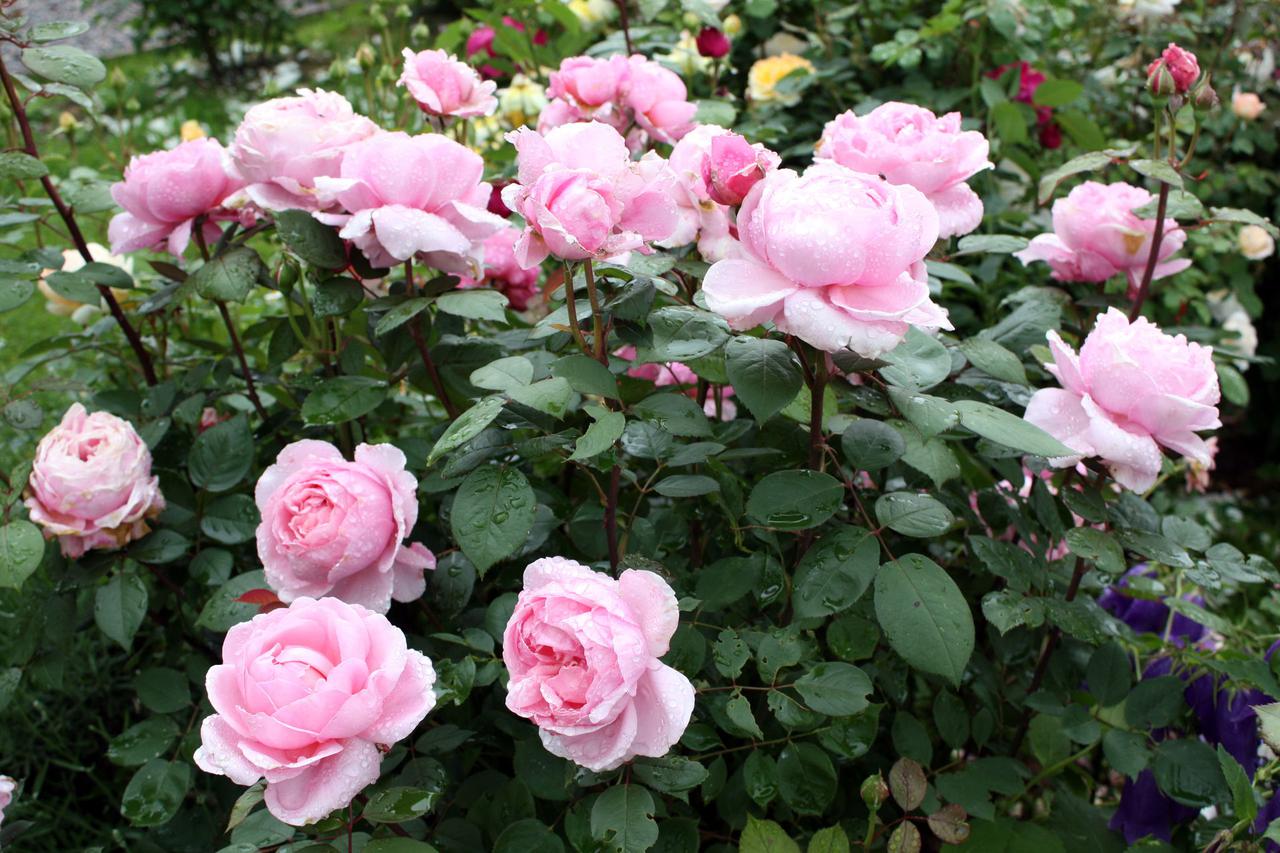
The erect stems grow just over a meter tall, forming a 0.9 m wide bush. The 14-16 cm flowers are a delicate white with a pinkish tint. A distinctive feature of Braze Cadfael is its complete absence of thorns.
Charlotte
Bred in 1993, this repeat-flowering hybrid is a medium-sized variety (0.7-0.9 m). The cup-shaped, lemon-yellow buds are not very large, about 10 cm in diameter, and are prone to fading in bright sunlight.
Christopher Marlowe
This cultivar was developed in the early 2000s. The bush reaches a height of one meter and a width of 0.7-0.8 m. The flowers are small, only 8-10 cm in size. The petals are raspberry-pink, with a yellow center. Blooming is continuous and long-lasting.
Claire Austin
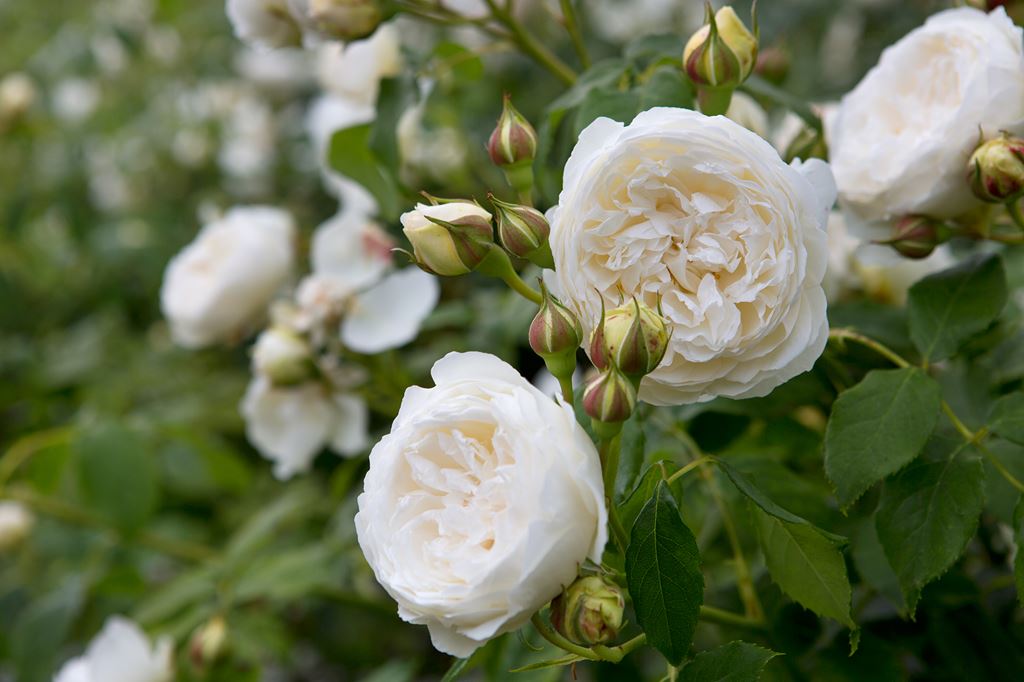
A white, repeat-blooming English rose, bred in 2007. The plant is tall (up to 1.5 meters), 1 meter in diameter, with drooping stems. The buds are approximately 10 cm in size. When fully open, they take on a delicate lemon hue.
-
- Claire Austin
-
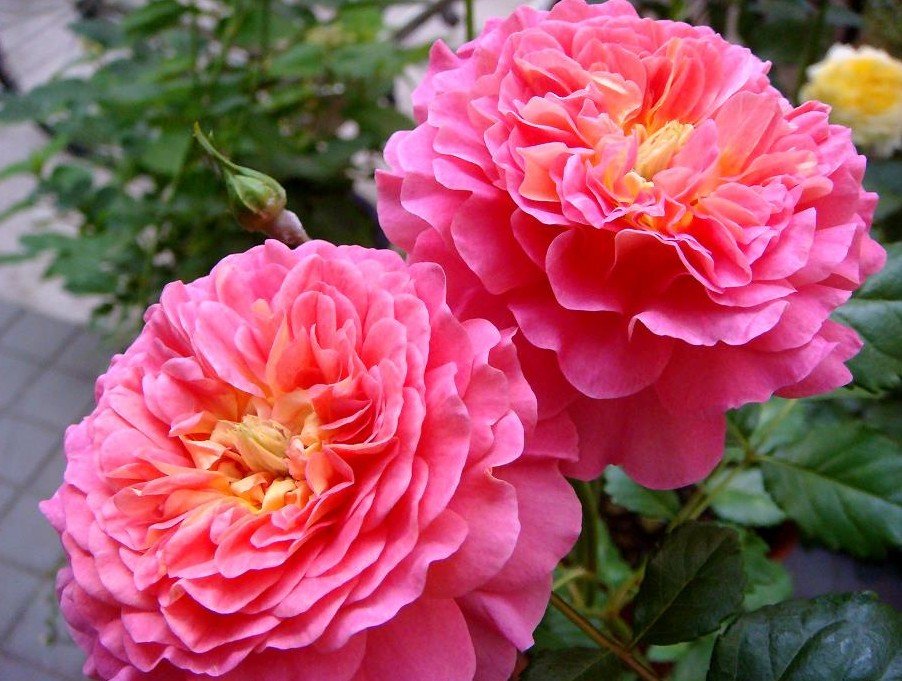
- Christopher Marlowe
-
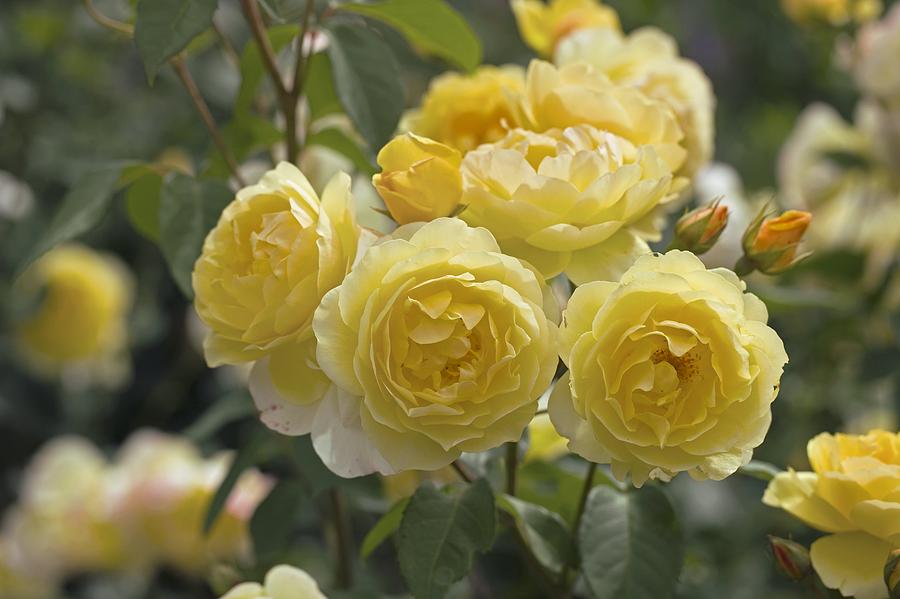
- Charlotte
Crocus Rose
The hybrid was bred in 2000. The bush grows tall (up to 1.2 m) and is 0.9 m wide. It is distinguished by drooping shoots. The flowers are medium-sized (10-12 cm) and creamy yellow, with a darker center.
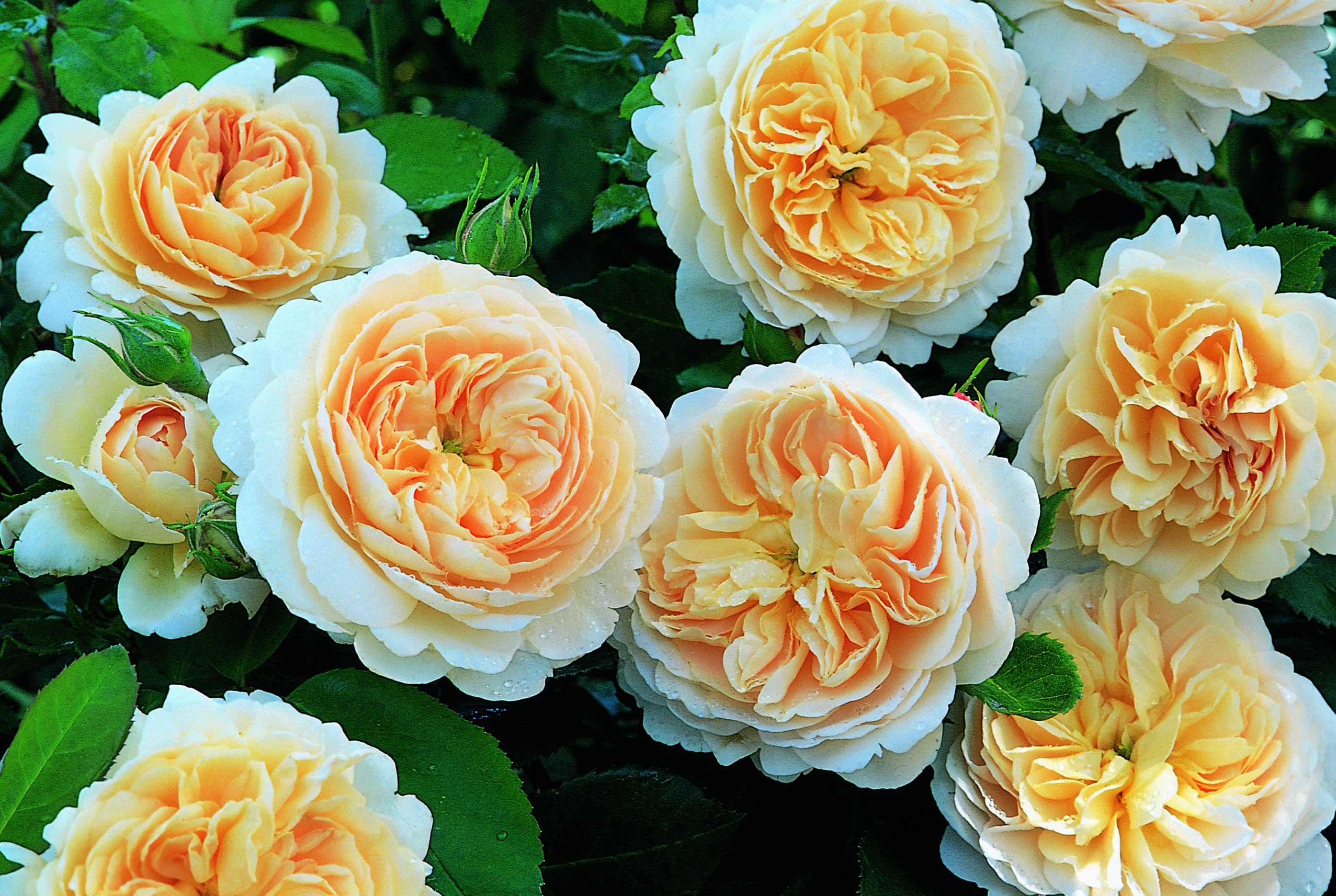
Crown Princess Margareta
A tall rose, 1.8 m tall and about a meter wide, it blooms with 10-12 cm buds in a salmon-orange hue. It blooms repeatedly and grows best when supported. Its fragrance is characterized by fruity notes.
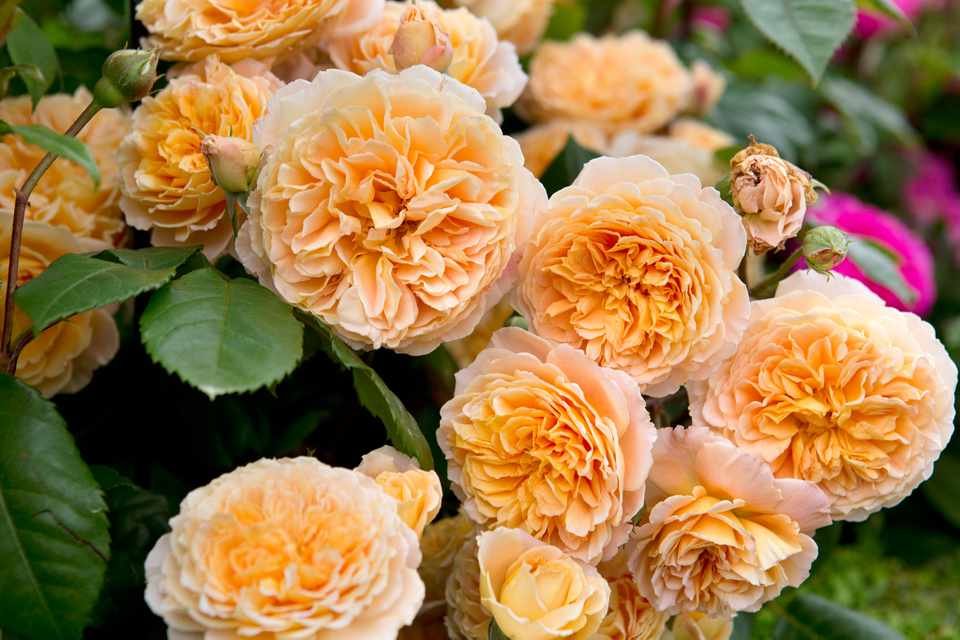
Eglantyne (Eglantyne)
A continuously flowering variety developed in 1985. A mature plant grows up to one and a half meters with a diameter of 1.2 m. The flowers are small (about 8 cm), pale pink, with a darkened center.
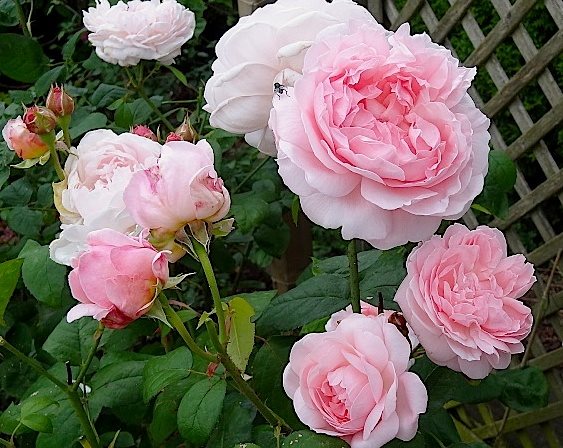
English Garden
This hybrid was bred in 1986 and looks beautiful in group plantings. The bush is medium-sized (0.8-0.9 m) and compact. The buds are 10 to 12 cm in size and tea-pink in color. English Garden is a repeat bloomer.
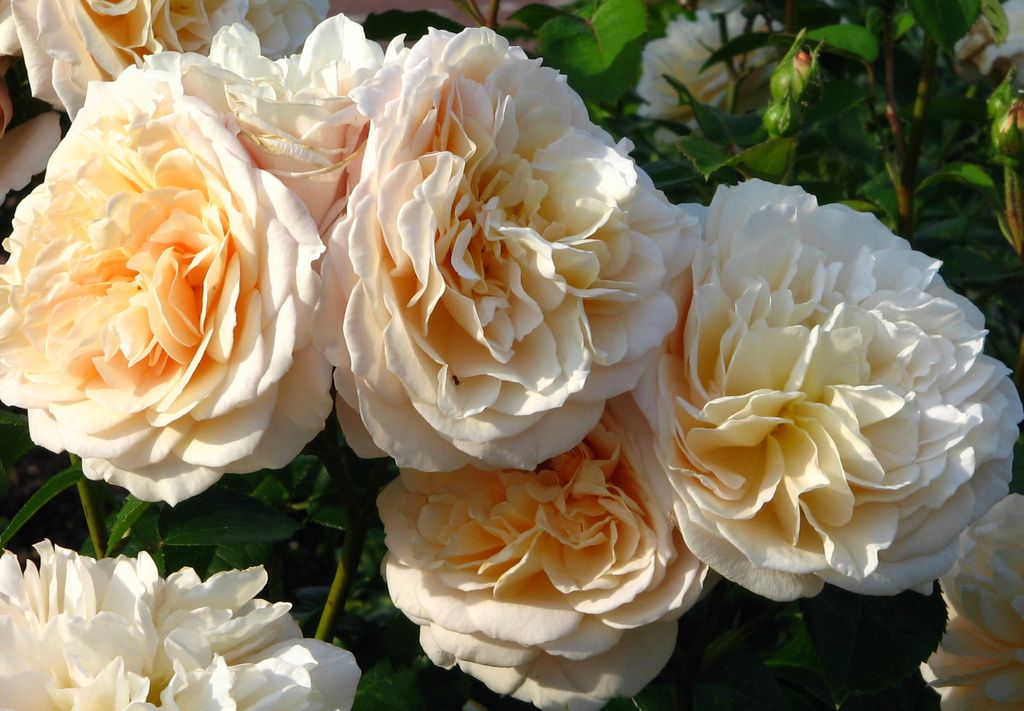
Gertrude Jekyll (Gertrude Jekyll)
This repeat-blooming rose was introduced in 1985. It grows 1.2 m tall and no more than 0.9 m wide. The flowers are medium-sized (about 10 cm) and a rich pink color. The plant requires pruning mid-season.
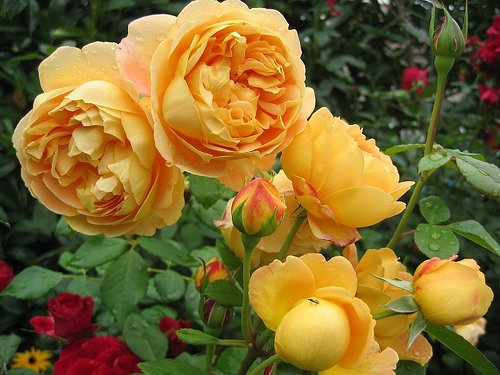
Golden Celebration
The climbing shoots are vigorous and reach a height of one and a half meters, forming a bush with a diameter of 1.2 m. Golden Celebration blooms twice a season with large (14-16 cm) buds of a warm yellow hue.
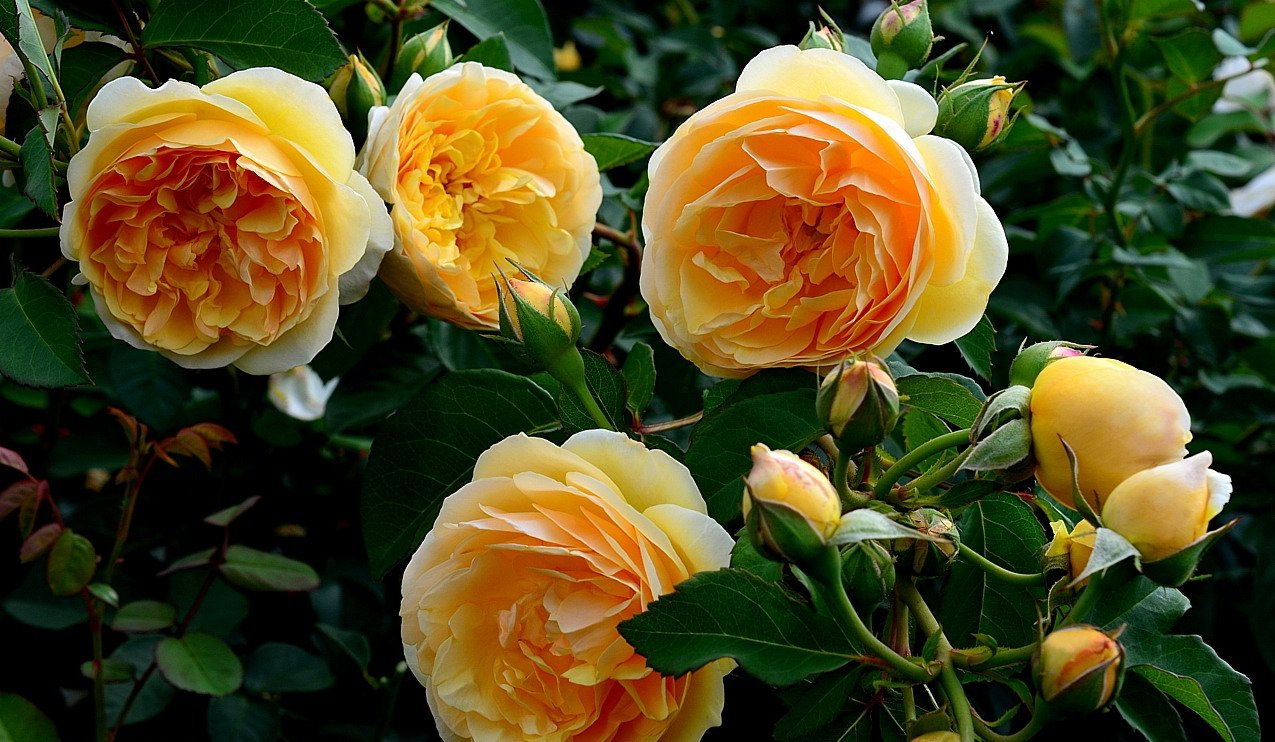
Graham Thomas
A tall hybrid (up to 1.2 m) bred in 1983. The plant width is just over a meter. The flowers are medium-sized (about 10 cm) and a sunny yellow color. It is characterized by repeated flowering.
-
- Graham Thomas
-
- Golden Celebration
-
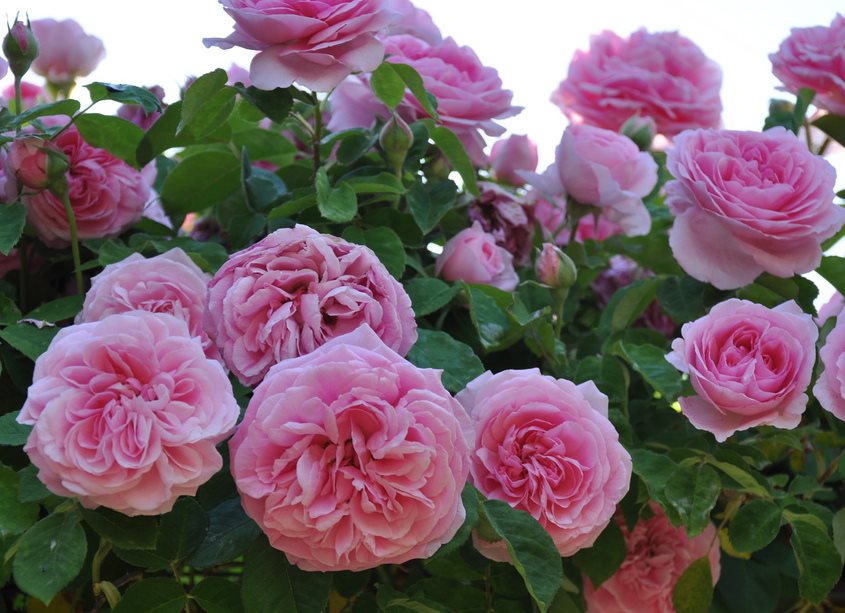
- Gertrude Jekyll (Gertrude Jekyll)
Jubilee Celebration
This variety was bred for the Queen's Jubilee, hence its name. It grows to a maximum height of 1.2 m. Flower buds are up to 15 cm in size. Jubilee Celebration is distinguished by its pinkish-purple color with a golden hue at the base. It is characterized by long flowering.
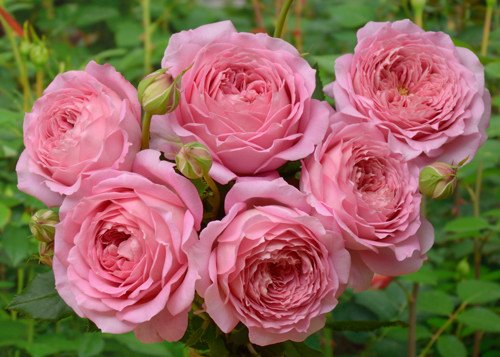
Jude the Obscure
This English rose was first introduced in 1995. The bush is tall (1.2 m) and about a meter wide. The flowers are a delicate cream color. Blooming is long and continuous. The fragrance is characterized by fruity notes.
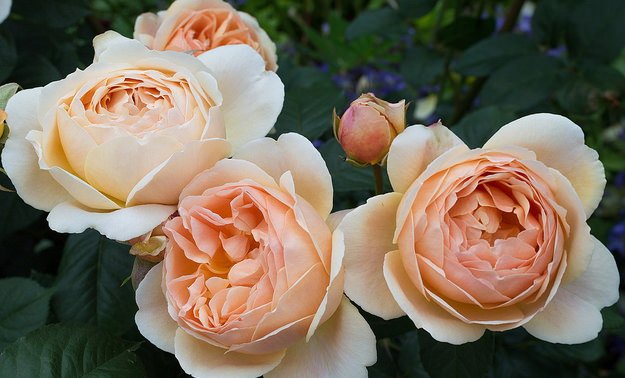
Lady Emma Hamilton
A medium-sized hybrid (0.7-1 m) bred in 2005. The bush is compact, producing 10-12 cm buds. The color is bright orange with a pinkish tint. The fragrance has fruity, citrusy notes.
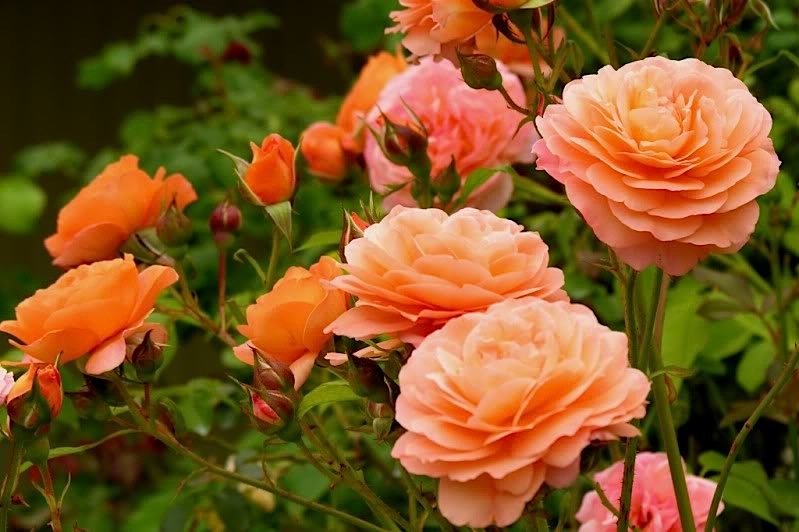
Lady of Shalott
This continuously blooming variety was developed just 10 years ago. The bush grows to a height of no more than 1.2 m with a similar diameter. The buds are small (7-8 cm) and salmon-yellow. The fragrance has clove notes.
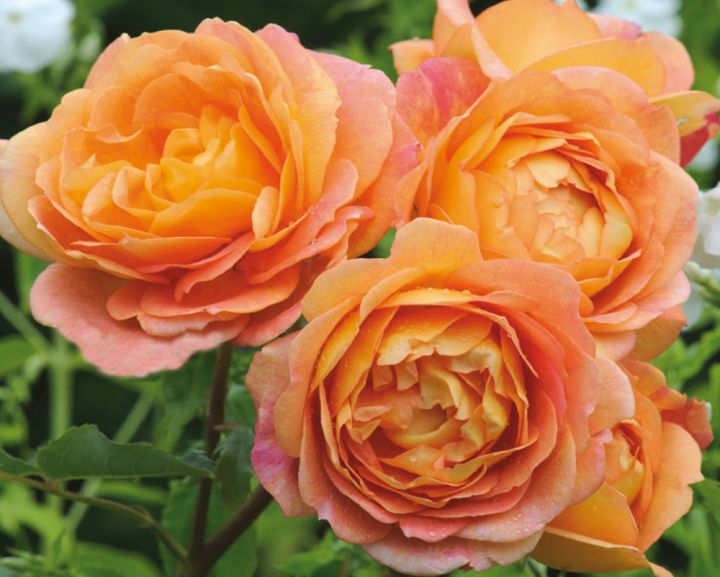
LD Braithwaite
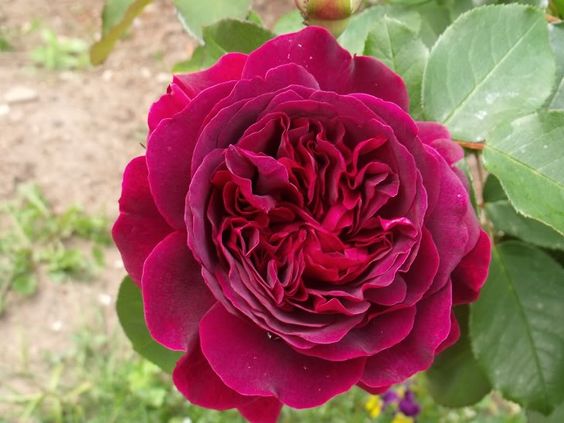
The rose was bred in 1988. The plant grows to 0.9-1 m tall and is about a meter in diameter. The petals are a uniform red-burgundy color. LD Braithwaite is characterized by continuous flowering. LD Braithwaite was named after Canadian rose breeder Leonard Dudley.
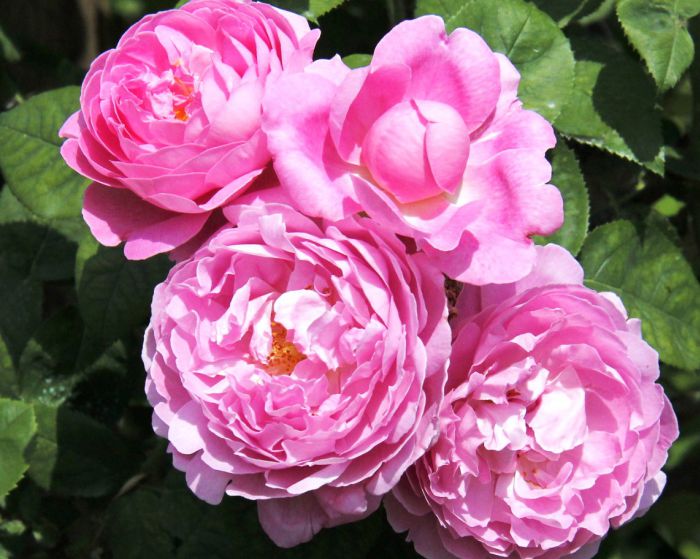
Mary Rose
A compact, repeat-flowering hybrid, about a meter in height and the same diameter, was introduced to the world in 1983. The buds are medium-sized (10-12 cm), light pink.
Mary Rose is more susceptible to black spot than others.
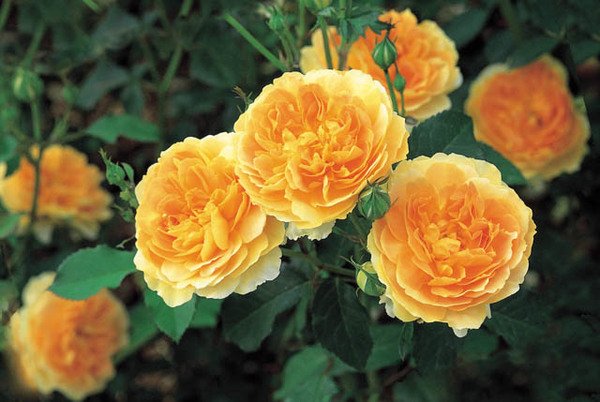
Molineux
A 1994 variety, it blooms twice. The bush is medium-sized (0.7-1 m), compact, with medium-sized flowers and virtually no thorns. The petals are lemon-yellow, with a pinkish tint closer to the center.
-
- Molineux
-
- Mary Rose
-
- LD Braithwaite
Othello
A tall hybrid bred in 1986, it grows up to 1.2 m tall and is about a meter wide. The buds are 10-12 cm in size, a rich crimson color with a beetroot tint. With proper care, it can bloom a second time.
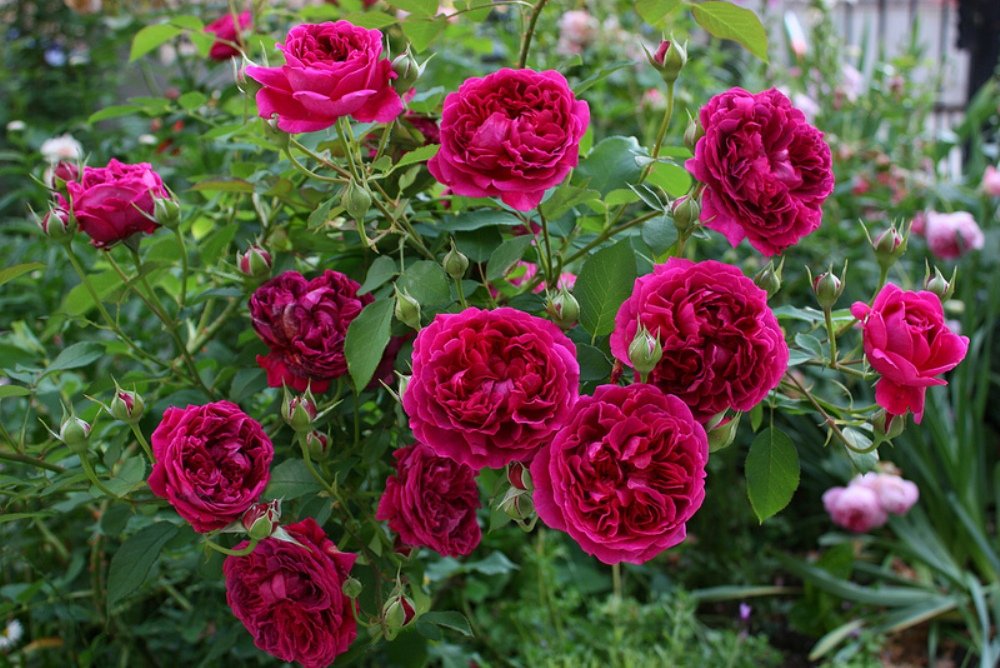
Pat Austin
This repeat-blooming rose was developed in 1995. The medium-height bush (just under 1 m) has a diameter of 1.2 m and is distinguished by drooping stems. The flowers are about 10 cm in size, pink-orange, with a copper tint.
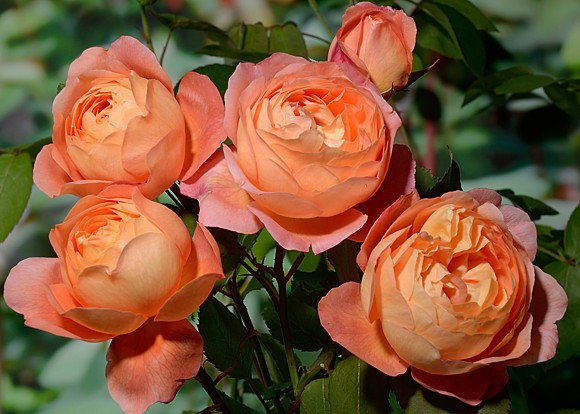
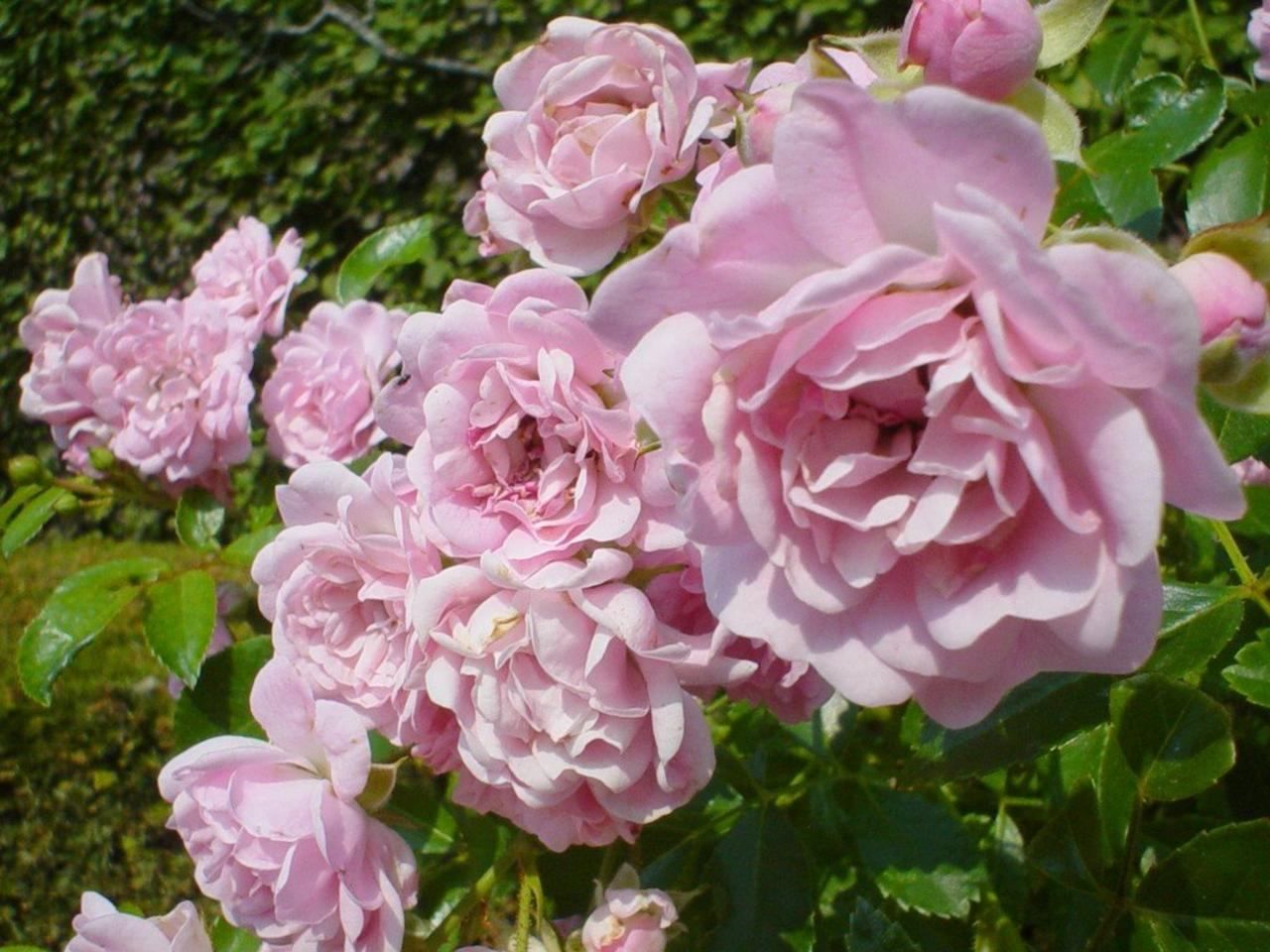
Queen of Sweden
This continuously blooming variety was bred in the early 2000s. A mature plant reaches a size of 1 x 1 m. The buds are small (only 7-8 cm) and pale pink. They are often used by florists.
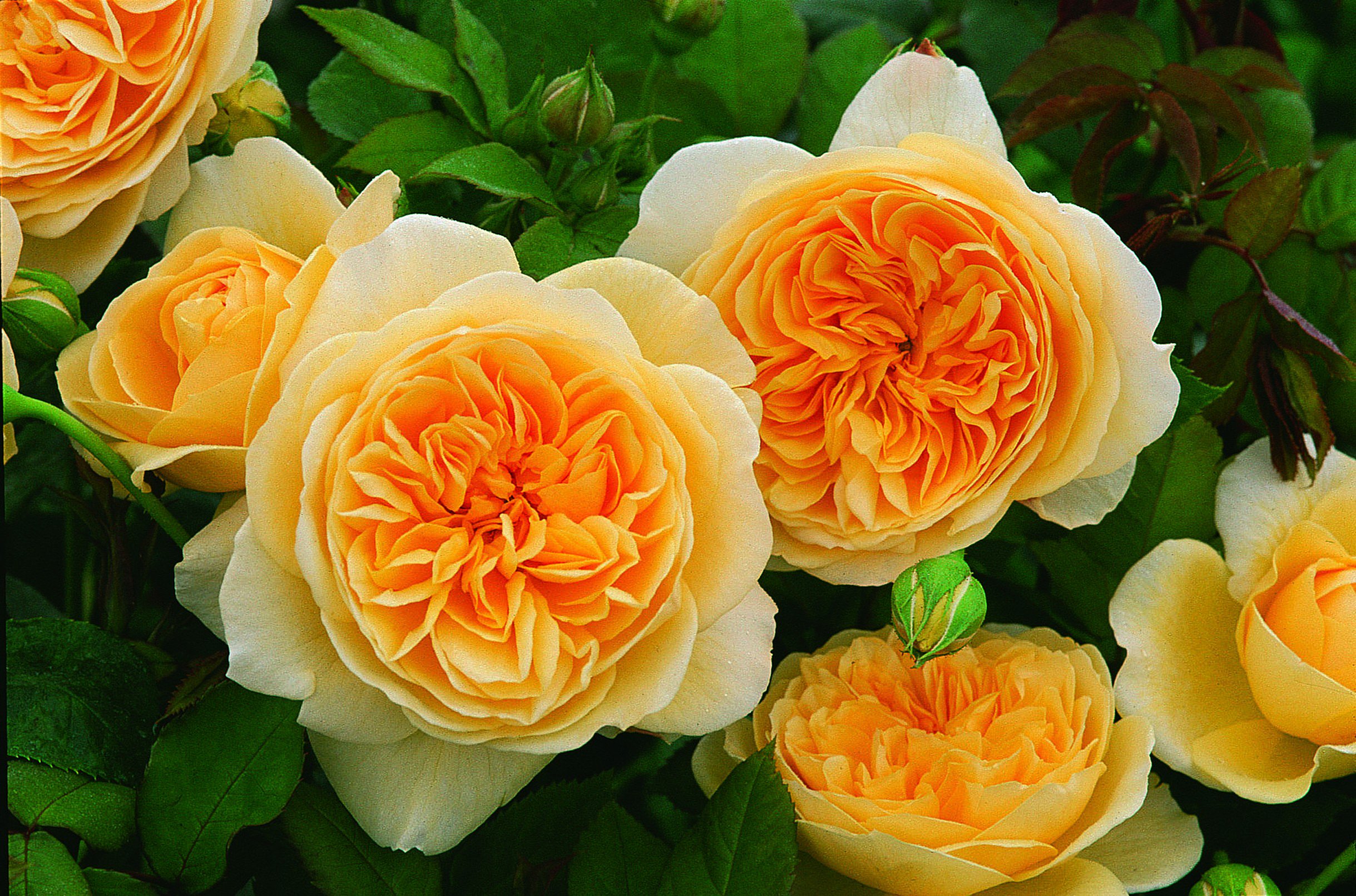
Teasing Georgia
An English rose bred in 1988. Belongs to the tall group (over a meter). The bush is compact, virtually thornless, and blooms with creamy-yellow buds. It is characterized by repeat blooming.
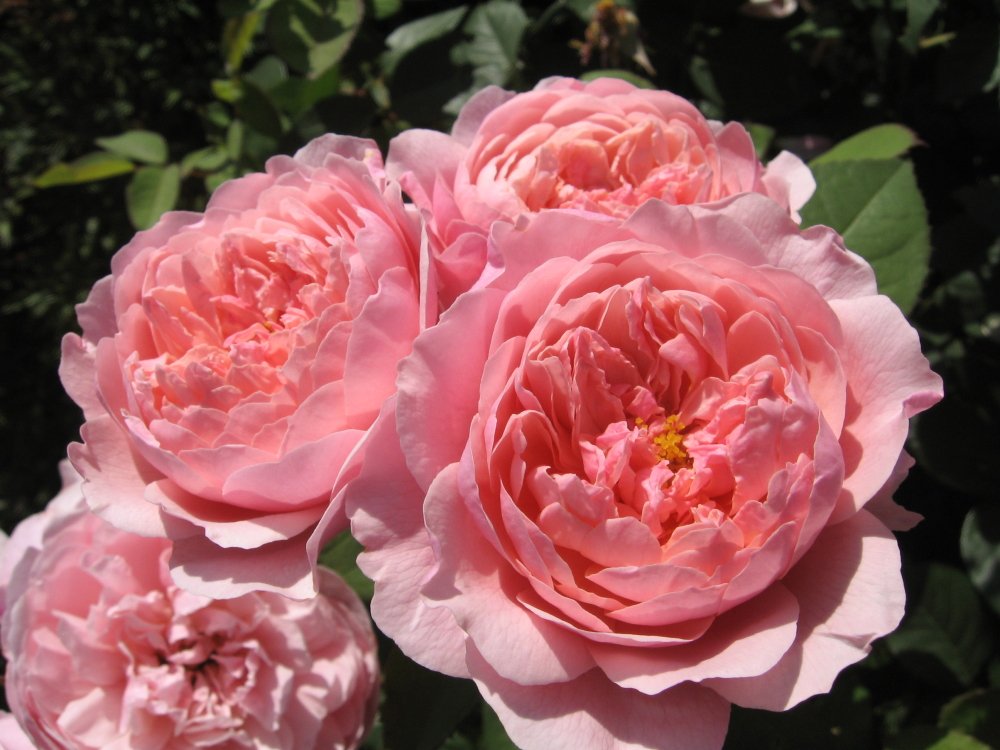
The Alnwick Rose
The hybrid was unveiled in 2001. The rose grows just over 1 m tall with a diameter of 100 cm. The flowers are small (7-8 cm) and a uniform, soft pink color. Repeat blooms are possible. The fragrance features raspberry notes.
-
- The Alnwick Rose
-
- Teasing Georgia
-
- Queen of Sweden
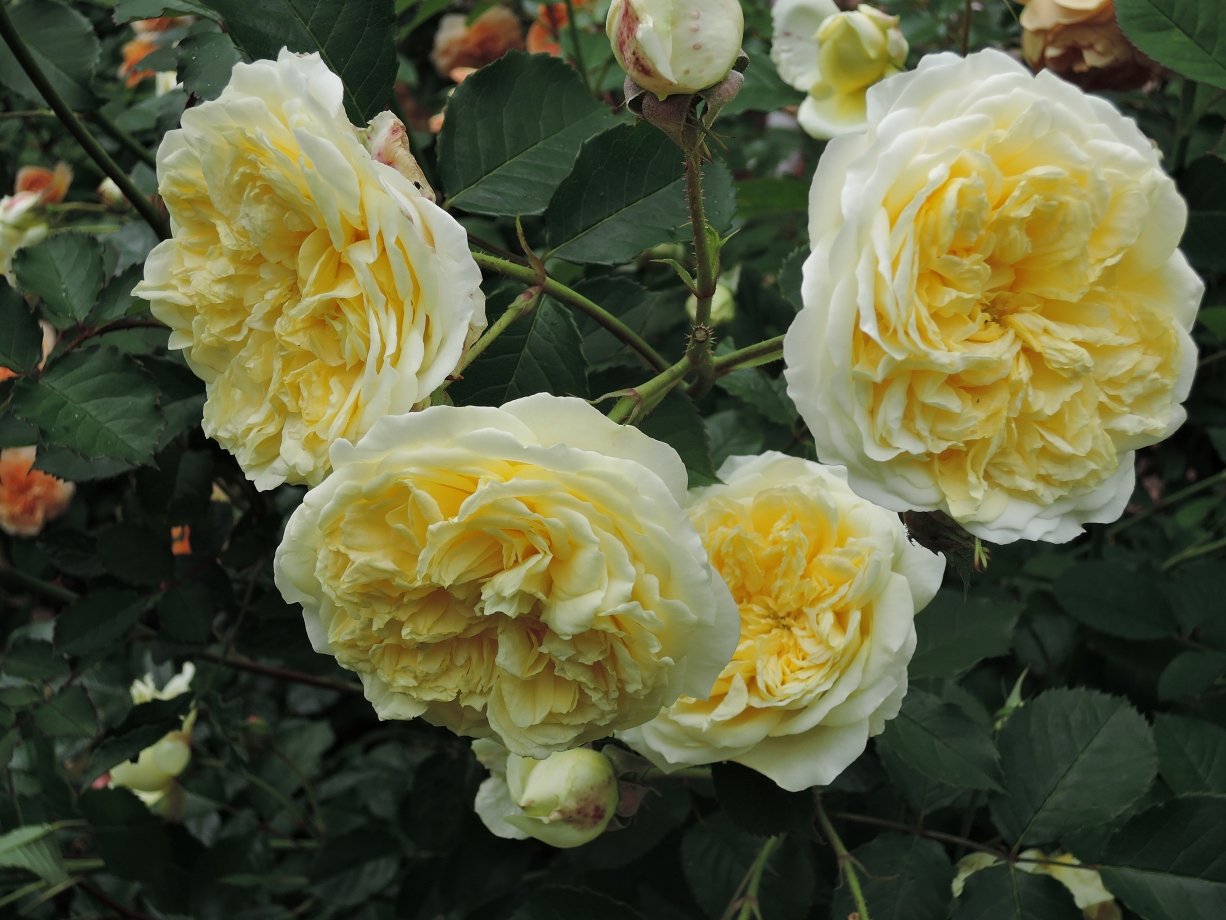
The Pilgrim
This repeat-blooming variety, developed in 1991, can grow up to three meters tall, forming compact bushes. The rosettes are small (about 6 cm) and creamy lemon-colored. With proper care, flowering continues until mid-autumn.
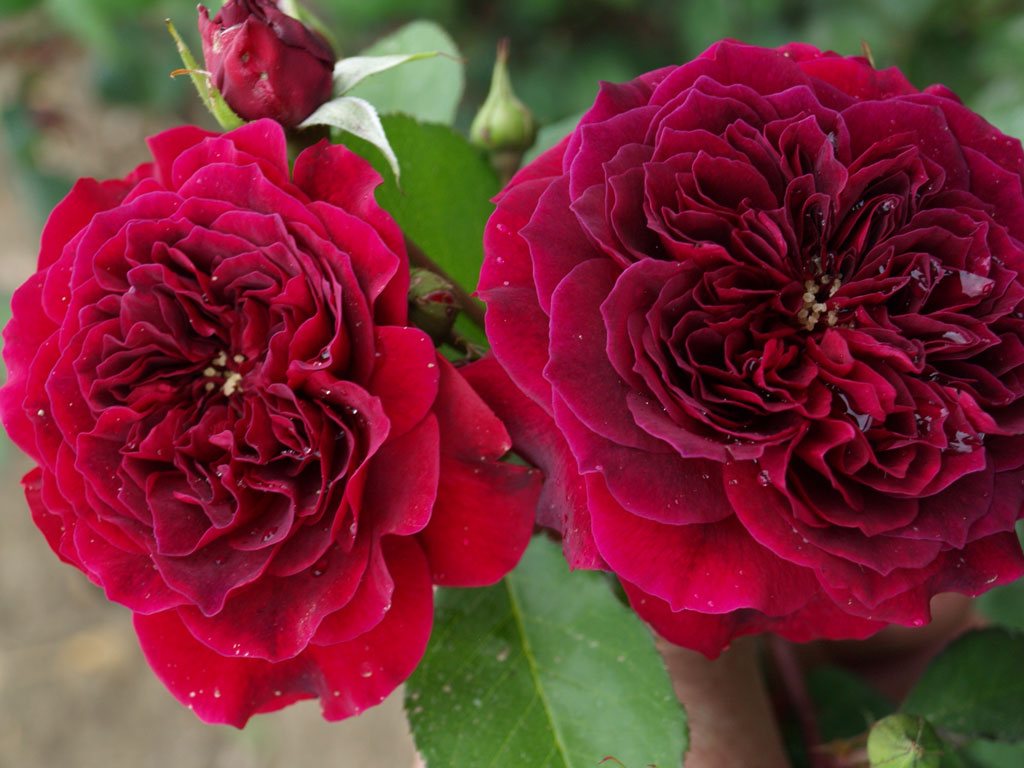
Tradescant
A rose bred in 1993. It belongs to the dwarf group (about half a meter in height). The bushes are compact, no more than 0.7 m wide. The buds are small (6-7 cm), raspberry-purple. It is characterized by repeated flowering.
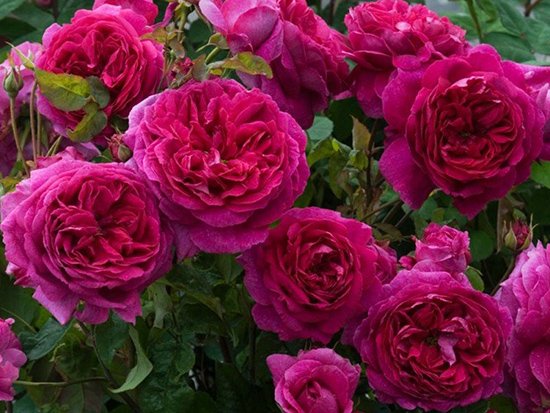
Young Lycidas
The hybrid is only 10 years old. The shoots are just over a meter long, and the bush diameter is 0.9 m. The flowers are small (8-9 cm), bright pink with a lilac tint. Young Lycidas blooms twice per season.
-
- Young Lycidas
-
- Tradescant
-
- The Pilgrim
William Morris
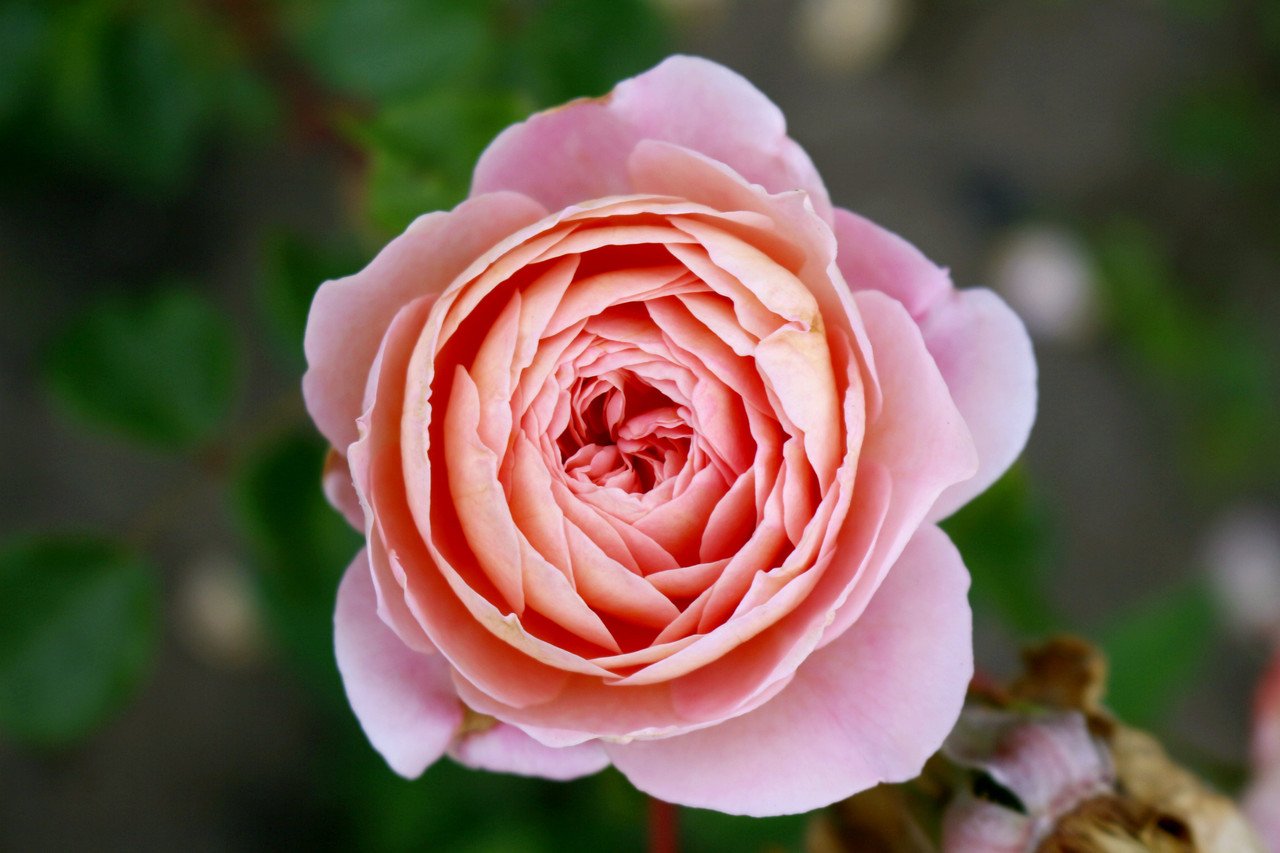
A cultivar bred in 1998. A tall rose (about one and a half meters) with a width of 0.9-1 m, with drooping stems. The buds are densely double, 8-10 cm in size, creamy pink with a peach tint.
Wollerton Old Hall
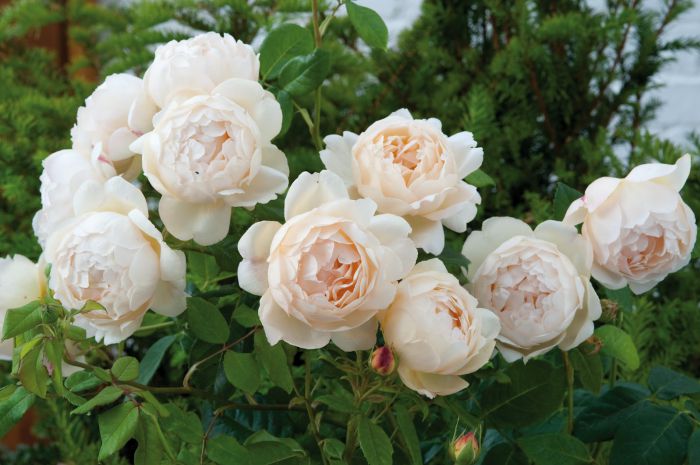
A young, continuously blooming hybrid, bred in 2011. The bush is tall (almost one and a half meters), with a diameter of 0.9 m. The flowers are medium-sized (about 10 cm), cream-colored. The delicate fragrance is distinguished by subtle cedar notes.
William Shakespeare
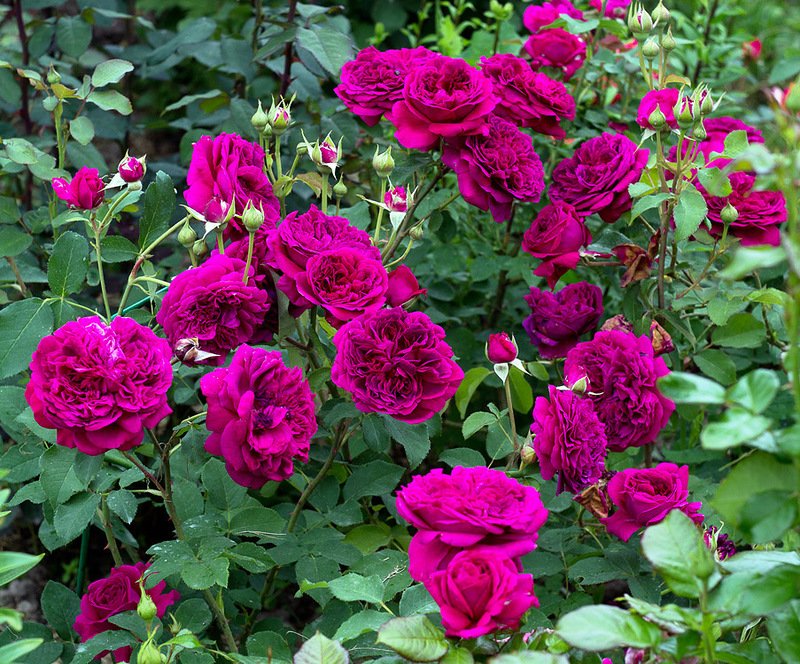
This tall (approximately two meters) rose was developed in 1987. The plant is compact, 1-1.2 meters wide. The flowers are small (no more than 8 cm), densely double, and a rich beetroot color. This variety is characterized by repeated blooming.
Examples in landscape design
Homeowners love to decorate their gardens with these flowers. The varieties bred by David Austin are versatile, making them popular among landscape designers:
- plants are planted to form hedges or decorate fences;
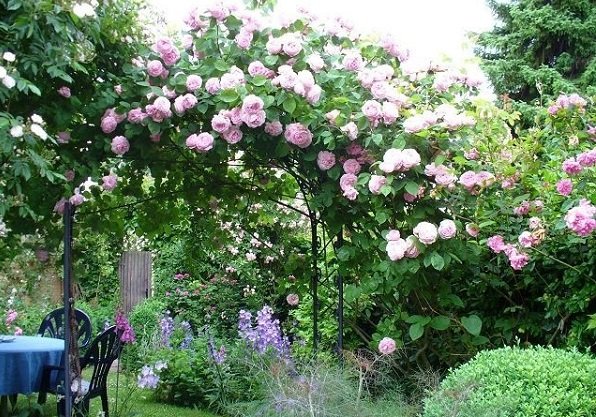
- tall hybrids can be used to create flowering arches, and sometimes even gazebos;
- standard plantings will look good along garden paths;
- By compactly planting peony roses of the same variety, you will get a delicate flower bed in the French style;
- Single plantings look beautiful if you use mobile flowerpots;
- low-growing species can be used to decorate borders;
- The plants fit well into various compositions and mixborders.
Besides designers, Austin roses are also a favorite among photographers for their vintage look and delicate hues.
-
- Greening of arches
-
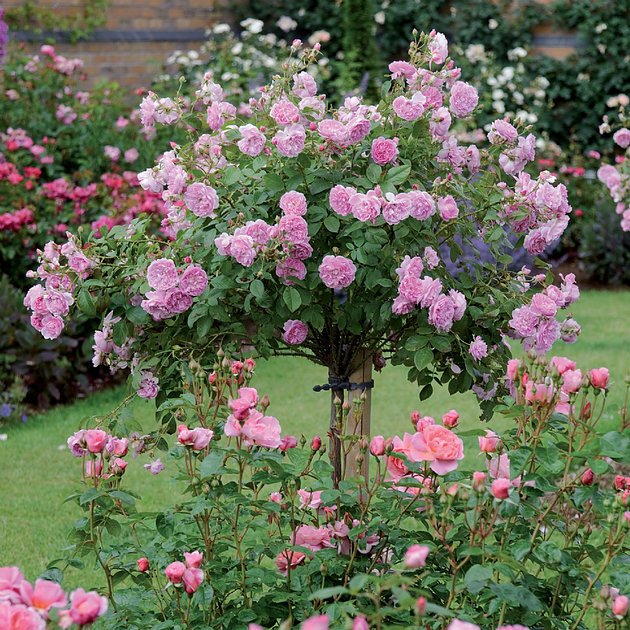
- Growing on a standard
-
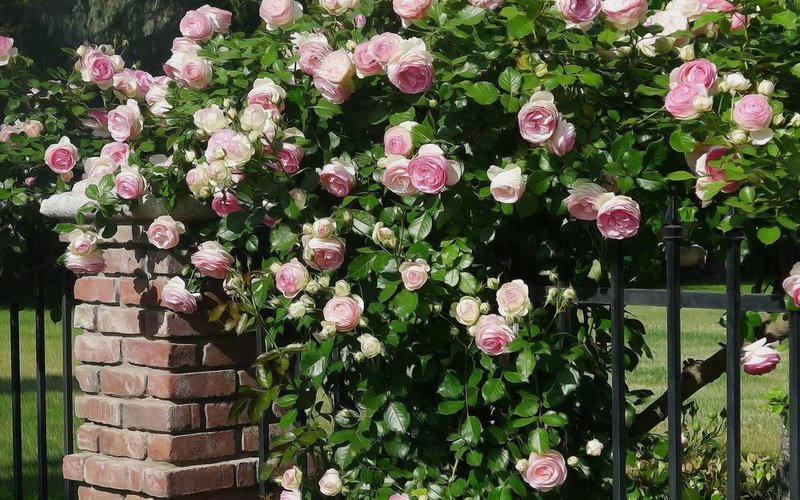
- Decorating the fence
-
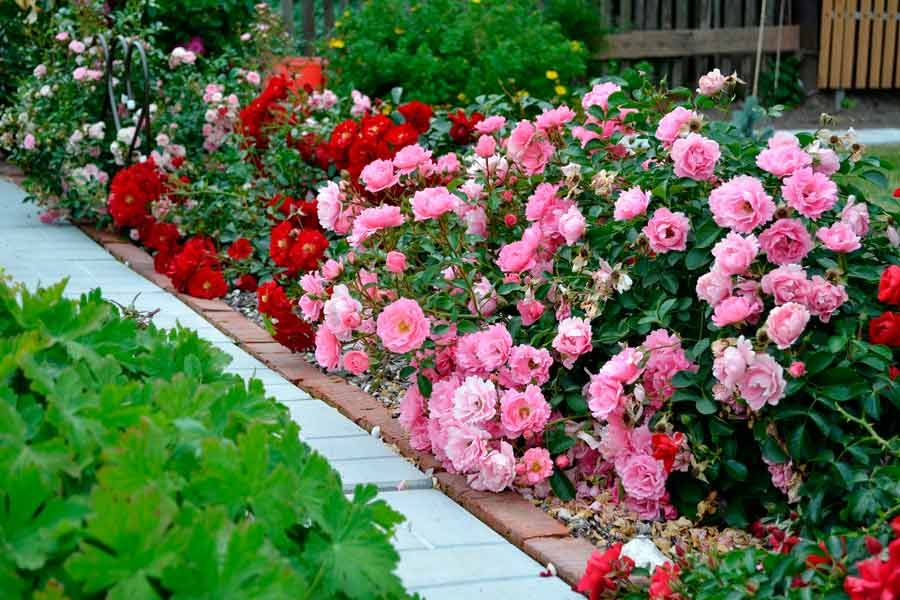
- Garden path design
-
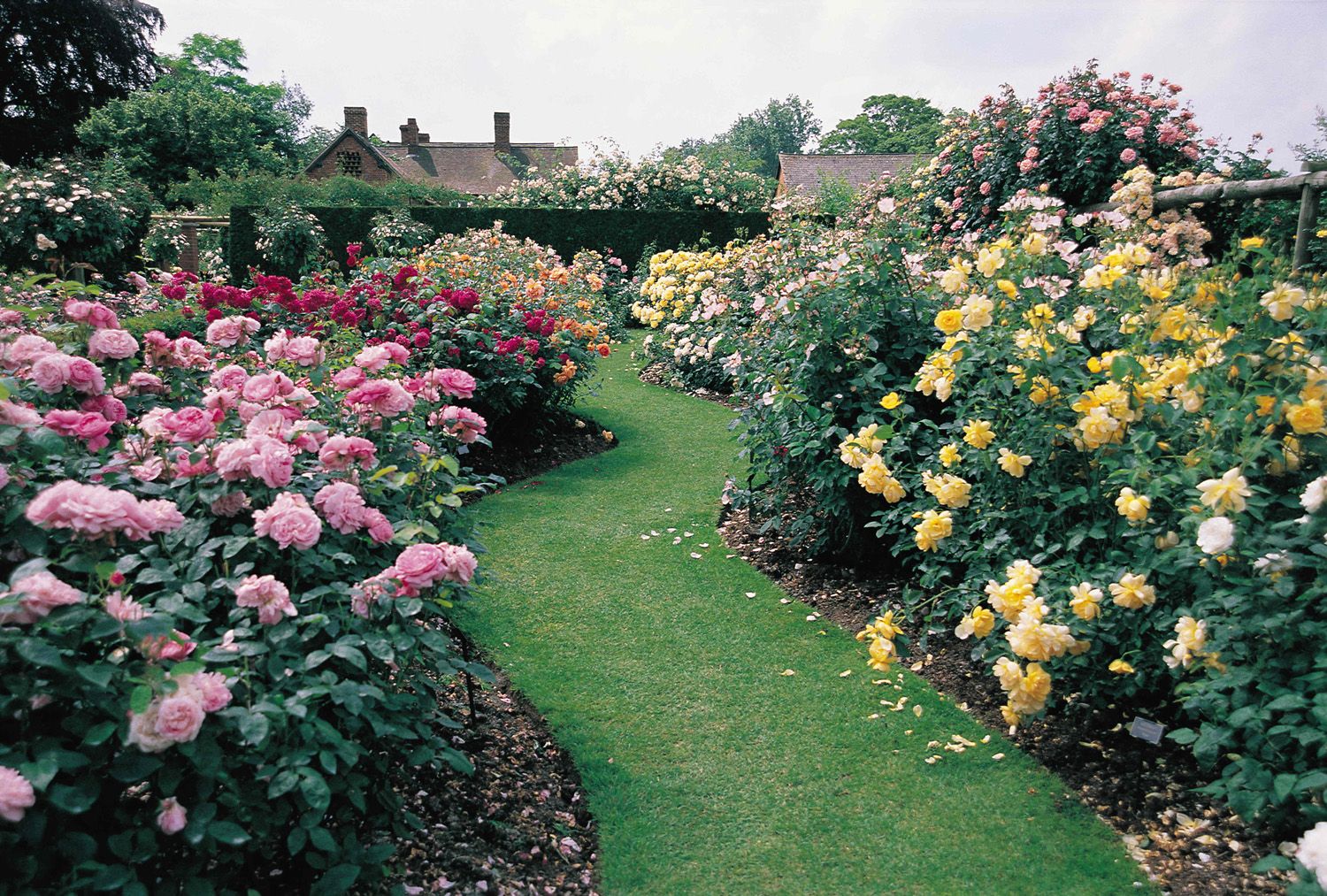
- Rose garden
-
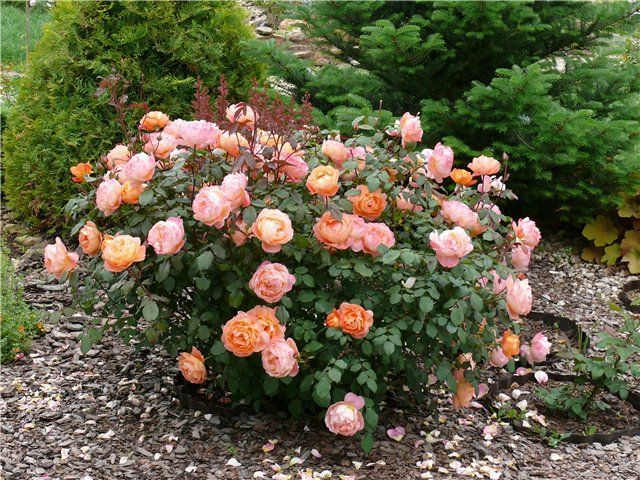
- Solitaire planting
To create harmony in your garden, ornamental plants need to be carefully combined. Avoid buying too many varieties at once, as this will make your rose garden too colorful and lacking in character.
When it comes to successful planting, the English rose looks great with compact plants that don't compete with it, but rather complement its beauty. These include conifers, phlox, veronica, salvia, aconite, or boxwood.
David Austin developed a large number of varieties in a variety of colors. In addition to those already mentioned, James Galway is also considered one of the best. It was Galway, along with several dozen other hybrids, that received recognition from the Royal Society of England.