
Gardener's Encyclopedia: 16 Most Beautiful Peony Rose Varieties with Photos
Content
History and description of the peony rose
The first varieties were developed by David Austin, a renowned British-born breeder. In the second half of the 20th century, inspired by an exhibition in France, Austin crossed Rosa gallica and Floribunda for the first time. The resulting hybrid resembled a peony so much that it was named "Rosa Peonia."
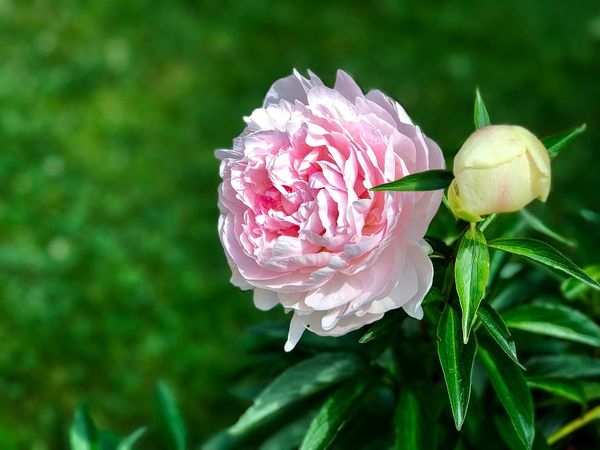
As opposed to vintage roses, English roses come in a variety of colours, from snow-white to almost black. Almost half a century has passed, but a separate class of flowers has still not been invented, calling them bush or shrub.
Peony hybrids are shrubs densely covered with lush inflorescences with double petals that emit a unique fragrance, especially intensified by high humidity. These artificially bred varieties tolerate extreme climate changes well and are virtually immune to diseases and pests.
Florists divide all peony hybrids into four categories:
- pink;
- white;
- yellow;
- red.
Of the two hundred existing varieties, only half are suitable for cultivation in the Russian Federation. We'll tell you about the most famous and beautiful specimens below.
Video: Planting, Pruning, and Propagating Roses
In this video, an expert shares tips on planting, propagating, and pruning roses in the garden.
Pink varieties
It's no wonder that plants in this group are so popular with women flower lovers. The traditional shade lends the shrub a special delicacy and airiness.
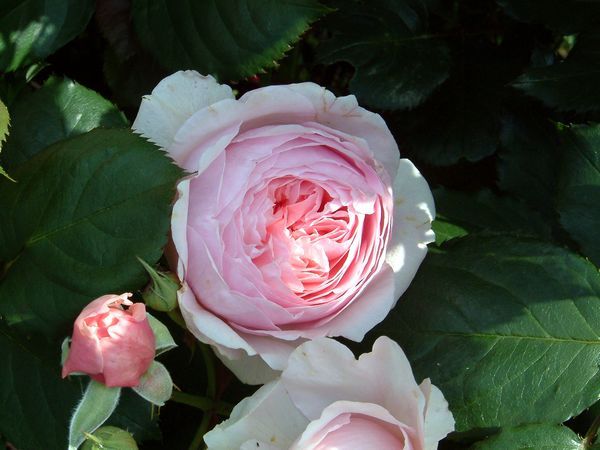
Constance Spry
This cultivar, 5-6 m tall and 2.5-3 m in diameter, was bred in the early 1960s. The stems are very rambling, abundantly covered with small spines. The pastel pink inflorescences consist of two to three pairs of large (10-14 cm) double buds. During flowering, which lasts from June to August, they do not fully open, but emit a strong, distinct fragrance.
Miranda
This shrub rose hybrid was developed by British breeders in 2005. The shrub grows low (up to just 1.5 meters) and is 0.5-0.6 meters wide. The stems bear single, fluffy flowers, 10-12 cm in diameter, which are virtually fragrance-free. The outer petals are white-purple, while the center is a rich pink. Miranda blooms twice a season and continues to bloom until almost the end of October.
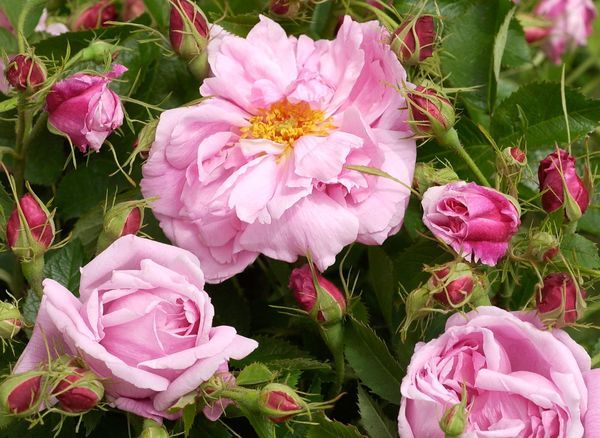
Rosalind
This low-growing variety (0.6-0.8 m) was bred by David Austin in 1999. The bushes are wide and very dense, covered with densely textured, matte leaves. The inflorescences consist of 7-9 miniature flowers no more than 5 cm in diameter. The petals are a uniform, warm creamy pink. During flowering, the shrub emits a subtle floral fragrance, which intensifies during rainfall.
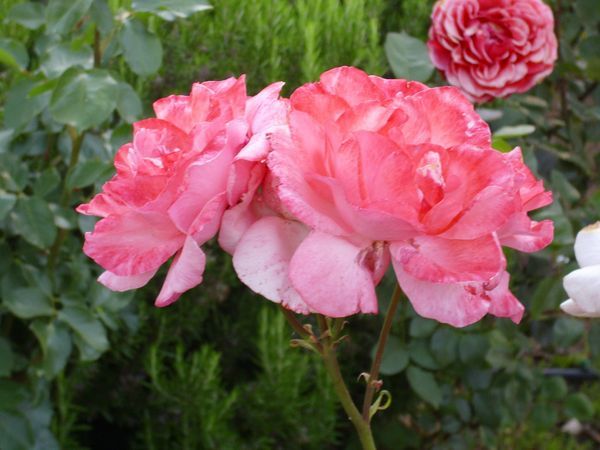
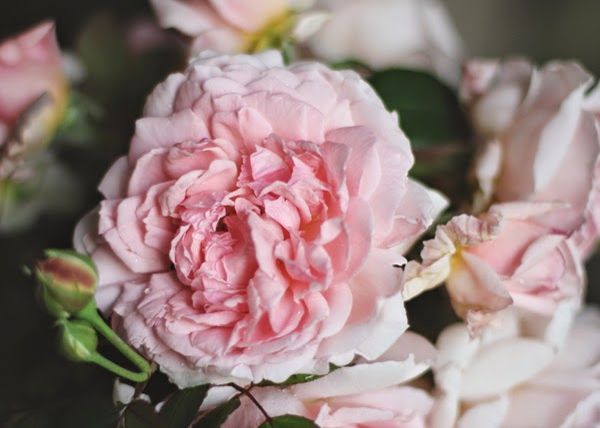
Eglantine
This medium-sized (1-1.5 m) shrub was bred by a renowned English breeder in 1985. It spreads well (its diameter is over a meter), branches extensively, and is densely foliated and thorny. The inflorescences form 3-5 buds measuring 8-10 cm. Their pastel peach hue is very light on the outer petals and deepens toward the center. This hybrid is a continuously blooming variety.
Due to its high vintage decorative quality, Eglantine is very popular among photographers and filmmakers.
White peony roses
Snow-white flowers are a favorite among florists and decorators. They look especially beautiful in wedding bouquets.
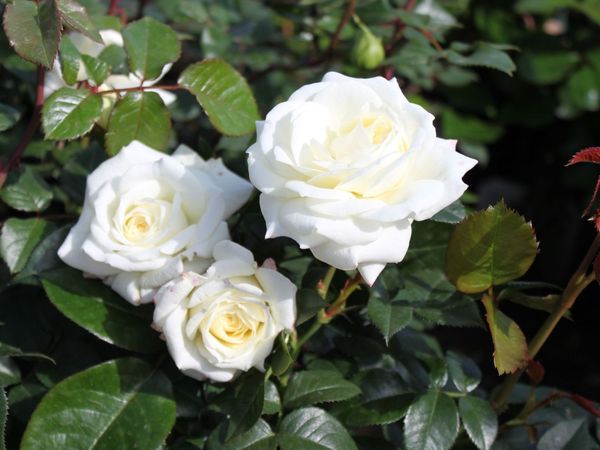
Alabaster
This low-growing variety (no more than 1 m) was developed by German breeders in 2007. The compact bush, just 0.5 m wide, is covered in glossy, bright emerald foliage. Twice a season, the plant produces medium-sized inflorescences consisting of two to three pairs of double buds 7-10 cm in diameter. The petals are white, with a subtle green tint and raspberry highlights.
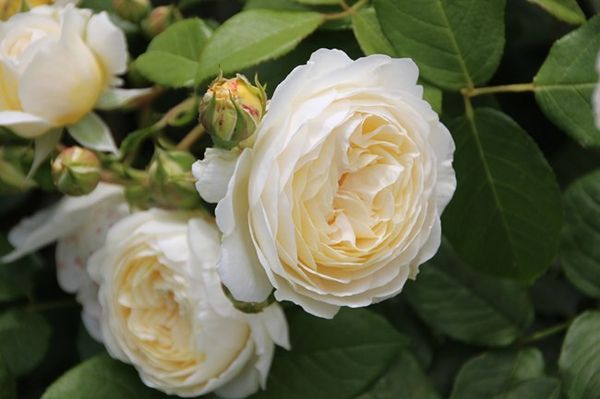
Claire Austin
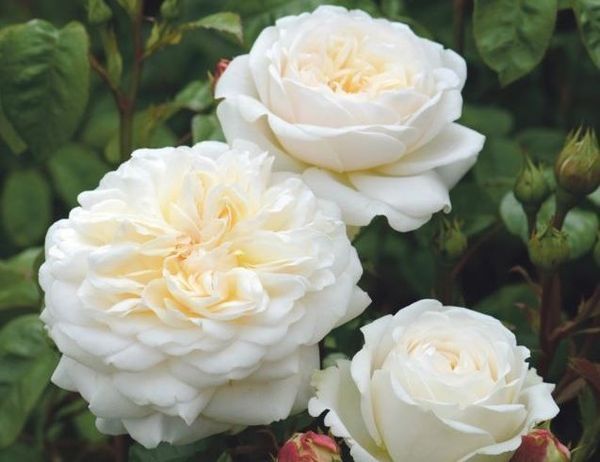
This hybrid was bred in the same year as Alabaster, but this time in England. It grows as a medium-sized shrub (1.5 x 1 m) that blooms twice a season. Its inflorescences consist of two to three buds, each 8-10 cm in diameter. They are distinguished by their snow-white color, gradually fading to a pale cream shade. During flowering, the rose emits a distinct, rich fragrance.
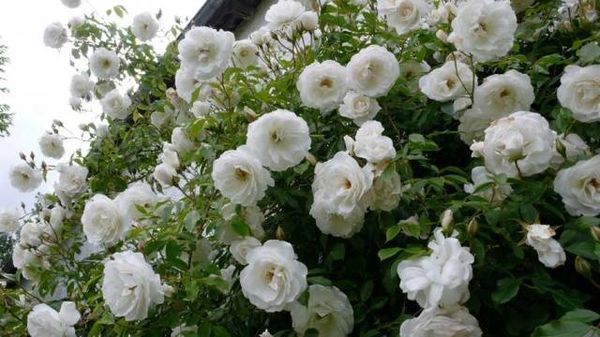
Snow Goose
This variety was developed by British breeders in 1996. It belongs to the tall climbing shrubs. This variety grows up to three meters tall with a diameter of 1.3-1.5 meters. The miniature flowers (3-5 cm) are uniformly snow-white and form lush inflorescences consisting of 5-20 buds. The flowering period lasts from the third ten days of June to mid-October. Snow Goose is characterized by a faint fragrance with a slight musky note.
Tranquility
A relatively new hybrid, developed in England just a few years ago. The bush grows to 1-1.2 m tall and the same width. The stems are flexible and virtually thornless. The inflorescences consist of 3-5 buds measuring 10-12 cm. The petals are white, fading to a delicate apricot hue toward the center. During flowering, which occurs twice a season, the plant emits a unique apple aroma.
Yellow hybrids
Bright, sunny varieties look stunning in any garden. Here we'll look at two hybrids that are best suited to Russia's climate.
Golden Celebration
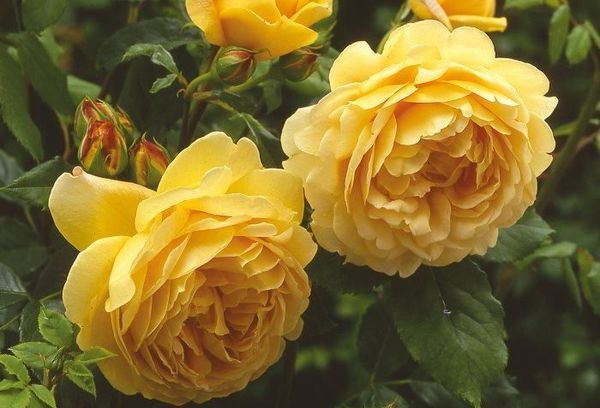
A shrub rose developed by British breeders (1992). This medium-sized bush grows up to one and a half meters tall with a nearly identical diameter. The branches are very flexible, twining, and covered with numerous small thorns. Throughout the flowering period, from June to August, the plant is covered with large (13-16 cm) flowers. Three to five flowers cluster together to form racemes of bright yellow.
Graham Thomas
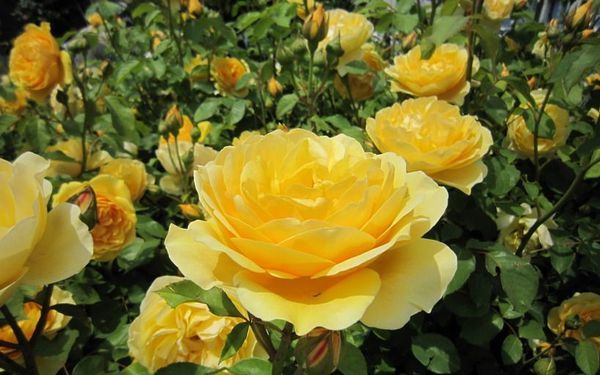
This hybrid was also bred in England, but ten years earlier than the previous one. The shrub grows 1.5-3 meters tall and up to 1.5 meters wide. Flowering begins in early June and continues until the first frost. Throughout this period, the plant is covered in lush, fragrant inflorescences, consisting of 3-5 buds 10-12 cm in diameter. The petals have a distinctive peach-yellow color.
Red varieties
Peony roses in this group have a strong, distinct fragrance. Their color varies depending on the variety and can have various shades.
Benjamin Britten
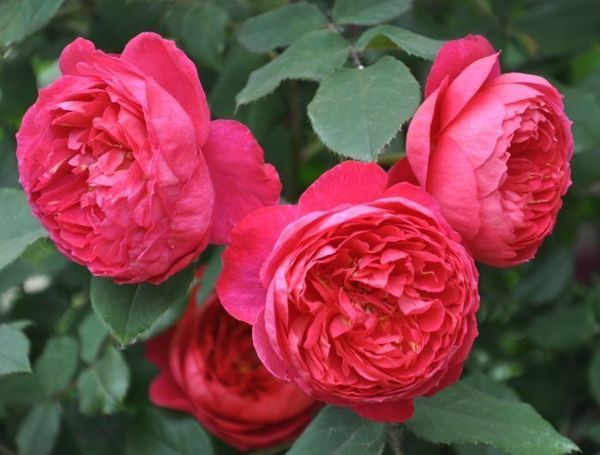
This low-growing hybrid was developed in the early 21st century by the Austin laboratory in England. It grows into a compact shrub no more than a meter tall and 0.5-0.7 meters wide. It blooms twice a season with single buds 10-12 cm in diameter, which can form in pairs to form small inflorescences. They are a beautiful crimson color with an orange tint.
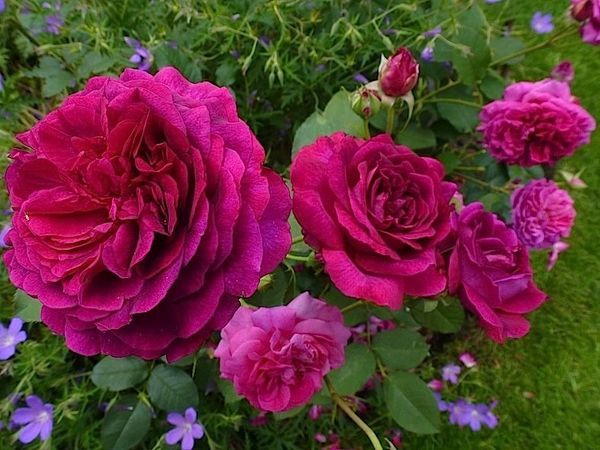
Munstead Wood
A variety bred in 2007 by the same laboratory as the previous hybrid. It's also a miniature variety, blooming twice. The bush doesn't exceed 1 x 0.6 m. During flowering, the rose produces small buds (8-10 cm), clustered in groups of 3-5. They are characterized by a raspberry-burgundy color with a beetroot hue.
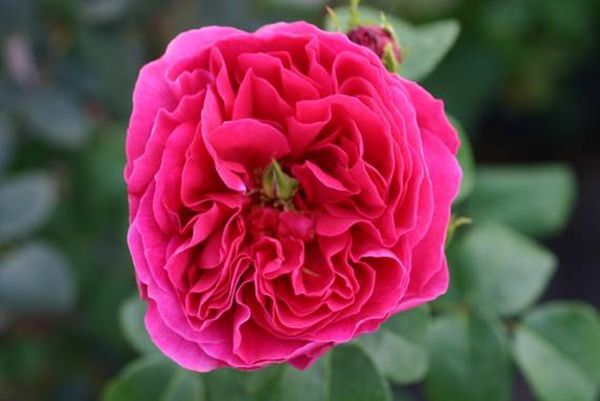
Othello
This variety was developed by British breeders in 1986. The compact bush grows no more than 1-1.2 m tall, maintaining a width of up to 90 cm. It blooms twice per season, during which time the plant is covered with single, medium-sized buds (9-10 cm) of a rich lilac-crimson color.
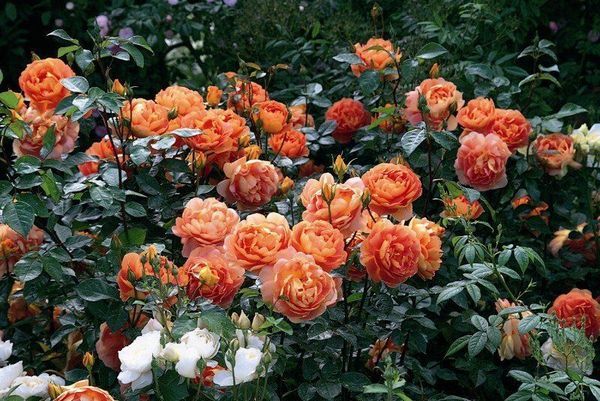
Pat Austin
A 1995 hybrid bred by the Austin laboratory in England. This low-growing rose grows no more than a meter tall and 1-1.2 meters in diameter. During its two-year flowering period, it produces single or triple red-orange blooms measuring 10-12 cm. Its color is characterized by a rich copper hue.
Tradescant
The variety was bred by the British in 1993 and named after the renowned British gardener John Tradescant. This medium-sized shrub (0.6-1.2 m) is densely foliated and has strong branching. The hybrid blooms twice a season with burgundy, almost black, inflorescences consisting of three to four pairs of small flowers, 5-8 cm in diameter.
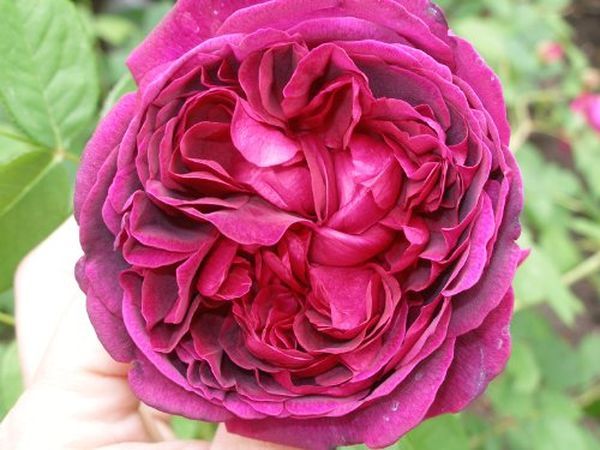
William Shakespeare
A shrub rose bred by David Austin in 1987. This tall variety reaches almost two meters in height and 0.9-1.2 m in width. Twice a season, the shrub bears lush inflorescences consisting of three to five flowers, 6-8 cm in diameter. The petals are purple-burgundy with a beautiful lilac hue.
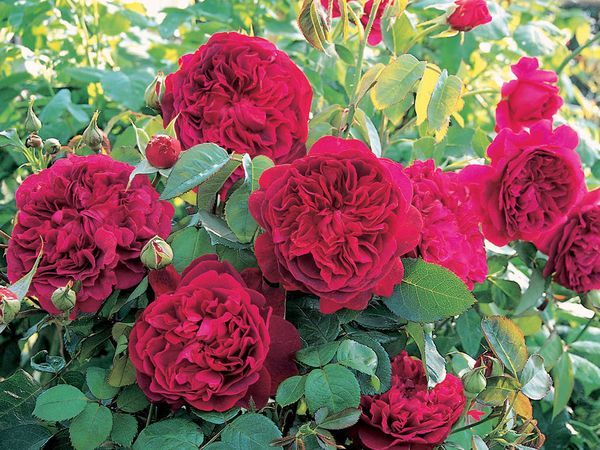
Examples of use in landscape design
English roses are a favorite among florists when creating bouquets and flower arrangements. However, their undeniable advantages in garden design should not be underestimated.
-
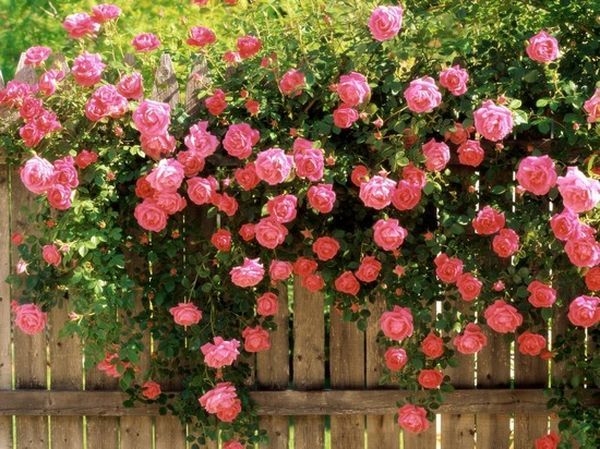
- Roses decorate hedges
-
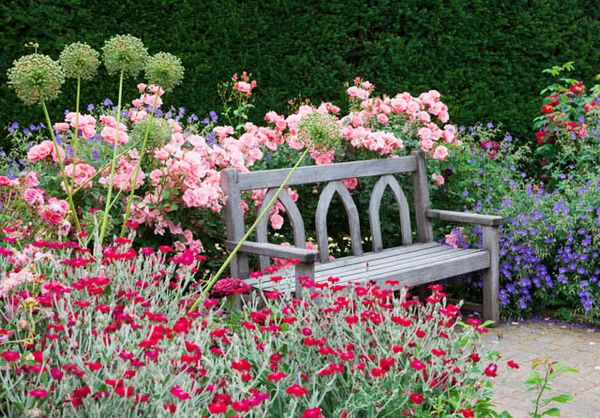
- Group composition in the courtyard
-
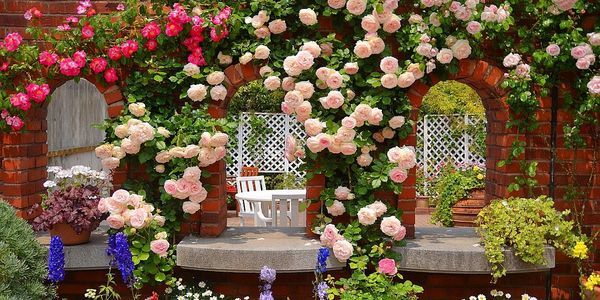
- Arbours made of bush roses
-
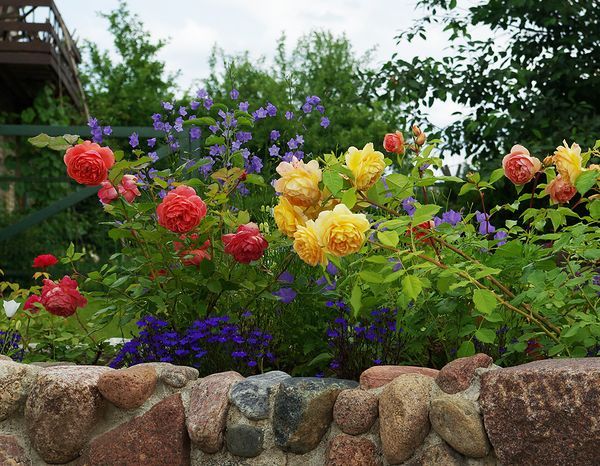
- Florists love to use English roses.
-
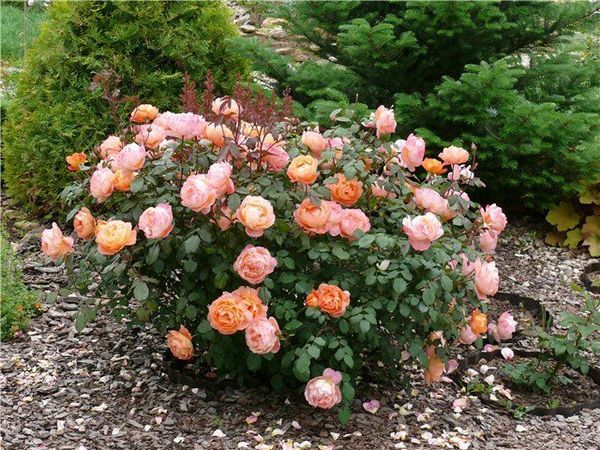
- Beautiful flower beds are made from roses
-
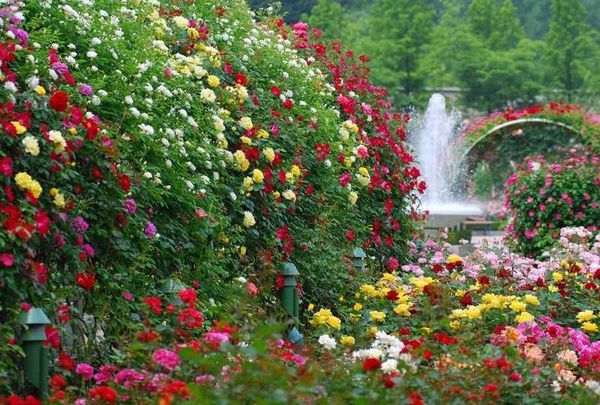
- Peony roses in landscape design
The hybrids presented to the world by David Austin are versatile and can therefore be used in landscape design in a variety of ways:
- hedges;
- arches;
- arbors made of bush roses;
- flower beds in the Provence style;
- single plantings using mobile flowerpots;
- border decoration;
- decorating wooden fences;
- standard plantings along paths and alleys;
- group composition in the courtyard;
- use in creating mixborders.
Peony hybrids inherited their beauty and grace from their prototype, and thanks to a British rose inspired by vintage roses, they acquired the qualities for which they are still valued throughout the world.