
An overview of popular varieties and growing features of hanging petunia
Content
Description of ampelous petunia
Trailing petunia is a perennial subshrub of the Solanaceae family. It is native to the tropics of South America. It grows wild in Argentina, Paraguay, and Bolivia, and is cultivated as a potted plant throughout the world.
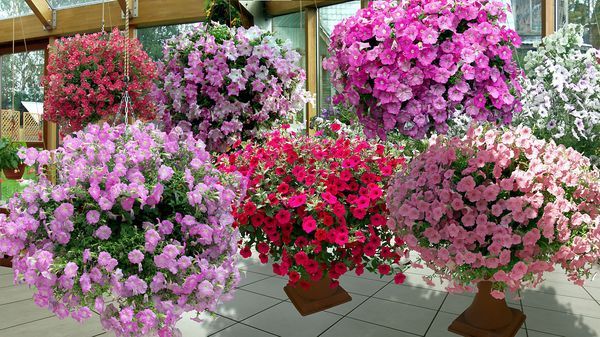
The plant's distinctive feature lies in its appearance. Unlike shrub petunias, trailing petunias have flexible shoots ranging from 0.3 to 1.5 meters in length, which droop or spread out as they grow. Their leaves are soft, slightly pubescent, and larger at the ends of the shoots, while the tips are smaller.
Trailing petunias bloom profusely and for a long time. The bell-shaped flowers, 3-8 cm in diameter, are located along the entire length of the bush. During the flowering period, buds are replaced: old ones fade, and new ones open. The color range is varied: from white to purple, black, and even two-tone.
Video: Planting Trailing Petunias
This video will show you how to properly plant hanging petunias.
What is the difference between cascading and trailing petunias?
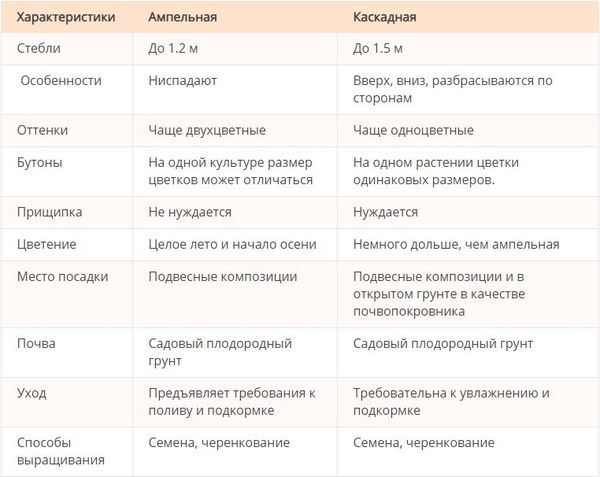
Distinguishing bush petunias from trailing petunias is easy, but determining whether a variety is cascading is quite challenging. Cascading petunias are a subspecies of trailing petunias, meaning the plants share many similarities:
- continuous flowering from early summer until frost;
- methods of reproduction;
- requirements for soil, growing conditions and care.
But at the same time, there are also differences related to appearance and growth characteristics:
- length of shoots - in cascading varieties they are longer (up to 1.5 m), the supercascading form reaches 2 m, in ampelous varieties the length does not exceed 1.2 m;
- the nature of shoot growth and density - in hanging petunias they are thin and flexible, they drop down immediately, while in cascading petunias they are more elastic, fleshy and strong, they grow first upward, then descend in different directions;
- Bush shape - the cascading plant has a voluminous cap, although not as dense as the ampelous one.
- the size of the buds - in cascading ones they are all the same, in ampelous ones on one plant there can be large and small flowers at the same time;
- The difference is also observed in color - in ampelous varieties, the buds can be of different colors or two-colored, while in cascading varieties, the color palette is more varied, but monochromatic.
Cascading petunias are more suitable for decorating walls, fences and as groundcover plants, while trailing petunias look better in hanging pots and planters.
Varietal varieties of flowers
Over their long history, petunias have undergone many changes. A whole series of easy-to-grow and long-blooming F1 hybrids, known as "fortunia," have been developed specifically for gardening. Below are the best petunia hybrids and varieties most commonly used in gardening.
Velveteen
A trailing variety with velvety foliage and bright, large, velvety buds. It's considered an excellent honey plant. It blooms late and sometimes produces small buds, but this can be resolved with regular pinching.
Catherine
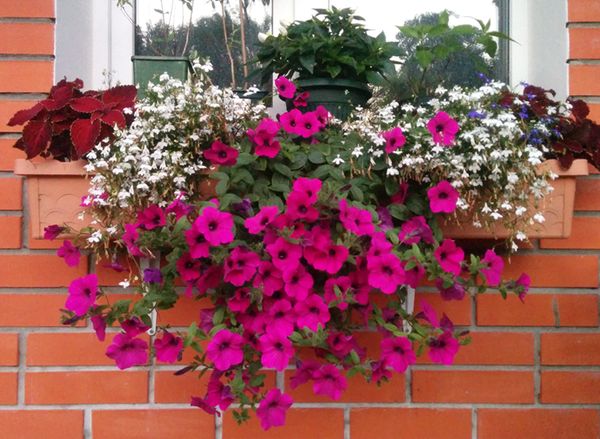
A hybrid petunia suitable for open ground. The bush is compact and rounded, with medium-sized flowers, 5-6 cm in diameter, predominantly in orange-red hues. Blooming is long and profuse.
Avalanche
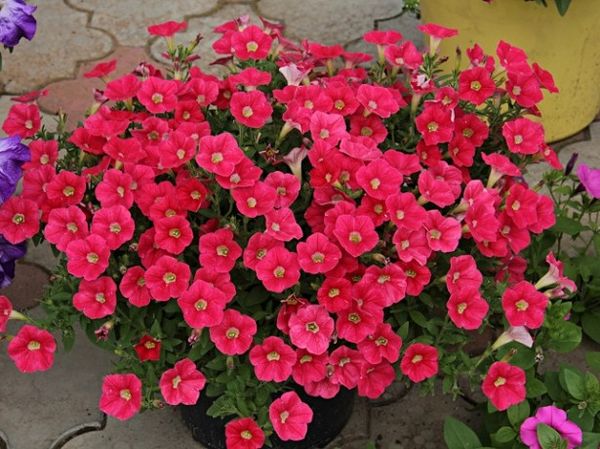
This series of varieties is primarily used to decorate balconies and small architectural features. The plants themselves are small, with large buds, and colors include white, red, orange, pink, and blue. A drawback is the increased fragility of the shoots.
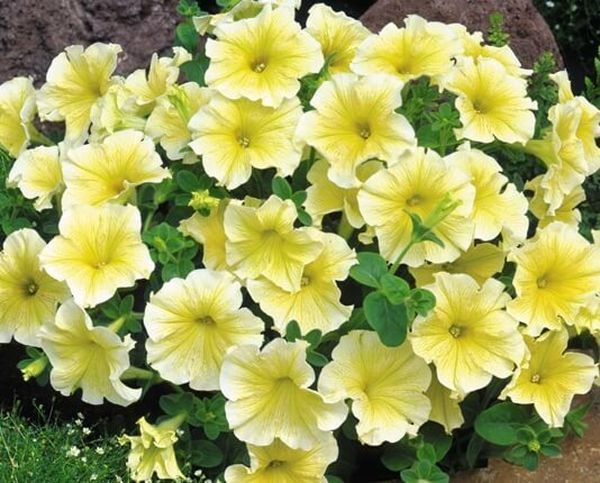
Opera
A trailing hybrid with buds predominantly red, pinkish, or violet-purple. The shoots are long but easily formed into a compact bush. The flowers are small and lack a velvety texture.
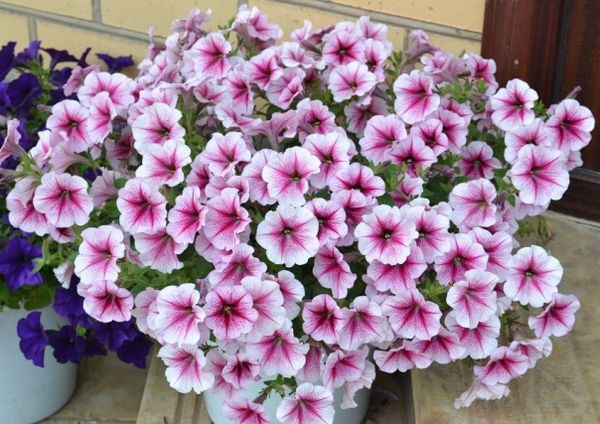
The Snow Queen
A delicate trailing hybrid with snow-white flowers exuding a subtle fragrance. The plant is compact, with stems no longer than 80 cm.
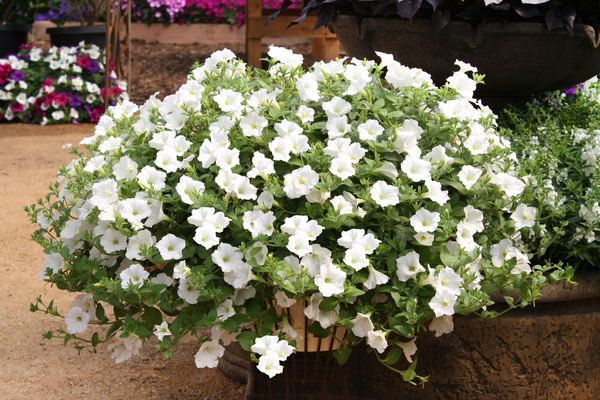
Surfinia
A series of varieties with increased resistance to adverse conditions. Produced exclusively from cuttings. Available in a wide range of colors.
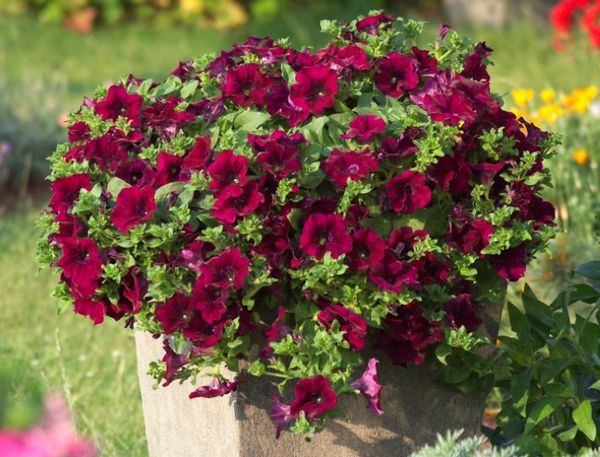
Features of growing hanging petunias
Let's look at some nuances and rules for successfully cultivating petunias.
Growing seedlings
To plant petunias in flowerbeds already in bloom, seedlings should be forced in early spring. Trailing varieties bloom 10 weeks after germination, while cascading varieties bloom 12 weeks later. With this in mind, it's easy to calculate the best time to sow the seeds – approximately late January or early February.
For sowing, use a loose, fertile substrate. A drainage layer must be placed at the bottom of the container. The seeds are soaked in potassium permanganate for half an hour, then sown in moist soil at a depth of 1.5-2 cm. Place the container on a bright windowsill and maintain a temperature of 21-24°C.
If all conditions are met, seedlings appear in 7-10 days.
Planting in open ground
When growing cascading petunias in a flowerbed, you need to allocate plenty of space, approximately 2 m² per bush, as the shoots quickly entwine the area. To decorate fences and supports, plants are spaced 40 cm apart. Planting outdoors occurs in late May, when the soil and air have warmed up well.
Petunias are most often grown in tubs, boxes, and hanging baskets. In these cases, the container should be 5 liters per plant. For 2-3 plants, a pot with a minimum capacity of 15 liters is needed. A general-purpose soil with some sand is suitable as a substrate; the key is that it's loose and fertile.
Watering and fertilizing
Because petunias have large above-ground parts and shallow roots, they need to be watered frequently, up to twice a day, especially if they're growing in pots and exposed to full sun. In open ground, water as the soil dries out, and mulch the space between plants after moistening. Occasionally, sprinkle the plants in the evening.
To ensure abundant flowering, petunias require fertilizing with a complex fertilizer. While the seedlings are establishing themselves in their new location, fertilize them once every 3-4 weeks. During flowering, a mineral complex containing primarily phosphorus and potassium is applied every 7-10 days.
-
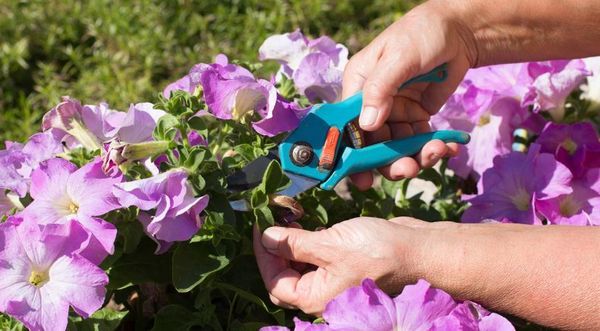
- Formation is carried out every 7-10 days
-
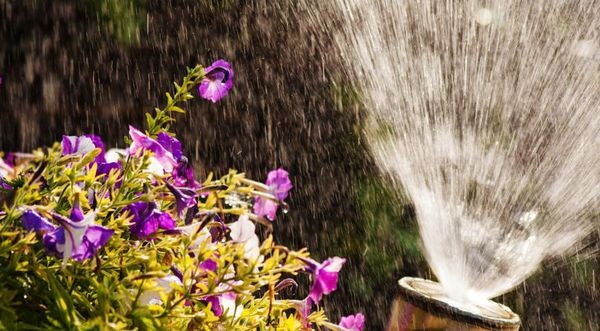
- Plants need to be watered frequently, up to 2 times a day.
-
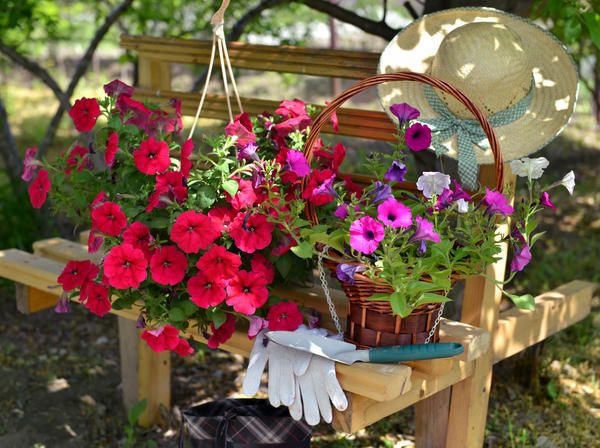
- Petunia requires fertilizing with complex fertilizers.
Pruning and shaping the bush
To keep the bush looking neat and to prevent long shoots at the bottom from becoming bare, pinch them back by two-thirds of their length. This pruning is done every 7-10 days. At the same time, faded buds and seed pods are removed. If these are not pruned, the plant will waste energy on seed maturation, and its decorative value will be reduced.
Pest and disease control
Most petunia varieties are disease-resistant. However, in dense plantings, powdery mildew or rot may develop. The fungus spreads quickly, so plants should be inspected periodically, and at the first sign of disease, damaged parts should be removed and healthy bushes treated with fungicides.
Flowers growing in the sun with low humidity can be attacked by pests such as spider mites, thrips, and aphids. To prevent these pests, sprinkle blooming petunias occasionally. If pests appear, use insecticides or folk remedies such as tobacco or garlic infusions or soap solutions.
Reviews from summer residents
"I can't imagine my garden without petunias. I always start seedlings and replant them when they're already in bloom. It's a bit of work and takes up space, but at least I get to enjoy the blooms all summer long."
"Petunias are my favorite flowers; I plant them on the balcony every year. They don't require much care, just watering and deadheading, and the results are excellent."
Trailing petunias are amazingly vibrant plants, an essential addition to any modern garden, plot, or balcony. They bloom long and profusely, require little care, and the variety of varieties allows for a wide variety of floral arrangements.