
The most beautiful species and varieties of perennial asters with descriptions and photos
Content
Description and characteristics of perennial aster
The flower belongs to the shrubby plants of the Asteraceae (Compositae) family, easily adapting to any soil and growing in the most unfavorable conditions. Asters have easily established themselves in Europe and Asian countries, Africa, and North America.
When describing a culture, a number of characteristics should be mentioned.
- It has a rhizome type system.
- The straight, branched stem reaches a height of 25–150 cm.
- The foliage is dark green, lanceolate, broad at the base, tapering toward the top of the stem.
- The inflorescences are capitate, ranging from 1 to 7 cm in diameter. The edges are tongue-shaped, and the petals are grouped in the center as yellow tubes.
- The color is determined by the specific variety; there are white, blue, violet, purple, burgundy, etc.
- Petals can be simple, double or semi-double.
- Flowering periods last from one month to 45 days.
The plant thrives in full sun, but drought and heat can be detrimental. Any soil is suitable, even clay, but the best results are achieved in humus-rich soil. It tolerates cold well, and the bushes do not require winter cover.
The perennial shrub lives for 5–6 years, after which it is divided and replanted. It reproduces by division and seed.
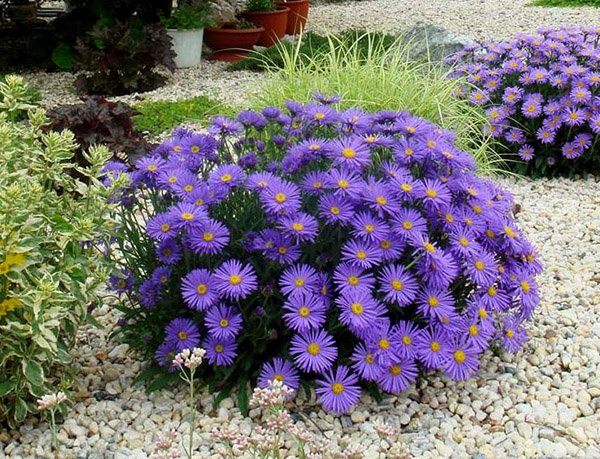
Classification of perennials
More than 500 plant varieties offer hobbyists a wide range of flowering times, bush heights, sizes, shapes, and colors of inflorescences. Using only this culture, gardeners manage to organize creative compositions that delight the eye with a riot of colors for many months.
Known varieties are divided into 3 classes.
- Early. Flowering begins in late spring and continues throughout June.
- Summer. They bloom and smell fragrant for three summer months.
- Late. They open in early September and bloom until the first snow.
In summer cottages and city flower beds, late varieties are more in demand, which is why they are popularly nicknamed “Sentyabrinka” and “October” varieties.
In addition to flowering time, asters are also classified by stem height. This classification also has three points.
- Low-growing (border) plants. Their maximum height does not exceed 30 cm. These plants are used to decorate alpine gardens and the fashionable rockeries.
- Garden. The height of individual stems within the shrub ranges from 40 to 70 cm, giving the plant a spherical shape. It has a decorative and neat appearance and pairs well with other flowers. It is often used to decorate fences and garden paths.
- Tall. Reaching up to 150–160 cm, they are recommended for planting in the center of a flowerbed. In spring, the plant adds a lush green glow to the flowerbed, and early in the season, it adorns the garden with a profusion of colorful flowers.
Video "Varieties of Perennial Asters"
This video describes the peculiarities of growing perennial asters.
Common species and varieties of perennial aster
Because the diversity of perennial asters is so vast, gardeners often refer not to individual cultivars but to subspecies grouped together. Knowing the differences between the groups makes it easier for amateur gardeners to select the right cultivar.
Ageratoides
Varieties of this species are best known as medicinal plants, sought after in folk medicine. Characteristic features:
- straight, smooth stems up to a meter high;
- The inflorescences are blue, small, grouped into corymbs.
The whole plant is suitable for treatment – stems, leaves, flowers.
Alpine
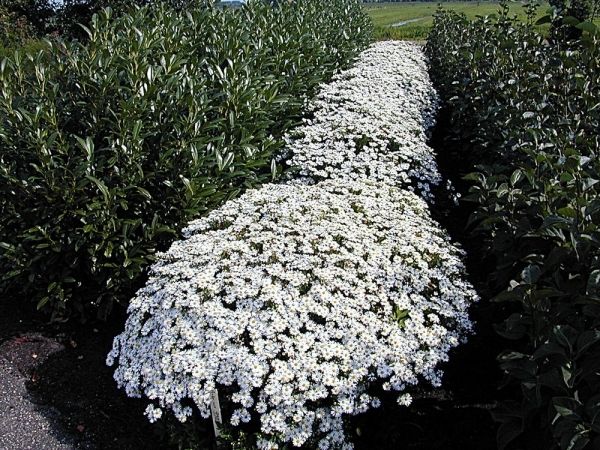
This variety combines sun-loving and frost-hardy varieties. The inflorescences are massive, isolated heads, ranging from 2 to 6 cm in diameter. Seedlings begin to bloom in the second year after planting. The bushes are compact, reaching a height of 35–55 cm. Blooming is early but profuse, lasting for a month. The flowers resemble daisies in appearance.
Let's list some representatives of the group:
- Alpine Blue. Blooms in early summer, grows to about 60 cm tall. The bud is 6 cm in diameter, lilac-blue, and has a yellow center. It resembles daisies.
- Aster Pink. Grows up to 30 cm. The stem is branched, the leaves are green. It blooms in May. The buds are about 5 cm in diameter, double, and light pink. It retains its green foliage into winter.
- Albus. Low growing, produces small white flowers.
- Dunkle Sheen. Dark purple inflorescences are 3 cm in diameter. Stem – up to 30 cm.
- Rosea. Blooms throughout the summer months. The buds are bright pink with a brown center.
Bessarabian
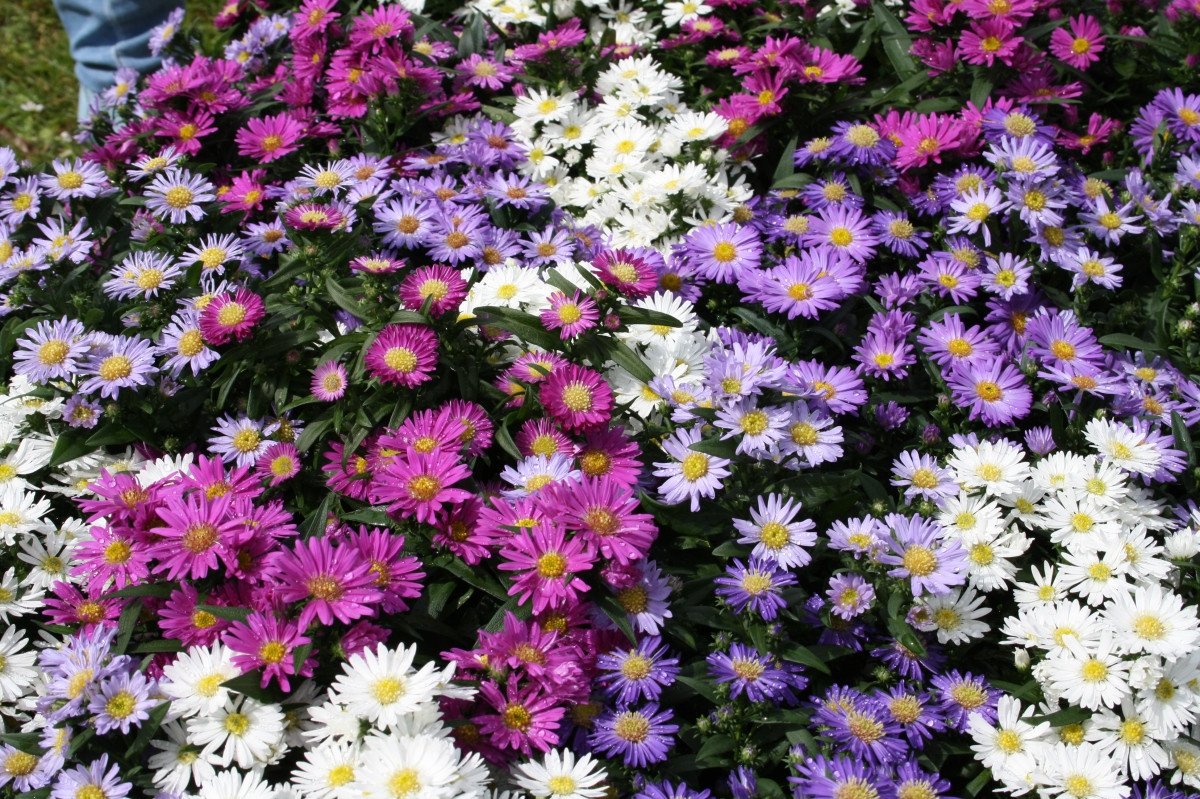
A variety of the Italian group. It grows to 70-80 cm, producing numerous large purple, pink, or white inflorescences. The center is dark brown. A robust root system.
Lateral flower
The bush grows up to 60 cm. The stems are straight and have numerous branches. All the side shoots are covered with miniature flowers. Blooming begins in September. The buds are white or pink, with a yellow center that later darkens to red. Young stems have a red tint.
Heather
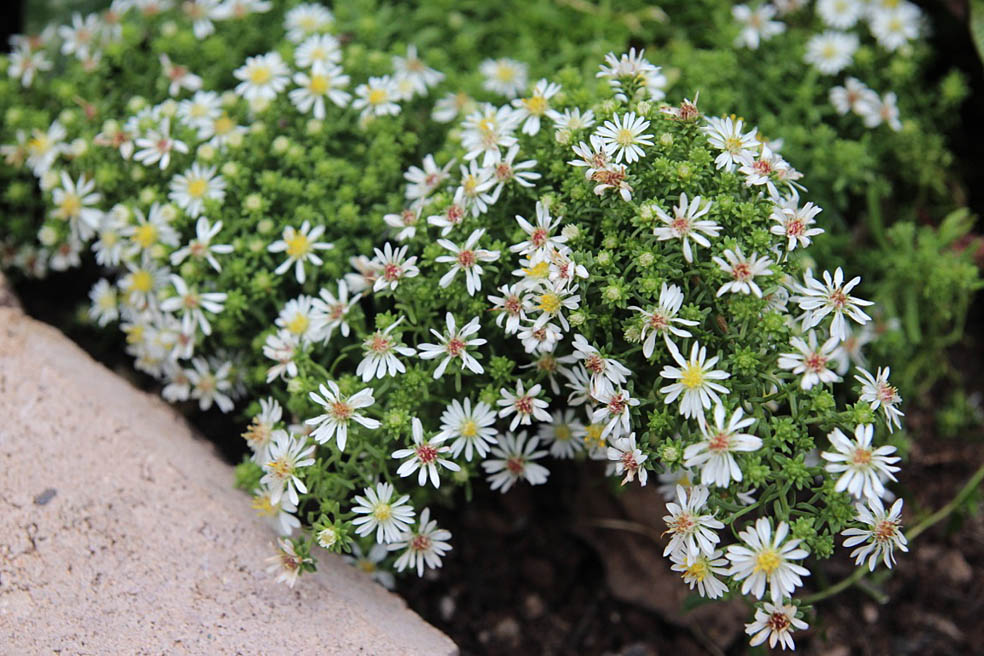
Imported from North America, this compact, meter-tall, pyramidal shrub has branches that bend toward the ground. It blooms in September. The flowers are tiny, but numerous, resembling a continuous carpet. It comes in white and pink varieties, with a yellow or brown center. It's popular for decorating parks and squares.
It loves lots of light and is not afraid of cold. It requires fertile soil. Bushes should be planted at some distance from each other.
-
- Heather
-
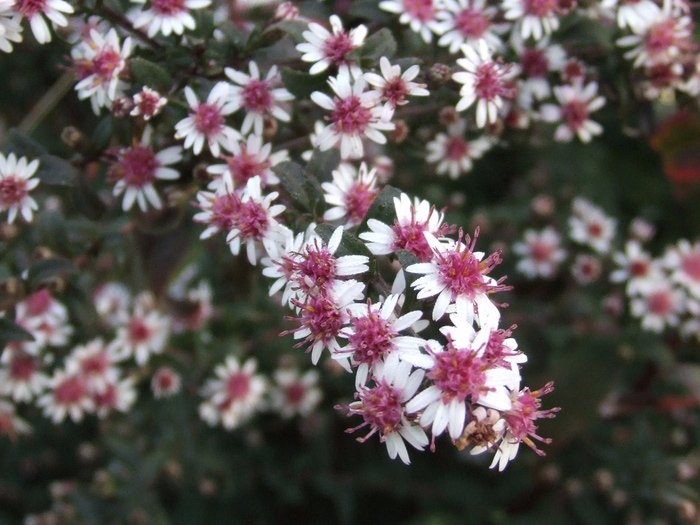
- Lateral flower
-
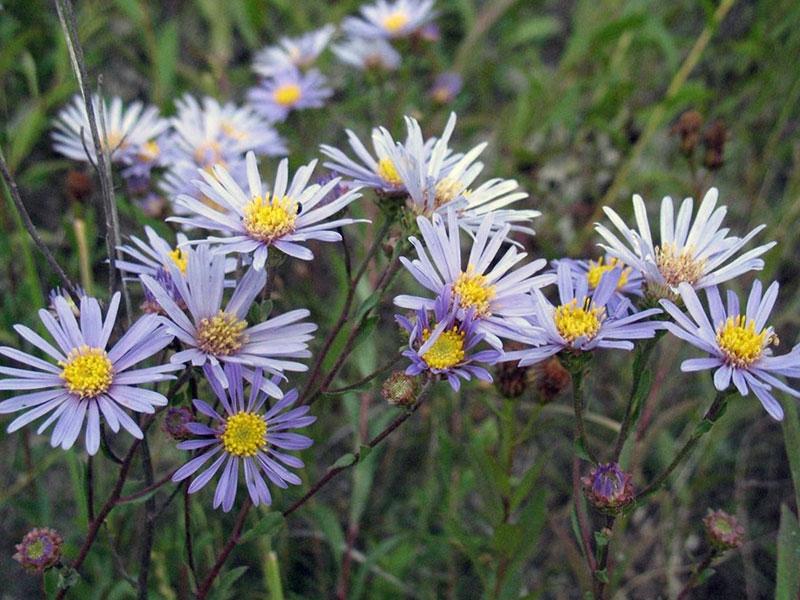
- Bessarabian
Golden
Another name for this plant is yellow or flax-leaved. The golden-yellow flowers resemble grouped fluffy balls or cones up to 1.5 cm in diameter. The stems are strong with narrow, needle-like leaves, reaching a height of 50 cm. It blooms in late summer. It is used for landscaping, arbors, and terraces.
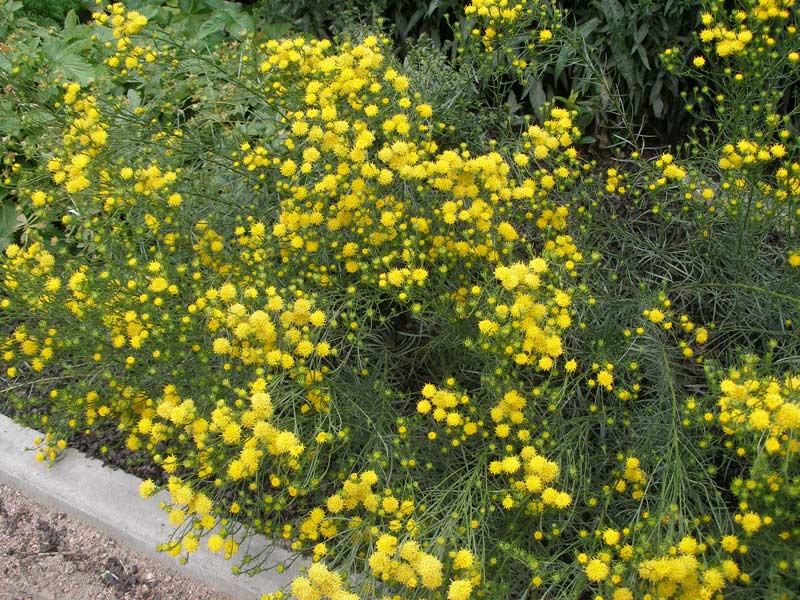
Italian
A summer subspecies. Grows to 60 cm. Flowering season: July – August. Flowers are corymbose, 4–5 cm in diameter, and lilac-blue. Some varieties produce lilac, pink, and lavender inflorescences. Seeds form by September.
Widely grown for bouquets. They require full sun and dry, well-drained soil. Standard care is required.
Let us list some representatives of the species.
- Lady Hindlip – pink flowers;
- Viоlette Queen – flowers are dark purple;
- King George blooms in July, producing large violet-blue flowers with a yellow center. It's tall and requires support.
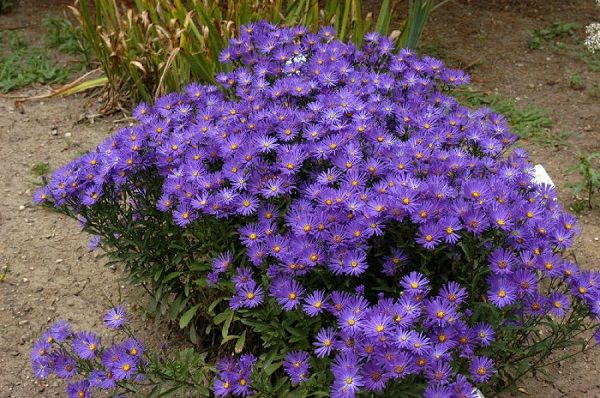
Bushy
The stems are soft and fluffy, reaching up to 50 cm. The foliage is dark green. Flowers, 3 cm in diameter, cover the entire shrub in a continuous, variegated carpet. Creeping varieties are also available. A dwarf subspecies is used as a groundcover.
Compact bushes are grown for borders and rockeries. They live up to 5 years. Overly dense bushes are divided and replanted.
Let us list some varieties of the group.
- Blue Bird. This dense bush resembles a green ball covered in flowers. It grows to a height of 30 cm. It blooms in early autumn and lasts for two months. The inflorescences are small, 2.5 cm in diameter, semi-double, blue with a yellow center.
- Dwarf Nancy. Grows up to 25 cm. Dense shoots form a sphere. Blooms with lilac semi-double flowers in the first half of autumn.
- Rosenwichtel. The bush is low, up to 30 cm, lush and dense. The stems are branched, and the leaves are small and dark green. It blooms in August and continues until mid-autumn. The pink petals gradually darken to a red hue as they fade.
- Blue Lagoon. Beautiful bushes, half a meter tall, with dark green leaves. Blooms from late summer until frost. The inflorescences are massive, up to 5 cm in diameter. The center is large, yellow, framed by several rows of purple petals.
- Jenny. Prefers fertile, loose soil and full sun. The stem is pubescent, and the bushes are hemispherical. The foliage is green and lanceolate. The flowers are red-crimson, double. Blooms from September until frost.
- Apollo. Dwarf, about 30-40 cm tall. The inflorescences are snow-white, reminiscent of small daisies. Under favorable conditions, it grows quickly, covering large areas. Lifespan: 6 years.
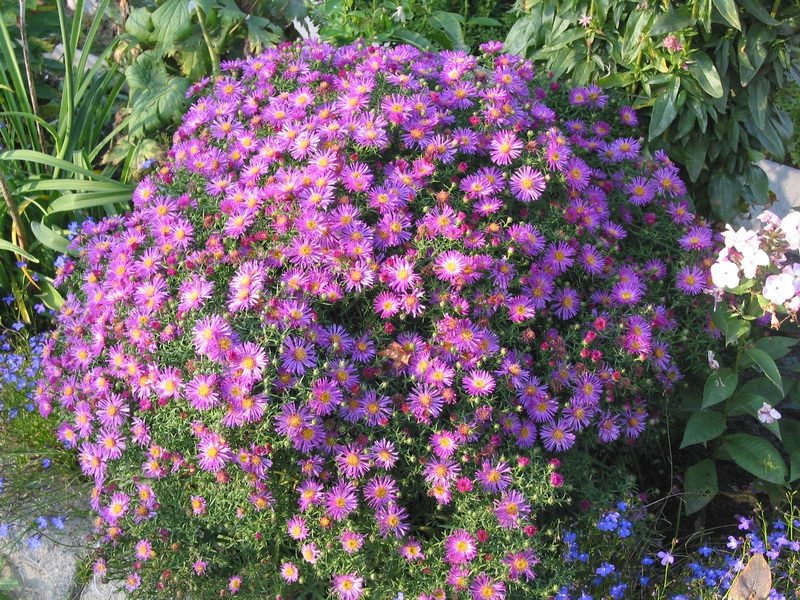
Terry
Forms dense, ball-shaped flowers. The tongue-shaped petals form several layers. The coloring varies depending on the variety. Due to its decorative appearance, it is used to decorate flowerbeds and grows well in pots and vases.
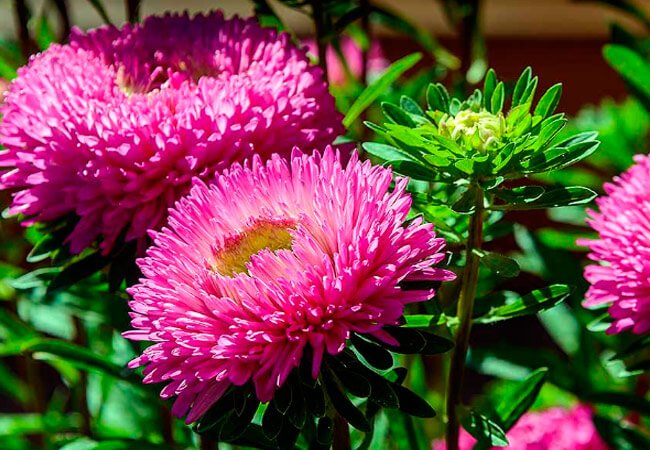
Mongolian
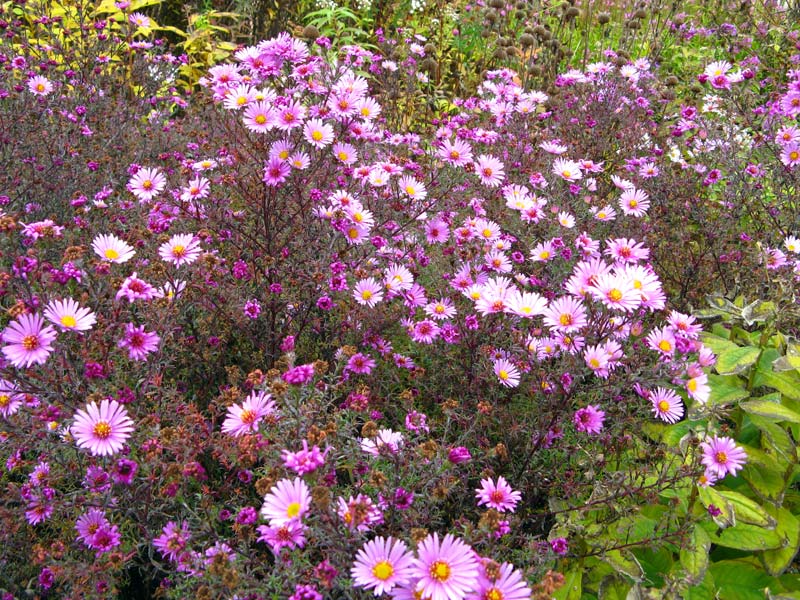
Imported from Mongolia, this tall plant grows to a height of up to a meter. Its distinctive features include small lilac flowers that cover the entire bush in abundance.
New England
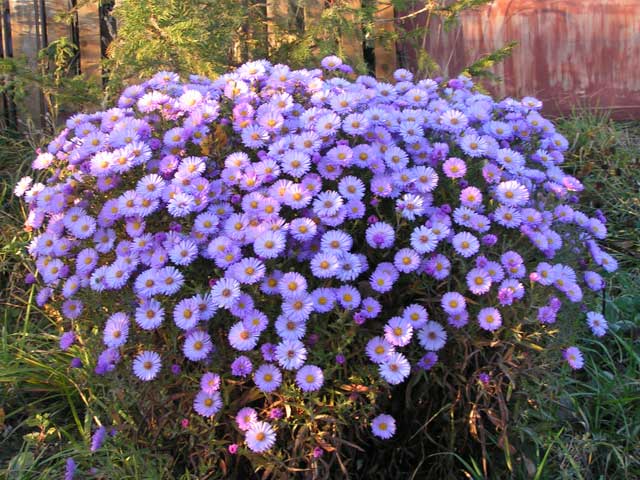
Another name is American. This autumn group blooms from September until early winter. It is frost-resistant and can bloom even under the first snow.
The stems are slender, produce numerous shoots, and retain their shape, requiring no staking. Height ranges from 80 cm to 2 m. Flowers are massive, up to 4 cm in diameter, and are grouped in voluminous clusters of 30-40. They can close at night and during cold weather. They are resistant to powdery mildew and grow quickly.
Let us describe some varieties of the group.
- Lucida. Height up to a meter, with a branched top. Buds are massive, ruby-colored, with a red center. Flowering period is month-long, beginning in September.
- Rote Stern. Grows to 1.5 m. Large, double flowers, crimson. Blooms for about a month in autumn.
- Dr. Eckener. Buds are 4 cm in diameter, reddish-purple. Grows up to 1.5 m.
- Lily Fardell. Height 1.5 m. Pink flowers, grouped in inflorescences on shoots. Grown for bouquets.
New Belgian or Virginia
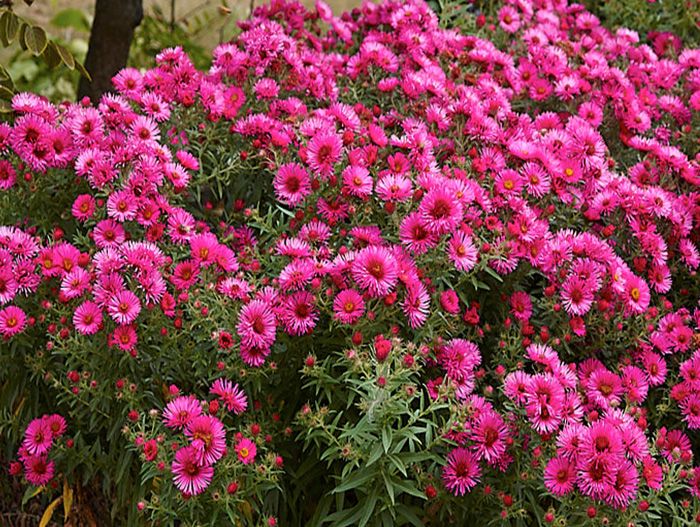
The height ranges from 40 to 150 cm (sometimes up to 2 m). The stems are woody, glabrous. Densely arranged, double inflorescences, covering the leaves, are grouped into panicles up to 2 cm in diameter, pinkish-purple. The central part is tubular and yellow. Flowering begins in August–September and lasts until November.
They are cold and drought-resistant. They don't hold their shape well and often break under the weight of their buds. At night and in bad weather, the flowers close, appearing to wilt, which is why they are rarely used in bouquets.
The following varieties are popular.
- Oktoberfest. Up to a meter tall, it blooms in August. The flowers are miniature, semi-double, light blue, with narrow petals. The center is yellow, giving the variety the appearance of a blue daisy.
- Royal Ruby. Medium-sized, about 90 cm tall, with a dense habit. It blooms from August until the frosts of November. The flowers are semi-double, raspberry-red, with a yellow center. The inflorescence diameter is 2–3 cm.
- Maria Ballard. Grown for cut flowers. Dark blue flowers.
- Henry Blue. Recently bred. The bush is compact, about 35 cm tall, and round. It blooms from late summer to mid-fall. The flowers are double, violet-blue. The leaves are dark.
- Herpicton Pink. Flowering period: late summer to early winter. Medium-sized, light pink flowers with a yellow center. In good light, it grows up to 1.5 m.
- Friendly. Delicate pink flowers, 7 cm in diameter, double. Height up to 1 m.
-
- New Belgian
-
- New England
-
- Mongolian
Tatar
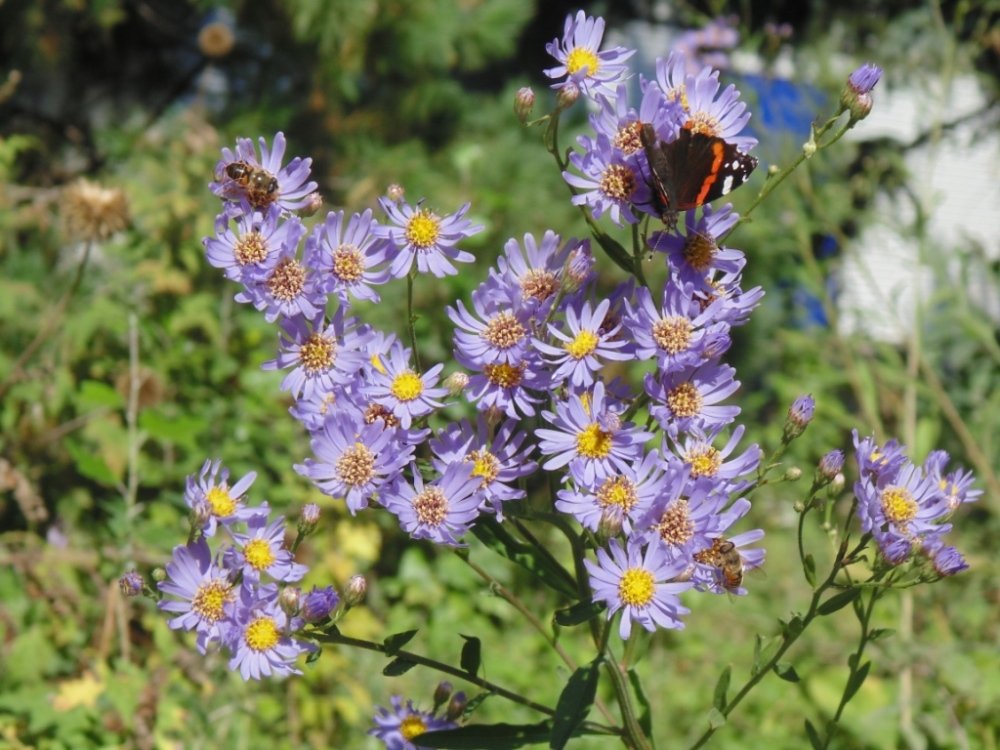
It is also popular in folk medicine. The shrub grows up to 1.5 meters. The flowers are small, pale pink or light blue. The central part is large and bright yellow. It prefers moisture and shade, and is found naturally along the banks of bodies of water and at the edges of forests.
Spherical
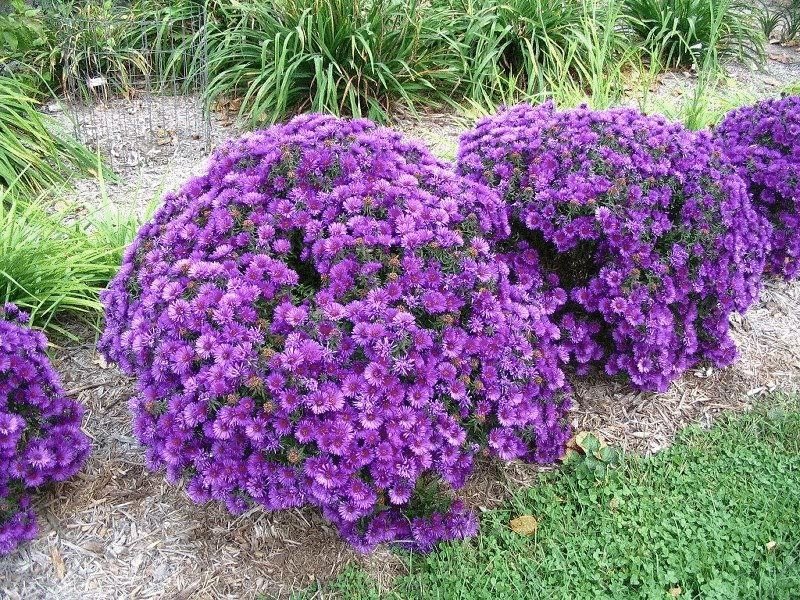
Named for the bush's shape—a perfect sphere. It grows to 40-50 cm. Small, pink flowers cover the shoots abundantly. The center is small and yellow.
Application in garden design
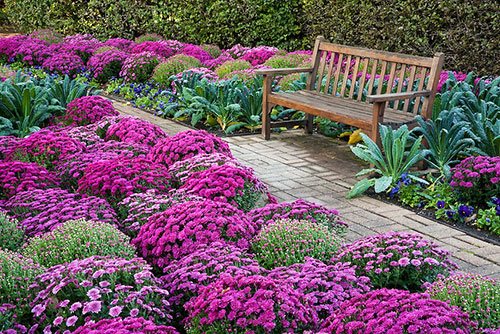
In garden landscapes, asters are often combined with conifers and evergreen shrubs. Thanks to their compact form, the bushes can be used singly or in groups. Gardeners often plant arrangements of single flowers, selecting them by color and height. In flowerbeds, they are planted in large areas or in several rows.
Tall varieties are combined with low-growing perennials to cover the bare base of the stem and preserve the foliage longer. They are also planted to create hedges. There are also honey-bearing varieties suitable for beekeeping.
Spherical shrubs look good in isolated clumps on lawns. They pair well with dwarf conifers and grasses.
-
- Design of the recreation area
-
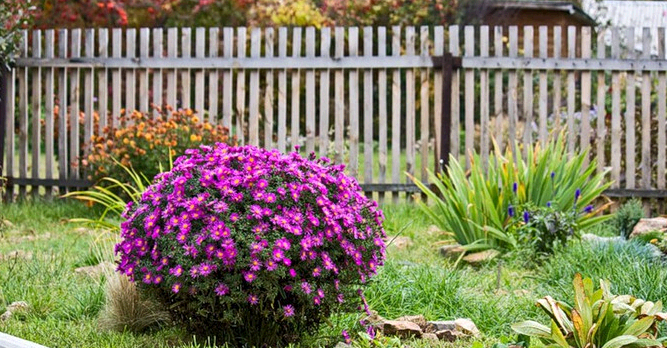
- Solitaire planting
-
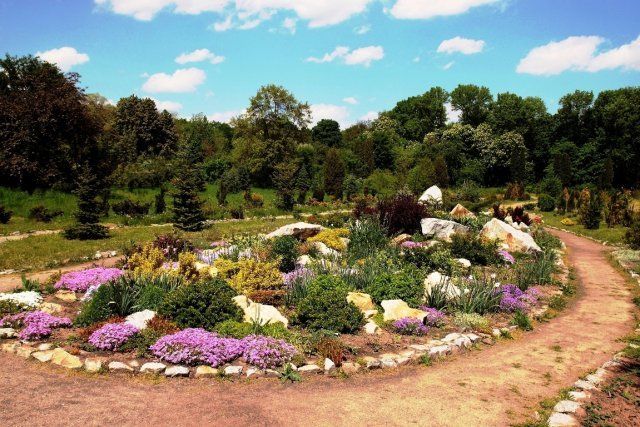
- Alpine slide
-
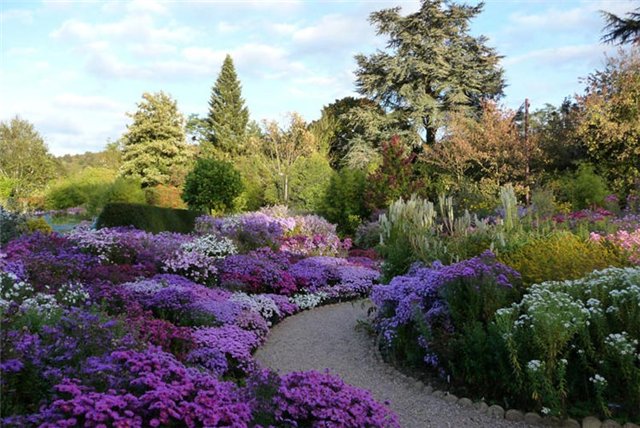
- Mixed type mixborder
-
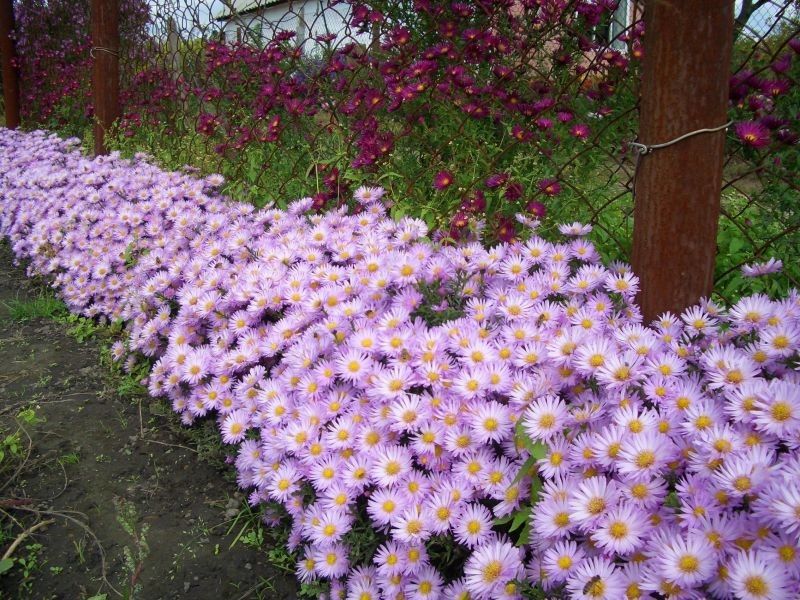
- Decorating the fence
-
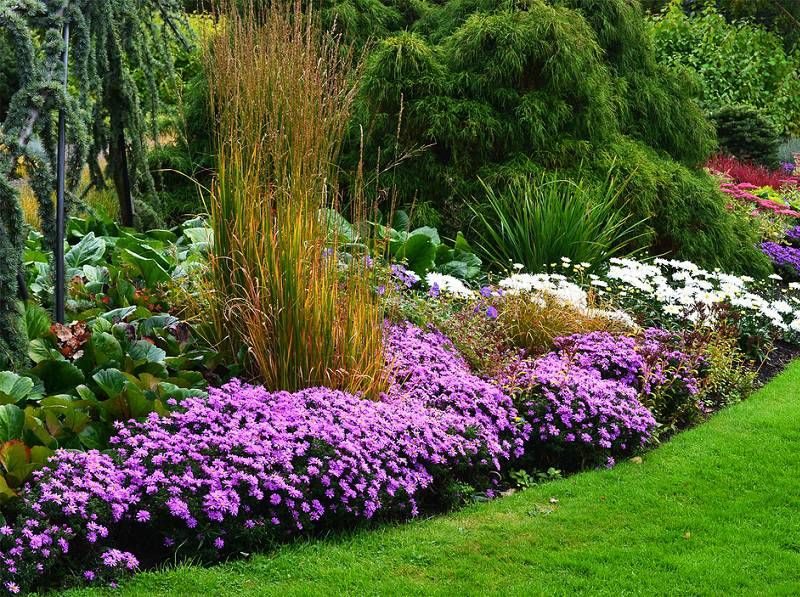
- Composite planting
Tall asters look great next to:
- Korean chrysanthemums;
- Hostoy Siebold;
- autumn heleniums;
- bergenia.
No matter where you place perennial asters in your garden, they always look picturesque. When they begin to bloom, it's time to say goodbye to summer and enjoy the vibrant autumn colors.