
Decorating the Garden: Planting and Caring for Perennial Garden Chrysanthemums
Content
Botanical description of the flower
Belongs to the Asteraceae family. Numerous diverse cultivars have been developed, some grown for cut flowers, others for ornamental purposes. The height of different subspecies can vary significantly, with small ones growing up to 15 cm, and large ones up to 1.5 meters. The inflorescences also form heads of varying sizes, from 5 to 25 cm in diameter.
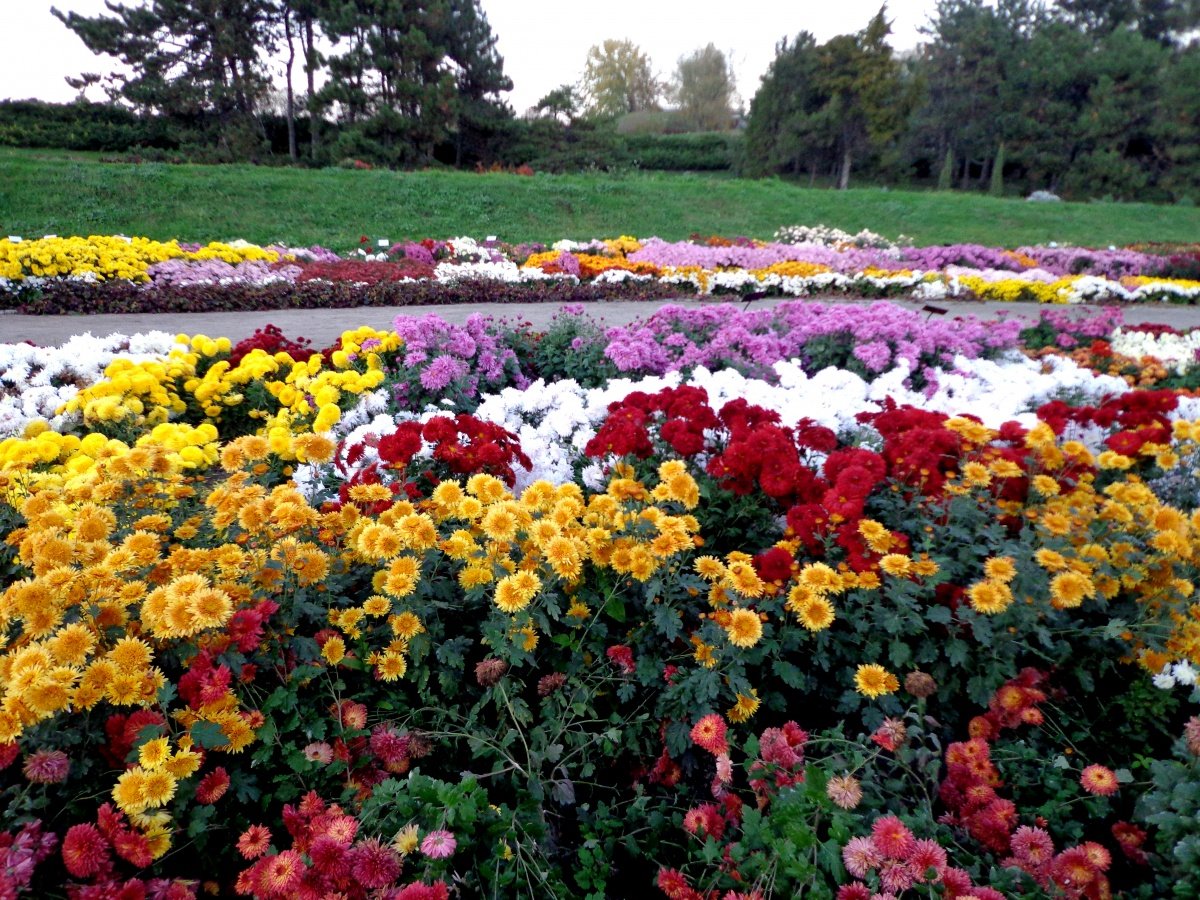
Garden chrysanthemums are shrubs that, during the season, are covered with dozens of colorful flowers. They have powerful, branching roots.
The crop thrives in most soils, is unpretentious, and is not afraid of temperature changes or bad weather.
Popular types and varieties of perennial garden chrysanthemums
Bush chrysanthemums amaze both novice and experienced gardeners with their wide variety of colors, shapes, and inflorescence types. Let's describe the most popular varieties in our country.
Alpine
One of the shortest hybrids in the family, it grows no taller than 15 cm. The foliage begins at the rootlets: gray-green below, dark green above. The stems are erect and do not form offshoots. Miniature flower heads up to 5 cm in diameter form at the tops. The flowers bloom in July, resembling daisies.
This variety of chrysanthemum is frost-hardy. It can be planted in pots or open ground, and is used to decorate garden path borders and rock gardens.
Indian
A massive species, reaching up to one and a half meters in height. Flowering occurs in autumn, with the bushes forming flower heads in a variety of colors.
Here is a brief description of the varieties typical for the species.
- Altgold. Double, spherical, dark yellow inflorescences grow up to 5 cm in diameter. Blooms in early autumn.
- Aurora. The bush grows up to 85 cm. The foliage is dark green, and the inflorescences are flat, orange, up to 10 cm in diameter.
- Snow Elf. Produces bright white, double, pom-pom-shaped flowers, averaging 7 cm in diameter. Grows up to 80 m.
- Primevara. The stem grows up to 1 m. The inflorescences are bright pink, resembling half a sphere. The foliage is dark green, covering the entire stem.
- Wally Roof. Blooms in late September. The flowers are flat, pinkish-lilac, and 8 cm in diameter.
There are varieties that form inflorescences of double color.
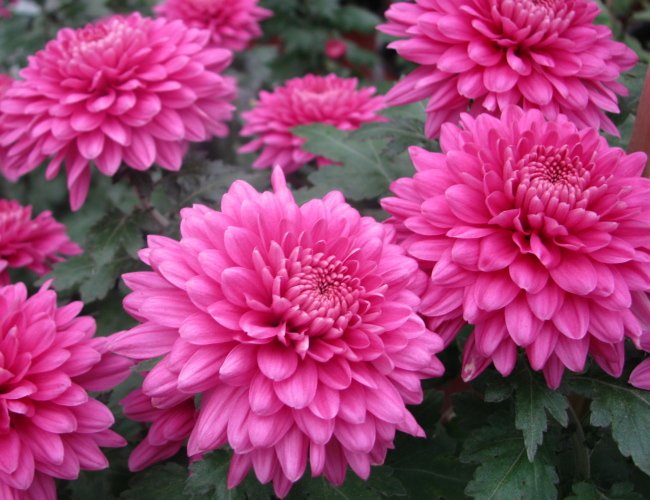
Chinese, or mulberry-leaved
A low-growing hybrid, about 30 cm tall, although some specimens reach up to 120 cm. The stem is strong and straight, becoming woody after a few years. The foliage is oval, sometimes lobed, growing up to 8 cm, and has a pleasant scent.
The inflorescences form fragrant flower heads—single, semi-double, or double, up to 8 cm in size. There are few or no seeds. The flowers can be grouped into racemes or grow singly.
Keeled
Characterized by a thick main stem from which shoots grow abundantly, the bush grows into a rounded shape, reaching a height of 20 to 70 cm. Inflorescences are either solitary or clustered (3 to 9 per raceme). Colors include white, red, or yellow. Flower sizes range from 4 to 8 cm. Blooms in July.
Korean
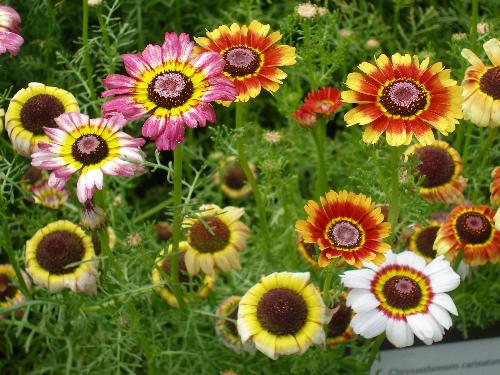
A hybrid with many varieties. Most have good immunity and thrive in the Russian climate. Varieties vary in size, color, and flowering season. It's frost-hardy—even when grown outdoors, it requires no winter cover.
Let us list the known varieties of this species.
- Alyonushka. Its distinctive feature is its pink flowers. The inflorescences are simple, reminiscent of daisies. It grows up to half a meter.
- Altyn Ai. The stem height does not exceed 60 cm. It produces yellow, double flowers up to 8 cm in size. Flowering begins in August and lasts for two months.
- Bacon. Tall, reaching up to 90 cm. Blooms with double inflorescences 5 cm in diameter. The flowers are red.
- Evening Lights. Low-growing, about 40 cm. The inflorescence resembles a daisy, but in a different color scheme – red petals with a yellow ring in the center.
- Dina. Stem height: 45 cm. Flowering begins in the second half of August and lasts up to 70 days. Flowers are white, about 8 cm.
- Zemfira. Blooms in late July, with a season lasting three months. The flowers are small, single, and light pink.
- Malchish-Kibalchish. Low-growing, up to 40 cm. Inflorescences are simple, with pink petals, 8 cm in diameter.
- Orange Sunset. Reaches 75 cm in height. The inflorescences are brownish-red. The flowers are massive, up to 10 cm in diameter.
- First Snow. Compact in size, with stems less than 40 cm tall. Blooms with white, double flowers.
- Sunny. Tall, about 80 cm. Buds are massive, bright yellow.
- Umka. One of the tallest, reaching 110 cm. The pom-pom-shaped flowers are 8 cm in size and white or slightly pinkish in color.
Shrub
It loves warmth and is common in regions with mild climates. In temperate climates, it is considered an annual crop.
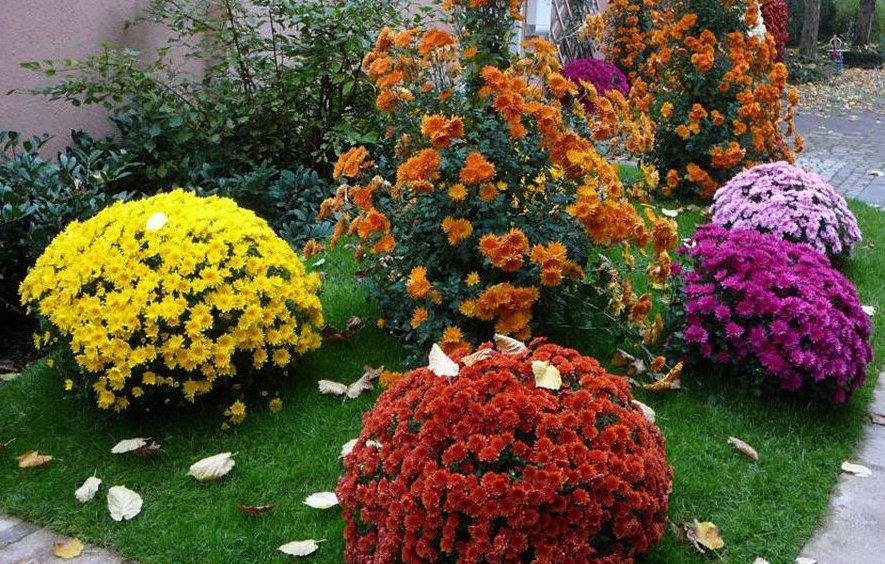
It grows up to 1 m. The shoots are heavily branched, becoming woody with age. It produces massive double or semi-double flowers. Up to 9 flowers, white, yellow, or pink, are produced on a single stem. They have a pungent odor, so it's best not to leave cut flowers in a poorly ventilated area.
Multi-stemmed
A low-growing species, no more than 25 cm in height. It produces numerous upright shoots covered with green foliage with a gray tint.
The inflorescences are bright yellow, up to 3 cm in diameter. The flowering season lasts from June to October.
One-headed
There are over 200 perennial cultivars of this species, varying in flower shape (double or semi-double) and size (from 12 to 25 cm). The stem extends from 0.5 to a meter. The color and volume of the inflorescences vary.
Let's list the most popular varieties.
- Avignon. Light or dark pink petals form a dense cap up to 12 cm in diameter. The flowering season begins in mid-autumn and lasts until the onset of cold weather.
- Annabelle. It grows in several tiers. The arrangement of the petals gives the flower a snowflake-like appearance. The inflorescence is 15 cm in diameter, and the plant reaches 70 cm in height.
- Astroid. The flowers are spherical and densely double. The petals are dense and flexible, curving toward the center. Tall – up to 80 cm.
- Balthazar. The flowers are lilac with greenish tips. The inflorescences are up to 18 cm in diameter and grow up to 120 cm. It is grown for cutting and has a long vase life.
- Bowla. Flowers are wide, densely double, bright white, up to 15 cm in diameter. Grows up to 80 cm.
- Wilhelmina. Bred in Holland. The flowers are white, double, up to 15 cm, and the foliage is dark green and massive. It grows up to 70 cm.
- Ksenia. Also created by Dutch breeders. The flowers are soft pink, with wide, firm petals. Grows up to 70 cm.
Autumn
Flowering begins in September, producing white or yellow, umbrella-shaped inflorescences. The plant reaches a height of one and a half meters.
Crowned
The inflorescences take the form of isolated baskets, forming on lateral branches. The bush rises to a height of one meter.
Let us describe the most popular varieties of the species.
- Nivea. An annual plant, it grows up to 80 cm tall. The inflorescences form massive white heads reminiscent of daisies.
- Goldcrone. Height less than a meter. Stem is strong, inflorescences are semi-double, medium-sized, with golden-yellow petals.
- Orion. A tall variety distinguished by massive inflorescences resembling daisies with yellow petals.
- Annette. The petals range from red-orange to light pink. It grows up to a meter tall, with the entire stem covered in massive inflorescences.
The petals of the crowned chrysanthemum are sometimes called salad petals because they are considered edible. They are often used to decorate desserts.
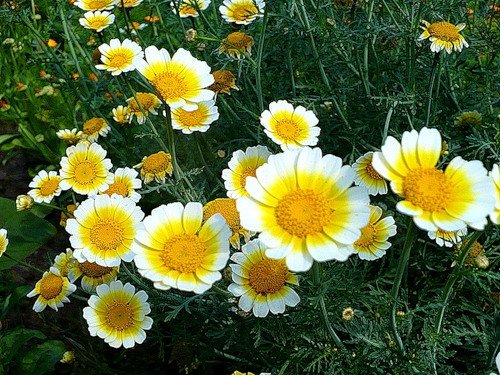
Video: Planting and Caring for Chrysanthemums
In this video, experts explain how to care for perennials grown in the garden.
Features of planting and growing garden crops
The culture is short-lived; even hardy varieties need to be replanted every three years. Hybrids with large flowers thrive in the south, but in frosty climates, the most cold-hardy varieties (such as Korean) require protection.
Recommended planting times
It is advisable to transplant specially purchased seedlings or home-grown seedlings into open ground in the spring:
- April-May – in the southern regions;
- after the spring frosts end – in the northern ones.
For planting in the ground, you need to select only frost-resistant varieties grown from seeds and zoned.
Selecting a location, soil and planting material
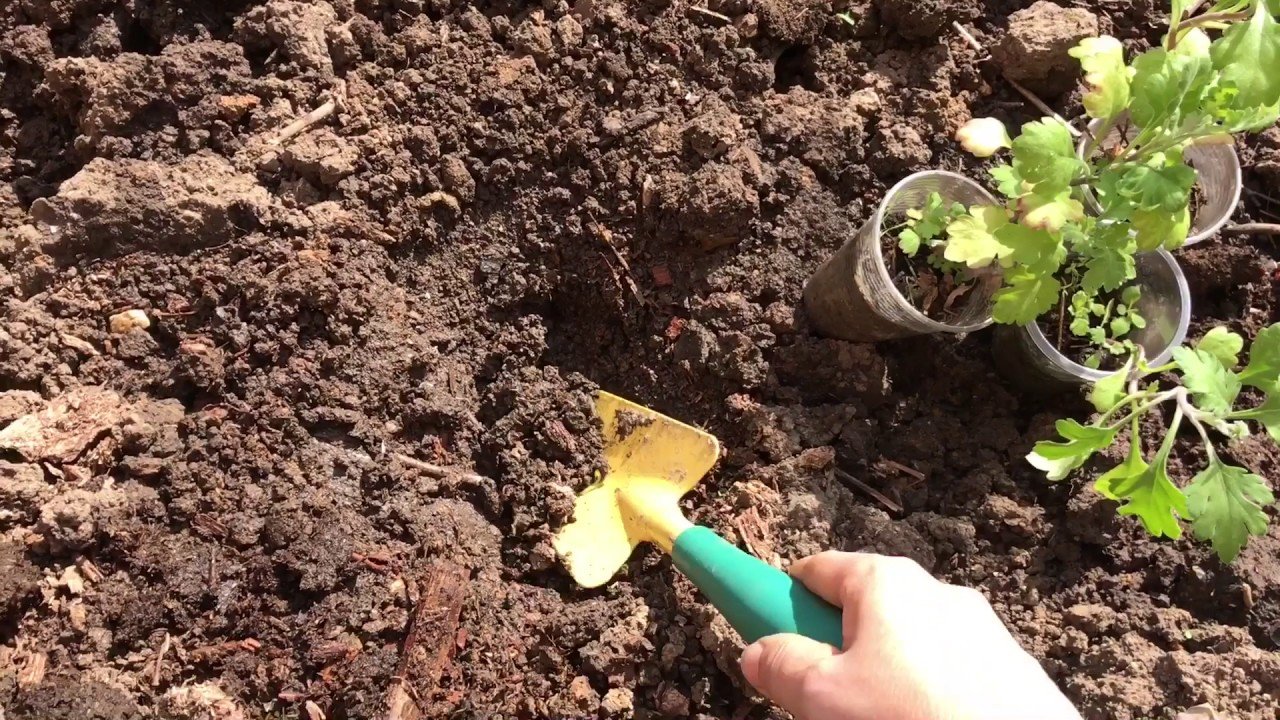
Seedlings are sold in pots and therefore require repotting. Shrub chrysanthemums are heat-loving; even light partial shade can be harmful. Choose a south-facing site for planting, with full sun and protection from wind and drafts. The soil should be moist but not too wet, rich in organic matter, and breathable. Any soil except heavy clay is suitable.
Excess organic matter is harmful – too many leaves are formed, and flowering, on the contrary, decreases.
The proposed site must be dug to a depth of half a meter. Fertilize with humus and manure. The fertilizer amount per square meter is calculated according to the following rule:
- up to 20 kg of humus;
- 100 g each of superphosphate and potassium sulfate;
- 30 g urea.
In heavy soils, add sand for drainage. It's also advisable to add a little peat to ensure a slightly acidic pH.
Planting recommendations
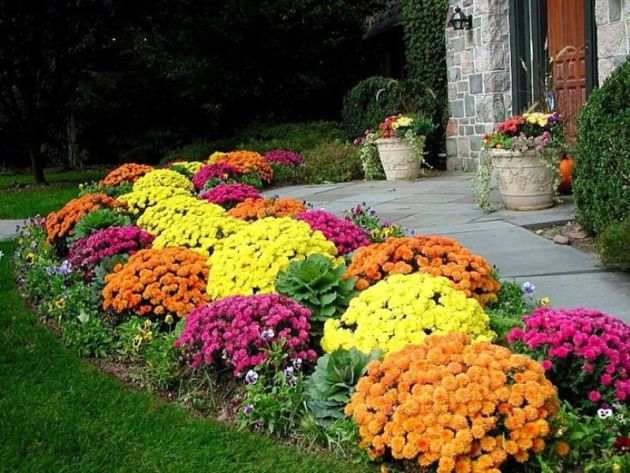
The correct way to disembark is as follows:
- A hole 40 cm deep is made for each cutting.
- The bottom is drained, humus is added, and the soil is watered.
- The sprout is placed without deepening.
- Several specimens are planted on a plot at intervals of 40 cm, with an inter-row interval of half a meter.
- For each bush, a support is made - a peg is driven in and tied up.
After three years, the plant will need repotting. This process involves dividing the plant and planting the fragments in new locations. Repotting is done in the spring as follows:
- the bush is carefully dug up and the soil is carefully shaken off;
- with a knife they are divided into parts, each of which has buds and roots;
- Planting in a new location is carried out according to the same rules as planting cuttings.
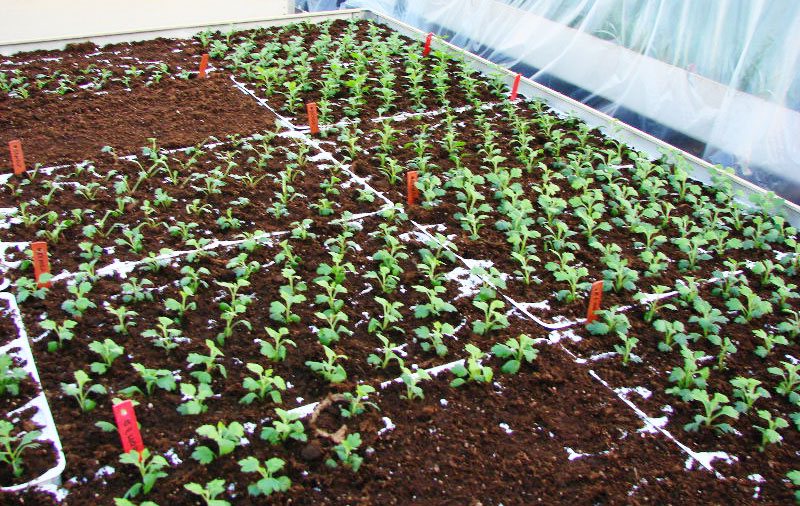
Several methods are used for reproduction:
- dividing the bush;
- by cuttings;
- sowing seeds.
The best method is the last one, the seeds allow the plant to adapt well to local climatic conditions.
-
- Propagation by seeds
-
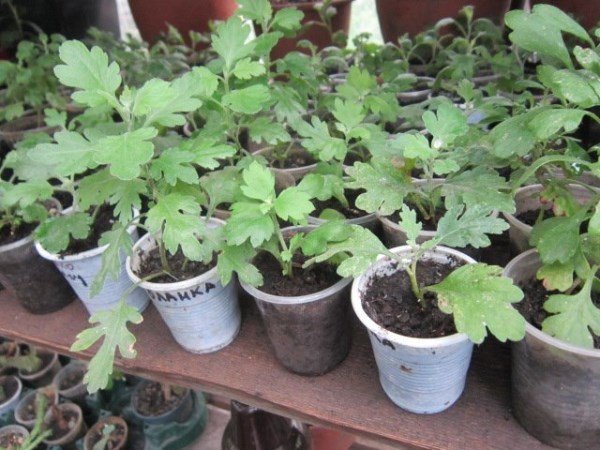
- Propagation by green cuttings
-
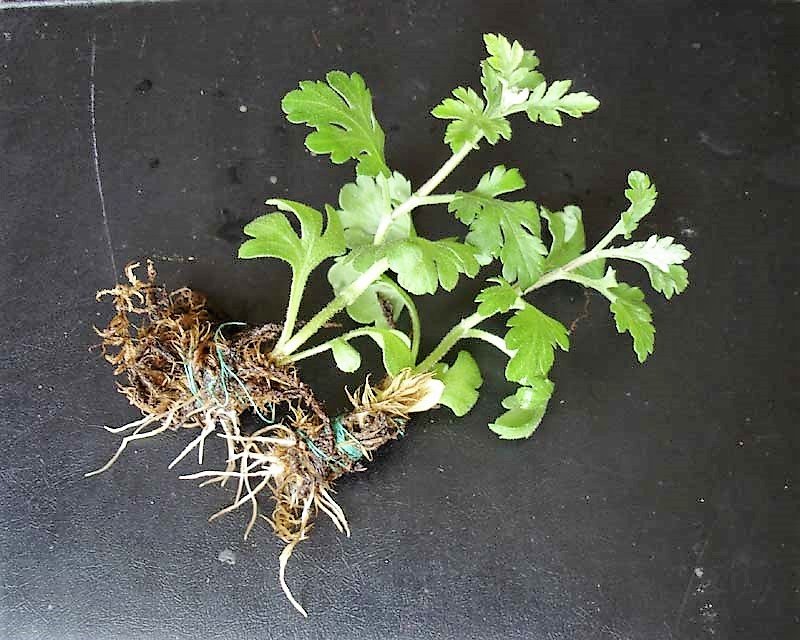
- Dividing the bush
Watering rules
The rate depends on the crop variety. Plants with small, hard leaves require less moisture than bushes with large, soft leaves, which have a larger evaporation surface area.
If chrysanthemums begin to drop buds, this indicates either overwatering or underwatering. Both causes need to be checked and corrected.
If the stems are under-watered, they will become woody; if they are over-watered, the root system will rot. More water will be needed during flowering and on hot, sultry days.
Water according to the rules:
- the water should settle;
- you need to water at the root.
Loosening and mulching
The soil should be loosened before planting, as well as the next day after each application of fertilizer and abundant watering.
Fertilizers and feeding
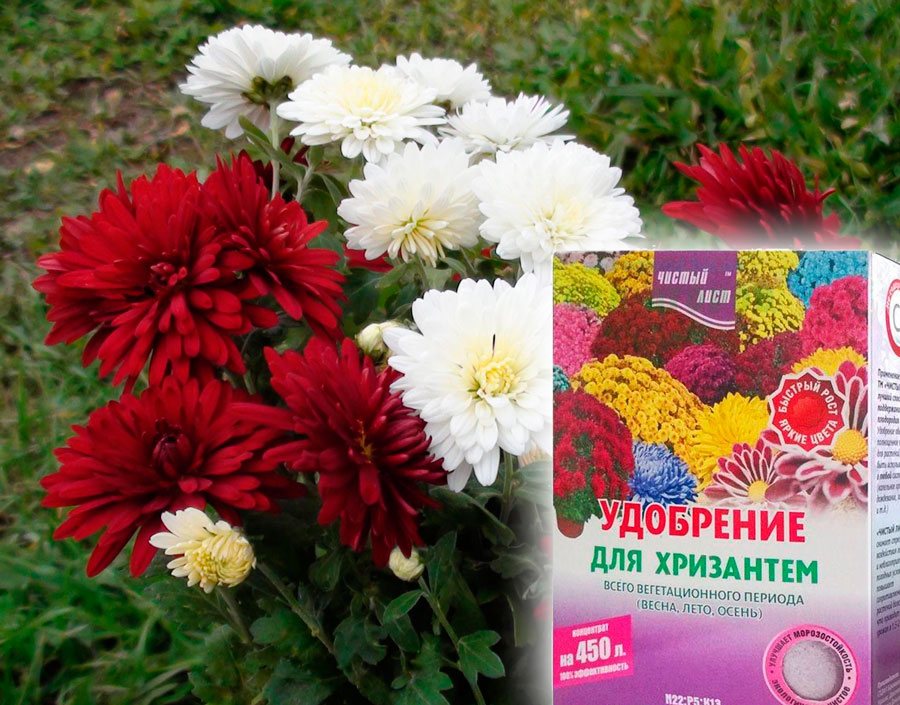
Organic and mineral fertilizers are needed. The former is applied 10-15 days after planting, stimulating root and shoot growth. Use a mullein infusion in a 1:10 ratio, from half a liter to a liter per seedling.
A second feeding is carried out during the budding season. When the flowering season begins, it is advisable to use a complex fertilizer. A solution of mineral fertilizer is added to the soil approximately every 2-3 weeks. The composition depends on the growing season:
- In the first half, nitrogen fertilizer predominates;
- in the second – phosphorus and potassium.
40 grams of fertilizer per 10-liter bucket is enough for 2 square meters of planting. Each application is combined with watering.
Pruning and shaping the bush
This is essential care for chrysanthemums. When the main shoot reaches 10-12 cm, pinch off the tip. When the side shoots reach the same size, the same procedure is performed for them. This procedure helps form a beautiful crown and continue growing.
During the flowering season, faded buds are cut off, allowing new ones to bloom.
Shelter for the winter
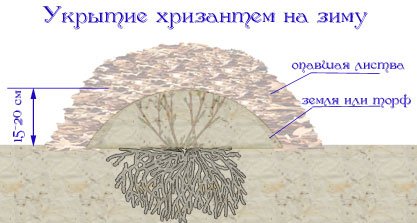
To ensure the crop survives frost, protection is needed. Covering is done according to the following scheme:
- Top dressing is done with phosphorus and potassium fertilizers.
- The stems are cut from the mother bushes, leaving stumps of 10-15 cm.
- Peat chips mixed with manure are added to the soil to hide the exposed roots.
- Cover with material left over from cleaning the garden (which does not allow snow to pass through) - spruce branches, tops or dry twigs.
Diseases and pests of perennial chrysanthemums
Here is a brief description of the dangers that gardeners face when growing shrubby perennials.
Plants are threatened by fungi:
- gray mold;
- powdery mildew;
- rust.
Copper-containing fungicides are used for control. Colloidal sulfur is effective against rust.
The culture can be attacked by viruses:
- mosaic;
- aspermia;
- dwarfism.
Diseased plants cannot be treated and are destroyed.
Insects that harm chrysanthemums include:
- nematodes (no cure yet found);
- meadow bugs (use spraying with hot pepper tincture or onion peel);
- aphids (treated with insecticides)
By following simple rules, gardeners can grow blooming beds of different chrysanthemum varieties in their gardens. These "queens of flowers" decorate their plots until late autumn.