
30 of the most beautiful bulbous flowers for the garden, with names and photos.
Content
Features of bulbous flowers
Scientifically, there's no such thing as "bulbous." This general term covers several families characterized by a bulbous stem. These include members of the Liliaceae, Allium, and Amaryllidaceae families. Unlike tuberous plants, the root of these flowers is not only a storehouse of nutrients but also the embryo of the plant itself. Perennials have a number of characteristics that distinguish them from other species:
- Seasonal replanting. Since the bulbs are dormant during winter, the risk of damaging the root system is minimal. This allows for trouble-free digging and replanting of perennials.
- Forcing. When cultivating in a greenhouse, it's possible to adjust the growing season. By managing the growth process, you can achieve flowers by the desired date.
- Long-term preservation of varietal qualities. Bulbous plants degenerate only after 5-10 years, allowing for the annual production of high-quality seeds.
- Increased frost resistance. Plants easily tolerate severe frosts (down to -30°C) and can bloom even at sub-zero temperatures.
- Low maintenance. Perennials thrive in any soil, grow equally well in shade and direct sunlight, and require little additional care.
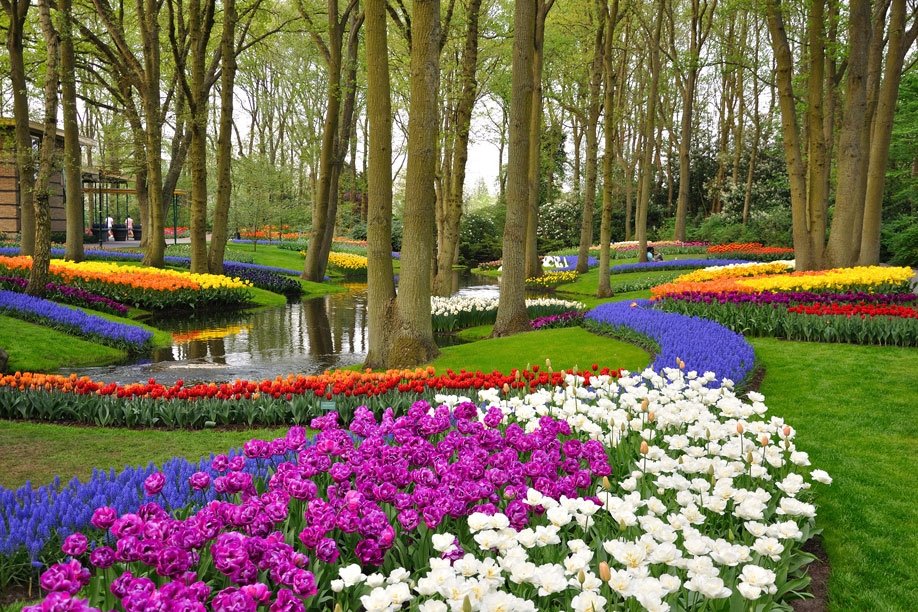
Despite these advantages, spring primroses have one significant drawback. If crop rotation rules are not followed and they are constantly planted in the same spot, the risk of soil depletion and sometimes even poisoning increases.
Classification of flowers by bulb type
Botanists divide all garden plants with modified stems into three types:
- corms (colchicums, ixias, gladioli);
- small-bulbous (most extra-early species);
- bulbous (representatives of the Liliaceae, Amaryllis, and irises families).
Each group has its own growing season. This allows you to select crops that will ensure continuous flowering throughout the garden season.
Video "TOP 10 Bulbous Flowers for the Garden"
This video features descriptions of the ten best bulbous flowers to grow in your garden.
Spring bulbous primroses
Here are all the plants that are the first to "wake up" after winter. Early perennials rarely exceed 15 cm in size. Active growth occurs in late February and early March, when the ground hasn't yet warmed up and there's still snow on some garden plots.
Wintering spring flower, or Eranthis
The earliest flower, even snow-resistant. It blooms in late February to early March. The buds are a vibrant yellow, almost always with six petals. Growing rapidly, it forms a sort of "carpet" 10 cm high.
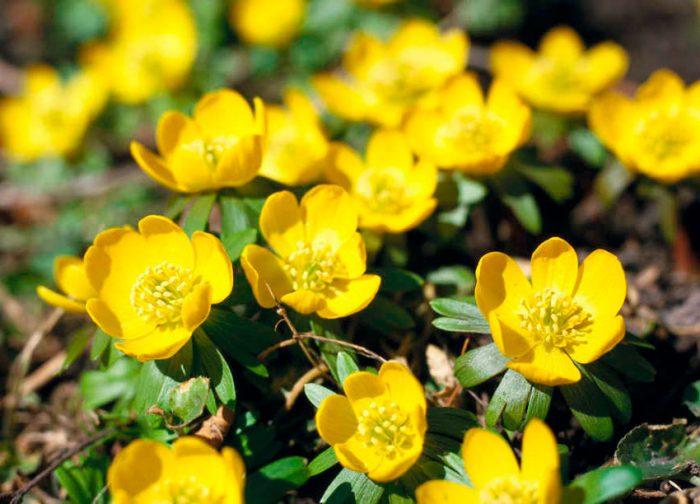
Wintering primrose, or Eranthis
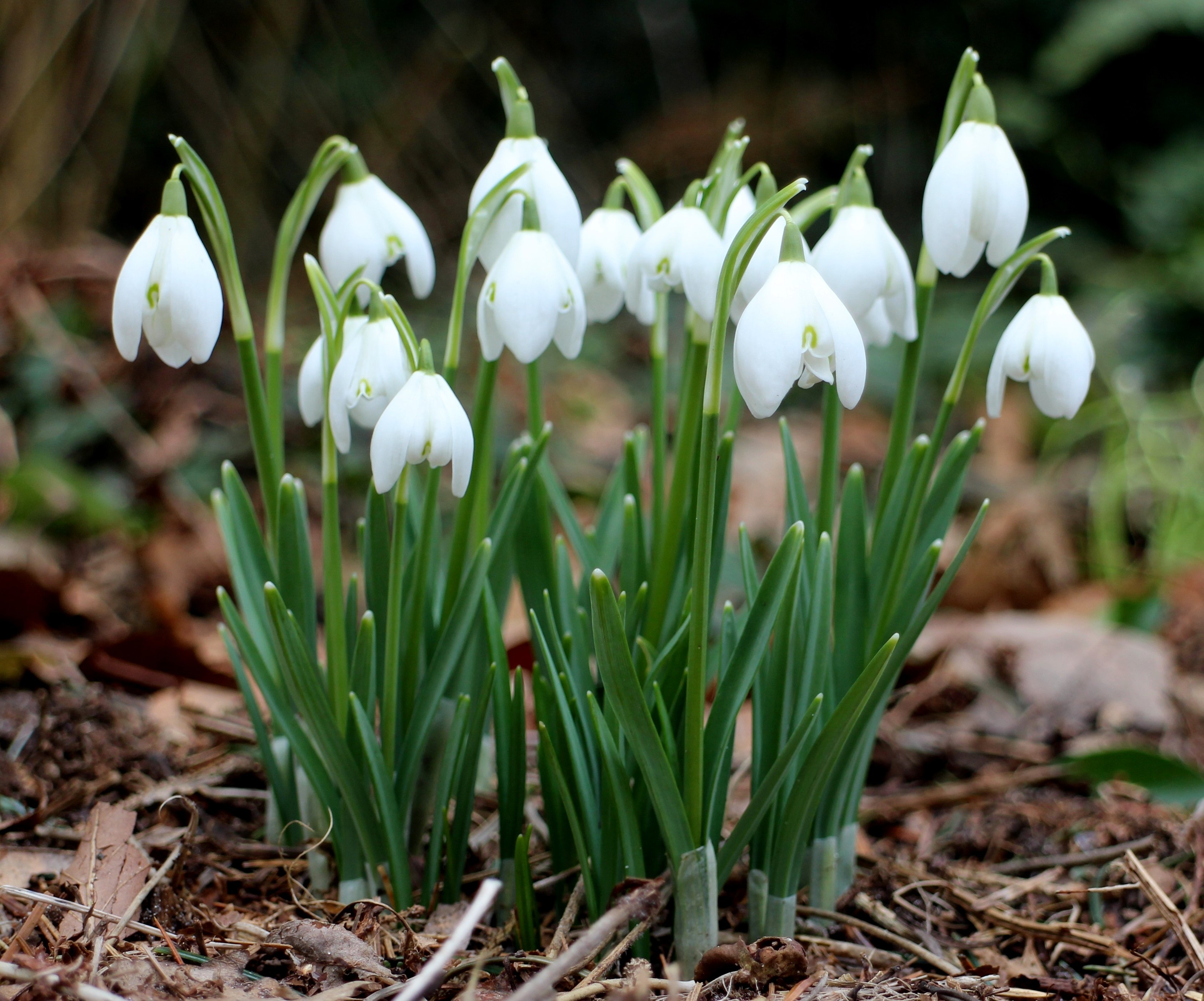
Galanthus, or snowdrop
Another plant that thrives under snow cover. Flowering begins in late winter to early spring. Snowdrops grow up to 0.1 m tall. The drooping inflorescences are snow-white, sometimes with light green stripes, and resemble a bell.
Iridodictyum, or reticulated iris
A low-growing cultivar (13-15 cm) often confused with common irises. Unlike the latter, however, the iris grows from a bulb. The primrose blooms in March in shades of white, azure, yellow, ultramarine, or violet.
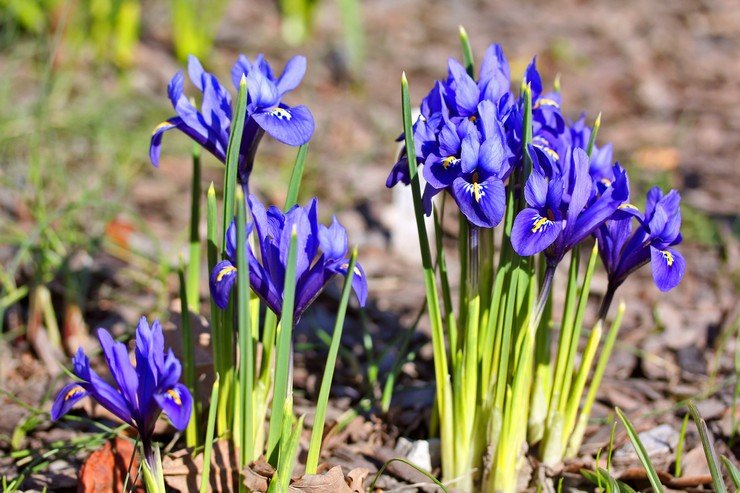
Low-growing Iridodictyum, or reticulated iris
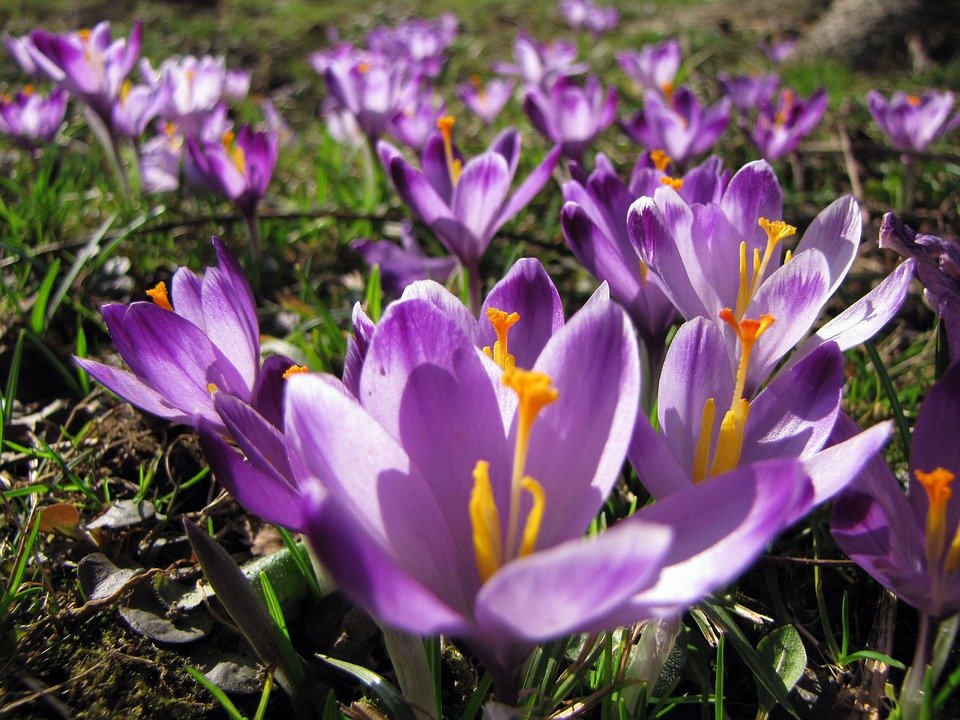
Spring crocus
Many gardeners know it as saffron. Besides its decorative properties, the flower is used in cooking as a spicy spice. The cultivar grows up to 15 cm tall and blooms from March to April with buds in white, yellow, purple, or pink.
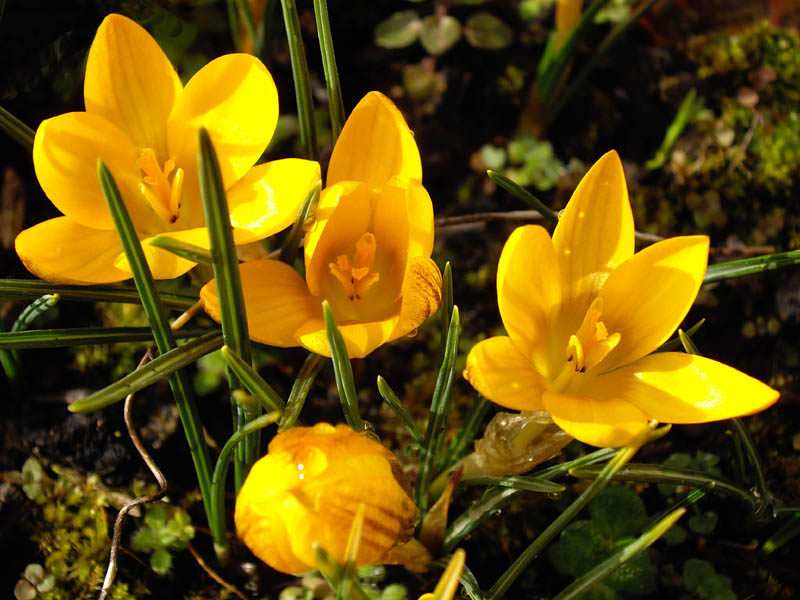
Golden crocus
This plant boasts a wider range of colors and grows slightly shorter than the spring crocus (only 0.1 m). Most commonly, petals are a uniform sunny yellow, but snow-white, purple, and lilac tones are also found.
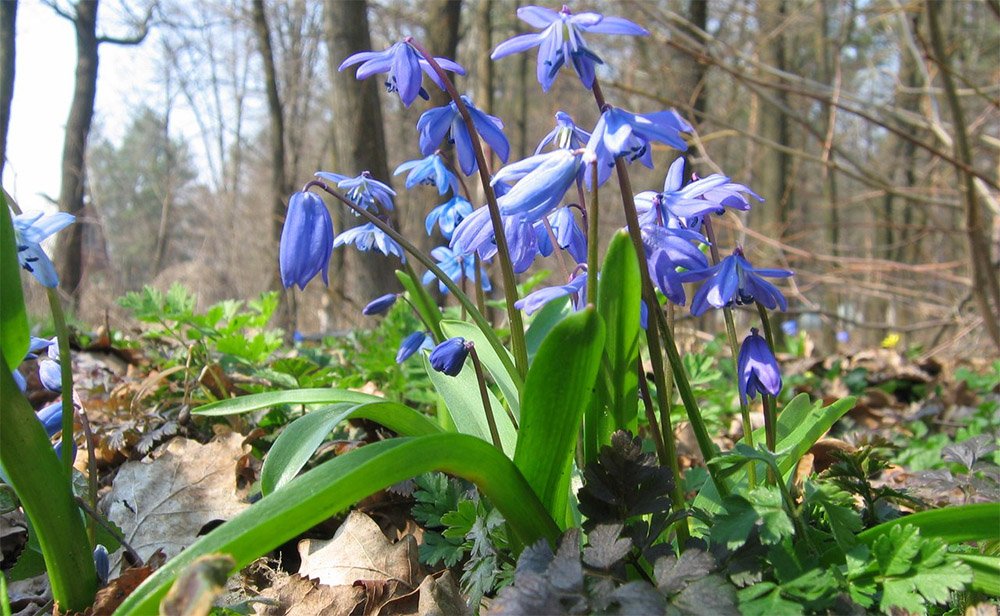
Siberian squill, or scilla
Like the snowdrop, this primrose is the first to bloom, breaking through layers of melting snow. Scilla grows 13-15 cm tall and produces drooping, snow-white or blue-blue flowers.
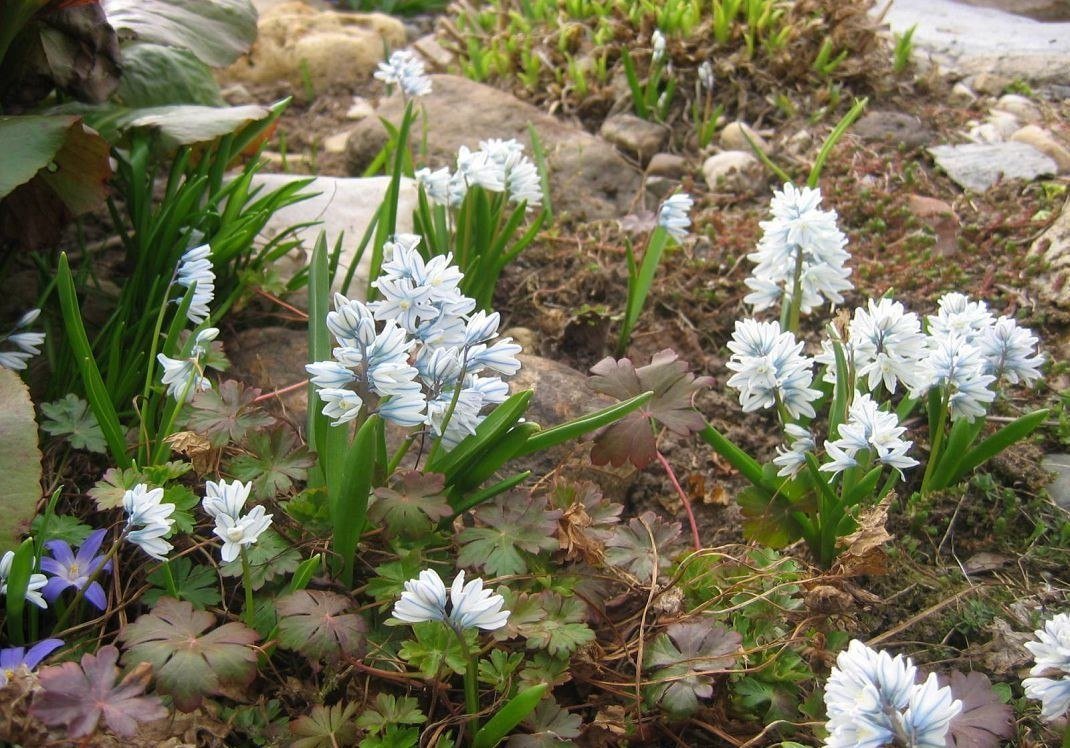
Pushkinia scillafoil
It blooms much later, in early April, and tolerates repeated frosts well. It grows to 0.1 m tall, producing bell-shaped flowers. The flowers are white with soft blue stripes.
-
- Pushkinia scillafoil
-
- Siberian squill, or scilla
-
- Golden crocus
Chionodoxa Lucii
A low-growing cultivar that spreads very easily. Planted in a flowerbed, it will soon produce a densely blooming "carpet" almost 10 cm tall. The color is forget-me-not, with a snow-white center.
Chionodoxa lutia is the only primrose that prefers shaded areas and suffers from direct sunlight.
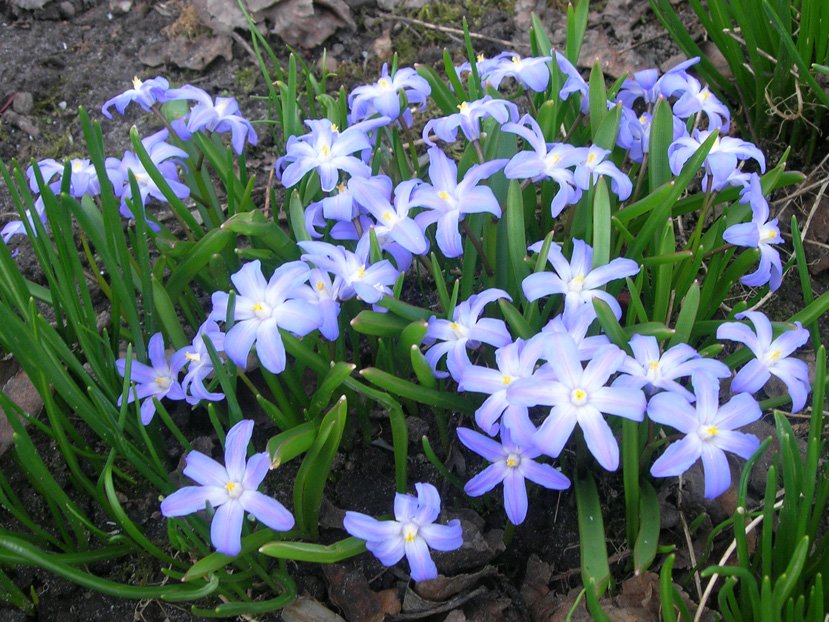
Pushkinia scillafoil resembles a bell
Blooming in mid-spring
These bulbous plants replace early spring cultivars. They bloom in April to early May. All perennials in this group prefer open, sunny locations, but they also thrive in semi-shaded areas.
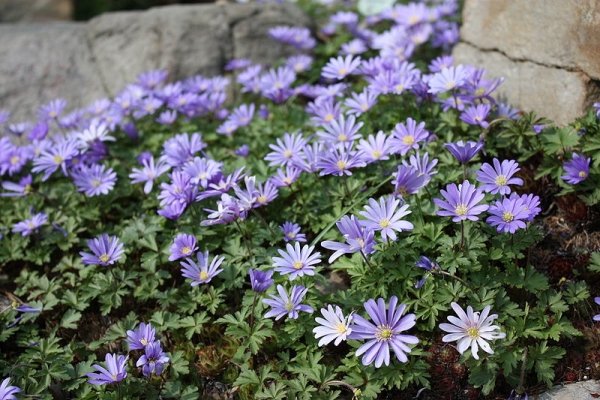
Anemone tender
Anemone, about 15 cm tall, blooms from mid-April to the first ten days of May. It resembles a daisy, but boasts a more interesting palette—it can be pure white, soft blue, lilac-pink, or violet-blue.
Oriental hyacinth
A decorative bulbous flower with the widest range of colors (from snow-white to salmon or burgundy-violet). Hyacinths grow to 20-25 cm tall and bloom with dense, candle-like inflorescences composed of small buds.
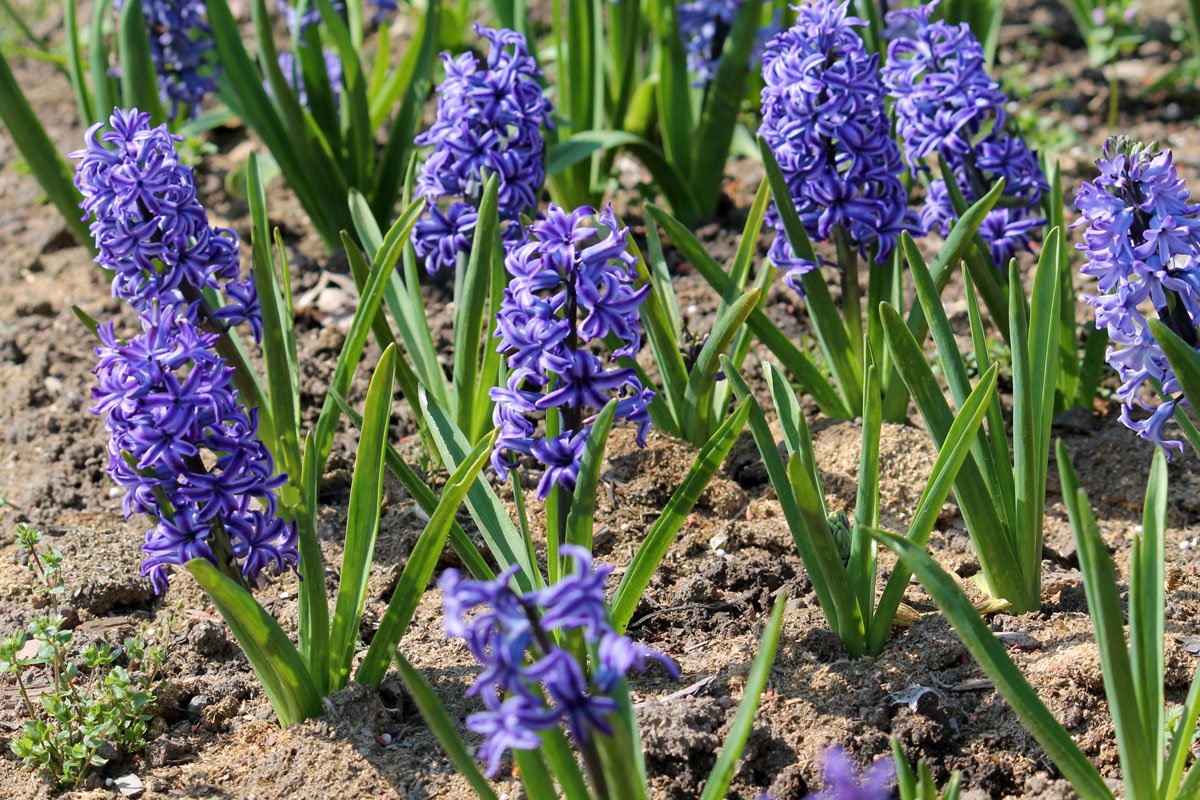
Oriental hyacinth has candle-shaped inflorescences
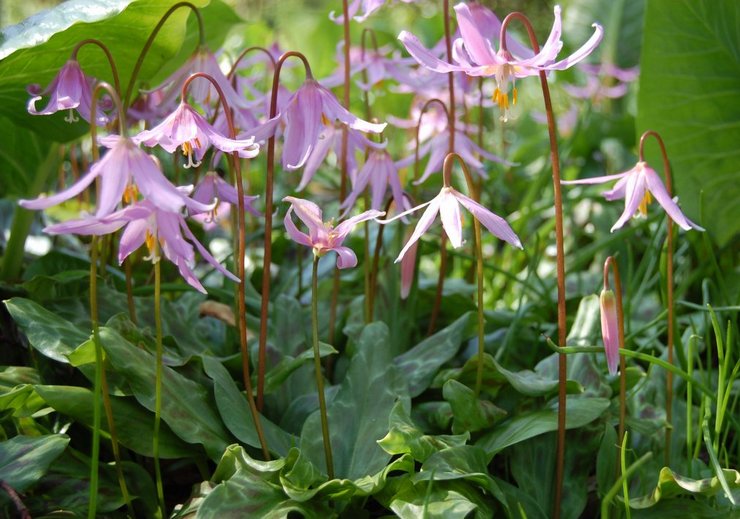
Kandyk, or erythronium
An unusual plant, 13-15 cm tall, with strongly inverted petals and long pistils. Flowering occurs in late April to early May. The petals are colored soft pink, purple, white, or orange-yellow.
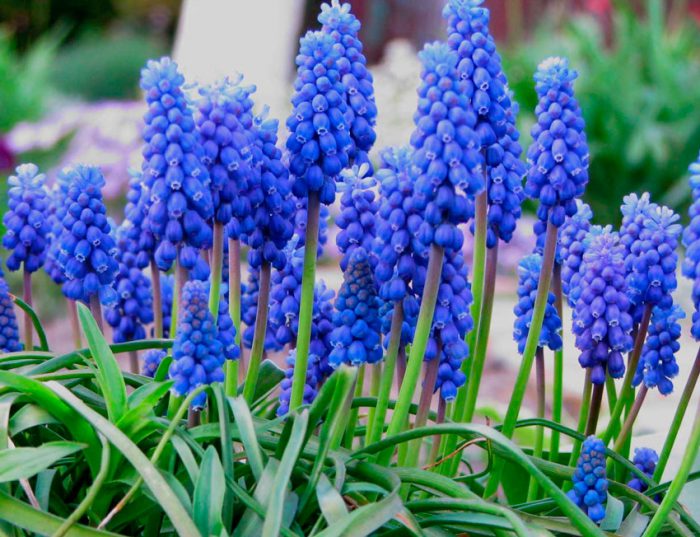
Muscari
Other names for this cultivar include mouse hyacinth or viper's onion. It grows up to 15 cm and produces miniature, pyramidal-shaped flowers. The palette includes all shades of blue and pink. Snow-white muscari are also found.
Narcissus
Thanks to selective breeding, we now know several varieties: small- and large-crowned, tubular, dwarf, and double daffodils. Cultivars range in height from 15 to 45 cm, depending on the variety. The color range is also diverse.
-
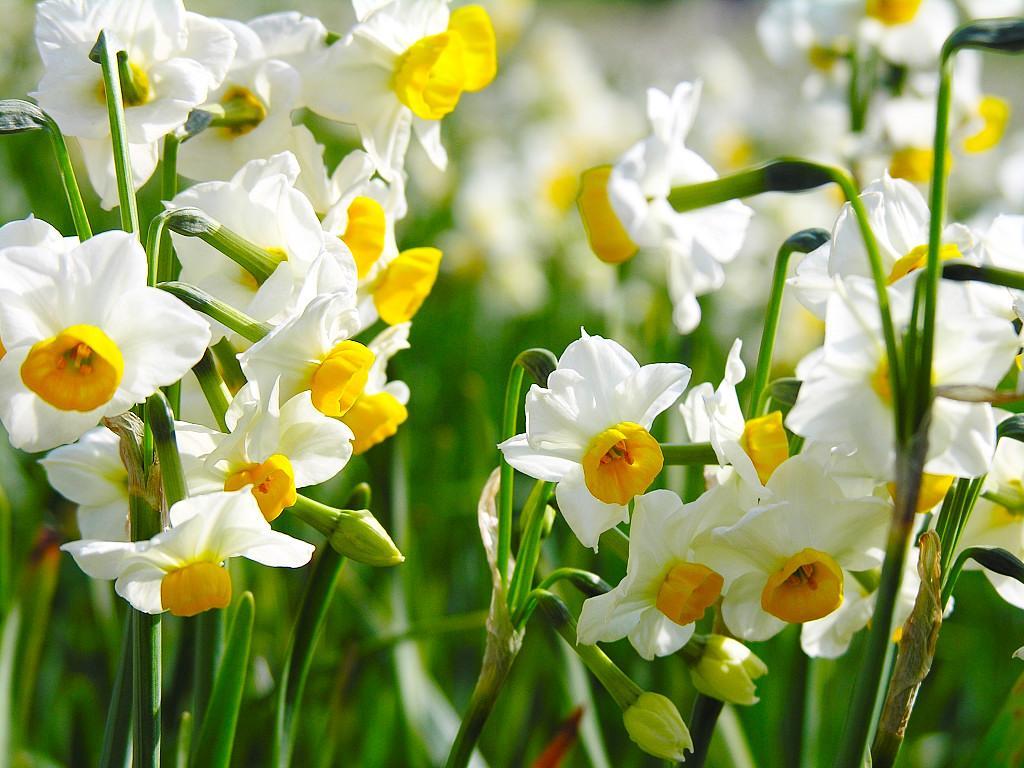
- Narcissus
-
- Muscari
-
- Kandyk, or erythronium
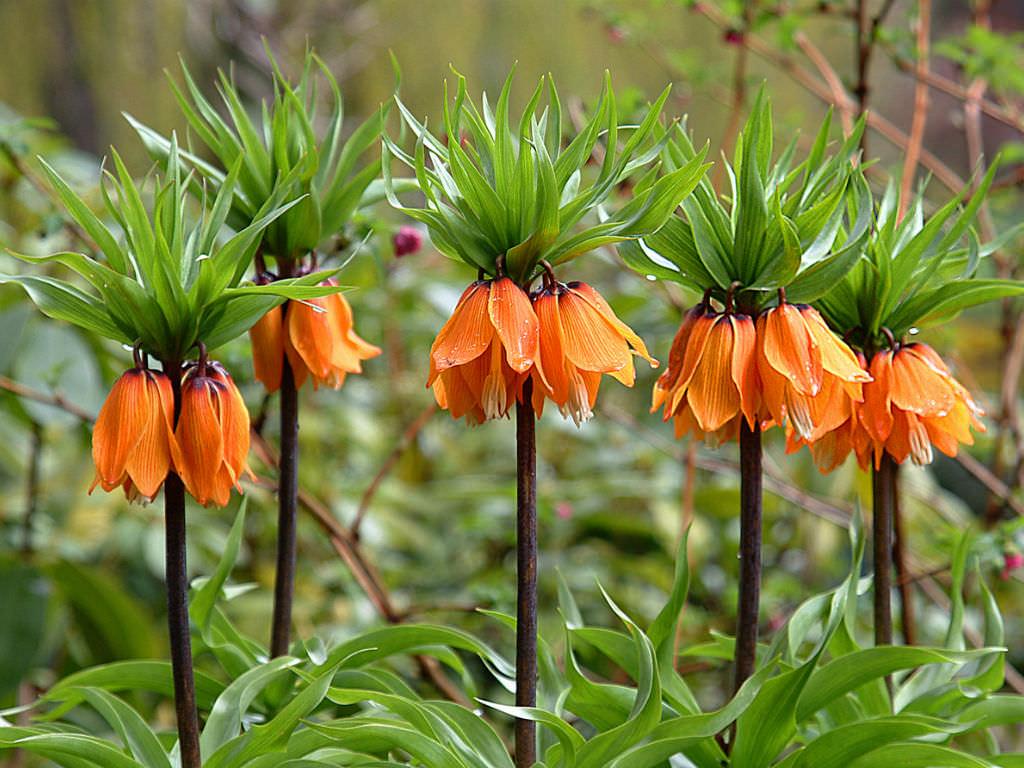
Imperial Fritillary, or Fritillaria
This unique plant blooms in the second half of April and lasts 10-14 days. The erect stem sometimes reaches one and a half meters in length. The inflorescences are large, drooping, and white, lemon-yellow, or red-orange.
The imperial hazel grouse has a second name – fritillaria
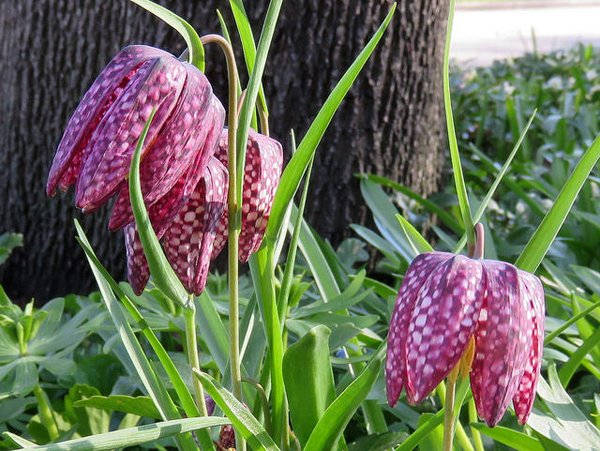
Fritillaria chequeredis
A low-growing relative of the fritillaria, it grows only 0.2 m tall. Its drooping buds resemble a bell. The petals are lilac-violet, with large, snow-white specks. It blooms towards the end of April or early May.
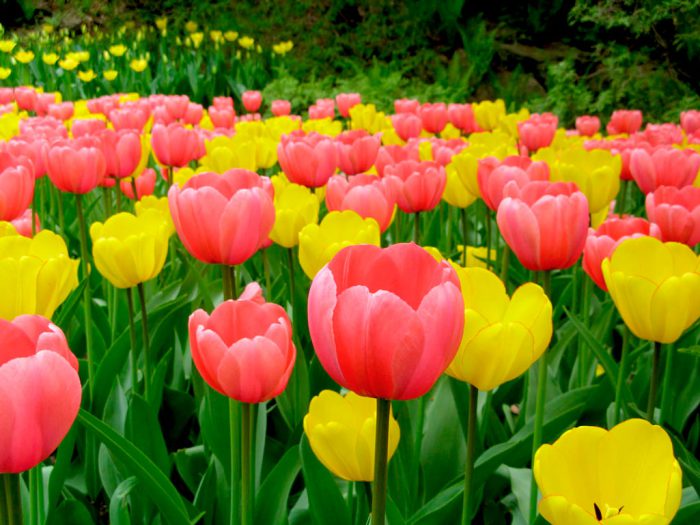
Tulip
The most famous bulbous plant, characterized by a wide variety of cultivars and hybrids. Blooming in mid-spring, it lasts 14-17 days. Cultivars range in height from 10 cm to half a meter. The color and structure of the buds also vary depending on the species.
Blooming in late spring
When summer cultivars have yet to bloom and the season of primroses has passed, flowerbeds are adorned with bulbous plants that bloom from mid-May to early June. All of them are relatively low-maintenance and grow well even without additional care.
Allium
Ornamental onions, as they are also called, grow over half a meter tall and bloom in late May. The inflorescences, crowning long, erect stems, are large "balls" of white, lavender, yellow, or burgundy.
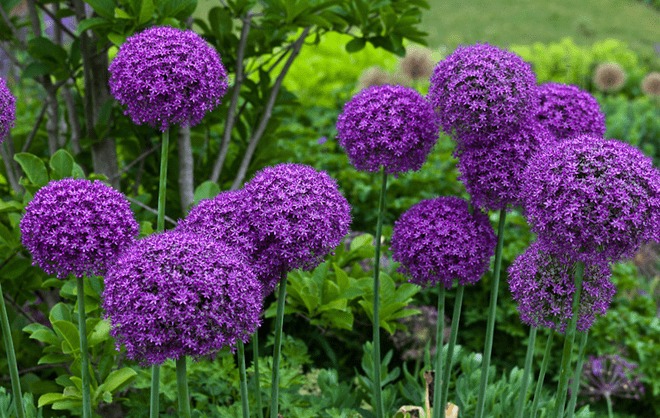
Allium is called ornamental onion.
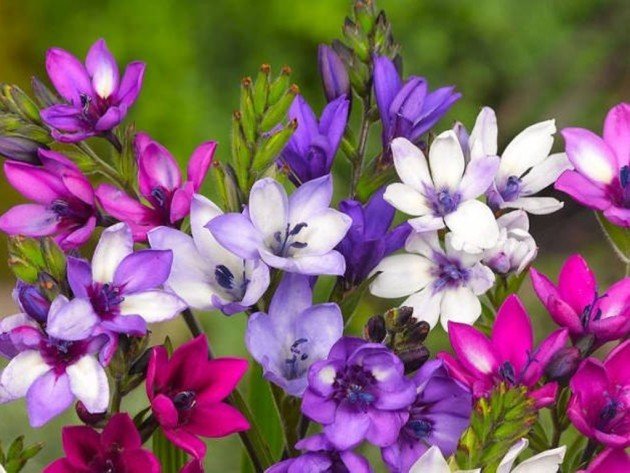
Babiana
A low-growing relative of irises, growing no taller than 25 cm and blooming in the second half of spring. The lanceolate leaves and short stems are covered with fine hairs. The buds are small, blue-violet or lilac-pink.
Summer Leucojum
Although this plant's name translates as "white violet," it closely resembles lily-of-the-valley. It grows to a height of 0.3 to 0.6 meters. Its petals are bicolor—snow-white with light green tips.
Camassia
A rare perennial in our country, it blooms from late May to early June. This cultivar grows up to 0.3 m tall. The buds are uniformly colored – ultramarine or lavender.
Camassia is a very unpretentious plant, capable of growing normally even in clayey, poor soils.
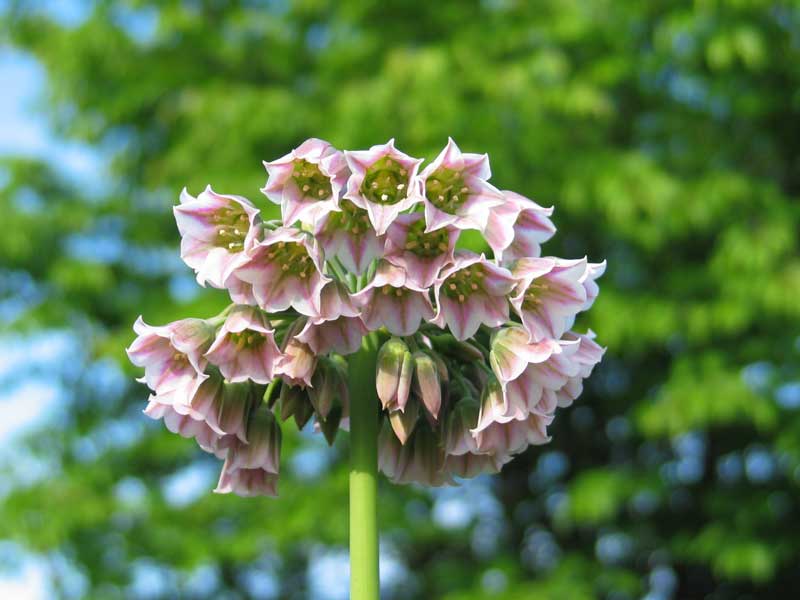
Nectaroscordum bulgaricus
The flower is a type of ornamental garlic. The plant can reach over a meter in height. Flowering occurs in late spring and early summer. The buds are greenish-purple, with white streaks.
-
- Nectaroscordum bulgaricus
-
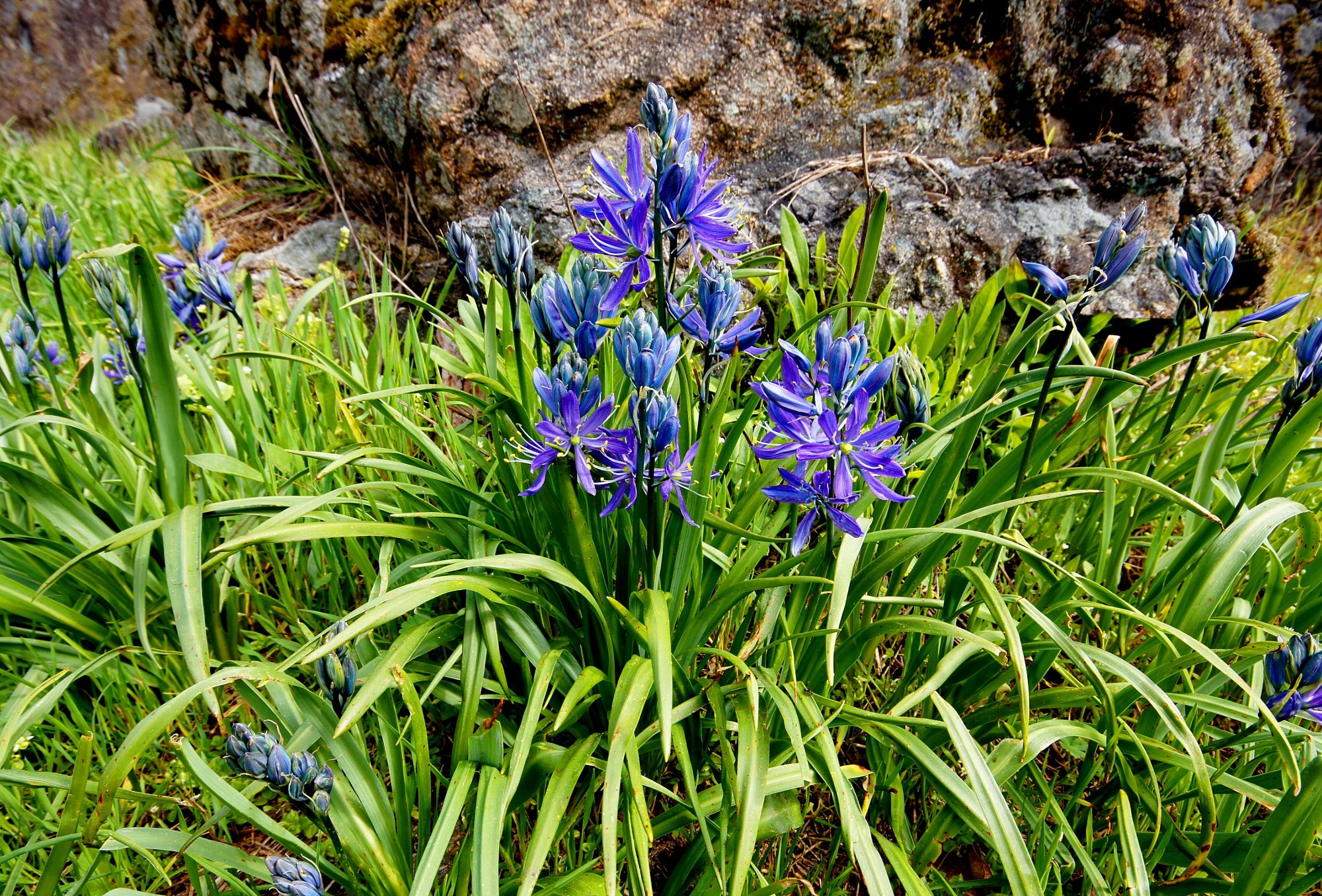
- Camassia
-
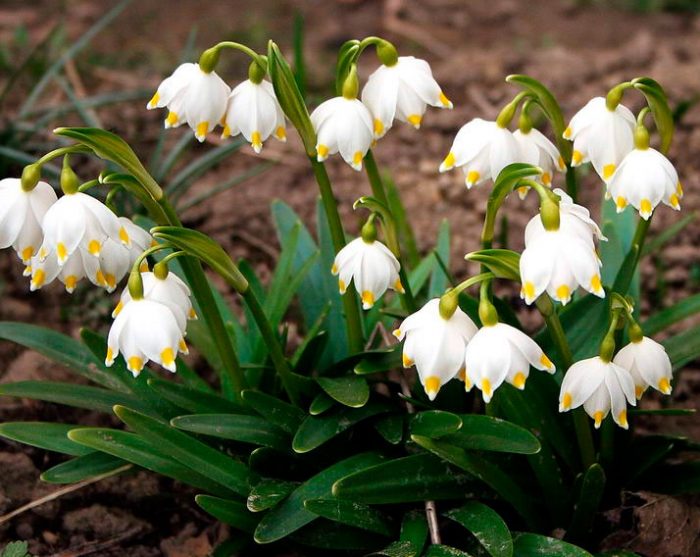
- Summer Leucojum
Summer flowering bulbs
The flowers are distinguished by their large size and rich color. This group's growing season occurs during the summer months. Thanks to their wide variety, they can be combined with other garden plants to create unique arrangements.
Daylilies
These easy-to-grow flowers form compact clumps up to a meter tall. Their colors are varied and very vibrant. Direct sunlight often fades the colors, so it's best to plant daylilies in shaded areas.
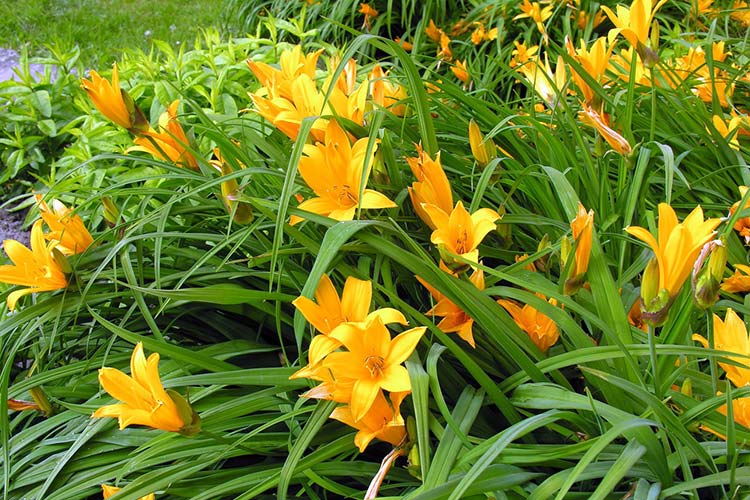
Daylilies form compact bushes
Garden lily
One of the classes of bulbous plants. Today, botany lists over 10,000 varieties and about a hundred species. They are distinguished by their unusual shapes, bright and variegated colors, and size. During flowering, they emit a rich lily-like scent.
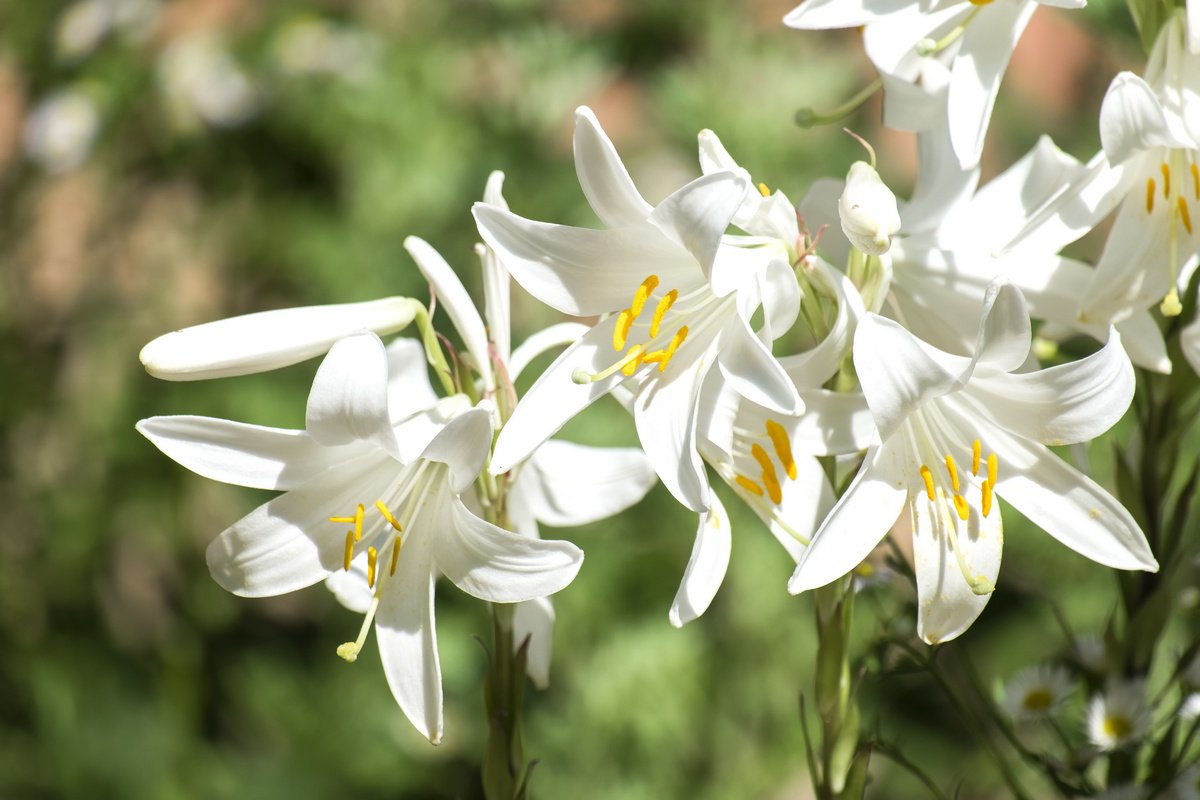
Gladiolus
It's no wonder this flower is called the aristocrat of garden plants. It is characterized by strong, upright stems about a meter tall, lush inflorescences covering almost half the length of the stems, and a wide range of colors. Gladiolus blooms in late summer.
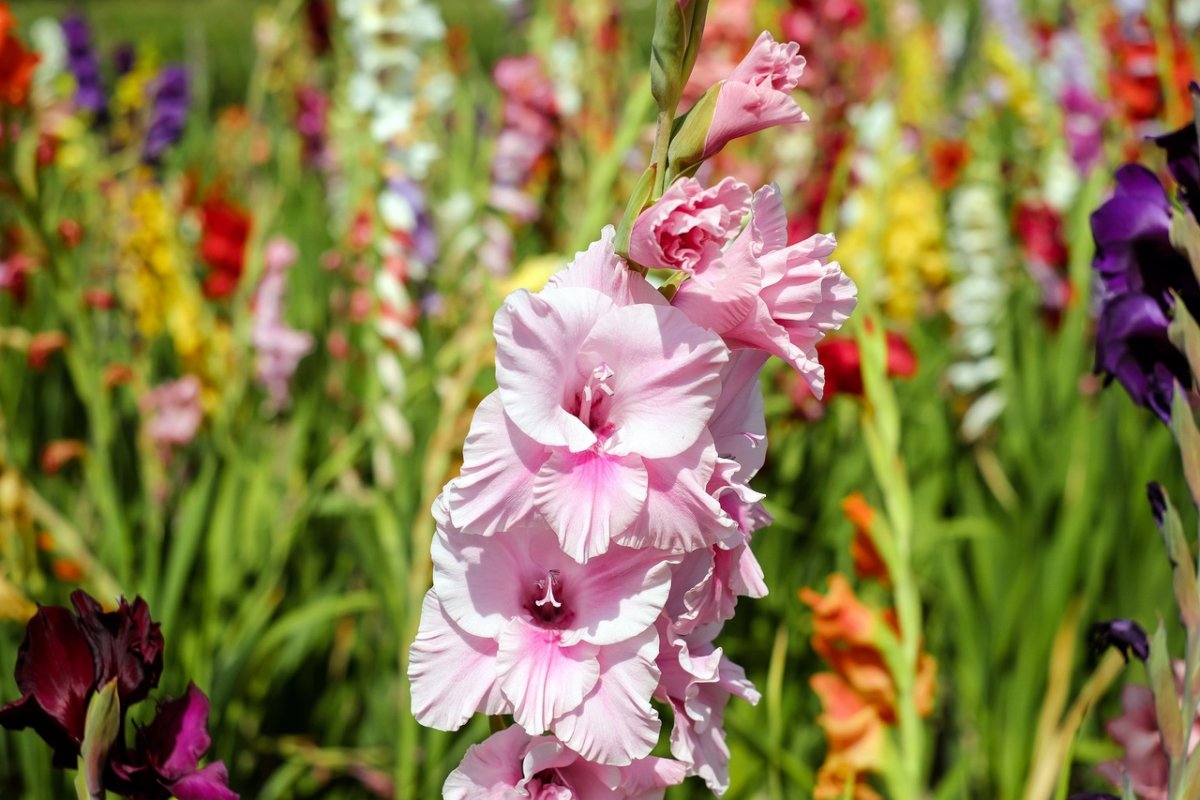
Glamini
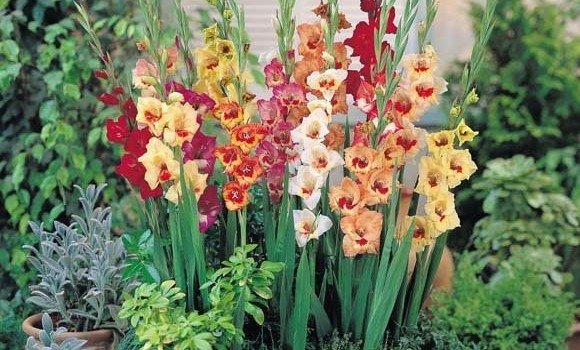
Thanks to breeders, a miniature variety of gladioli, glamini, has recently been developed. They grow no more than 0.5 m tall, making them more wind-resistant. They bloom earlier, in late July or early August.
Crocosmia
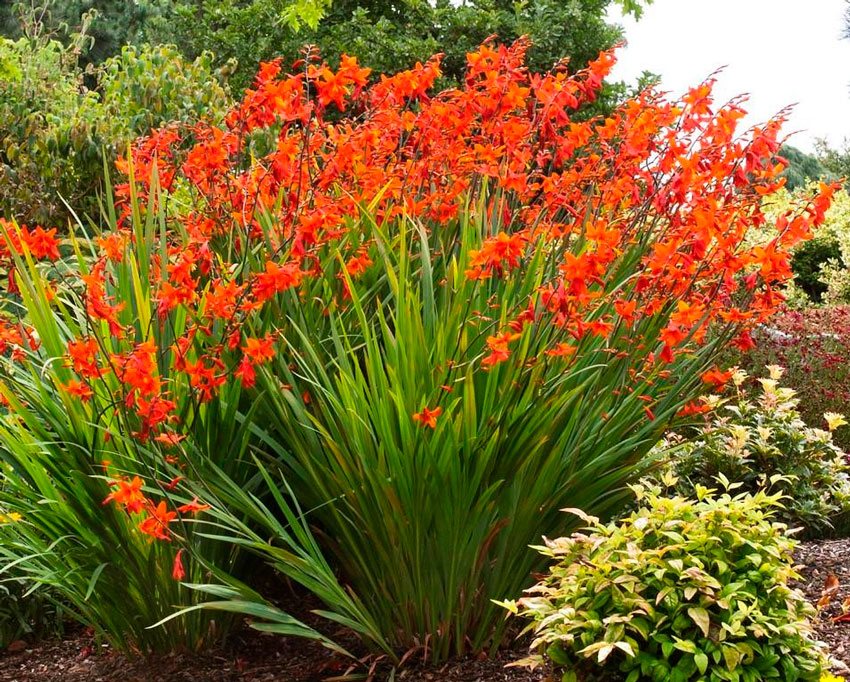
This flower is also known as the Japanese gladiolus or montbretia. Crocosmia grows to 50-70 cm. The leaves are erect, lanceolate, with pointed tips. This perennial blooms with graceful red-orange inflorescences.
Tigridia
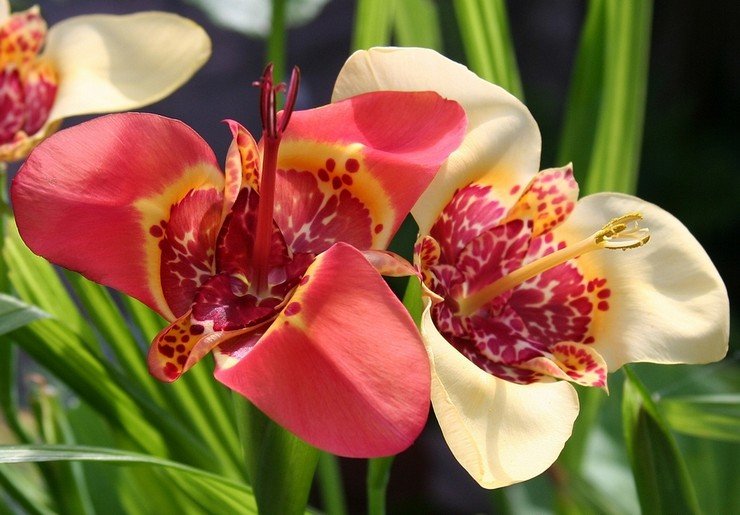
The appearance of tigridia inflorescences resembles orchids. This cultivar is characterized by a diverse palette of colors and unique shapes. Height ranges from 30 to 70 cm. Flowering occurs in the second half of summer.
-
- Tigridia
-
- Crocosmia
-
- Glamini
Freesia
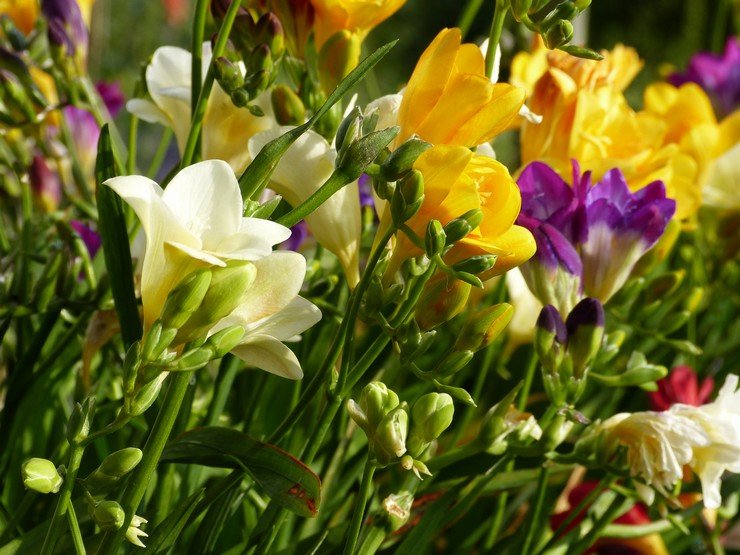
Another class of perennials with numerous varieties. It also features a variety of colors and stem heights (from 30 cm to 1 m). Freesia blooms from mid-July to the second ten days of August.
Autumn flowering bulbs
These plants replace summer perennials and bloom from early September until the first frost. These flowers are especially beautiful when the garden is empty and lacking vibrant colors. These are typically dwarf, compact cultivars no larger than 0.3 m.
Colchicum
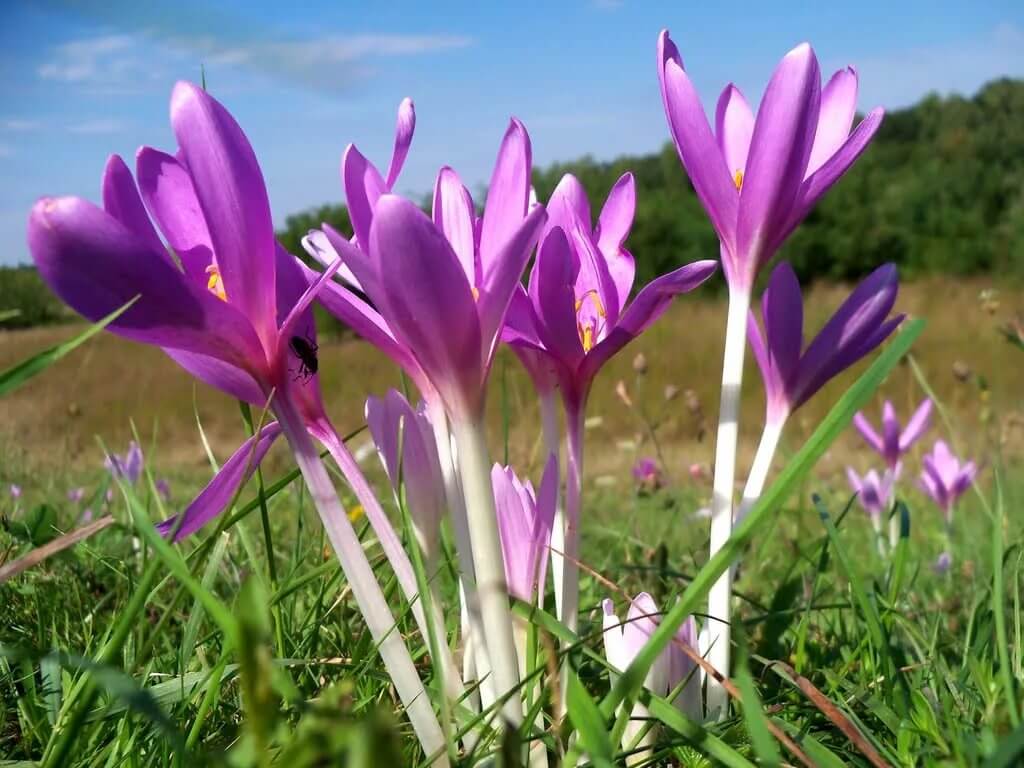
The low-growing flowers (15-20 cm) are named so for a reason. They appear after all other garden crops have finished blooming. Colchicum blooms for almost a month, from September to October. The color is uniform, soft lilac, sometimes with a violet tint.
Low-growing flower colchicum, or autumn crocus
Sternbergia
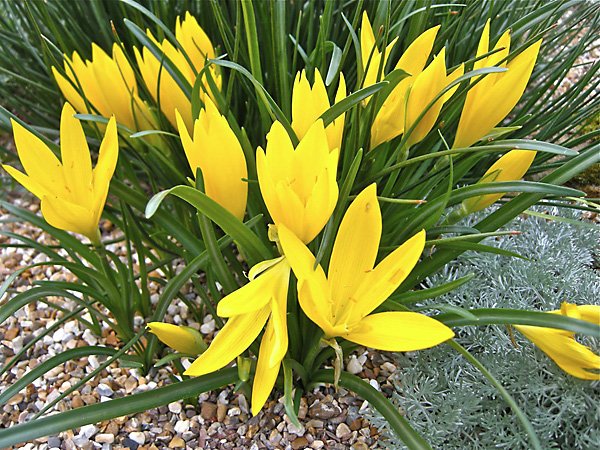
These perennials resemble crocuses in appearance, but bloom not in spring, but with the arrival of autumn. These small bushes range in height from 10 to 30 cm. The inflorescences are a vibrant, pure lemon-yellow hue.
Using bulbs in landscape design
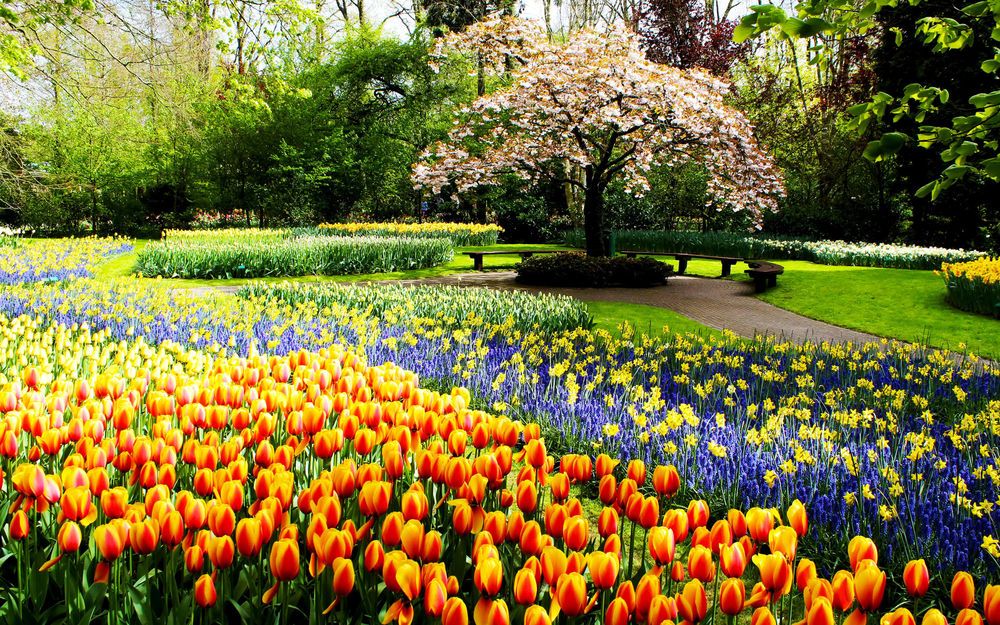
Unpretentious yet highly decorative, perennials look equally beautiful in gardens and vegetable patches. They are used to decorate lawns and flowerbeds, line borders, and are planted along fences, arbors, and houses, as well as to create various floral arrangements. To ensure continuous flowering, designers recommend planting different types of plants that alternate during the growing season. A harmonious arrangement can be achieved by following a few rules:
- Avoid creating colorful or monotonous flowerbeds. It's better to choose three contrasting shades, with one dominant color.
- Try to plant low plants in the foreground so that they highlight the beauty of tall flowers.
- When creating borders, create small groupings that will look as natural as possible.
- Avoid using these flowers on parterre lawns and don't be afraid to experiment with design.
- Remove faded flowers promptly. This will allow new flower stalks to grow and significantly improve the overall appearance of the flowerbed.
-
- Group planting
-
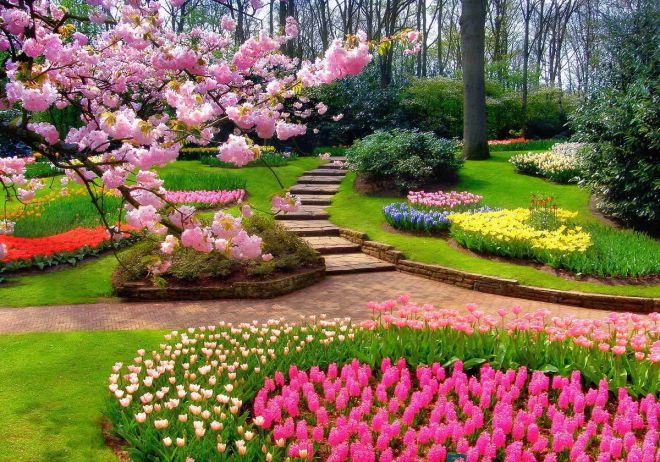
- Garden decoration
-
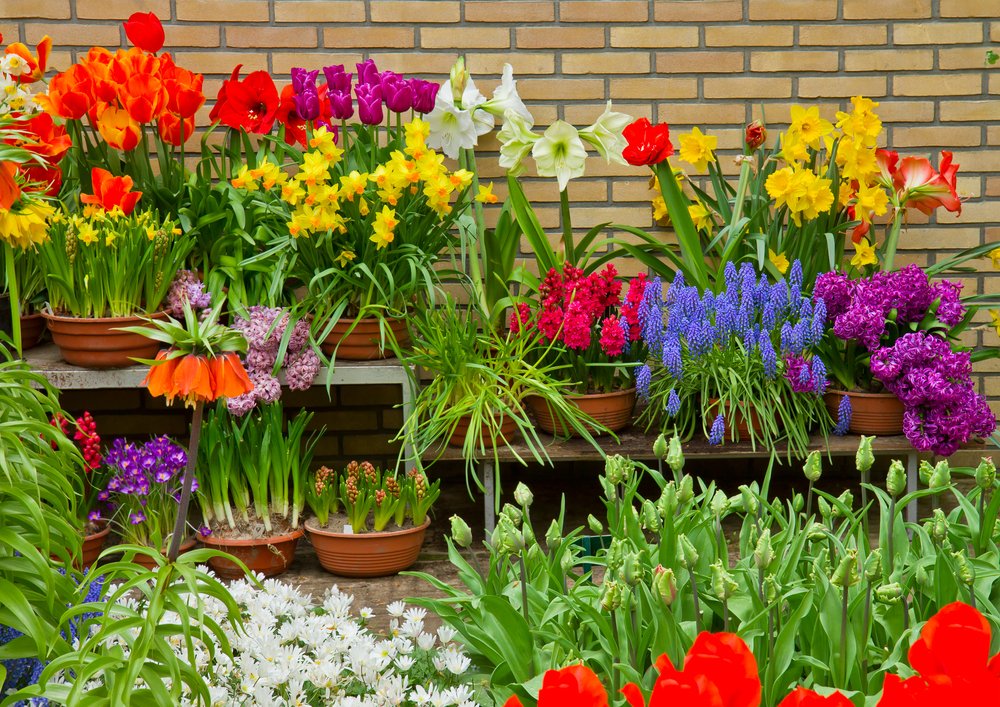
- Growing in pots
-
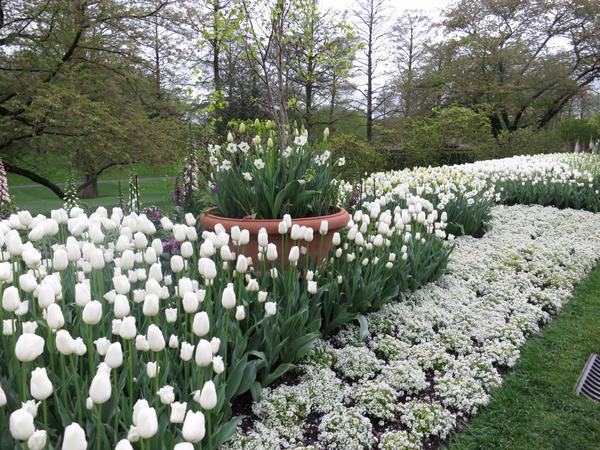
- Flowerbed in white
-
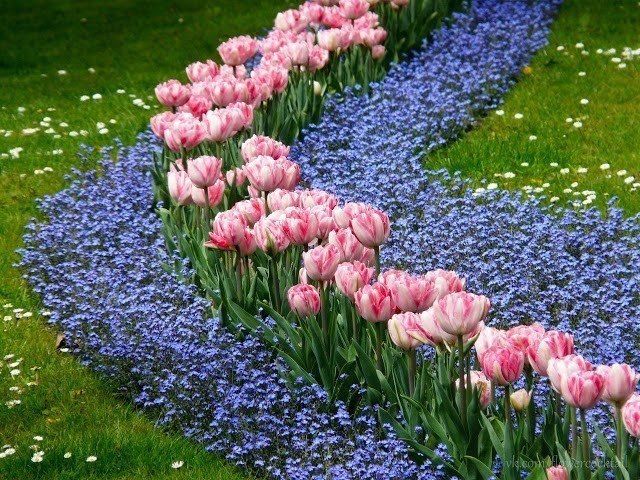
- Composite planting
-
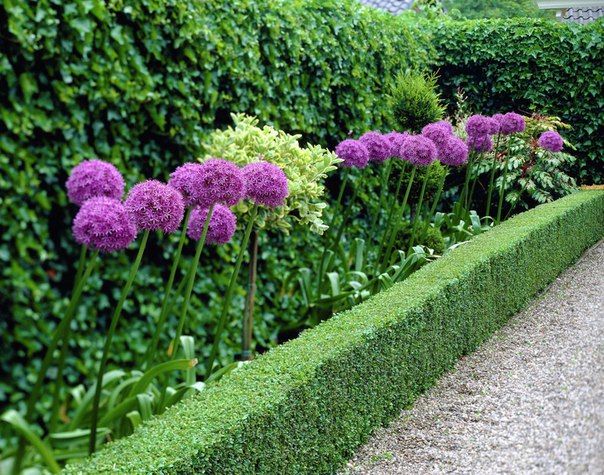
- Flower border
It's no wonder that easy-to-grow bulbous cultivars are so popular among landscape designers. The diversity of species and varying flowering times make these plants a true favorite among Russian gardeners, as they help maintain a beautiful garden from early spring to late fall.