
Luxurious shrub roses in garden design: interesting species and varieties with photos
Content
Botanical characteristics of shrub roses
The rose hip is considered the ancestor of shrub roses, and they achieved their current cultivated appearance through numerous interspecific crosses. They are distinguished from other roses by their life form—they are shrubs. Otherwise, each variety has its own botanical characteristics.
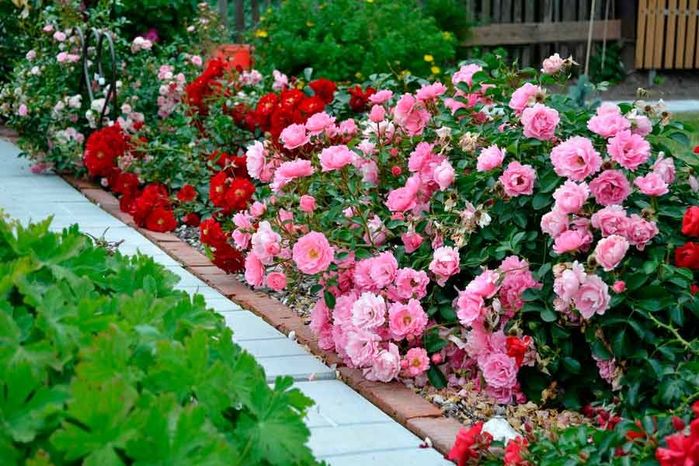
Characteristics that can be distinguished in bush roses:
- Massive, long-lasting flowering from early summer until the first frosts;
- intensive growth of shoots - in 1 season they can grow up to 2 m, in climbing roses even more;
- unpretentiousness and relative resistance to cold (most roses can easily tolerate temperatures down to -15 °C);
- the height of plants varies from 30 cm to 3 meters or more;
- the bush can be compact or spreading;
- buds are formed singly or in inflorescences;
- have completely different shapes, colors, sizes and structures;
- The aroma can be light, barely perceptible, or, on the contrary, rich.
Video: "Growing Shrub Roses"
This video describes the rules for planting and the intricacies of caring for this garden flower.
Popular types and varieties of shrub roses in gardening
Shrub species are striking in their diversity. Today, over 200,000 varieties are known, astonishing with their beauty and splendor.
Bourbon
This legendary shrub rose variety has retained its special status to this day. It is believed that it served as the basis for the development of modern varieties. The name of this rose directly refers to its place of origin – Bourbon Island, lost in the Indian Ocean. Since it was bred long ago, it lacks great resistance to disease and cold, but this shortcoming is compensated for by its long blooming period and the beauty of its buds.
Rose Edouard is a classic of the Bourbon collection. It is a Chinese-Damask hybrid, bred in 1818. It is capricious but very beautiful, with large pinkish-white buds gathered in inflorescences.
Boule de Neige (Boulle de Neige) is considered one of the best in the collection. Its name translates as "snowball." It is a complex hybrid, bred in France in 1867. It is distinguished by its unusual coloring: in the bud stage, the rose is reddish, and when it opens, it becomes snow-white.
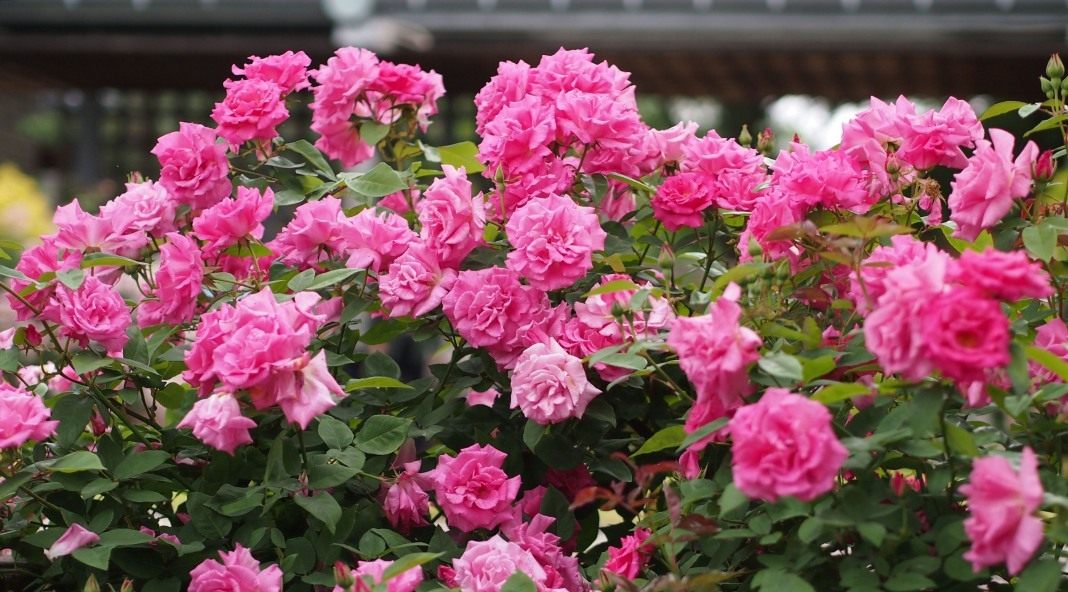
A bush of the Bourbon rose variety Zepherine Drouhin
French
This group consists of varieties that, according to some sources, were cultivated as early as the Middle Ages. French roses are characterized by compact bushes and numerous thorns on upward-sloping shoots. They bloom for a short time, about a month, but are hardy and winter-hardy. The color range is primarily represented by deep purple and carmine hues.
A classic example of French roses is the Galica variety. This wild, cultivated rose has single or semi-double petals of a light carmine color. The bush grows tall, up to 1.5 m, and blooms from June to mid-July. By autumn, the flowers turn into red fruits, similar to those of a rose.
Cardinal de Richelieu is the most vibrant rose in the French collection, renowned since 1747. The color of its petals is mesmerizing. They are dark purple inside and pinkish underneath. The buds are large and densely double. The bush is compact, up to 1 m, and virtually thornless.
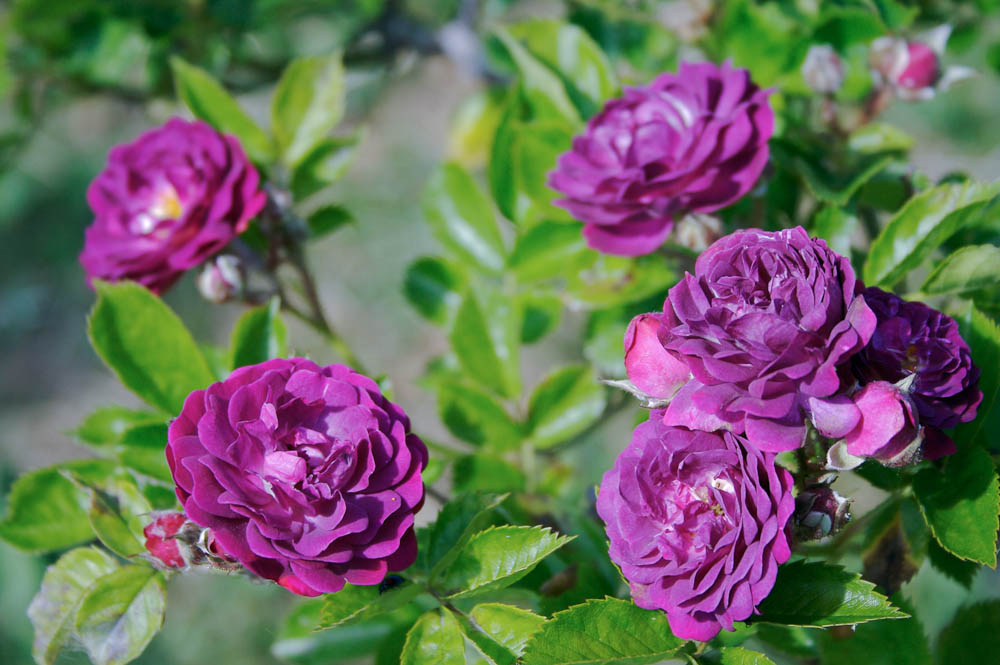
Cardinal de Richelieu is a prominent representative of the French group
English
Among gardeners, they are known as "Austin roses" in honor of the renowned breeder David Austin, who restored the English rose to its former glory. Today, his collection comprises over 200 varieties. Among them are flowers with single petals and densely double ones, but all are remontant (bloom continuously), making them popular among landscape designers.
Graham Thomas is a beautiful, vibrant rose bred in 1984. The bush is lush and spreading, with large (up to 10 cm) buds of a rich yellow color. Blooming is profuse, lasting 2-3 months.
Abraham Darby is one of the most beautiful varieties in the renowned collection. The buds are lush, up to 15 cm in diameter, pinkish in hue, and have a rich center. The bush is compact, reaching up to 1 m.
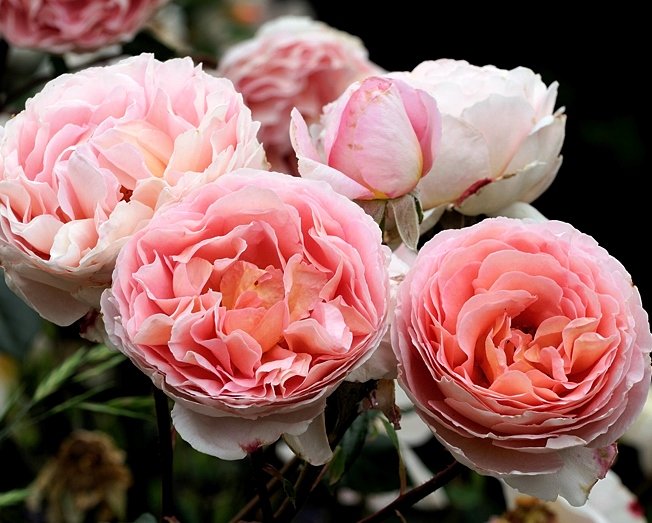
Abraham Darby is a variety of English rose.
German
The history of German roses began with the famous German company Kordes, founded in 1865. Their distinctive features include good frost resistance, resistance to fungi, and long flowering without fading.
The most striking representative of the Kordes nursery is the Quadra rose, bred in 1981. This is a compact bush with large (up to 8 cm), densely double buds of a bright red color.
Ilse Krohn Superior is a delightful tea-type variety. The bush is tall and spreading, reaching up to 3 meters. The buds are white with creamy centers, gathered in clusters of 5-6.
An interesting fact: It's in Germany, near the cathedral in Hildesheim, that the oldest rose in the world, approximately 1,000 years old, grows. It was damaged during the war, but the surviving roots sprouted, and in 1945 the bush bloomed again with modest white flowers.
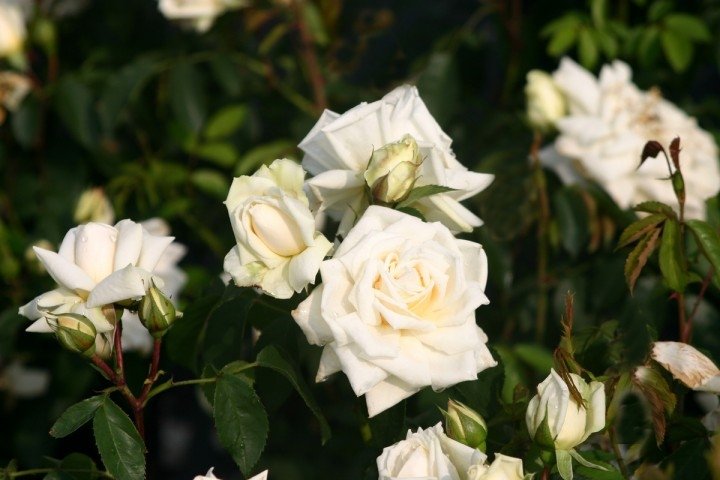
The Ilse Krohn Superior variety is a German variety.
Canadian
Canadian-bred roses are characterized by excellent winter hardiness (withstanding temperatures down to -40°C) and a long flowering period (from early summer until frost). The idea for their development belongs to Canadian breeder William Sanders, and later, Isabella Preston continued the breeding process, developing a whole series called Explorer.
The most famous variety in this collection is Cuthbert Grant, bred in 1967. It is a vigorous shrub, 1.5 m tall, with upright stems. The buds are purple-red, clustered in 3-4 clusters, and bloom from May to July.
Champlain is a winter-hardy hybrid from the same series, bred in 1982. This rose resembles a floribunda in appearance. The semi-double, bright red blooms are borne in clusters of 5-7. Blooming lasts from early summer until the first frost.
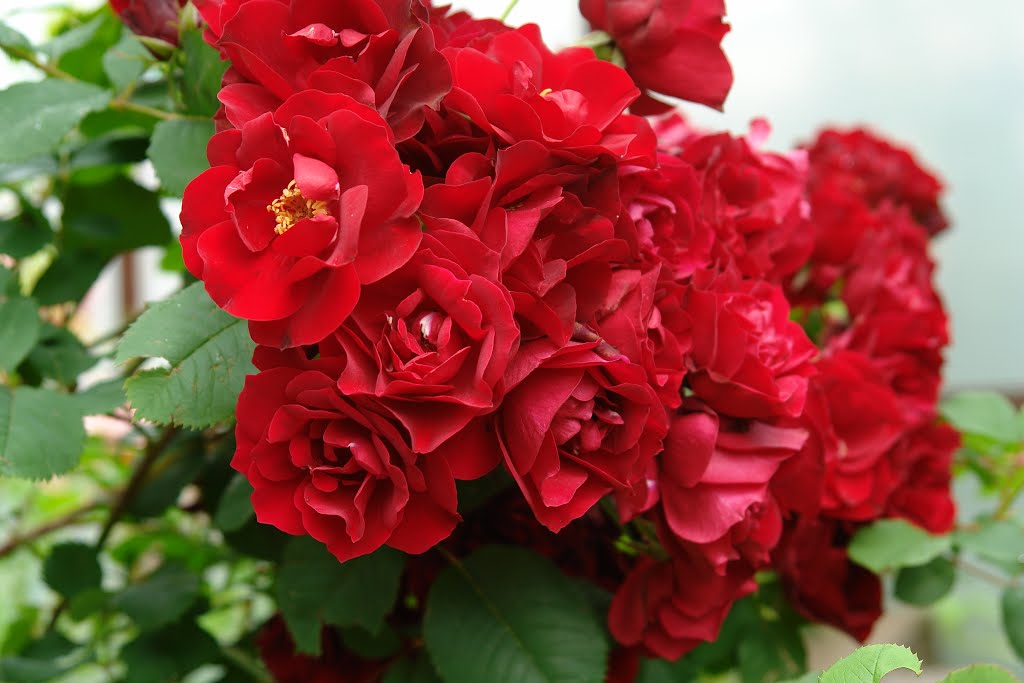
Cuthbert Grant is a well-known variety of the Canadian subspecies
Climbing
Without them, there would be no luxurious arbors, hedges, or wedding arches. They are used in vertical gardening because of their flexible and very long stems, up to 10 meters. Climbing roses can be used to decorate any extension, wall, or even create a festive arrangement.
Based on shoot type, they are classified as ramblers and climbers. The former twine well, with flexible, long shoots, while the latter have stiff, straight branches, reaching 4 meters in length.
Representatives of climbing roses:
Brise Parfum (Breeze Perfume). A very delicate pinkish-white climbing rose, belonging to the rambler family. It grows up to 5 m in a season, with small buds gathered in inflorescences of 15-20. The stems are flexible, easily twining around arches and arbors.
Excelsa is an incredibly vibrant climbing rose with deep purple flowers, bred back in 1908. The vines are flexible and grow up to 6 m. The buds are double, gathered in voluminous clusters of 40-50. Blooming lasts about 35 days.
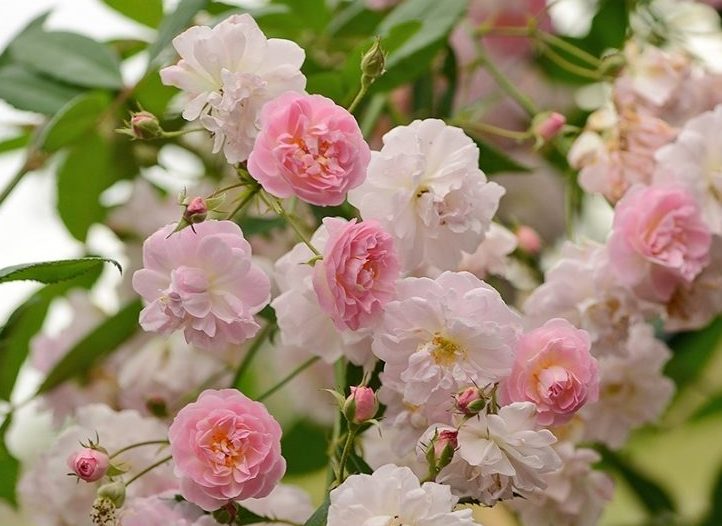
Climbing rose variety Brise Parfum
Groundcover
A very promising and sought-after group in landscape design. These roses are used to decorate borders, fill flowerbeds, and mixed borders, and they quickly spread on their own, forming a living carpet.
Fairy is an exquisite groundcover variety with pinkish-white petals. The buds are double, gathered in large clusters of 30-40. The bush grows low, up to 60 cm, and blooms from July until late autumn.
Amber Sun is a low-growing shrub (50-60 cm) with slender, drooping stems. The small, semi-double buds change color as they bloom, from rich copper to beige, adding a distinctive decorative touch.
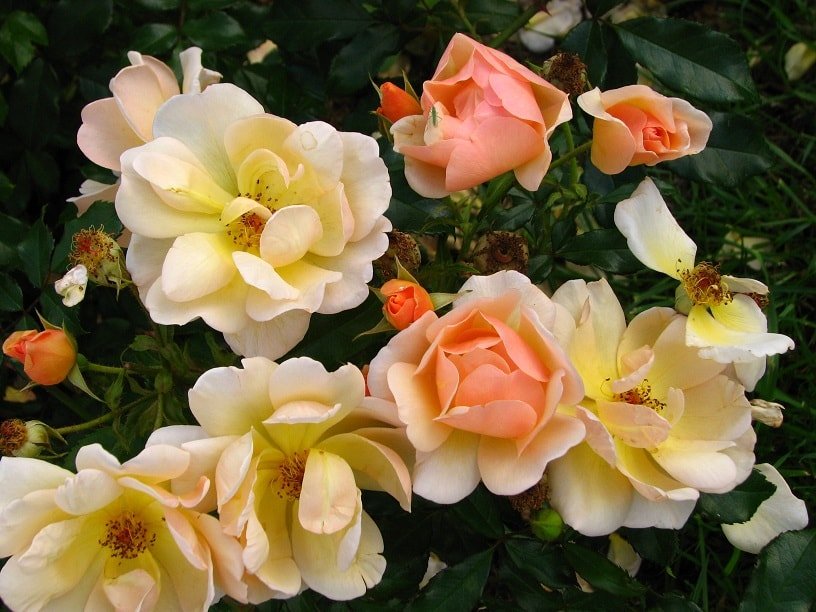
The Brise Parfum variety belongs to the groundcover species.
Shrubs
Shrub roses are varieties of shrub roses of the so-called new generation, bred after 1965 and not classified into other groups. They are more compact than typical shrub varieties, have flexible stems, and a wide variety of bud colors, even striped ones.
Belvedere is a German cultivar bred in 1996. The buds are large (up to 12 cm), densely double, and clustered. The petals are a rich, orange-peach color that does not fade. The bush is vigorous, reaching over 1 m in height.
William Christie is another profusely blooming shrub, bred by the French in 1994. The buds are very large, densely double, the petals are soft pink, and exude a fruity aroma.
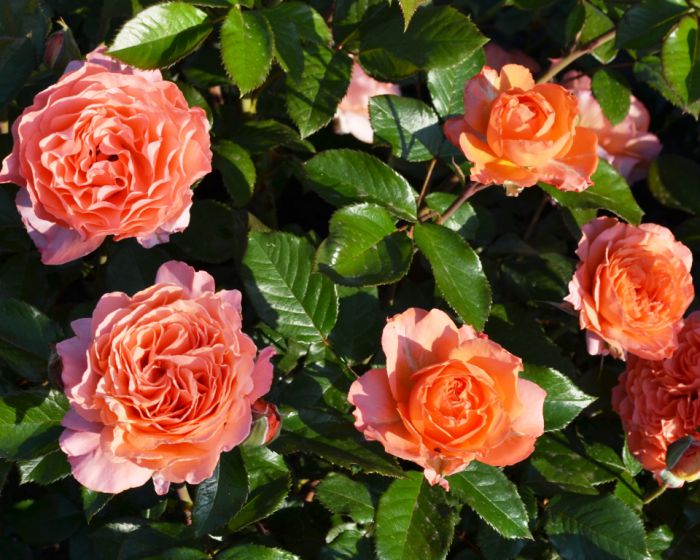
Shrub Belvedere is a variety from the German collection.
Shrub roses in landscape design
Rose bushes are magnificent on their own, so they're best placed in flowerbeds in the center, allowing other plants to provide a backdrop. A rose bush looks stunning as a solitary plant near the front of a house, in the center of a property, or against a green lawn. A so-called English planting of several varieties along paths, near a pond, or fountain is also an interesting option.
Climbing roses are the perfect solution for vertical gardening. Luxurious arches, hedges, or an arbor draped with fragrant roses are not only decorative but also a pleasant spot for relaxation. These flowers can be used to decorate a fence or the side of a house.
The possibilities for using roses in landscape design are endless, but when combining them with other plants, it's important not to overdo it with quantity and color. Avoid planting bright and tall flowers nearby. As for quantity, no more than 5-6 varieties should be used in a composition, otherwise it will appear garish.
-
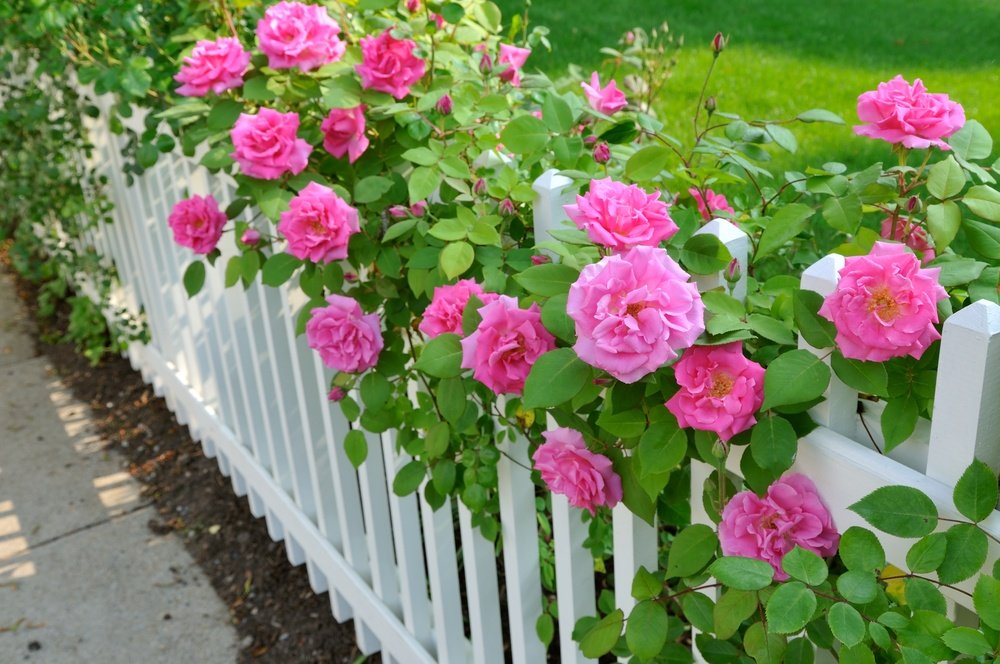
- Fence design
-
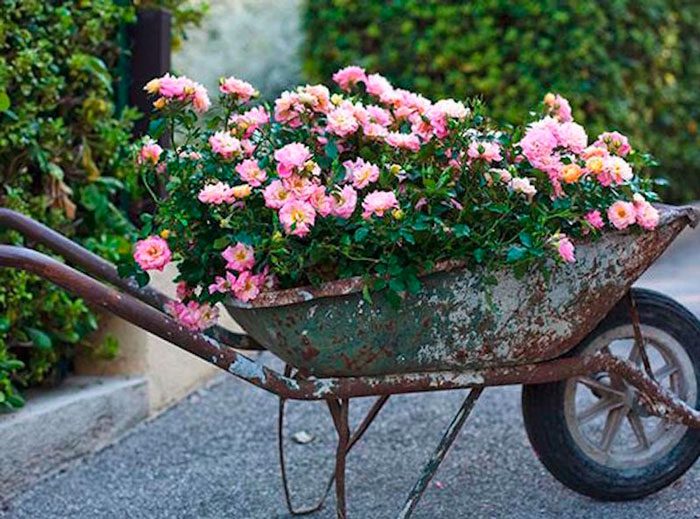
- Decorating elements
-
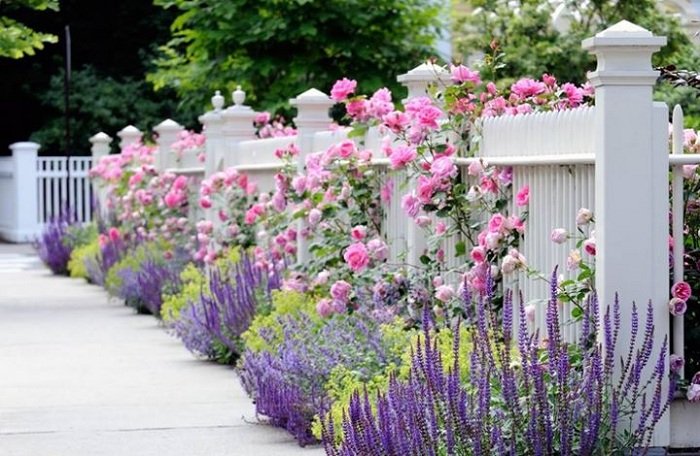
- Mixborder element
-
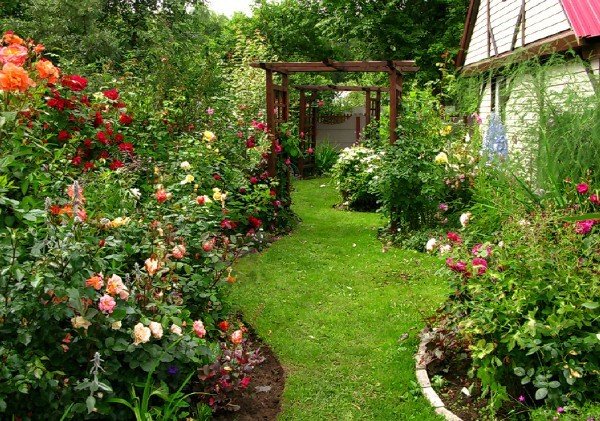
- Group planting
-
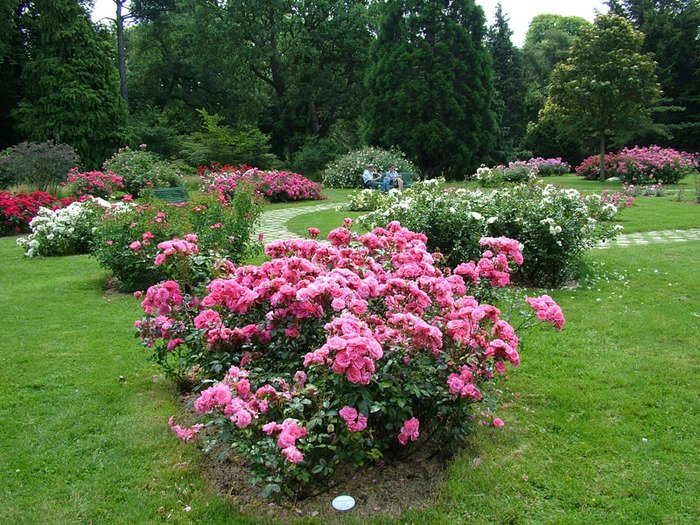
- Compositional group
-
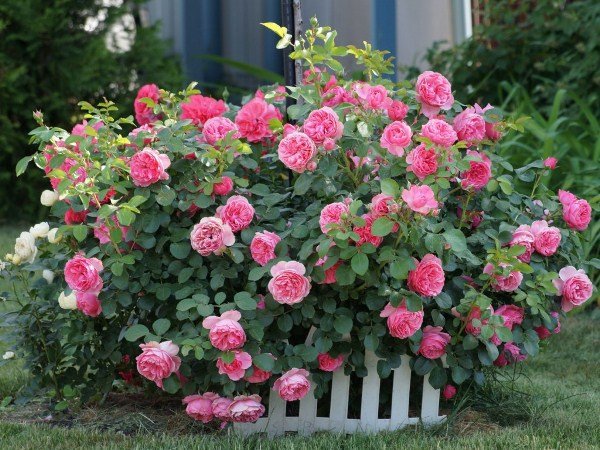
- Solitaire planting
Shrub roses are highly sought after in gardening and landscape design. They require little maintenance, bloom long and profusely, and the variety of varieties allows for stunning compositions and striking accents.