
All about planting and growing the climbing clematis Ville de Lyon at your dacha.
Content
History and description of clematis Ville de Lyon
The hybrid clematis Ville de Lyon was bred in 1899. The creator of this beautiful flowering shrub is the French botanist and plant breeder François Vivian-Morel. The French province of Lyon is considered the birthplace of this spectacular clematis, hence the name of this ornamental plant.
Ornamental value of the shrub
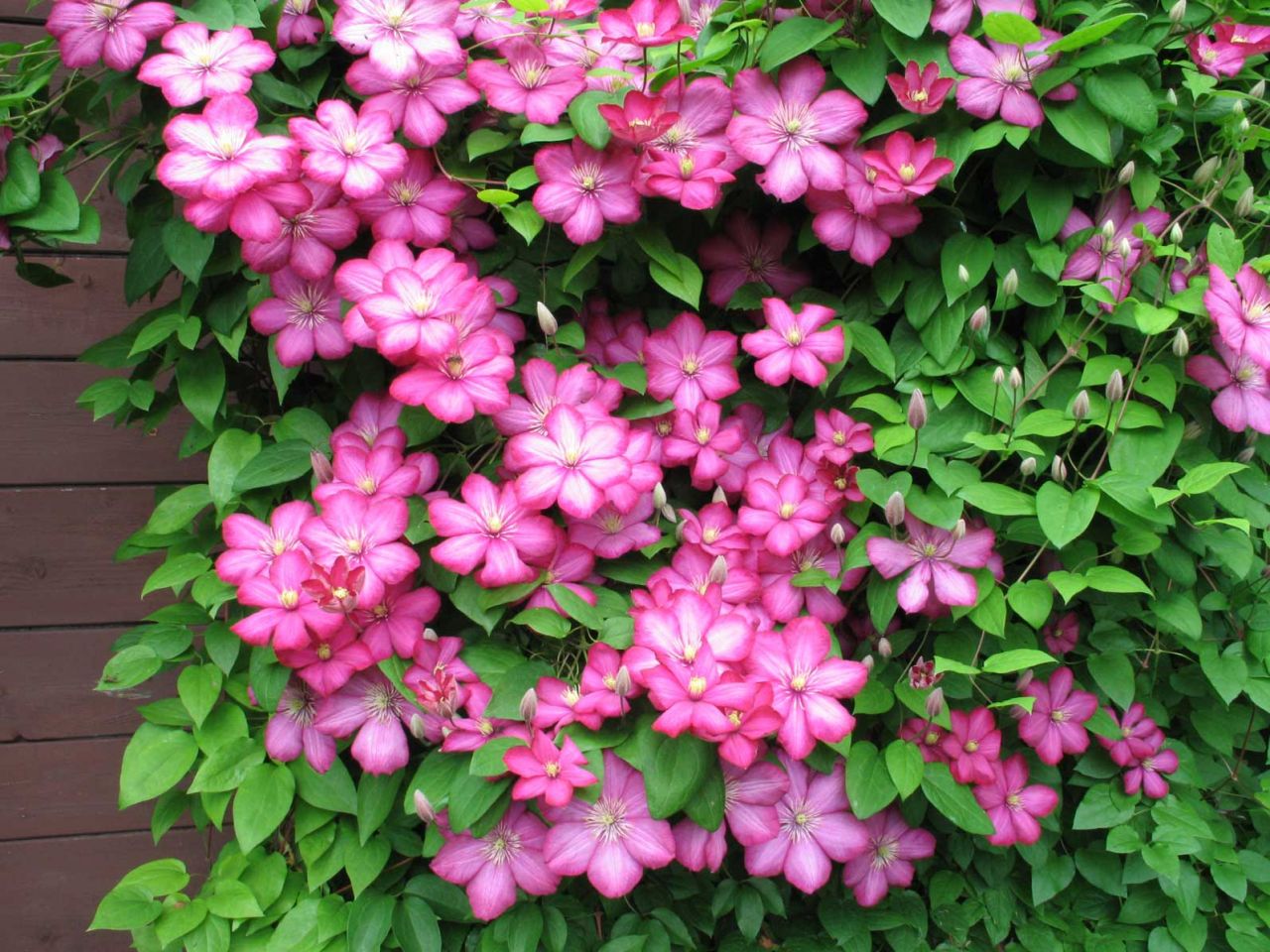
Clematis de Lyon is a vine-like flower. Flexible, brown stems reach 3–4 meters in length. A single bush produces up to 15 shoots. The shrub has medium foliage. The leaves are small, light or dark green. The color of the leaf blade depends on the amount of light the clematis receives.
Features of flowering
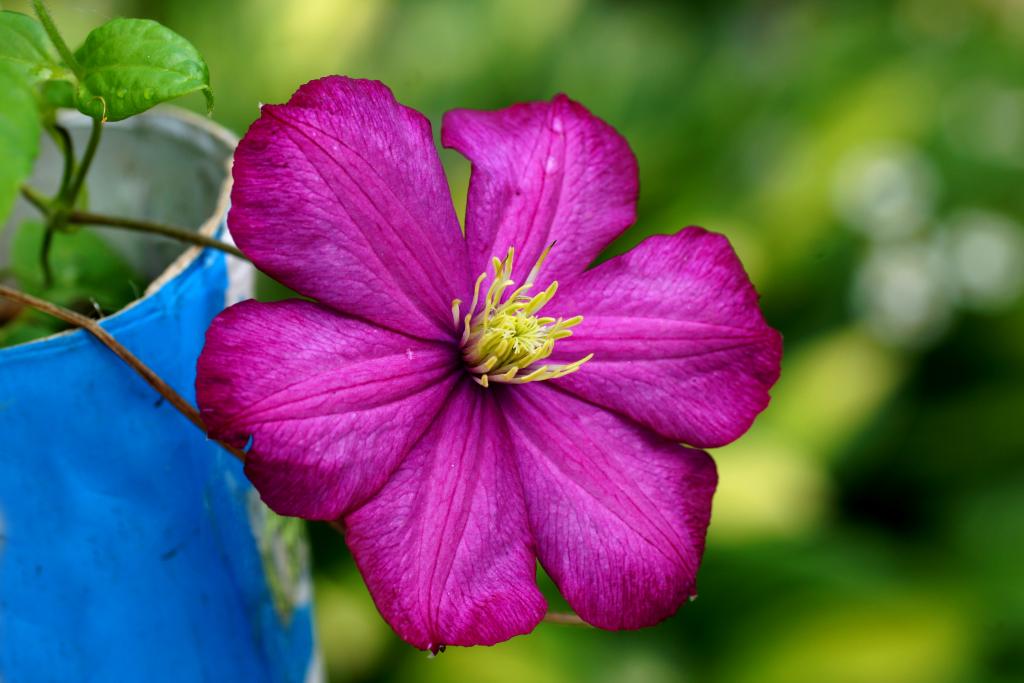
A unique feature of the Ville de Lyon variety is its long flowering period. The first buds appear in early July. Depending on weather conditions, the plant can bloom until late September or even early October. The petals of the opened buds are fuchsia. When exposed to sunlight, the flowers fade slightly, turning a rich purple or violet-crimson.
Video: Description of Clematis Ville de Lyon
This video presents the decorative and varietal characteristics of the liana shrub.
The subtleties of planting and growing
Subject to certain planting and growing conditions, clematis Ville de Lyon can be cultivated in various climatic zones.
Selecting a location and soil
Clematis are sun-loving plants. Therefore, they are grown in sunny areas of the garden. However, the plant tolerates gusty winds and drafts. This vine-like shrub can be grown near a fence or the wall of a house.
Clematis thrives in a light, nutritious environment. Experienced gardeners recommend choosing a garden plot with loamy soil. The groundwater level should be no higher than 2 meters above the soil surface, and the soil pH should be neutral or slightly acidic.
Algorithm for planting a seedling
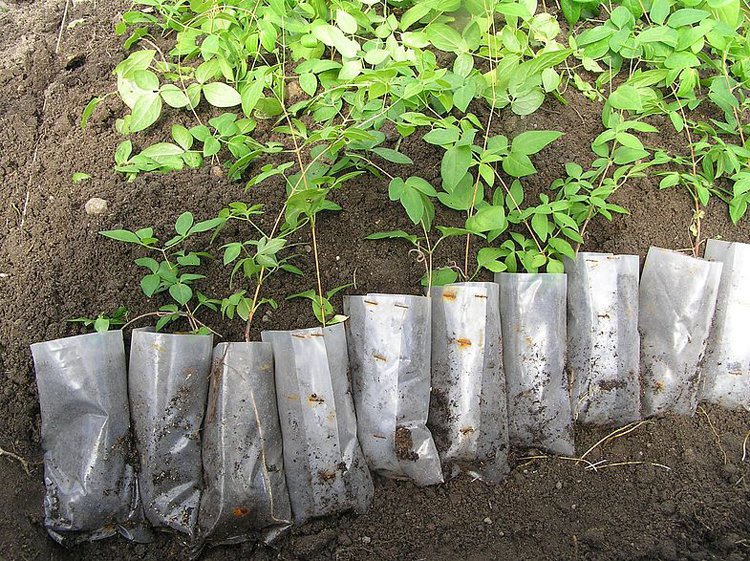
A bare-root clematis seedling is planted in the ground in spring or fall. The timing of fall planting is somewhat limited. It's best to plant it a few weeks before the onset of cold weather. Once planted in the open ground, carefully cover the seedling for the winter. Otherwise, the plant may die at the first frost.
The planting hole is prepared 1.5 to 2 weeks in advance. Drainage materials are essential to ensure moisture drainage. Excess moisture in the soil leads to root rot. Then, nutrients are added. A combination of peat and humus in equal quantities is most commonly used.
The average planting hole size is 60 x 60 cm. Leave 80 cm between holes. Before rooting, the seedling is immersed in a solution of the growth biostimulant "Etamon," "Zircon," or "Kornevin." The plant is planted in a mound formed in the center of the hole. The lower pair of buds is buried 7-8 cm deep. If the bush is tall, support can be installed. After planting, the clematis is watered generously.
Other methods of reproduction
The Ville de Lyon flower growing in a garden is propagated vegetatively: by cuttings, layering, and division. The easiest method of propagation is layering.
Several trenches no more than 10 cm deep are dug around the ornamental shrub. Two or three strong, healthy-looking shoots are selected and carefully bent to the ground. The clematis branches are laid in the trenches and covered with fertile soil. Further care for the cuttings consists of watering, shallow loosening of the soil, and fertilization. For the winter, the covered branches are insulated with dry fallen leaves and pine branches.
Rooted shoots can be separated from the mother bush the following growing season.
Watering, mulching and fertilizing
Water clematis as the soil dries out. Ville de Lyon does not tolerate overly wet soil. If it rains frequently, you can avoid watering the soil altogether for a period of time.
The average watering frequency for young shrubs is twice a week, and for mature plants, once every 10-14 days. This ornamental plant should be watered in the evening. Apply water carefully, avoiding contact with branches and leaves.
Once the liquid has been absorbed, the soil around the tree trunk is mulched with hay or straw. The mulch layer prevents active weed growth and maintains moisture levels in the soil.
Clematis is fertilized no more than four times per season. Nitrogen-containing fertilizers are applied first. This feeding is done in early spring, allowing the plant to develop foliage. During bud formation, clematis is fertilized with potassium- and phosphorus-rich mineral complexes. For foliar feeding, use products such as "Avkarin," "Master," and "Rastvorin Tsvetkovy" (Flower Solution). Every month, the flowering shrub is sprayed with a solution of potassium permanganate and boric acid. Use 2 grams of each solution per bucket of water.
Pruning vines
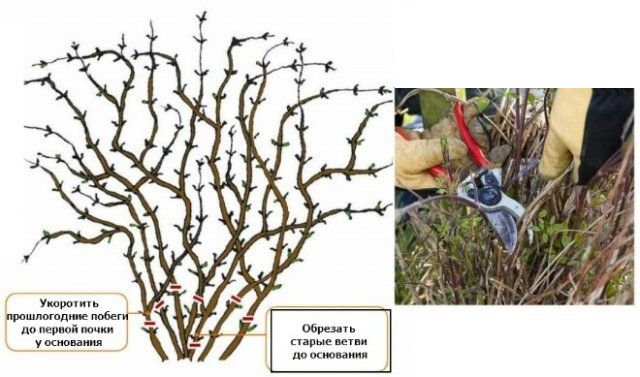
Ville de Lyon belongs to the third pruning group of clematis. Therefore, pruning is carried out in the fall at the end of the growing season. This procedure involves completely shortening the stems.
To prune branches, use a sharp garden knife or pruning shears. The tool should be disinfected beforehand. Afterward, the cut areas are sealed with garden pitch.
Preparing for winter
Since the hybrid's winter hardiness is low (no more than -20 °C), the plant requires additional shelter for the winter.
Pruned clematis shoots are generously mulched with peat, fallen leaves, river sand, hay, straw, or spruce branches. The top of the ornamental shrub is covered with spruce branches or agrofibre.
Dangerous diseases and pests
Adherence to the above-described agricultural practices will help prevent disease development. Clematis Ville de Lyon can be susceptible to powdery mildew, fusarium, and rust. Fungicides such as Topaz, Horus, Fundazol, and Maxim will help combat these diseases.
The flowering shrub attracts snails and slugs, which can be controlled with wood ash. For aphid and spider mite infestations, use insecticides such as Actellic, Calypso, Aktara, and Confidor Maxi.
Application for landscaping a summer cottage
This vine is widely used in landscape design. It's used to decorate house walls, garden gazebos, and various outbuildings. 'Ville de Lyon' looks stunning on open terraces and chain-link fences. It can be grown alongside wrought iron fences and arched structures.
The best "neighbors" for clematis are climbing roses, daylilies and lilies, forsythia, peonies, jasmine bushes, viburnum and spirea, maiden grapes and even conifers.
-
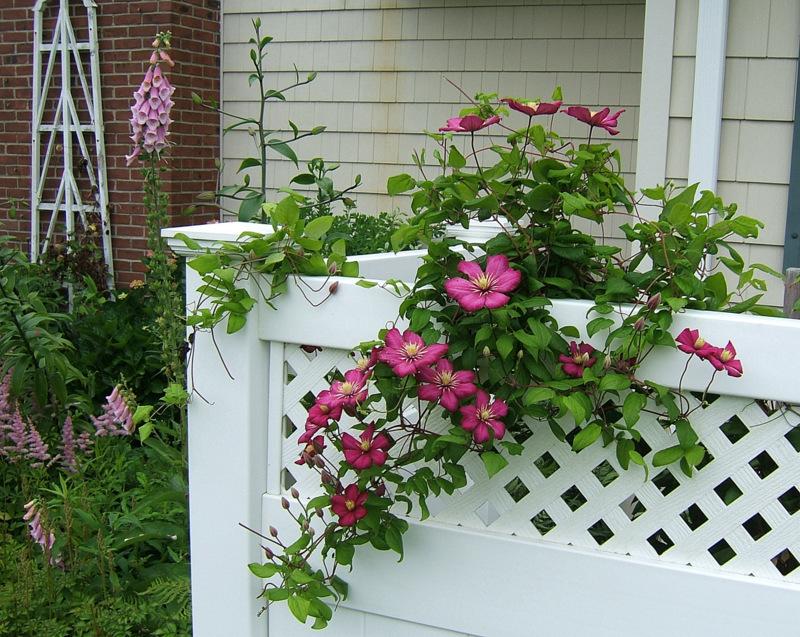
- Landscaping of terraces
-
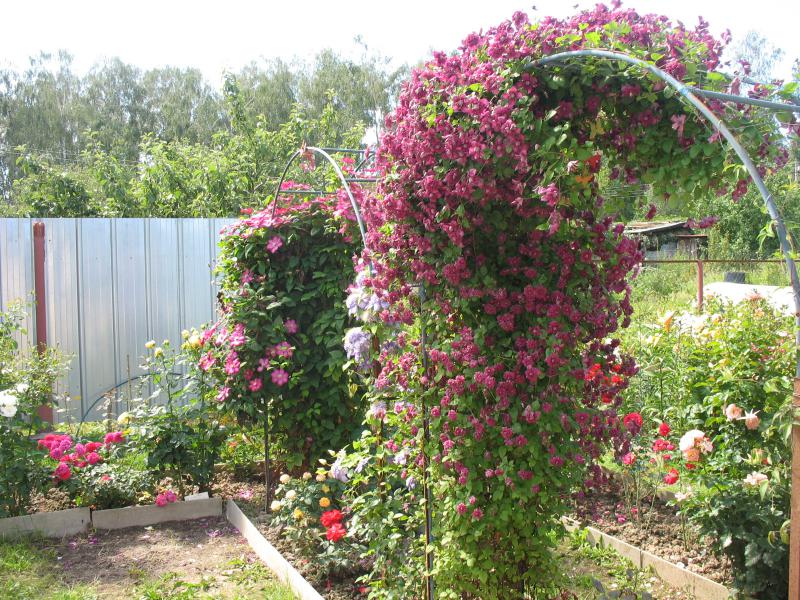
- Decoration of arches
-
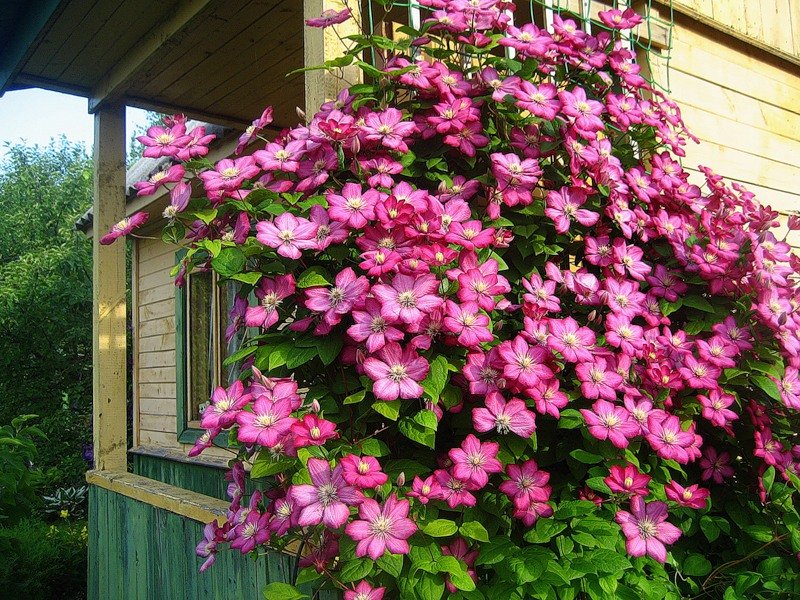
- Wall decoration
Reviews from summer residents
"A few years ago, I planted a clematis sapling, Ville de Lyon, near our garden gazebo. The plant quickly took root and began growing vigorously. Over time, the vine-like bush turned our gazebo into a highlight of the garden."
"After retirement, I took up gardening. I grow various species and varieties of ornamental plants at my dacha, including clematis Ville de Lyon. I recommend this shrub to all beginning amateur gardeners. The plant doesn't require much time or attention, is resistant to diseases and insects, and, with proper protection, is not afraid of cold winters."
The French hybrid Ville de Lyon is characterized by its high adaptability. This variety is popular in many countries of Western and Central Europe, as well as in Russia, Ukraine, and Belarus. Under favorable conditions, the plant produces long-lasting blooms.