
Description and uses of horizontal cotoneaster in garden design
Content
General description of the horizontal cotoneaster
Cotoneaster horizontalis has a dense crown with dark green leaves covered in a shiny silvery coating. In autumn, they take on a crimson hue. The white or pink flowers are clustered in inflorescences that attract butterflies and bees. The red or black berries are not beneficial, but are not considered dangerous.
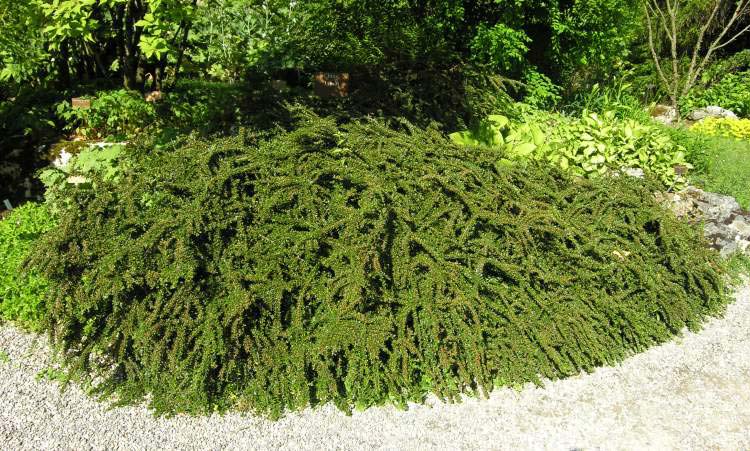
Inexperienced gardeners often confuse cotoneaster with dogwood. However, these are two distinct plants with distinct appearances and the purpose of their berries.
Video "Description of the horizontal cotoneaster"
This video provides a brief description of the ornamental culture.
Varietal diversity
Gardeners favor this plant for its visual appeal and ornamental qualities. There are various varieties, each with its own unique characteristics.
Shiny horizontal
The most popular species of cotoneaster, it grows up to 2 meters in height. It gets its name from the glossy surface of its leaves. They are green with a silvery sheen in spring and red in autumn.
Variegatus
An evergreen plant growing to a height of no more than 30 cm, Cotoneaster atropurpurea variegatus has green foliage with a creamy edge. In autumn, the foliage turns purple but retains its light edge.
Pressed
The plant has the appearance of a low-growing bush, reaching a height of no more than 0.5 meters.
Coral Extravaganza
The foliage retains a pink hue even in winter. The Coral Fairy has small-petaled pink flowers. The crimson fruits ripen in the first ten days of autumn and continue to ripen for 3-4 months.
-
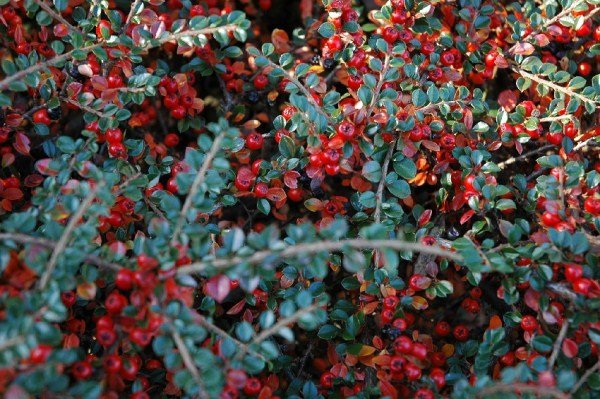
- Coral Extravaganza
-
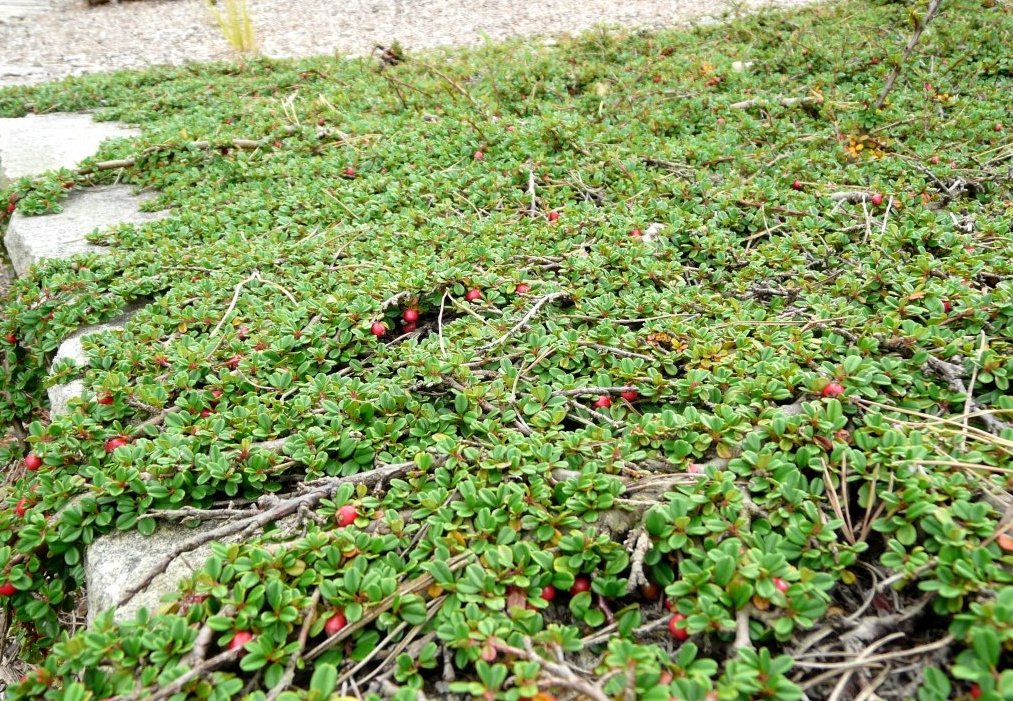
- Pressed
-
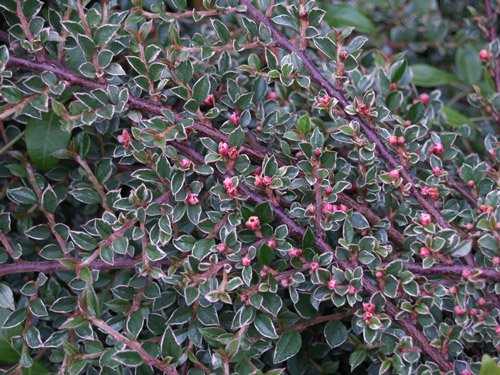
- Variegatus
-
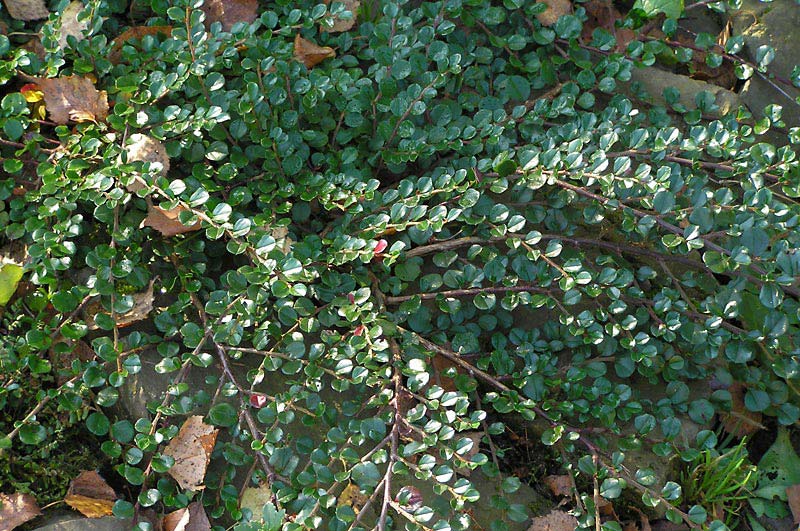
- Brilliant
Red-fruited
Thanks to its frost resistance, this variety is suitable for decorating gardens in central Russia. The berries are a bright crimson hue.
Ordinary
An easy-to-grow and frost-hardy plant, popular among gardeners. The bush bears black fruits, while the foliage has a silvery undertone.
Black chokeberry
The bush reaches 2 meters and begins flowering at 5 years of age. It produces black fruits.
Multi-flowered
It gets its name from its flowers, which form voluminous clusters. The bush reaches 3 meters in height and has light green foliage that turns crimson in the fall.
-
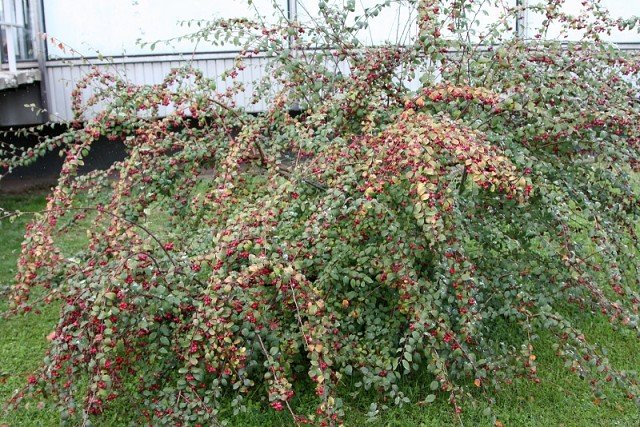
- Multi-flowered
-
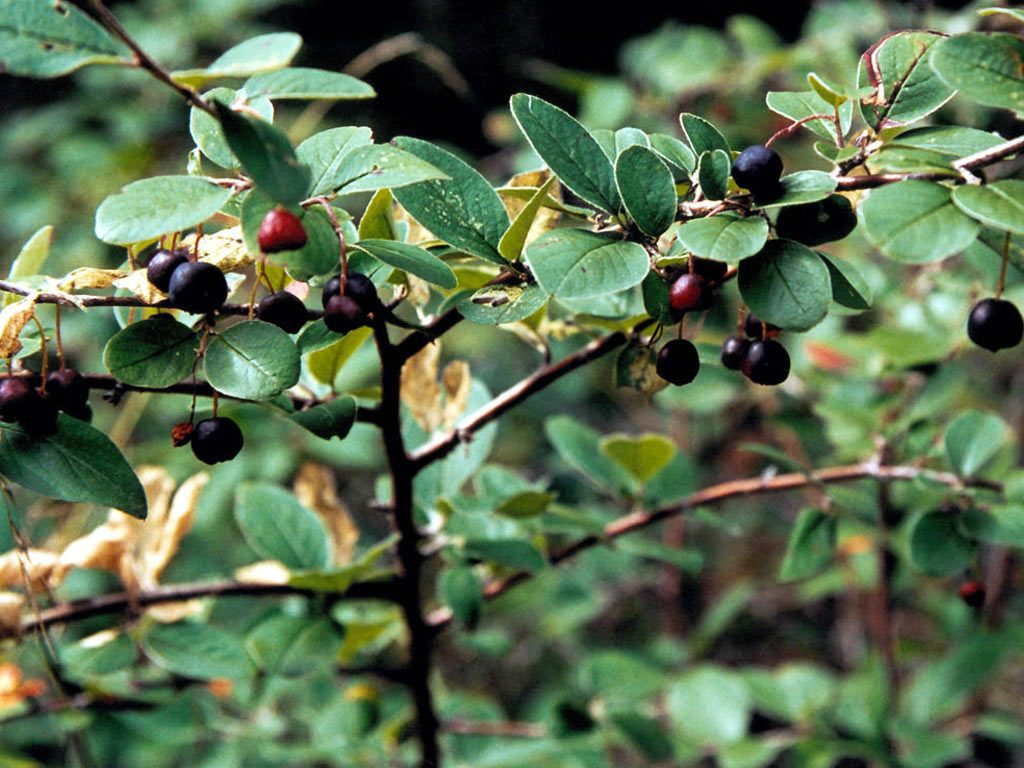
- Black chokeberry
-
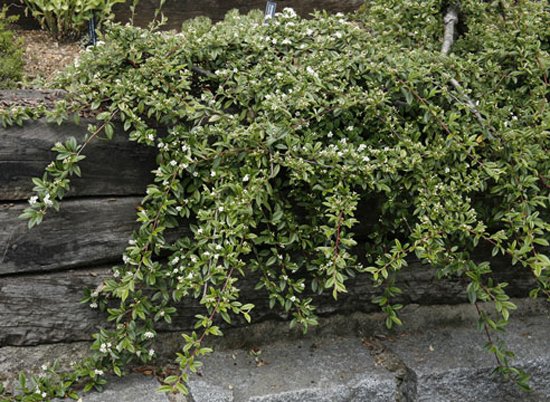
- Ordinary
-
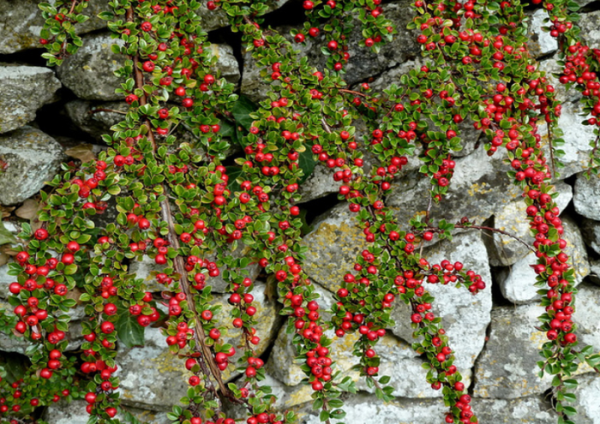
- Red-fruited
Features of agricultural technology of horizontal cotoneaster
The plant is generally easy to care for, but growing it outdoors is labor-intensive. If you follow all the recommendations, it will become a beautiful addition to your garden.
Selecting a planting site and preparing the soil
Growing horizontal cotoneaster requires adhering to a number of agricultural requirements. First and foremost, it's important to select a suitable location that meets all these requirements. It's recommended to plant in areas with filtered light or partial shade. A lack of sunlight isn't critical for normal growth.
The soil must contain certain components. When planting, it is recommended to add a substrate consisting of sand, peat compost, and turf (2:1:2) to the hole. This will increase the chances of plant survival to almost 100%. Lime should also be added to the soil (300 grams of lime per 1 m²).
Planting rules and propagation methods
Planting can be done in several ways: by seeds, cuttings, and layering. The first method is the least successful, as the seed material does not take well to open ground. Seeds are collected in the first ten days of October from fully ripened fruits. They are then placed in water; those that sink to the bottom are ready for planting. The first shoots are expected no earlier than May or June, and they must be thinned out. Transplanting to a permanent location is recommended no sooner than after 2-3 years.
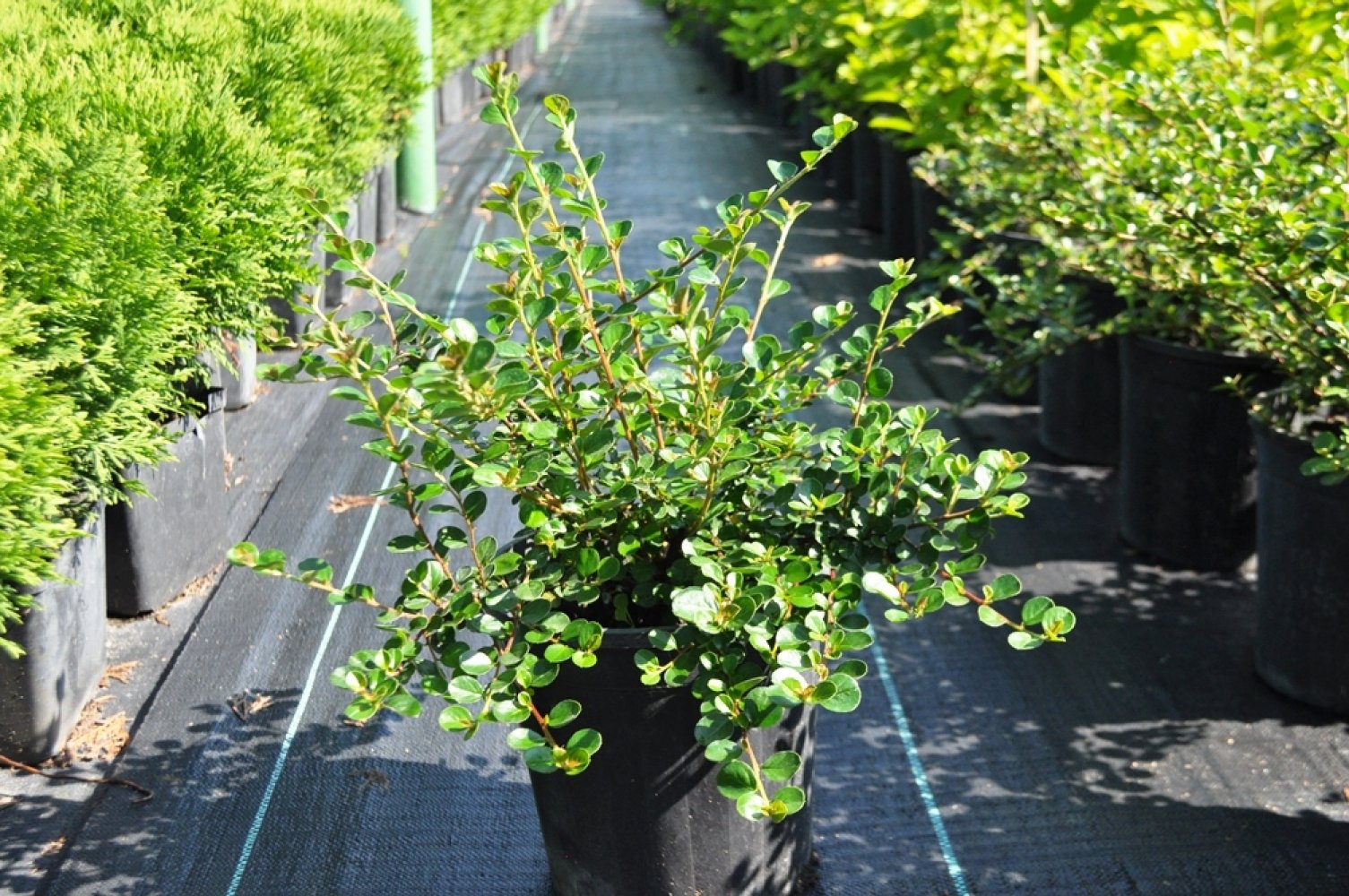
Sowing is done before winter to harden the seeds. Otherwise, germination rates are reduced several times.
The primary method of propagation is by cuttings, which yields the highest survival rate. This procedure is carried out in early June. Cuttings are taken from healthy shoots, soaked in water for 24 hours, and then planted in soil at a 45-degree angle. The newly planted plants are covered with an open-necked plastic bottle. It is recommended to transplant the young seedlings to their permanent location the following spring.
Horizontal cotoneaster can be propagated by layering. To do this, a young shoot is buried 10-15 cm deep. Gardeners dig holes, fill the bottom with equal parts sand and peat, and then secure the shoot in the hole. After a year, the rooted shoot is separated from the mother plant.
Aftercare
Plant care begins with proper watering. Cotoneaster does not tolerate excess moisture, so it should be watered no more than once every 30 days. During drought, water every 14 days, with the total amount of water per plant not exceeding 8 buckets. It is recommended to loosen moist soil and remove weeds promptly. Water the shrub only in the summer.
The plant doesn't require additional nutrients. The exception is spring, when the plant won't grow fully without fertilizing. Gardeners adhere to the following schedule:
- in early spring, a urea solution is added (25 g of substance per 10 liters of water);
- Before the formation of buds, potassium sulfate is spread (15 g per 1 m2).
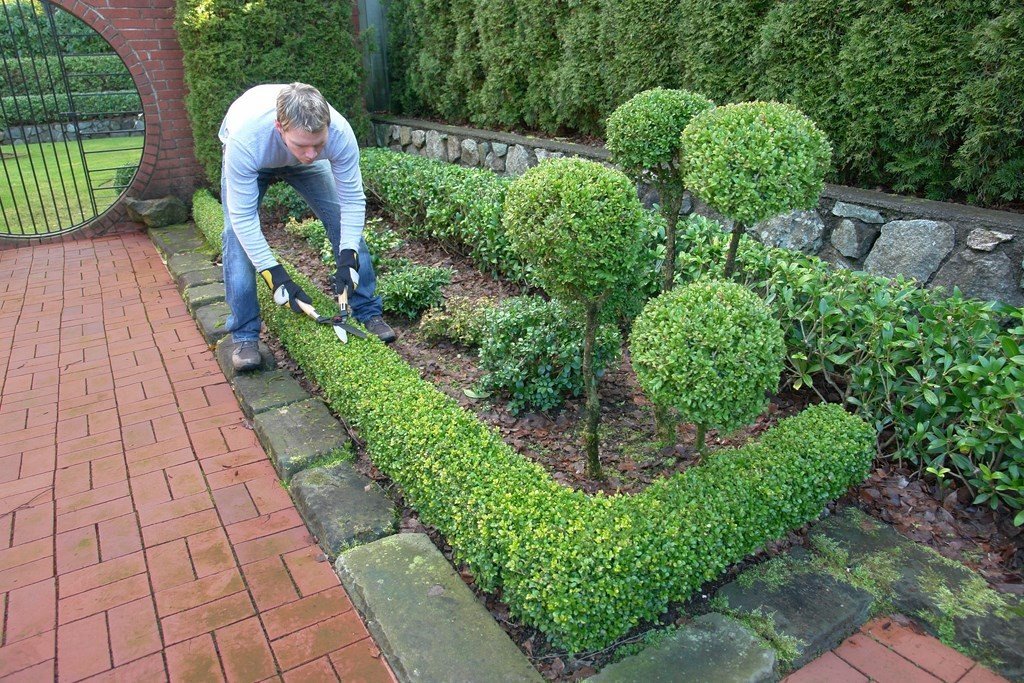
The shrub appreciates pruning, which can be either sanitary, rejuvenating, or formative. The latter two are performed before buds appear, stimulating growth. Sanitary pruning is acceptable at any time, as it helps remove dead plant parts.
The plant can be attacked by aphids and moths, which leads to leaf wilting and the gradual death of the cotoneaster. In the former case, use Metaphos and Karbofos, and in the latter, use Ammophos. As a preventative measure, the bushes are treated with Nitrofen.
Using horizontal cotoneaster in landscape design
Cotoneaster horizontalis holds a special place in the aesthetics of the garden. Thanks to its characteristics, it blends well with other plants and has a presentable appearance.
Planting options
Gardens are designed by combining several varieties of cotoneaster. This recumbent shrub with spreading vines looks harmonious with stone, ceramic, and bronze design elements. It is used to create mixed borders and multi-level flowerbeds.
-
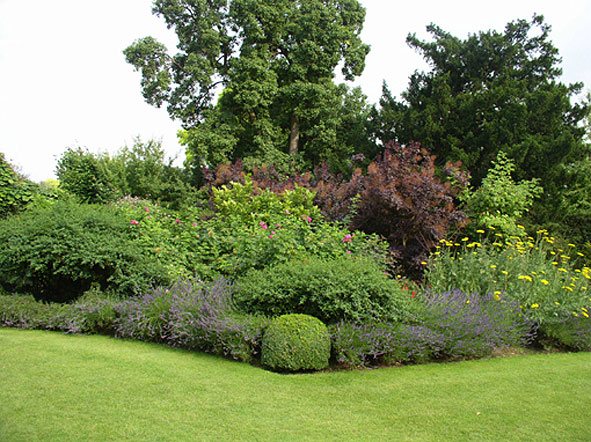
- Composite planting
-
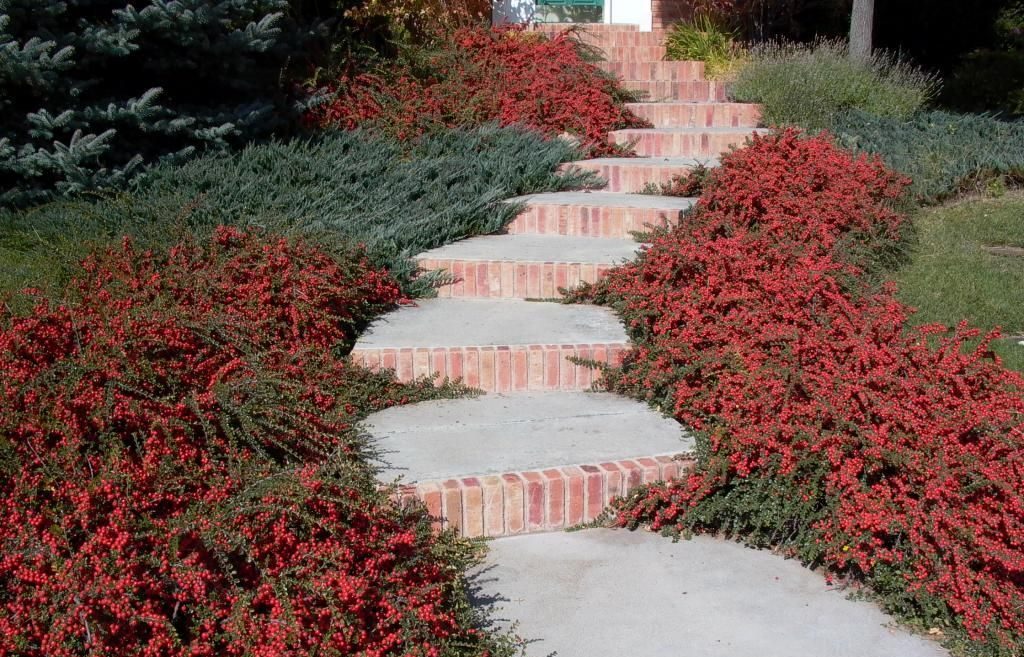
- Decoration of steps
-
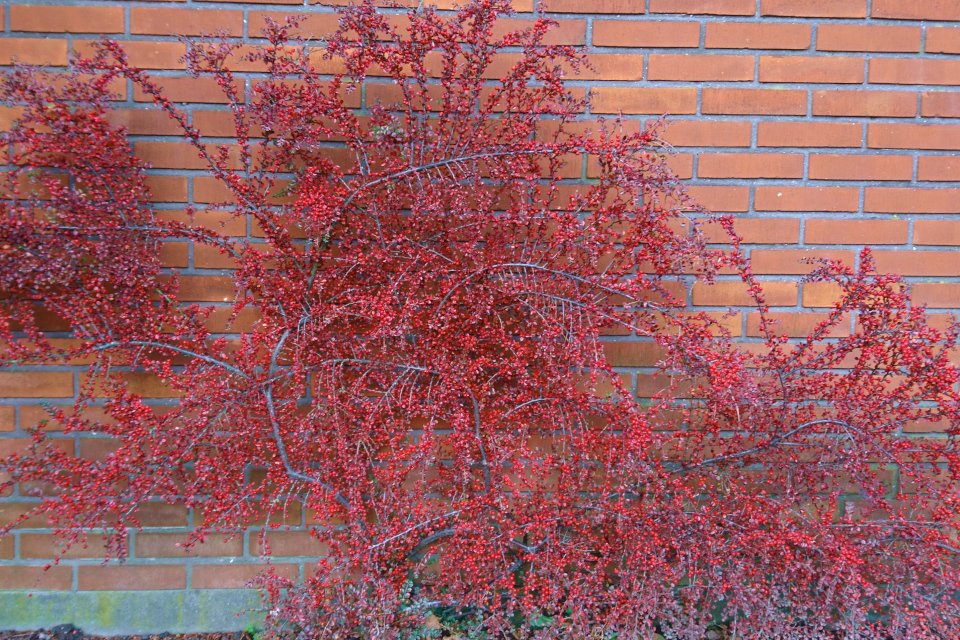
- Wall decoration
-
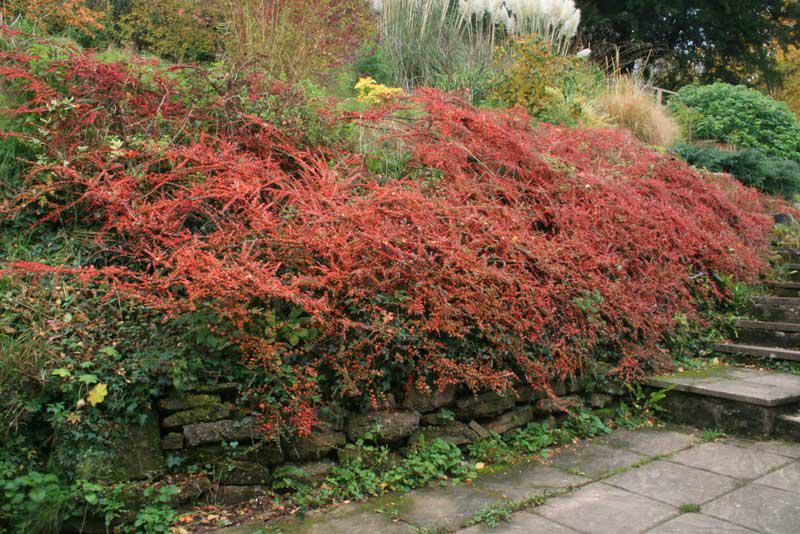
- Fence element
-
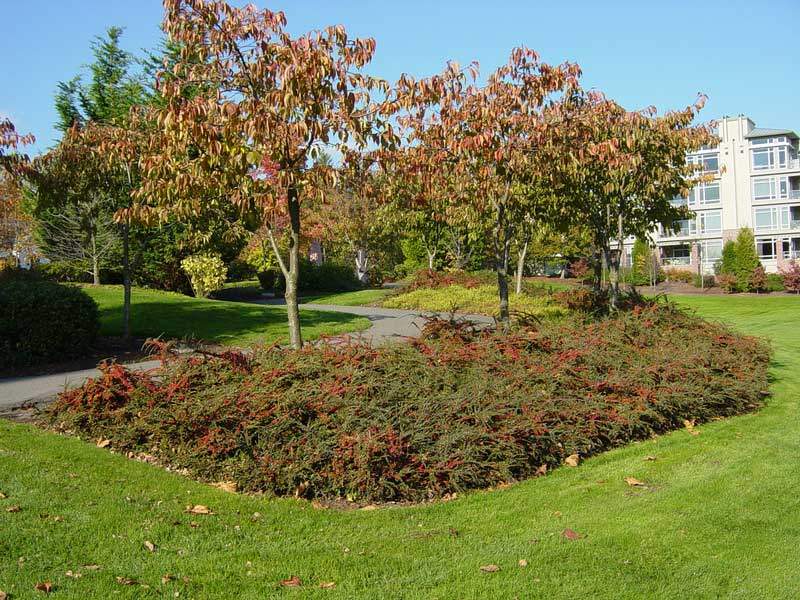
- Solitaire planting
-
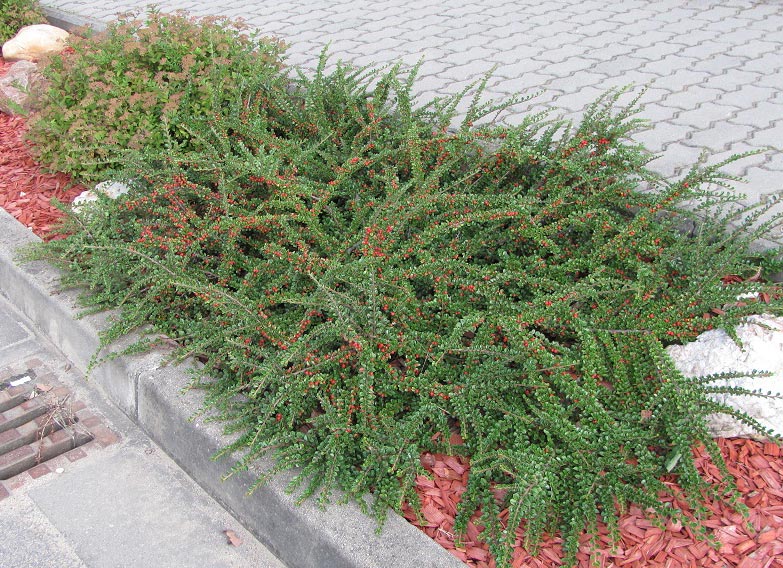
- Decorative border
Combination with other plants
In landscape design, it is often combined with conifers and flowering shrubs. To create a retaining wall, cotoneaster can be combined with ivy, honeysuckle, maiden grapes, and euonymus. A hedge can consist of several varieties of a single plant, such as Ursina, Drummera, and Brilliant.
A country house plot or park area will acquire a special chic look if planted alongside other garden plants, such as horizontal cotoneaster. Its low-maintenance nature makes it indispensable for novice gardeners.