
A beautiful and useful miracle bush: growing Canadian serviceberry at your dacha
Content
- 1 Botanical description of Canadian serviceberry
- 2 Video "Description of the Canadian Amelanchier"
- 3 Useful and medicinal properties of berries
- 4 Popular varieties of Canadian serviceberry among gardeners
- 5 Conditions for planting, growing and care
- 6 Pests and diseases, methods of control
- 7 Reviews from gardeners
Botanical description of Canadian serviceberry
This plant belongs to the Rosaceae family and is considered long-lived. Its average lifespan is almost half a century. It grows quickly and begins bearing fruit as early as three years old. The bush is distinguished by its high winter hardiness (down to -40°C), making it suitable for the Moscow region and other temperate regions.
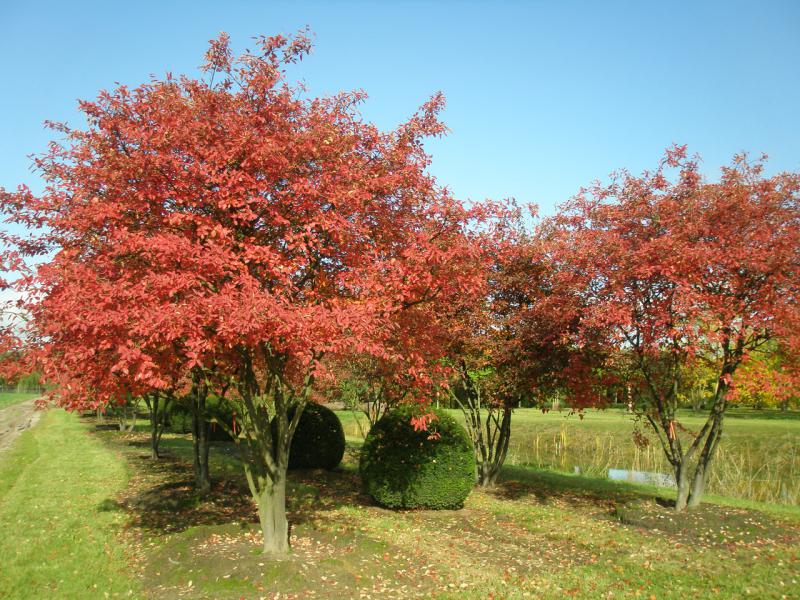
The serviceberry is described as somewhat tree-like. A mature plant can reach up to 7 meters in height, with up to two dozen trunks. The shoots are smooth, slightly drooping, and covered with reddish-brown bark. The crown is densely foliated and lush. The leaf blades are serrated, medium-sized, oval, and covered with short silvery hairs. Throughout the season, their color changes from olive to deep crimson or copper-orange.
The shrub blooms for only a couple of weeks, beginning in the third ten days of April. The racemes consist of several white buds, which later develop into berries. The ripe fruits are dark purple, perfectly round, and covered with a bluish bloom. They are very sweet, but not cloying. A single tree can yield up to 10 kg of fruit per season.
Video "Description of the Canadian Amelanchier"
This video presents the main characteristics of the plant.
Useful and medicinal properties of berries
Ripe berries contain many beneficial substances, making the chokeberry a medicinal plant. The fruit contains the following components:
- vitamins B, C, P;
- microelements (Co, Cu, Pb);
- pectin;
- carotene;
- glucose and fructose;
- phytosterols;
- anthocyanins;
- fiber.
Regular consumption of fresh or processed berries has a healing effect on the body:
- normalizes the functioning of the central nervous system;
- treats insomnia;
- strengthens the heart muscle;
- restores the elasticity of blood vessels;
- reduces the risk of blood clots and plaques;
- improves immunity;
- reduces pressure;
- normalizes cholesterol;
- stabilizes the functioning of the gastrointestinal tract;
- fights sclerosis;
- relieves inflammation of the mucous membranes of the oral cavity.

Popular varieties of Canadian serviceberry among gardeners
Breeders have paid close attention to this crop and have developed over three dozen varieties, including Honeywood, Starry Night, Mandan, Slate, and others. Read below to find out which varieties Russian gardeners plant in their garden plots.
Pembina
A spreading, spherical shrub measuring 5 x 5 m. It produces sweet, round berries, about one and a half centimeters in diameter. A characteristic feature of this variety is the almost complete absence of shoots.
Thyssen
An early-ripening serviceberry, the fruit can be harvested as early as the third ten days of June. The bush grows up to 5 m tall and 6 m wide. The fruits are large, up to 2 cm in diameter, and have a slightly tart flavor.
Thyssen can withstand frosts down to -30°C, but due to early flowering it can suffer from spring frosts.
Smokey
This late-ripening variety is beloved by gardeners for its high yield. Smoky blooms only in late spring. The bush is medium-sized, spherical, measuring 4.5 x 4.5 m. The berries are not very large (about 1.5 cm) and have a balanced flavor.
Sturgeon
A low, spreading shrub no more than three meters tall. It bears fruit abundantly and regularly. The fruits are very large, gathered in clusters similar to grapes. The flavor is very sweet, with almost no tartness.
Northline
This variety has erect stems up to 4 meters long. The circumference of a mature plant is almost six meters. The berries are medium-sized (1.4-1.6 cm) and ripen simultaneously. Northline will not bear fruit without a pollinator.
-
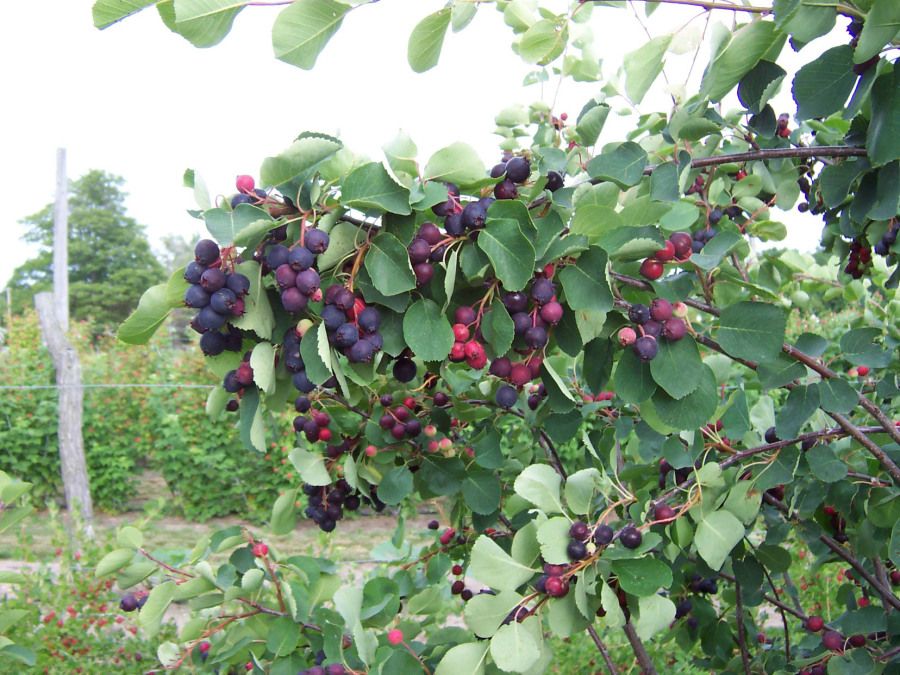
- Northline
-
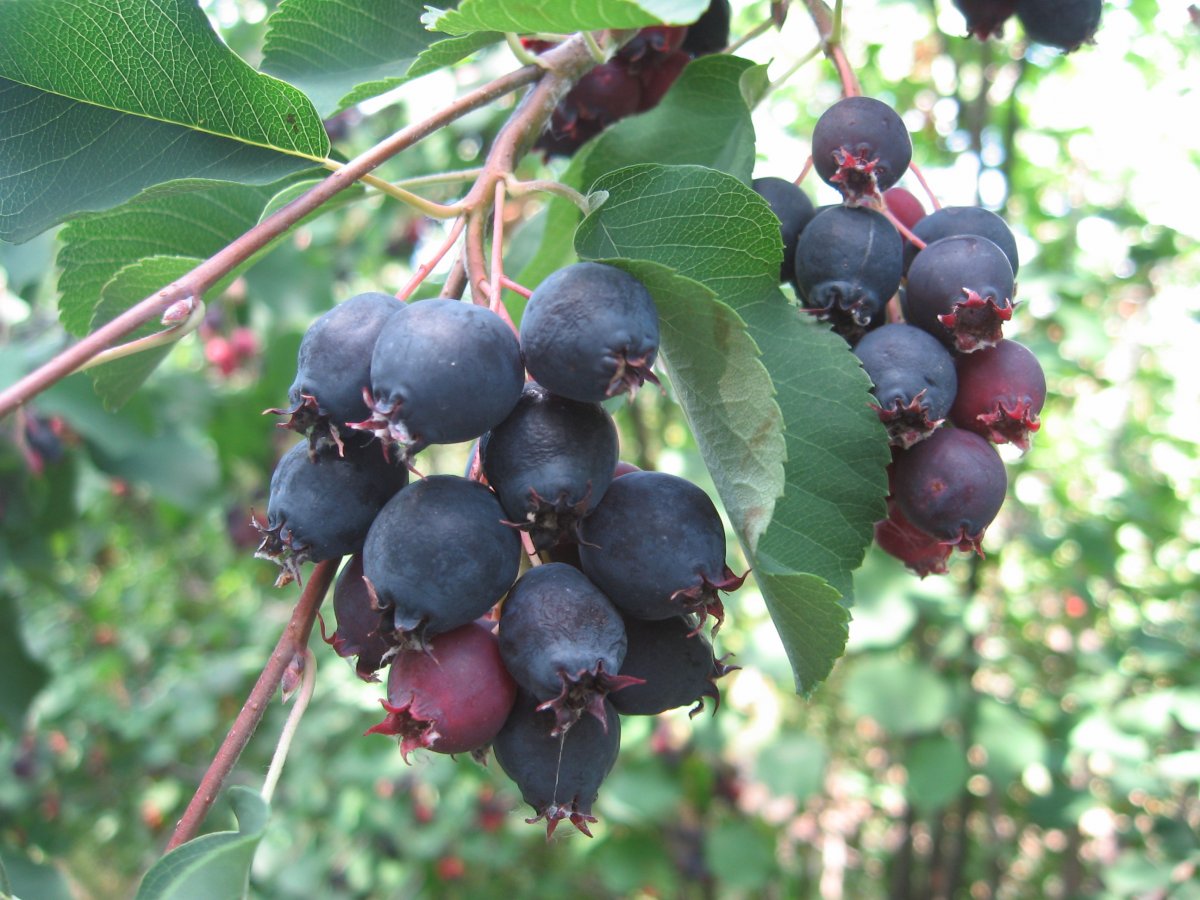
- Sturgeon
-
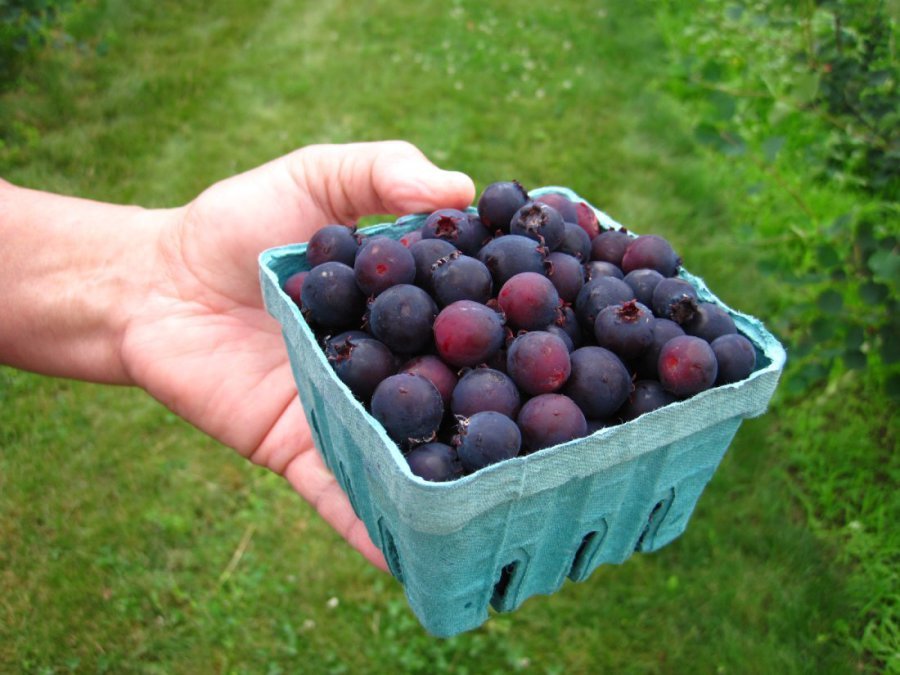
- Thyssen
Conditions for planting, growing and care
The Canadian serviceberry is a relatively easy-to-grow crop. Growing it doesn't require much effort, but basic cultivation practices still need to be followed.
Site selection and preparation
The shrub can be planted in any area except marshy areas. It thrives in all soil types, thrives in shade, and is completely resistant to winds and drafts.
Planting holes are prepared in advance, spaced about five meters apart. To increase productivity, pollinators are planted nearby. These can include rose hips, sea buckthorn, or other varieties of serviceberry.
Boarding procedure
There's no set time for planting. In southern regions and cities in central Russia, the procedure is usually carried out in late autumn; further north, young trees are planted in the spring.
When purchasing planting material, carefully inspect it. The trees should be at least a meter tall, with established buds, smooth, undamaged bark, and a fibrous rhizome 20-30 cm long. To ensure successful establishment, gardeners recommend choosing one- or two-year-old trees.
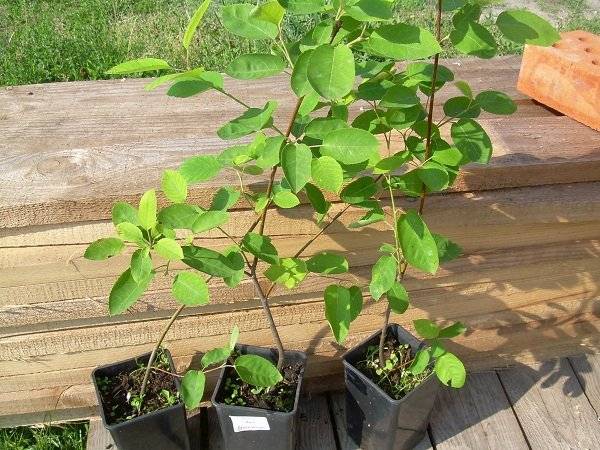
Planting holes are dug half a meter deep and 60-70 cm in diameter. The bottom is covered with a drainage layer, and the top is filled with a substrate (soil, peat, humus, or sand). The soil mixture is fertilized with a potassium-phosphorus mixture with added lime. When planting, the seedling is tilted slightly, creating a 45° angle. The root collar is left level with the surface. After planting, the area around the plant is mulched, and the shoots are lightly trimmed, leaving five buds.
Watering and soil care
Watering young seedlings is no different from watering mature shrubs. The moisture they receive from rain is sufficient. Supplemental watering is only necessary during prolonged droughts. The standard rate is 2-3 buckets twice a month.
The moist soil is thoroughly loosened to ensure the roots have better access to moisture and air. The area around the bushes is regularly weeded to remove weeds.
Fertilizing during the season
The first time Irga is fertilized is in the second year after planting. The procedure consists of several stages:
- before the sap starts to move (nitrogen-containing fertilizer);
- in the third week after the beginning of flowering (boric acid with zinc and copper sulfate);
- in the fall, before wintering (potassium-phosphorus compositions).
Timing and rules for pruning
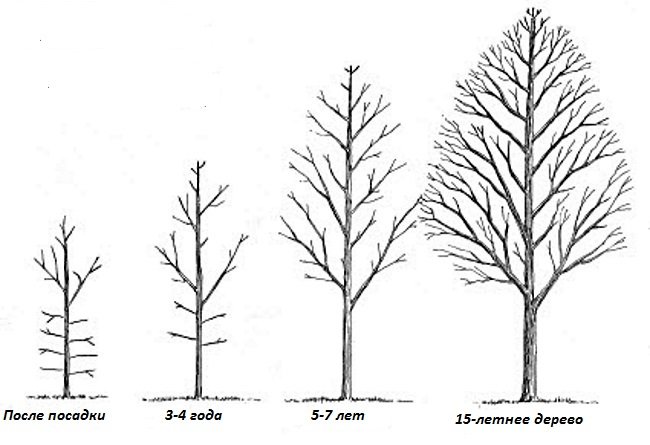
Canadian serviceberry requires regular pruning. This procedure is performed in early spring, before the sap begins to flow. Gardeners recommend following these guidelines:
- Sanitary pruning involves removing dry or damaged branches;
- when cutting out young growth, leave a couple of shoots that will eventually replace the old ones;
- erect branches are shortened by ¼ of last year’s growth;
- to make the bush grow more actively in width, the lateral shoots are trimmed;
- To rejuvenate the irga, cut it to 2.5 m, removing all weakly growing branches.
Preparing for winter
This winter-hardy plant tolerates harsh winters well, and therefore requires minimal preparation. After the plant has shed its leaves, carefully inspect the bush. Dry and damaged shoots are pruned, the area around the trunk is cleared of debris, and then dug over. If the bush is young, snow is thrown onto it.
Pests and diseases, methods of control
Canadian serviceberry is fairly resistant to infections and is rarely attacked by insects. If improperly cared for, it can become susceptible to leaf spot or gray mold. Leaf roller caterpillars sometimes infest the bush, devouring young shoots. To protect the plant, it's important to apply insecticides prophylactically.
The plant often suffers from birds. When the fruit ripens, they flock to feast on the sweet berries. A net placed over the bush will protect against them.

Reviews from gardeners
I planted a serviceberry last summer at the Thyssen dacha. Even though they say it's frost-hardy, I still covered the seedling. It overwintered well and produced leaves on time. We'll see what the harvest looks like next year.
On a friend's advice, I planted Smoky about five years ago. It was my first experience. Now I have several bushes growing in my garden, and they're producing excellent fruit.
I've been growing irga for about ten years now. The bush is small, but it produces a prolific crop. My wife preserves the berries for the winter, and it's good for lowering high blood pressure.
The Canadian serviceberry rightfully earns positive reviews. It's undemanding, adapts quickly, produces a bountiful harvest, is healthy, and very beautiful. Rarely can a plant combine all these qualities, which is why it's so beloved by our gardeners.