
How to plant and grow the Vims Red paniculata hydrangea in your garden
Content
History and characteristics of the variety
Hydrangea paniculata stands out among other subspecies of this ornamental deciduous plant. Among the many varieties, the Wims Red hybrid is particularly popular with gardeners and landscape designers. The cultivar was developed by German breeder Wim Rutten. Unfortunately, more detailed information about the breeding experiment is unavailable.
Appearance of the bush
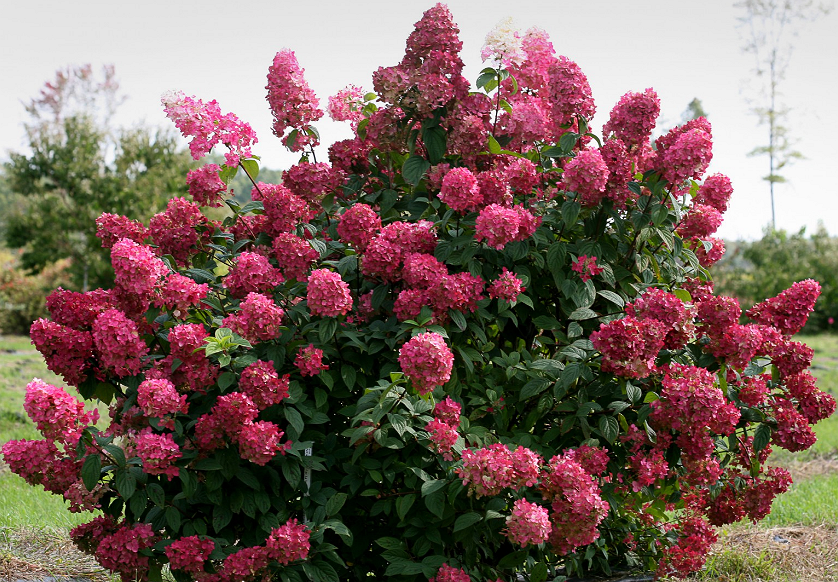
Vims Red is a compact deciduous shrub that rarely exceeds 2 meters in height. It grows uniformly. The shoots are weakly branched and moderately stiff. The bark of the branches is a brownish-red hue. The leaves are dense, ovate, and dark green. The veins are clearly visible on the rough surface of the leaf blade.
Flowering period
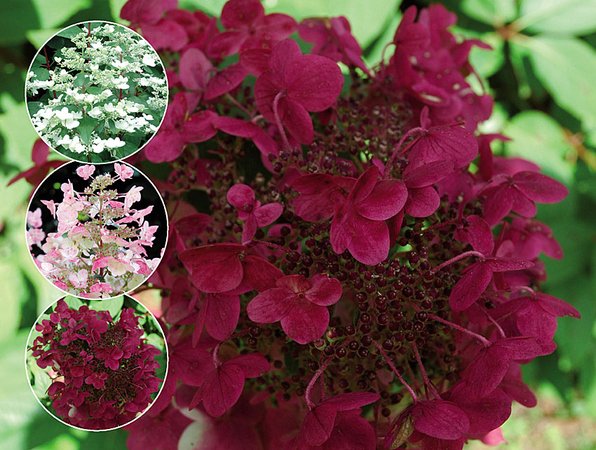
The flowering period lasts from July to September. In warm weather, it can bloom until early October. The inflorescences are broadly pyramidal in shape and average 35 cm in length. Vims Red has three stages of flower color: white turns to pink, and pink turns to burgundy-red.
Winter hardiness and drought resistance
Vims Red does not tolerate drought well. The plant's vitality and decorative qualities are determined by the moisture levels in the soil and air. For this reason, we strongly recommend not allowing the substrate to dry out.
Winter hardiness, as noted in the variety description, is -30°C. Gardeners familiar with this hydrangea variety claim that the frost resistance figures are overstated.
Video "Wim's Red Panicle Hydrangea"
This video provides a brief varietal description of this ornamental shrub.
Planting and caring for the panicle hydrangea Vims Red
The duration of flowering, the number of inflorescences, and the vibrancy of their color depend on the observance of certain agricultural practices. Let's take a closer look at the planting and care guidelines for the Wims Red hydrangea.
Recommended timeframes
Planting times are determined by the climate zone. For northern and central regions, spring planting is preferable. Planted outdoors, the seedling has time to root well, adapt, and establish itself in its new environment.
For southern Russia, both spring and fall planting are suitable. In the fall, only completely healthy and well-formed seedlings are planted in open ground. Planting can be done from September to the first ten days of October.
Selecting a suitable location and soil
Paniculata hydrangea grows well in partial shade. Find a wind-protected spot in the garden to plant the seedling. Too much sunlight is undesirable for this ornamental plant, as it will cause the blooms to fade. Avoid planting the plant in the shade. Complete lack of sun will negatively impact the shrub's beauty and viability.
Wims Red prefers a loose, fertile soil with a high or neutral pH. Note that the soil's pH determines the intensity and richness of the blooms. It's simple: the higher the pH, the more vibrant the bloom color.
Sandy or alkaline soil is not suitable for growing the Vims Red hydrangea. Avoid planting it in soil with a high lime content.
Landing algorithm
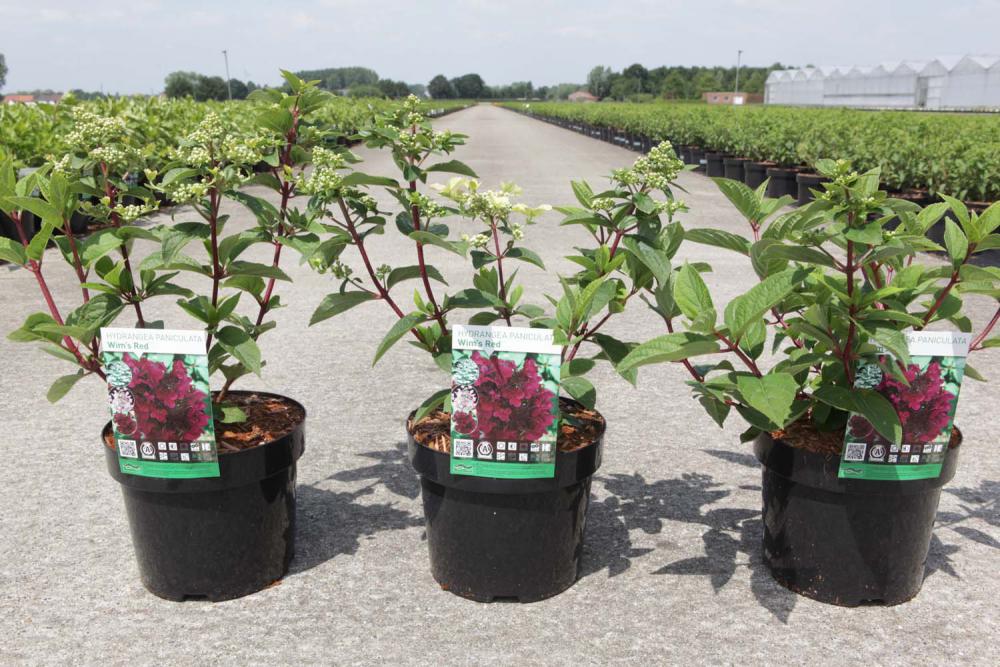
It's best to prepare planting material yourself or purchase it from a nursery. Seedlings with closed root systems, removed from their containers just before planting, thrive.
The plant should have a fresh and healthy appearance. Signs of poor-quality planting material include various types of damage to the bark and a rotten smell.
A planting hole, approximately 40 x 40 cm in size, is dug in advance. To prevent water stagnation in the soil, the bottom of the hole is lined with drainage materials. Crushed brick, coarse expanded clay, or small pebbles are most commonly used.
Garden soil is mixed with peat, humus, and river sand. The seedling is planted deep in a mound formed from the nutrient-rich substrate, ensuring the root collar remains above the soil surface. The remaining soil is sprinkled over the plant and gently compacted. A furrow is formed around the edge of the tree trunk and thoroughly moistened. The area around the tree trunk is then mulched with a layer of peat and hay.
How to water and fertilize
Since Vims Red is a moisture-loving variety, soil moisture levels must be carefully monitored. The soil beneath the shrub should be consistently moderately moist. If there is abundant natural precipitation, the plant should not be watered. If the weather is hot and dry, pour 1-2 buckets of settled water under each bush. Under these conditions, the recommended watering frequency is 1-2 times per week.
In spring, when active green growth occurs, hydrangeas are fed with nitrogen-containing fertilizers. To promote budding, potassium and phosphorus fertilizers are added. Potassium-phosphorus fertilizers are applied during the growing season. Superphosphates are added closer to autumn.
Organic fertilizer can be used for fertilizing the Vims Red hydrangea. The plant responds well to a solution of bird droppings.
Pruning panicle hydrangea
Once hydrangeas reach three years of age, annual crown pruning is performed. First, remove dry, broken, and insect-damaged branches. Then, rejuvenate and shape the crown, as described below:
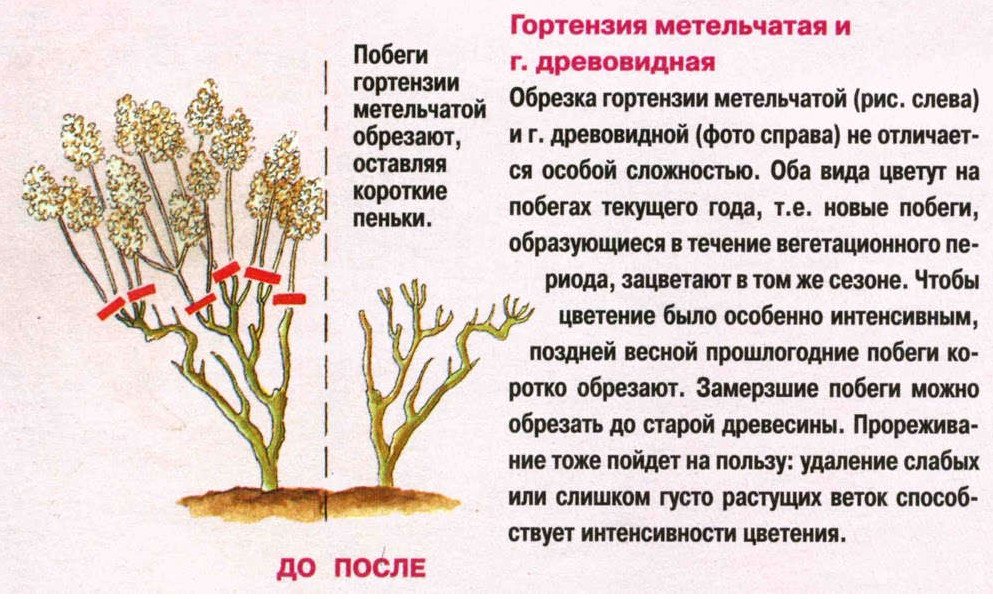
It is better to prune ornamental shrubs in the spring before the active sap flow begins, or in the fall after the leaves have fallen.
Covering shrubs for winter
This variety is distinguished by its good winter hardiness. However, bushes grown in northern and central regions are insulated for the winter, as shoots are often susceptible to freezing. The lower parts of the hydrangea are sprinkled with peat, dried leaves, and hay. The shoots are carefully gathered into bunches and wrapped in a non-woven covering material that allows for air circulation.
In the south, shrubs are pruned and mulched with river sand mixed with peat. This insulation is sufficient for the successful overwintering of ornamental plants.
Diseases and pests, methods of control and prevention
Incorrect planting location and poor agricultural practices are the main causes of shrub disease. Paniculata hydrangea can be affected by chlorosis, powdery mildew, and gray mold. Effective fungicides are used to treat the plant:
- gray rot - preparations "Horus", "Fundazol" and "Magnicur Star";
- powdery mildew – Flint Star, Topaz and Topsin-M;
- chlorosis - iron sulfate.
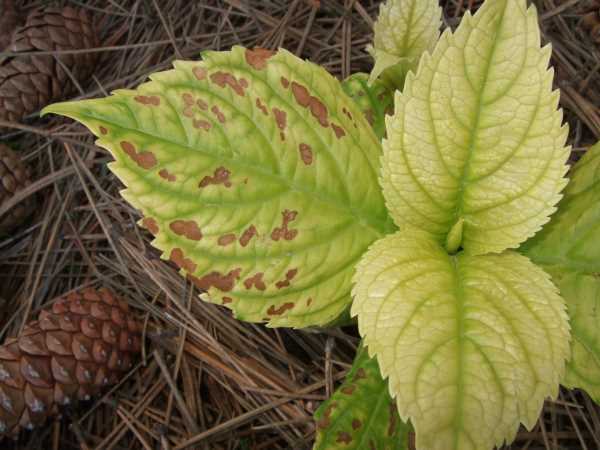
The main pests of this variety are the Colorado potato beetle, spider mite, and aphids. Popular gardening insecticides, Actellic and Aktara, are used to control these insects.
Hydrangea Weems Red in landscape design
Vims Red is one of the most popular plants in landscape design. It can be grown as a spherical shrub or as a standard tree. Paniculata hydrangea is often used to form hedges. It looks attractive in solitary plantings and can also serve as a compositional element in group plantings or mixed borders.
When planted in groups, successful “neighbors” for panicle hydrangea include ferns, ivy, cereal crops, phlox, daylilies, irises, delphiniums, and autumn anemones.
-
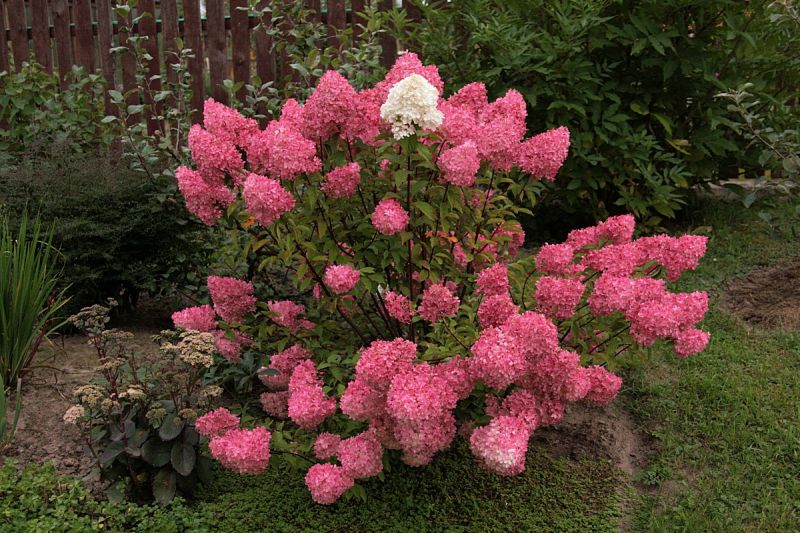
- Solitaire planting
-
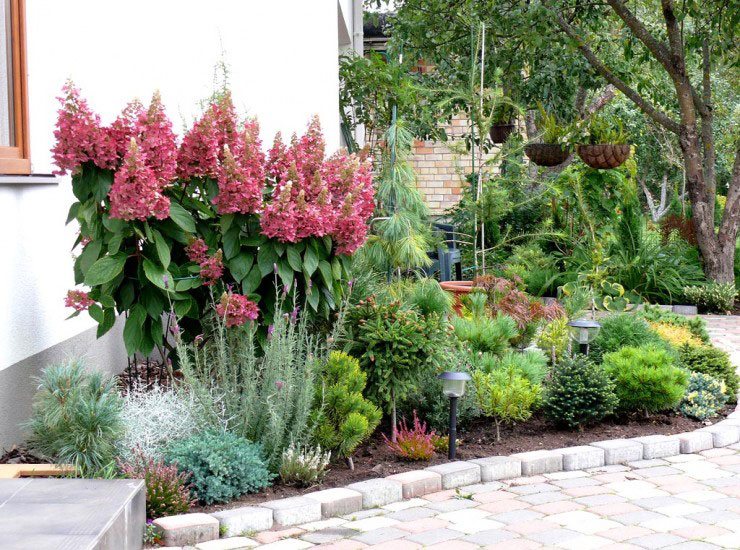
- Mixed mixborder
-
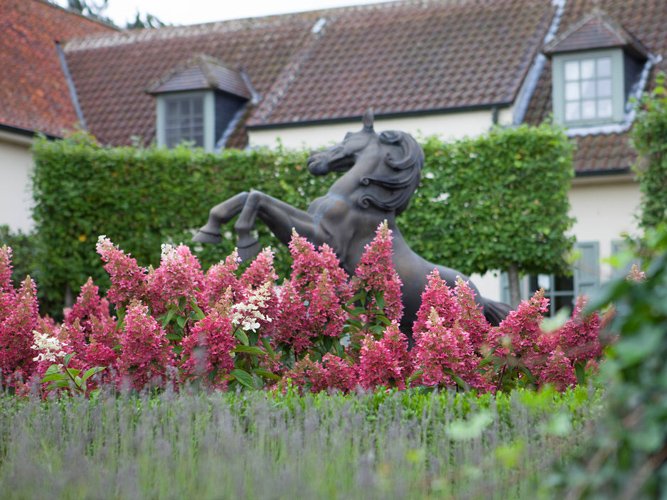
- Compositional design
Reviews from summer residents
"I've had a Vims Red hydrangea growing in my garden for over seven years. With minimal care (watering, occasional fertilizing, pruning, and occasional pest control), the shrub delights with vibrant and long-lasting blooms."
"My first attempt at growing a 'Wims Red' hydrangea was unsuccessful. A seedling planted in the shade failed to thrive. After carefully studying the variety description, I decided to try again. Planted in partial shade, the bush quickly adapted to the environment and began to grow vigorously."
You can add variety to your garden's deciduous and coniferous ornamental plants with the beautifully flowering panicle hydrangea, 'Wims Red.' This plant requires minimal time and effort to care for.